This site is supported by our readers. We may earn a commission, at no cost to you, if you purchase through links.

Overfeeding kills more pet corn snakes than starvation ever will. That’s the truth most beginners never hear, because a hungry-looking snake tugs at your sympathy more than a chunky one does. But obesity in captive corn snakes drives fatty liver disease, reproductive problems, and shortened lifespans, and it’s almost entirely preventable.
Here’s the thing: adult corn snakes evolved to survive weeks between meals in the wild. Your feeding schedule should respect that biology, not your own urge to nurture.
Get the corn snake feeding schedule adult timing right, from prey size to post-meal monitoring, and you’ll set your snake up for a decade or more of steady, healthy growth.
Table Of Contents
- Key Takeaways
- Set an Adult Corn Snake Feeding Schedule
- Choose Proper Adult Prey Size
- Prepare Frozen-Thawed Prey Safely
- Create Ideal Adult Feeding Conditions
- Track Weight and Body Condition
- Handle Refusals and Seasonal Changes
- Frequently Asked Questions (FAQs)
- How often should I feed a fully grown corn snake?
- How do I tell when my corn snake is hungry?
- How old is a 25 inch corn snake?
- How long can corn snakes go without being fed?
- Can adult corn snakes eat vegetables or fruit?
- Is tap water safe for corn snake hydration?
- Can you feed two prey items in one sitting?
- Do corn snakes need vitamin or calcium supplements?
- Conclusion
Key Takeaways
- Overfeeding, not starvation, is the real threat to adult corn snakes, since it leads to fatty liver disease and a shorter lifespan.
- Feed adults every 10–14 days once they cross 300 grams, adjusting for size, age, and breeding status rather than sticking to a rigid calendar.
- Match prey size to your snake’s body width (1 to 1.5 times) and cap prey weight at about 10% of your snake’s body weight to avoid regurgitation and excess fat.
- Track your snake’s weight and body condition monthly, using those trends—not guesswork or guilt—to adjust feeding intervals over time.
Set an Adult Corn Snake Feeding Schedule

Feeding an adult corn snake isn’t about a rigid calendar—it’s about reading your snake. Age, weight, and meal size all shift the timeline, and getting it wrong in either direction costs you. Here’s how to build a schedule that actually fits your snake.
Whole prey delivers the calcium and nutrients your snake needs in the right ratios, which is why choosing properly sized feeder mice matters just as much as timing.
Once you dial in the right pace, feeding consistently through adulthood plays a big role in how big corn snakes get and how quickly they get there.
Feed Every 10–14 Days
Once your corn snake hits adulthood, feed every 10–14 days. Most adults settle in nicely once they cross 300 grams, thriving on this weight-based feeding plan without piling on excess fat.
Snakes under 300 grams often do better closer to the 7–10 day mark. Track growth rate consistently, and let body weight, not the calendar, guide your schedule.
It’s also important to wait 48 hours after feeding before handling, and to always thaw and warm prey properly, as described in this complete corn snake care guide.
Extend Intervals After Large Meals
Fed a rat instead of a mouse? Push that next meal back. A big prey item demands a longer digestive waiting period, sometimes stretching past 14 days.
Watch the bulge, watch activity levels. Sluggish snake means slower digestion, so extend further. This stress-free digestion window cuts regurgitation risk and keeps your feeding schedule honest, not rigid.
Consider Age and Weight
Not every adult is the same adult. A weight-based feeding plan beats a calendar guess every time.
- Yearlings (250-350g): weekly meals
- 200-400g adults: every 10-14 days
- 400-600g (age 2-3): stretch toward 14 days
- Breeding females: every 5-7 days in season
Pair numbers with body condition checks. Ribs showing? Feed sooner.
Avoid Frequent Adult Feedings
More food isn’t kindness, it’s a slow health tax. Feeding beyond every 10-14 days strains the digestive system, slows metabolism, and packs on fat you’ll spot along the spine and ribs.
That fat isn’t cosmetic. Overfeeding shortens lifespan through fatty liver and cardiovascular strain. Stick to the schedule, run body condition checks monthly, and let weight monitoring guide adjustments, not guilt.
Overfeeding isn’t kindness—it’s a slow tax on your snake’s liver, heart, and lifespan
Adjust for Senior Snakes
Old age changes the math. Past 15 years, your snake’s metabolism slows down, so stretch that feeding schedule adjustment to every 10-14 days with smaller prey.
Watch for:
- Rib or spine visibility
- Slower feeding response
- Weight loss over 10%
- Reduced appetite in winter
- Girth changes despite stable weight
Weight monitoring monthly beats guessing every time.
Choose Proper Adult Prey Size
Getting the schedule right only solves half the equation. Size matters just as much, and guessing puts your snake at real risk. Here’s exactly how to pick prey that fits.
Follow The Body-Width Rule
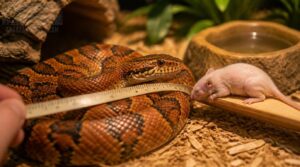
How wide is too wide? That’s the question. Grab a flexible tape and measure your snake’s girth at midbody, then match prey to roughly 1 to 1.5 times that width. Wider risks regurgitation. If your snake’s on the heavier side, tighten that ratio to 1.25x, easing off until body condition improves.
Watching how your snake reacts to prey size and presence can also help you decide whether feeding in a separate enclosure suits its temperament better than tank-side feeding.
Target Ten Percent Body Weight

Numbers don’t lie, so let math guide you. Take your snake’s body weight and multiply by 0.10, that’s your prey weight ceiling. A 300-gram adult? Cap prey at 30 grams. This ten percent rule beats guesswork every time.
Weigh both snake and prey monthly, log the ratio, and let weight-based feeding keep body condition honest, not just habit.
Choose Adult Mice or Small Rats

Mouse or rat? Let body condition decide. Adult mice run leaner, better for slimmer snakes, while small rats pack more calories for bigger-bodied adults. Rats also mean tougher tissue, adding enrichment value during feeding. Mice thaw faster too, a real perk on busy days.
Either way, prey size selection should match your snake’s actual weight, not habit.
Keep Whole Rodents Primary

Skip the pre-made "reptile diets." Whole uncooked prey gives you a complete nutrient package, protein, calcium, fat-soluble vitamins, all in natural ratios synthetic supplements can’t fully replicate.
Vary it up with mice, small rats, even quail on occasion. That variety mimics wild feeding patterns and keeps rodents your dietary backbone, not an occasional add-on.
Check Post-Meal Bulge Duration
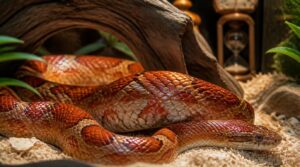
That bulge behind the ribs? It’s your best digestion clock. Adults show it for 24–72 hours, size-dependent, pinkies clear fastest, small rats linger longest.
Watch for gradual flattening, not sudden vanishing. Firm but not rock-hard, no discoloration, no multiple bulges.
Persisting past 72 hours, hardening, or lethargy alongside it? That’s your vet-visit signal.
Prepare Frozen-Thawed Prey Safely
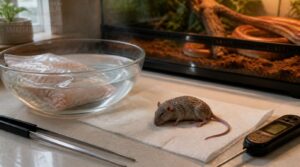
Picking the right size prey is only half the job. How you thaw and warm it matters just as much for safety and feeding success. Here’s the process, step by step.
Refrigerate Prey Until Thawed
Patience pays off here. Thaw frozen mice in the fridge, never at room temp, since bacteria multiply fast once temperatures climb.
- Small prey: ready in about 12 hours
- Rats: up to 24 hours
- Keep in sealed BPA-free bags, air removed, labeled
- Store flat below 40°F (4°C)
Use thawed prey within 24 hours. Never refreeze; it damages tissue and invites bacterial risk.
Warm Prey to 100°F
Once thawed, it’s water bath time. Submerge the sealed bag in 100°F (38°C) water for 15-30 minutes, checking that the thickest part, not just the fur, reaches temperature. Cold centers cause regurgitation.
Verify with an infrared thermometer at the head and chest. Warm prey triggers a stronger feeding response, better scent, better strike rate, fewer refusals from picky eaters.
Never Microwave or Refreeze
That microwave sitting in your kitchen? Leave it alone for prey. Uneven heating creates cold spots next to hot zones, risking burns and refusals.
Never refreeze thawed prey, either. Bacteria grows during thawing, and refreezing won’t undo that.
Three rules, always:
- Thaw in refrigerator only
- Use water bath method for warming
- Avoid refreezing after thaw
Stick to it.
Pat Prey Dry Before Offering
Once your adult mouse hits 100°F, grab a paper towel. Blot it for 30-60 seconds, focusing on the head and body.
Why bother? Wet prey breeds bacteria fast and rarely triggers a strike, dry rodents feel more like live prey. Drying also cuts substrate pickup and stops moisture-driven regurgitation. Skip this step and you’re inviting refusals.
Use Long Feeding Tongs
Bare hands near a strike zone? Not smart. Long feeding tongs create safe handling distance, 6-12 inches, cutting bite risk during your Adult Corn Snake Feeding Schedule.
Stick to:
- Stainless steel tips
- Locking joints
- Textured grip
- Rust-free maintenance
Practice proper grip technique, position for prey placement accuracy near a prey sized to body width, then wipe tongs after each use for solid feeding spot hygiene.
Create Ideal Adult Feeding Conditions

Good food alone won’t guarantee a good meal. Your snake’s environment matters just as much as what’s on the menu. Here’s what to get right before that mouse ever hits the tongs.
Feed Near Evening Lights-Out
Dusk hunters don’t check clocks, they check light. Feed 1–2 hours before lights-off to match crepuscular feeding alignment.
Pick a designated feeding spot near lights-out and stick to it. Time consistency matters more than the exact hour.
Warm prey to 100°F, wiggle it with tongs, then leave your snake undisturbed. Reduced handling afterward protects digestion.
Maintain Proper Warm-Side Temperatures
Get the gradient right and digestion follows. Warm side needs 83–88°F surface temperature, checked with an IR temperature gun, not guessed by hand.
Calibrate your thermostat monthly against an independent thermometer. Nighttime minimum stays at 75°F. Basking surfaces can hit 92°F, but that’s for lounging, not feeding, since 90°F risks regurgitation.
Choose a Consistent Feeding Location
Same spot, every meal. Snakes read patterns, and a consistent feeding location cuts stress while flagging refusals fast.
- Feed inside on newspaper or outside in a separate tub
- Outside setup simplifies water changes and husbandry
- Bare substrate risks impaction if ingested
- Use tongs at 90 degrees for safety
- Replace surfaces after each feeding for hygiene
Minimize Noise and Disturbance
Snakes hunt by vibration and smell first, sight second. A quiet feeding environment matters more than most keepers realize.
Keep the room calm, skip dropping bowls or lids nearby. Offer prey with slow, gentle movement, no jabbing or chasing. Resist repeated attempts if your snake hesitates. Consistent feeding times paired with reduced enclosure vibrations build trust and cut stress, meal after meal.
If you’re still struggling with a reluctant feeder, digging into the root causes of snake feeding stress can help you pinpoint what’s really going wrong.
Avoid Handling for 48 Hours
That full meal sitting in your snake’s belly isn’t ready for a workout. Avoid handling for 48 hours minimum, longer for big meals, to prevent regurgitation and support the digestive recovery period.
- Handling triggers postfeeding stress
- Warm hides support digestion
- Bulges signal recovery progress
- Patience prevents costly setbacks
Watch post-feed behavioral cues before safe handling resumption.
Track Weight and Body Condition

A feeding schedule only works if the snake’s body backs it up. Numbers on a scale and a quick visual check tell you more than any calendar ever will. Here’s how to actually keep score.
Weigh Your Snake Monthly
Once a month, put your snake on a digital gram scale, same container, same time of day. Give it a second to settle before you record anything.
Compare against last month’s number, that’s your Weight Trend Analysis. Pair it with quick body condition scoring, ribs, spine, roundness, and you’ll catch problems long before they show up as real trouble.
Log Meals and Prey Sizes
That scale number means little without context. Keep a feeding log alongside it: date, prey type, prey weight, and any refusals.
Note bulge duration too, since a bulge fading in 48 hours confirms good sizing. Track interval adjustments and rationale, then build monthly trend summaries. This weight-based feeding plan turns raw numbers into real pattern recognition.
Spot Obesity Warning Signs
Numbers only tell half the story. Run your hands along your snake’s spine, look from above, check the neck.
Warning signs include:
- Lost spine ridge, back looks rounded, not ridged
- Neck as wide as the head
- Fat "cleavage" beside the spine
- Visible corn snake hips near the tail
Scale spread near folds means fat’s pushing skin apart.
Recognize Underweight Body Shape
Where fat hides a spine, hunger carves one out. Look for a triangular ridge along the back, a head that seems too big for the neck, and a tail thinner than half the body width.
| Healthy Adult | Underweight Adult |
|---|---|
| Rounded back, spine hidden | V-shaped spine, visible vertebrae |
| Taut skin, no gaps | Loose folds, papery texture |
| Tail matches body width | Thin, tapering tail |
Adjust Intervals From Weight Trends
Two data points beat guesswork every time: weight and body shape.
Trending heavier? Stretch intervals 30-50%, up to every 21-28 days. Trending lighter? Shorten to 7-10 days. Big meal last week? Give 14-21 days recovery. Seniors often need 14-21 days regardless.
Update your feeding chart monthly, let real numbers drive the weight-based feeding plan, not the calendar.
Handle Refusals and Seasonal Changes

Your snake turns its nose up at dinner sometimes, and that’s not always a crisis. Before you panic or force the issue, walk through a quick checklist to figure out what’s really going on. Here’s where to start.
Check Temperatures Before Retrying
Before offering food again, run a Thermal Gradient Check. Verify warm side hits 83-88°F with Surface Temp Verification, cool side stays 72-78°F. Below 75°F? Postpone. This Pre-Feed Warmth Test, paired with feeding tongs and a Post-Meal Temp Log, catches why feeding refusals happen. Fix your feeding enclosure setup first, then retry.
If refusals continue even after correcting the thermal gradient, check your snake’s behavior against this guide to recognizing signs of stress in ball pythons, since stress can suppress appetite independent of temperature.
Allow Seasonal Appetite Changes
Every winter, your snake’s appetite naturally dips, that’s normal brumation behavior, not a red flag. Shorter daylight and temps below 65°F trigger it.
Track weight monthly. Stable weight with less food? Healthy seasonal adjustment. Losing weight? Call your vet.
Rotate prey types, extend intervals to 14-21 days, and trust the process until spring warms things back up.
Avoid Repeated Prey Offers
Nagging your snake with the same rejected mouse only teaches it to distrust feeding time. Wait 7-10 days, check temps, then retry.
- Swap prey size or type
- Confirm warm-side temps hit 88-92°F
- Log each refusal for patterns
Repeated offers stress your snake and disrupt feeding consistency, patience beats persistence here.
Watch for Regurgitation Risks
Regurgitation isn’t just a messy accident, it’s your snake’s stomach waving a red flag. Watch for undigested prey with mucus, often tied to handling too soon, chilly enclosures, or oversized meals.
Recovery takes 8-10 days off food. Keep the temperature gradient steady, size prey to 1.5x body width, and let digestion happen undisturbed.
Seek Veterinary Help When Needed
When should you call the vet instead of waiting it out? Skip straight to the clinic for nonstop gagging, breathing trouble, or bleeding that won’t quit in 5 minutes. For anything less urgent, jot down weight, appetite changes, and a timeline before your visit. Pick a clinic experienced with reptiles, then stick to their care plan.
Frequently Asked Questions (FAQs)
How often should I feed a fully grown corn snake?
Picture a slow, steady coil settling after a meal, unhurried, patient. That rhythm is your guide: feed every 10–14 days once grown. Adjust by weight and meal size, since overfeeding risks outweigh a missed snack.
How do I tell when my corn snake is hungry?
Watch for increased evening activity, more frequent tongue flicking, and tracking movement near the glass. She may strike-test at motion or hunt at consistent times, signaling readiness. Pair these cues with weight trends and body condition scoring.
If she hesitates at feeding time, a quick review of what baby corn snakes eat can help you fine-tune prey size and temperature for a better strike response.
How old is a 25 inch corn snake?
Think of a snake’s length like tree rings, a rough timeline written in growth. A 25 inch corn snake usually falls between 2 and 3 years old, sitting in that juvenile to young adult stretch under good husbandry.
How long can corn snakes go without being fed?
A healthy adult can fast 2 to 3 months without real trouble. Still, don’t treat that as routine, weight monitoring and body condition checks matter most whenever a meal gets skipped, especially outside normal seasonal appetite dips.
Can adult corn snakes eat vegetables or fruit?
Offering veggies to your snake is like handing a lion a salad bar. Nutritional gaps and digestive limitations mean fruit or vegetables get refused or cause upset. Stick with rodents, your reptile’s natural prey preference.
Is tap water safe for corn snake hydration?
Only with dechlorination first. Let tap water sit open 24 hours, or use a conditioner, since chlorine and chloramine harm hydration. Otherwise, bottled or filtered water is safer for enclosure setup and daily drinking needs.
Can you feed two prey items in one sitting?
Two mice at once? Only if each stays properly sized to body width, not oversized. Treat it as a larger total meal, then extend the next interval to avoid overfeeding.
Do corn snakes need vitamin or calcium supplements?
Not usually. Whole prey nutrition already supplies calcium, and D3 support depends on proper husbandry. Supplement only if a vet confirms deficiency risk, since dusting without cause can throw off calcium-to-phosphorus balance.
Conclusion
One client’s snake gained a pound in a year from weekly feedings, then developed fatty liver disease that cut its life short by years. That’s the real cost of confusing love with overfeeding.
A solid corn snake feeding schedule adult routine isn’t about restriction, it’s about matching biology. Feed every 10-14 days, track weight trends, and trust the process. Your snake doesn’t need a feast. It needs consistency, patience, and a keeper who knows when enough is enough.