This site is supported by our readers. We may earn a commission, at no cost to you, if you purchase through links.
A leopard gecko can dehydrate in 48 hours if its enclosure humidity drops below 30%, yet the culprit often isn’t the substrate or the heat lamp. It’s the water dish. A shallow ceramic bowl evaporates too fast, while a deep plastic tub invites drowning risk for hatchlings barely two inches long.
Choosing the right dish matters just as much in tropical setups, where pairing it with a reliable misting system for tropical species keeps humidity stable between fogging cycles.
The right choice among reptile water bowls for humidity control does more than hold water, it regulates evaporation rate, resists bacterial biofilm, and holds its ground when a curious monitor decides to investigate. Material matters as much as size here.
Six bowls stand out for balancing these demands, from rock-textured resin to glazed ceramic, each suited to different species and enclosure setups.
Table Of Contents
Key Takeaways
- Non-porous materials like resin, glazed ceramic, and food-safe polypropylene resist biofilm and bacteria far better than porous or scratched surfaces, making them the smarter pick for humid enclosures.
- Bowl size and depth need to match your reptile’s body: leopard geckos require just 1.5–2 inches (even less for juveniles), while snakes need enough diameter to curl up and water deep enough to reach halfway up their body.
- Where you place the bowl matters as much as the bowl itself—keeping it on the cool side and out of direct basking heat prevents thermal shock, bacterial growth, and unpredictable humidity spikes.
- Staying on top of cleaning (daily water changes, weekly deep cleans, biweekly disinfection, and full replacement every 1–2 weeks) is what actually keeps bacteria and biofilm from building up, no matter how nice the bowl is.
6 Best Reptile Water Bowls for Humidity
Not every water dish belongs in a humid enclosure, and picking the wrong one can undo all your careful gradient work.
A shallow dish with high sides can spike humidity too fast while barely holding enough water, so it helps to check this guide to choosing reptile water dishes for humid hide setups before you buy one.
The bowls below stand out for their non-porous surfaces, stable bases, and easy-clean designs suited to species that need consistent moisture without bacterial buildup.
Here’s a closer look at six options worth adding to your setup.
If you want to go deeper on what actually works in practice, this guide to climbing branches for terrariums breaks down the best setups for arboreal species that need vertical space to thrive.
1. 7. Exo Terra Reptile Water Dish
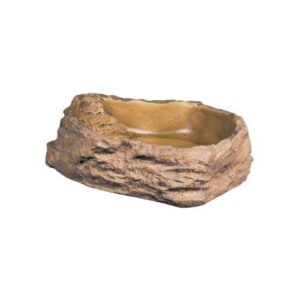
Rock-textured on the outside, glass-smooth within, the Exo Terra Reptile Water Dish (PT2803) solves the biofilm problem most bowls create. That non-porous interior wipes clean in seconds, while built-in safety steps let smaller species climb out before soaking turns to drowning.
At 8.7 x 6.7 x 2 inches, it suits mid-sized geckos and juvenile snakes best. The weighted resin base resists tipping, though that textured exterior takes a bit more scrubbing than fully smooth designs.
| Best For | Reptile and amphibian keepers with mid-sized species, like adult geckos or juvenile snakes, who want a low-maintenance soaking dish for desert, tropical, or bioactive terrarium setups. |
|---|---|
| Material | Food-grade resin |
| Tip Resistance | Weighted stable base |
| Ease Of Cleaning | Easy, smooth interior |
| Model Number | PT2803 |
| Terrarium Aesthetic | Natural rock finish |
| Depth Suitability | Moderate soaking depth |
| Additional Features |
|
- Smooth, non-porous interior wipes clean easily and resists bacterial buildup
- Built-in safety steps help prevent smaller animals from drowning
- Weighted resin base keeps the dish stable against tipping
- Textured exterior takes more scrubbing effort than a fully smooth surface
- Not ideal for very small species that may struggle with the entry/exit depth
- Actual dimensions may vary slightly, so it’s worth double-checking size before buying
2. Zoo Med Reptile Rock Corner Water Dish
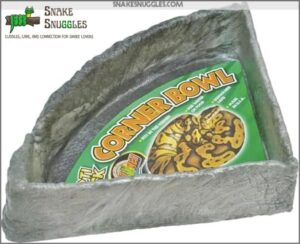
Foamed polystyrene gives this dish its rock look without the ceramic weight, and at 6 to 7 inches, it fits corner niches without eating up floor space. The smooth non-porous interior resists bacterial growth, while molded stairs let hatchlings climb out before soaking becomes a hazard.
It’s heavy enough to resist tipping from larger lizards, though the low rim (a plus for juveniles) means adult snakes may find it shallow for full submersion.
| Best For | reptile keepers with hatchlings or juvenile lizards who need a lightweight, corner-fitting water dish with easy climb-out access. |
|---|---|
| Material | Plastic |
| Tip Resistance | Durable, tip-resistant |
| Ease Of Cleaning | Dishwasher safe |
| Model Number | ZM92520 |
| Terrarium Aesthetic | Assorted tank colors |
| Depth Suitability | Deep, large capacity |
| Additional Features |
|
- Lightweight foamed polystyrene construction gives a natural rock look without heavy ceramic weight
- Smooth, non-porous interior resists bacterial buildup for easier cleaning
- Molded stairs let hatchlings climb out safely, reducing drowning risk
- Low rim may not allow adult snakes to fully submerge for soaking
- Compact 6 to 7 inch size may be too small for larger reptile enclosures
- Foamed material construction may be less durable than solid ceramic or plastic dishes over time
3. Fluker’s Repta Bowl Rock-Like Feeding Dish
Where the Zoo Med dish leans on molded steps for easy exits, Fluker’s Repta Bowl skips extras entirely, betting on a tough plastic shell molded to look like weathered stone. At 11 x 7 x 1.5 inches and 1.34 pounds, it’s non-porous and stain-resistant, doubling as feeder and water dish.
The shallow rim keeps substrate out during feeding, and the textured underside grips smooth flooring. Just scrub off the factory residue before first use; several owners note it arrives sticky.
| Best For | Reptile and amphibian owners who want a heavy, tip-resistant dish for food or water in small to medium terrariums. |
|---|---|
| Material | Plastic |
| Tip Resistance | Heavy, tip-resistant |
| Ease Of Cleaning | Easy with mild soap |
| Model Number | 30007 |
| Terrarium Aesthetic | Natural gray marbled |
| Depth Suitability | Shallow, limited volume |
| Additional Features |
|
- Sturdy, non-porous plastic resists stains and cleans up easily with mild soap
- Heavy build and grippy underside keep it from tipping when active pets like geckos or hedgehogs bump into it
- Natural rock-like look blends well into most enclosure setups
- Shallow depth (about 1 inch or less) limits water volume, so it’s not ideal for larger animals
- May arrive with sticky residue that needs a thorough wash before first use
- Some owners find it larger than expected, which could be a tight fit for smaller enclosures
4. Zilla Ceramic Terrarium Dish Medium
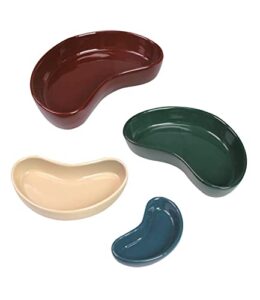
For keepers who want stone-textured plastic to give way to something heavier, the Zilla Ceramic Terrarium Dish Medium delivers real weight: 5.25 x 2.6 x 1 inch and dense enough to resist tipping.
Its low, wide base and built-in safety steps make it a smart pick from this guide to reptile water bowls for arboreal snakes, especially for enclosures housing bigger, more active animals.
The glossy glaze wipes clean with soap and water, resists staining, and holds roughly six ounces, enough for steady humidity without daily refills.
Check for chips each cleaning. Hairline cracks in glaze invite bacteria, undermining the very hygiene ceramic promises.
| Best For | This dish is best for keepers of geckos, tortoises, axolotls, and other small reptiles or amphibians who need a stable, easy-to-clean feeding or watering spot. |
|---|---|
| Material | Ceramic |
| Tip Resistance | Weighted ceramic base |
| Ease Of Cleaning | Easy, glossy finish |
| Model Number | 100111657 |
| Terrarium Aesthetic | Earth tone colors |
| Depth Suitability | Shallow, easy access |
| Additional Features |
|
- Heavy ceramic construction resists tipping, even with active pets
- Glossy glaze cleans easily with soap and water and resists staining
- Shallow design makes food and water easy for small animals to access
- Size may be too small for larger reptiles or multi-pet setups
- Color is randomly assigned and cannot be chosen
- Some users report leakage or glaze chips after extended use
5. Elevated Ceramic Cat Bowls Extra Wide
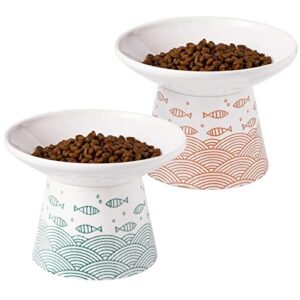
Borrowed from the feline aisle, the Elevated Ceramic Cat Bowl Extra Wide works surprisingly well in reptile setups needing steady humidity. Its five-inch elevation keeps water off substrate, preventing debris contamination while a wide six-to-seven-inch mouth slows evaporation and limits splash.
The non-porous glaze resists staining, and thick ceramic walls shrug off minor bumps from active snakes or curious lizards during soaking.
A non-slip base ring adds tip resistance on smooth glass or PVC enclosure floors.
| Best For | This elevated ceramic bowl set is best for cat owners who want to reduce their pet’s neck and whisker strain during meals, especially for older or larger cats. |
|---|---|
| Material | Ceramic |
| Tip Resistance | Weighted cone base |
| Ease Of Cleaning | Dishwasher/microwave safe |
| Model Number | O/6.25IN-Cat-LV/Y+C/Y |
| Terrarium Aesthetic | Not applicable |
| Depth Suitability | Shallow, 10 oz |
| Additional Features |
|
- Wide 6.25-inch opening prevents whisker fatigue and keeps your cat’s face clean while eating
- Elevated 4.3-inch height eases neck and spine strain, supporting better digestion and reduced vomiting
- Durable, non-porous ceramic surface is dishwasher and microwave safe for easy cleaning
- 10 oz capacity per bowl may be too small for pets needing large-volume feeding
- Shallow bowl depth can limit how much water it comfortably holds
- Lightweight ceramic base may slide on tile or smooth floors without added non-slip padding
6. Komodo Smart Dish Feeding Bowl for Reptiles
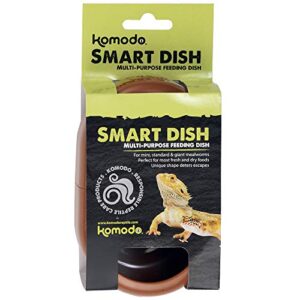
Rounding out the list is a dish built more for feeding than soaking, but useful anywhere you need a spill-resistant water station. The tall lip keeps mealworms and skittering prey from escaping while doubling as a splash guard against evaporation-driven humidity swings.
At 9.88 x 6.69 x 1.69 inches, it fits geckos, small lizards, even juvenile bearded dragons. Just watch its 2.08-ounce weight: lightweight plastic means active baskers can tip it if not anchored to substrate.
| Best For | Keepers who need a reliable, easy-to-clean feeding station for non-jumping live insects like mealworms and dubia roaches, especially for geckos, turtles, lizards, and adult bearded dragons. |
|---|---|
| Material | Plastic |
| Tip Resistance | Lightweight, tips easily |
| Ease Of Cleaning | Easy, smooth interior |
| Model Number | KM93235 |
| Terrarium Aesthetic | Neutral plastic finish |
| Depth Suitability | Tall, deep sides |
| Additional Features |
|
- Tall, smooth sides with a lip effectively contain non-jumping live food, reducing escapes and waste
- Water-safe plastic construction makes it versatile for both terrariums and aquariums, above or below water
- Smooth interior surfaces make cleaning quick and easy, keeping the enclosure hygienic
- Lightweight design can be tipped over by larger or more active reptiles, like bearded dragons
- Deep sides may make it harder for smaller geckos or less mobile pets to access food
- Not effective for jumping insects, since it relies on non-jumping prey behavior to work
Choosing Materials for Humid Enclosures
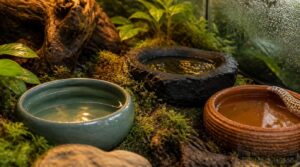
Not every water dish controls moisture the same way, and in a humid enclosure, that difference matters more than you’d think. The material you choose affects everything from bacterial growth to how often you’ll be scrubbing out biofilm. Here’s what separates the winners from the water-logged mistakes.
Ceramic Bowl Pros and Cons
Ceramic earns its shelf space through thermal stability, resisting the rapid swings that stress humidity-sensitive reptiles. Glazed surfaces fight biofilm and clean up fast with hot water.
The catch? Weight makes daily handling a chore, and glaze cracks under thermal shock or rough drops, turning a durable dish into a bacterial trap overnight.
Plastic Bowl Safety Concerns
That cheap dish under the heat lamp isn’t as harmless as it looks. Repeated UV exposure and warmth accelerate chemical migration, letting plasticizers leach into standing water.
Watch for:
- BPA leaching from unmarked plastics
- Microcracking that traps biofilm
- Warping under heat lamps
- Dye residue in dark plastics
Choose food-safe, UV-stable polypropylene, and stick to a strict cleaning routine to limit bacterial growth.
Resin Bowl Hygiene Benefits
Why do keepers keep switching to resin? Biofilm can’t gain a foothold on its dense, non-porous surface, and mineral staining wipes away fast.
| Feature | Hygiene Benefit |
|---|---|
| Antimicrobial additives | Inhibit bacteria on contact |
| Chemical resistance | Tolerates cleaners without clouding |
| Quick drying | Limits moisture-related growth |
| Sealed finish | Resists odor absorption |
Non-Porous Surface Advantages
A bowl’s surface texture decides its fate in a humid tank. Nonporous materials block water absorption, so spills wipe away instead of soaking in.
- Biofilm prevention on smooth interiors
- Algae resistance even in constant moisture
- Water repellency that stops staining
This preserves water quality and cuts bacterial growth, making sanitization quick and enclosure hygiene far easier to maintain.
Tip-Resistant Bowl Designs
A smooth surface means little if your snake tips the dish mid-soak. Look for a Weighted Base Design paired with an Anti-Slip Bottom for real water bowl stability.
A Spill Guard Lip and Raised Collar Feature deter nudging, while Snap-In Mounts lock placement. Heavy bases beat lightweight ones every time humidity and curious claws are involved.
Sizing Water Bowls by Species
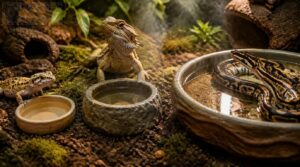
One bowl size doesn’t fit every reptile in your collection, and getting it wrong can mean drowning risks or a humidity level that never quite settles. Your leopard gecko and your ball python have completely different bathing habits, body weights, and safety margins to think about.
Here’s how to match the dish to the species before you buy anything.
Snake Bowl Size Guidelines
Since coiling space matters as much as depth, aim for bowl diameter sizing that lets your snake curl fully inside. A 3-foot snake needs 6-8 inches; 5-6 footers need 10-12 inches. Water should reach halfway up the body for proper submersion. Keep width-depth proportionality near 3:1, and always place the bowl on the cool side.
As a general rule, the bowl shouldn’t take up more than about ten percent of the enclosure floor space to avoid crowding hides or blocking thermal gradients.
Leopard Gecko Depth Limits
Leopard geckos need far shallower water than snakes, since their small frame can’t handle deep submersion.
- Depth cap: 1.5–2 inches max for adults
- Juveniles need just 0.25–0.5 inches
- Deeper dishes risk drowning, eyelid stress, and inhaled substrate
Cool side placement and non-porous, easy-clean design still apply here.
Safe Soaking Bowl Depth
Chest-high submersion is the real measure for ideal soaking depth, not a fixed number on a ruler.
Juvenile species limits sit around 1–2 inches, while larger species depth runs 2–3 inches for proper hydration and clean sheds.
An adjustable bowl depth, shallow edge, deeper center, suits mixed postures best and helps long-term reptile health in any enclosure setup.
Width-to-Depth Ratio
Beyond depth alone, width shapes evaporation efficiency and humidity gradient control across the enclosure.
Width-to-Depth Ratio determines surface area ratio, evaporation rates, and splashing control.
Standard ratios run 1:5 to 1:8 for stability balance.
Consider:
- Wider bowls raise humidity faster
- Deeper bowls slow evaporation
- Moderate widths ease cleaning
- Cool side placement affects rate
- Ratio impacts tipping risk
Stable Adult Python Bowls
Adult ball pythons do best with a 12 to 16 ounce reptile water bowl, wide and shallow, sized 6 to 8 inches across with 1.5 to 2.5 inches of depth.
Choose ceramic bowls with heavy bases for weighted base stability against soaking disturbances. Non-porous glazing simplifies cleaning, while daily dechlorinated water refills keep humidity control consistent and bacteria-free.
Water Bowl Placement for Humidity Control
Where you put the bowl matters just as much as what it’s made of. The right spot controls evaporation, shapes your humidity gradient, and keeps water away from basking heat and loose substrate. Here’s exactly where to place it for the best results.
Dialing in placement also pairs well with understanding how terrarium water bowls influence humidity gradients, giving your snake reliable zones to move between as its needs shift.
For a deeper look at getting all these details right from the start, choosing the right water bowl for your snake walks through placement, sizing, and material in one practical guide.
Cool-Side Placement Benefits
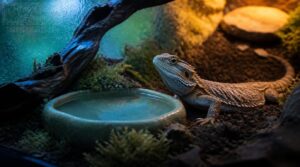
Where you set that bowl matters as much as what it’s made of. Placing it on the cool side keeps water near ambient temperature, preventing thermal shock while supporting steady, gradual evaporation instead of humidity spikes.
Benefits include:
- Reduced radiant heat transfer
- Lower substrate dampness near the warm zone
- Fewer condensation swings on enclosure surfaces
That balance builds a reliable humidity gradient your reptile can actually rely on.
Managing Evaporation Rates
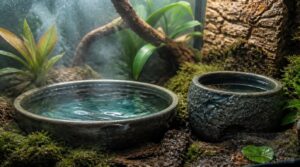
Evaporation is basically a math problem you can control. Surface area drives the rate: a wide, shallow dish loses water faster than a narrow one, so match dish shape to your humidity target.
Temperature and airflow matter too. Cooler, still air near the cool side slows evaporation, giving you steadier humidity control without constant refills or reliance on misting systems.
Creating Humidity Gradients
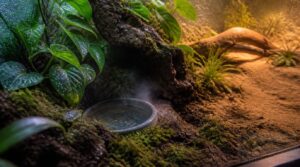
Think of your enclosure as having zones, not just spots. Bowl placement shapes a thermal gradient, pulling moisture toward cooler air while airflow and substrate interaction spread it further.
Three factors steer this:
- Evaporation rate near the dish
- Airflow humidity balance across zones
- Condensation zone mapping on nearby surfaces
Bioactive substrates hold residual moisture, reinforcing gradients your water bowls establish.
Avoiding Direct Basking Heat
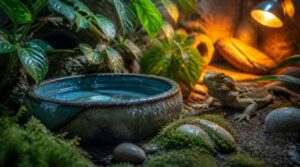
A bowl parked under basking heat is basically a slow cooker for bacteria. Direct sun can spike enclosure temps 5-15°F, so keep water bowl placement shaded using canopies, foliage, or shade cloth (cuts absorption ~30%).
A water bowl left under basking heat is basically a slow cooker for bacteria, so keep it shaded
Heat-reflective surfaces and cooling mat placement nearby preserve thermal gradient balance, keeping water 1-3°F cooler and evaporation rates in check.
Preventing Substrate Contamination
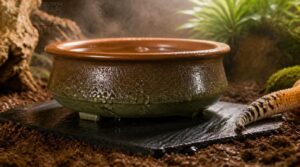
Splashing turns loose substrate into sludge fast. Elevated ceramic bowls with wide rims and non-porous mats underneath stop spillage from soaking into bedding. Wipe spills immediately, since waterlogged substrate breeds mold within hours.
Combine tip-resistant designs, proper water bowl placement, and evaporation control, and you’ll keep your enclosure setup clean without constant substrate replacement.
Cleaning Bowls in Humid Habitats
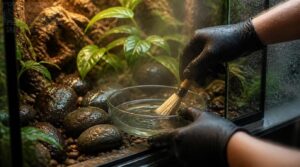
High humidity turns water bowls into bacterial breeding grounds faster than you’d think, so cleaning can’t be an afterthought. Getting it right means knowing what to do daily, weekly, and biweekly, not just when the water looks dirty. Here’s the routine that keeps your setup safe without turning into a second job.
Daily Water Replacement
Every 24 hours, dump the bowl and refill with dechlorinated water at room temperature. This single habit drives humidity stabilization, curbs stagnation, and limits mineral buildup on non-porous surfaces.
For a full breakdown of ventilation, substrate, and water placement, corn snake environment setup covers how each element works together to maintain stable conditions.
Monitor evaporation rate against your hygrometer readings, adjusting volume incrementally. Fresh water benefits shedding and hydration while protecting substrate moisture control, since stale bowls invite algae and unwanted scent trails pests notice fast.
Immediate Spot-Cleaning Steps
Daily water changes handle routine upkeep, but feces or shed skin floating in the dish demand action now, not at tomorrow’s refill.
Remove slime residue and dislodge biofilm buildup with a quick rinse, then dry before refilling with dechlorinated water. This habit blocks bacterial growth before it starts, keeping water quality solid between full cleanings.
Weekly Deep-Cleaning Routine
Once a week, pull every bowl and decor piece for a full teardown, not just a rinse. Soak parts in reptile-safe solution for 10 minutes to loosen biofilm, then scrub, rinse, and air dry completely before checking for cracks.
- Confirm humidity readings stay in range
- Inspect bowls for chips or wear
- Verify substrate dried fully
- Check gaskets and seals
- Log cleaning date and products used
Safe Biweekly Disinfection
Grab an EPA-registered disinfectant labeled for reptile use, diluted bleach (1:10) works well. Apply, then respect the label’s disinfectant contact time before rinsing thoroughly.
Rotate two bowls so one air-dries completely while the other’s in use. Wear gloves, check for chemical residue, and confirm humidity after cleaning returns to target before reintroducing your reptile water bowl.
Preventing Bacteria and Biofilm
Bacteria thrive where moisture lingers, so drying between uses matters as much as the wash itself. Combine daily water changes with a dedicated brush and non-porous bowl material to disrupt biofilm formation before it starts.
Three habits stop it cold:
- Air-dry fully between refills
- Alternate two bowls
- Disinfect biweekly, rinse thoroughly
Consistency beats intensity here, protecting water quality without daily scrubbing marathons.
Frequently Asked Questions (FAQs)
How often should I replace water bowls entirely, not just clean them?
A spotless bowl isn’t automatically a safe one. Scratches trap bacteria no scrubbing reaches. Follow replacement frequency guidelines: every 1-2 weeks in humid setups, sooner if you spot cracking, staining, or biofilm buildup signaling material degradation.
Can tap water safely be used, or is filtration necessary?
Cold tap water is safe if your municipal report meets standards, no boiling needed. Well water or old plumbing benefits from carbon or RO filtration to cut lead, chlorine, and chloramine before it touches your reptile’s water source.
Conclusion
A dish that costs less than your morning coffee can quite literally make or break your gecko’s entire respiratory health, that’s how much this small choice matters.
The best reptile water bowls for humidity control aren’t glamorous, but they’re doing quiet, constant work every hour of the day. Match material to species, depth to body size, and placement to your gradient. Get those three right, and hydration stops being something you worry about.