This site is supported by our readers. We may earn a commission, at no cost to you, if you purchase through links.

A snake stuck in a half-shed skin looks rough, patches clinging to the tail, eye caps still in place, belly scales dull and tight. Owners panic and reach for warm water fast, but timing matters more than speed. Retained shed usually points to low humidity, not a problem water alone fixes.
Soaking a snake for shedding helps, but only when you do it right: correct depth, safe temperature, and close supervision the whole time. Skip a step and you risk chilling your snake or triggering real stress. Get the setup right, and you’ll turn a stubborn shed into a clean, confident slide out of old skin.
Table Of Contents
- Key Takeaways
- Signs Your Snake is Shedding
- When Soaking May Be Necessary
- Fix Humidity Before Starting a Soak
- Prepare a Safe Snake Soaking Tub
- How to Soak a Snake for Shedding
- Choose Safe Water Temperature and Depth
- Set Soaking Duration and Frequency
- Monitor Stress During The Soak
- Handle Stuck Shed After Soaking
- Top 3 Products Unsuited to Snake Soaks
- Frequently Asked Questions (FAQs)
- How long should you soak a snake with a stuck shed?
- Is it good to soak your snake?
- How do I help my snake finish shedding?
- How long can a snake go without shedding?
- Can I soak my snake right after feeding it?
- Is it safe to soak a snake alone at home?
- Can different snake species be soaked together?
- Does soaking help with mites or parasites too?
- Should I soak a snake during brumation or winter?
- Conclusion
Key Takeaways
- Fix your enclosure’s humidity first, since low humidity causes most stuck sheds and soaking alone won’t fix a dry setup.
- When you do soak, keep water shallow (2-3 inches), lukewarm (85-90°F), and always below your snake’s neck to avoid respiratory risk.
- Never leave your snake unattended in the tub, and watch closely for stress signs like frantic climbing, gaping, or weak coordination.
- Let loosened skin peel off naturally afterward in a humid hide, since forcing off stuck shed can tear skin and cut circulation.
Signs Your Snake is Shedding
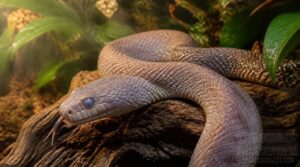
Your snake can’t tell you it’s about to shed, but its body will. Shedding shows up as a handful of clear physical and behavioral changes, some easy to spot and others easy to miss. Here’s what to watch for before you even think about reaching for the soaking tub.
For a deeper dive into what triggers this process and how often to expect it, check out this guide on understanding your snake’s shedding cycle.
Cloudy Eyes and Dull Skin
Before your snake sheds, you’ll notice its eyes turn cloudy or blue as fluid builds beneath the old skin. This eye fluid buildup causes real vision impairment, so don’t be surprised by defensiveness.
Since eye color varies naturally between species, it helps to know what snakes with naturally blue eyes look like, so you don’t mistake it for a shed.
Skin dullness follows, losing its normal shine.
This cloudiness timeline runs 5-10 days. Eyes clearing signals shedding is near, but persistent cloudiness after shedding suggests retained eye caps.
This blue-eyed shedding warning sign usually appears 24 to 72 hours before the shed actually begins.
Wrinkling Around Lips and Belly
Once the eyes clear, watch the belly. Lymphatic fluid pools between old and new skin, causing wrinkles around the lips and belly. Ball pythons often flash a pink belly first.
- Ventral wrinkling
- Lip creasing near the mouth
- Faded, blurred patterns
- Looser, swollen-looking scales
Low humidity worsens wrinkling, so keep levels at 50-60% before you soak.
Hiding, Fasting, and Defensiveness
Wrinkles aren’t the only clue. Your snake goes quiet too, tucking into a humid hide for days.
That’s blue-eyed hiding, driven by fasting and blurred sight. Food gets refused, and handling risks a defensive strike since it can’t see threats clearly.
Skip feeding attempts. Let the hide’s microclimate do its job while stress stays low.
Rubbing and Restless Movement
Quiet time ends fast once your snake starts scraping itself against everything in reach.
Head Rubbing Behavior targets the snout first, since the head sheds before the rest. Watch for:
- Snout drags along rough bark or rock
- Body coils pressing hard against glass
- Tail-tip flicks against substrate corners
Surface Preference Patterns show up as excessive movement, testing textures during exploration during pre-shed, all driving rubbing skin separation.
Clear Eyes Before Shedding
That milky "in the blue" look won’t last. After 3-5 cloudy days, eyes clear 1-2 days before shedding, signaling old eye caps are ready to release. This shift happens as trapped fluid reabsorbs. Ball pythons clear dramatically; other species vary.
Watching this pattern builds real skill, so you’ll know exactly when to skip the soak and let shedding happen naturally.
When Soaking May Be Necessary
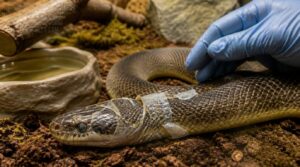
Not every shed needs a soak, so it helps to know when one actually makes sense. Most snakes shed in one clean piece and never need your help at all. Here’s what to check before you reach for the tub.
Complete Versus Retained Sheds
Not all sheds are created equal. A complete shed peels off as one inverted tube, nose to tail, with eye caps attached. A retained shed leaves patchy skin behind, often from low humidity or dehydration.
Health consequences matter here: retained skin can restrict blood flow and invite infection. That’s when soaking earns its place in your routine.
Stuck Patches After Shedding
Left unchecked, a stuck shed turns from cosmetic issue into real danger within 48 to 72 hours.
Watch for:
- Darkened skin patches signaling tail tip constriction
- Retained skin near the vent, blocking waste elimination
- Cloudy eyes lingering past the normal cycle
Gentle skin softening methods, like humid hides, usually beat forceful peeling for dysecdysis.
Retained Tail-tip Skin
Think of retained tail-tip skin as a tiny tourniquet. That half-inch of unshed skin dries and tightens, causing blood flow constriction that can cut circulation within hours.
Check daily for a translucent, glistening film or dark discoloration. Untreated, this leads to necrosis. Necrosis prevention means soaking, then gentle removal, never forceful. If retained shed won’t budge, get veterinary emergency care fast.
Try Humidity Correction First
Before reaching for a soaking tub, fix your enclosure. Poor humidity control causes most stuck sheds.
Check these first:
- Species specific needs (ball pythons need 80%+ during shed cycles)
- Damp humid hide with sphagnum moss
- Moisture retaining substrate like coconut husk
Balance ventilation so humidity doesn’t drop below 50%. Correct habitat humidity often resolves shedding trouble without any soaking at all.
Veterinary Warning Signs
Some sheds need more than a soak. Eye cap retention, a visible tail ring, or infection indicators like swelling and discharge all call for veterinary care.
| Warning Sign | Why It Matters |
|---|---|
| Retained eye caps | Risk of permanent eye damage |
| Constricting tail ring | Cuts off circulation |
| Chronic shedding issues | Points to an root health issue or systemic illness |
Fix Humidity Before Starting a Soak
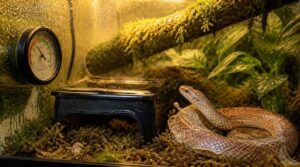
Before you fill that soaking tub, take a hard look at the enclosure itself. Low humidity is behind most stubborn sheds, and soaking won’t fix a setup that’s too dry. Here’s what to check first.
Check Species-specific Humidity Needs
Before you fill that tub, know your snake’s species humidity targets. Ball python humidity runs 50-60%, corn snake humidity similar, king snake humidity leans drier at 40-60%.
- Ball pythons: 50-60%
- Corn snakes: 50-60%
- King snakes: 40-60%
- Tropical species: 70-90%
- Desert species: 40-60%
Match environmental humidity to your species. That’s humidity stress prevention in action.
Create a Damp Humid Hide
Once you know your target range, build a humid hide to hit it. Soak sphagnum moss fully, squeeze out excess water, and pack it two inches deep.
Cut an entrance hole just wider than your snake’s body, smoothing edges to prevent skin damage. Check moisture daily, misting when the surface dries, and swap moss out every one to four weeks.
Use Moisture-retaining Substrate
A humid hide controls spot humidity, but your whole enclosure needs help too.
Swap bare liner for cypress mulch or coconut fiber substrate, both prized for holding water without turning soggy. Sphagnum moss mixed in boosts your substrate water retention further. Aim for a 50-65% moisture retention ratio in your humidity substrate mix, giving you steady humidity between mistings.
Measure Humidity With a Hygrometer
Substrate only tells half the story. You need a hygrometer to know what’s actually happening in the air.
- Place it mid-enclosure, away from vents and glass
- Let it acclimate 10-15 minutes before reading
- Calibrate monthly using a salt solution
- Log readings daily to track trends
Digital units add temperature data too, giving you a fuller humidity management picture across microclimates.
Balance Moisture and Ventilation
Cranking humidity means nothing if the air can’t move. Stagnant, soggy enclosures breed bacteria fast.
Airflow and Humidity work as a team, not rivals. Ventilation for shedding pulls stale moisture out while fresh air replaces it, keeping your humid hide’s microclimate intact without soaking the whole tank.
| Problem | Fix |
|---|---|
| Wet glass | Add vents |
| Musty smell | Increase airflow |
| Soggy substrate | Reduce misting |
Prepare a Safe Snake Soaking Tub
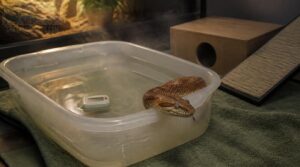
The right tub can make or break the whole soaking experience. You don’t need anything fancy, just a few key features that keep your snake calm and secure. Here’s what to look for before you fill it with water.
Choose a Secure Smooth Tub
Your tub choice matters more than you’d think. Pick a high rigidity plastic tub, 10-20 gallons, with a smooth interior surface and no seams to snag scales.
A flat, stable base and easy entry lip keep your snake secure and comfortable. Lightweight tub handling makes setup, soaking, and cleanup simple, every single time.
Add Safe Nonslip Traction
Slippery tubs cause real panic. Line the bottom with a damp towel first, it’s simple and works. Want extra grip? Try a rubber mat with texture, or a textured liner for smooth footing. Suction pad placement helps in high-traffic zones.
For your own safety, wear slip-resistant shoes near the soak area, and skip the edge rail for now.
Provide Ventilation Without Escape Gaps
A sealed tub turns dangerous fast, snakes need airflow just as much as they need water.
Drill 4-inch holes on opposite ends, then cover each with stainless steel mesh to block escape while air moves freely. Keep holes 2 inches above water. For bigger tubs, a small fan aids exchange, secure the lid with a two-handed latch so no gaps invite trouble.
Keep The Snake’s Head Elevated
Here’s the golden rule: water should never rise past your snake’s shoulders. Head elevation safety comes first, always. Snakes breathe through lungs and nostrils, not gills, so a submerged head risks water entering the airway.
Watch for calm, relaxed breathing and voluntary head positioning. Struggling to stay elevated signals stress or water that’s too deep, not a snake enjoying its soak.
Warm The Soaking Room
Cold rooms pull heat straight out of soak water, so warm the space before you warm the tub. Keep ambient air at 75°F or higher, with insulated walls to stop swings.
A small fan run 15 minutes prior stabilizes temperature. Check readings with a thermometer, and set alarms above 90°F or below 70°F.
How to Soak a Snake for Shedding
Once your tub is ready, the actual soak comes down to five simple steps. Each one matters for keeping your snake calm and safe in the water. Here’s exactly how to walk through the process, start to finish.
Before you begin, make sure your snake is on a consistent feeding schedule — check out this snake feeding guide covering prey sizing and meal frequency to ensure your setup supports healthy digestion between soaks.
Gather Tub, Towel, Thermometer
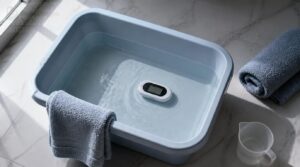
Three tools make or break your soak: tub, towel, thermometer. Grab a smooth-sided container, a soft towel for traction, and an accurate thermometer.
- Smooth tub material, no rough edges
- Non-slip towel texture
- Reliable thermometer accuracy
- Quick water depth check
- Safety edges inspection before use
Skip any step and you’re improvising blind.
Add Shallow Lukewarm Water
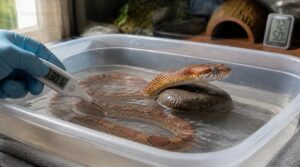
Fill your tub with dechlorinated water, 2-3 inches deep, kept between 85-90°F. Let it sit a few minutes so temperature stays even, top to bottom.
Depth matters: shallow enough for your snake to rest its head above water without swimming.
| Factor | Target Range | Why It Matters |
|---|---|---|
| Depth | 2-3 inches | Prevents submersion risk |
| Temp | 85-90°F | helps with safe shedding assistance |
| Water | Dechlorinated | Protects sensitive scales |
Place Your Snake Gently
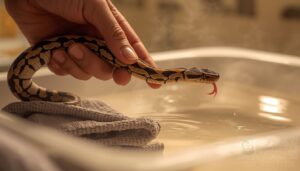
Water’s ready, so now comes the part your snake actually feels: pickup. Support the entire body, spine aligned, no sudden shifts. A damp towel barrier eases the plastic tub entry.
- Scoop from underneath, never grab head or tail
- Let them enter water at their own pace
- Watch for relaxed tongue flicks
- Give 2-3 minutes to settle in lukewarm water
Supervise The Entire Soak

Now that your snake is settled in the plastic tub, don’t wander off. Stay nearby and watch the entire soak, no exceptions.
Monitor head position constantly, weak snakes can slip under in lukewarm, dechlorinated water without struggling. Watch for distress signs like frantic scratching. Prevent unsupervised soaking; a reptile veterinarian will tell you drowning risks climb fast when nobody’s watching.
Dry and Return Safely
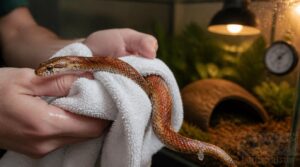
Pull your snake out once time’s up, then get to drying right away. Towel drying matters more than owners think, since leftover moisture invites skin issues.
- Pat dry with a clean, unscented towel
- Check eyes, tail tip for stuck shed
- Match enclosure temp to soak water
- Add humid hide with damp moss
- Return snake, monitor overnight
Choose Safe Water Temperature and Depth
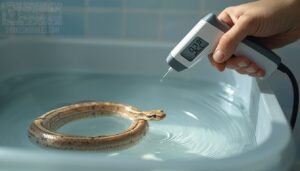
Water temperature and depth aren’t details you can eyeball. Get either one wrong, and a soak meant to help can turn stressful fast. Here’s exactly what to check before your snake ever touches the water.
Measure Temperature Before Soaking
Guessing water temperature is a gamble your snake shouldn’t have to take. Use a digital probe thermometer placed directly in the water, not the tub wall, for accurate readings.
| Tool | Best Use |
|---|---|
| Probe thermometer | Water temp |
| Infrared thermometer | Surface check |
| Analog | Slower, less precise |
| Calibrated probe | Most reliable |
| Uncalibrated | Risk of drift |
Calibrate before every soak to avoid dangerous swings.
Avoid Hot or Cold Water
Extremes kill the shed, not just the mood. Below 75°F risks respiratory infection; above 90°F risks neurological damage. Rapid swings trigger stress hormones that stall shedding entirely.
- Keep water lukewarm, never hot or cold
- Use dechlorinated water with a reptile-safe conditioner
- Monitor temperature every 5 minutes to prevent drift
Stability beats guesswork, every single time.
Follow Species-safe Temperature Ranges
Not all snakes want the same bath. Ball pythons do best at 86-90°F, while boas need warmer water, 88-94°F, matching their tropical roots. Corn snakes and other temperate species prefer 80-86°F.
A 70°F room can chill 86°F water to 78°F in just 15 minutes, so watch ambient temperature too.
Keep Water Below The Neck
Here’s the line that matters most: water stays below the neck, always. Snakes have incomplete tracheal rings, so any water reaching the airway risks bacterial pneumonia.
Keep depth shallow, just 2-3 inches for adults, less for hatchlings. A shallow dish works fine too. This isn’t about comfort. It’s straight-up respiratory safety.
Replace Chilled or Soiled Water
Water cools fast, and a chilled soak ruins the purpose. Check water temperature every few minutes.
- Test water at the 10-minute mark
- Swap in fresh lukewarm, dechlorinated water if cool
- Replace immediately if soiled
- Never reuse dirty water from a shallow dish
- Keep a clean water source ready beforehand
Add a reptile-safe water conditioner to any fresh batch first.
Set Soaking Duration and Frequency
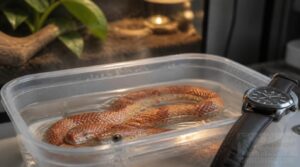
Timing matters just as much as water temperature and depth. Soak too often and you’ll stress your snake out for nothing. Here’s how to figure out the right duration and schedule for your snake’s needs.
Begin With a Brief Session
Ready to soak? Start small. Your first session should run 5 to 7 minutes, using lukewarm, dechlorinated water at 85-88°F with a reptile-safe conditioner added.
| Step | Detail | Why |
|---|---|---|
| Duration | 5-7 min | Builds trust |
| Temp | 85-88°F | Prevents chilling |
| Depth | 2-3 in | Keeps head clear |
| Check | Thermometer | Confirms safety |
Adjust for Individual Stress Tolerance
Every snake reads the tub differently. Watch how yours responds before adding a single minute.
- Calm stillness: reassess, maybe extend slightly
- Climbing or frantic shifts: stop now
- Open-mouth breathing: end the soak
- Stiff, uncoordinated movement: safety concern
- Repeated head dunking: too stressed
Match pace, warmth, and duration to that individual snake, not a fixed formula.
Repeat Only When Genuinely Needed
Most herpetologists advise against soaking more than once per shed cycle. Assess retained shed first: cloudy patches, dry tail tips, or stuck eye caps.
| Situation | Try First | Then Soak? |
|---|---|---|
| Mild dullness | Humidity fix | No |
| Retained patch | Humid hide, 48hrs | If unresolved |
| Stuck eye caps | Consult veterinarian | Vet-guided only |
Environmental humidity first, always.
Avoid Routine Preventive Soaking
Soaking "just in case" does more harm than good. Healthy snakes shed every 4-6 weeks on their own, no tub required. Routine dunking raises the risk of scale rot and skin infections while doing nothing for shed quality.
Skip the calendar-based soaks. Fix humidity, offer enrichment, and monitor shed frequency instead. Save soaking for genuine retained shed or stuck eye caps.
Ask Your Veterinarian About Frequency
Rarely does one soak schedule fit every snake, so bring your questions straight to a reptile veterinarian. Ask about a species-specific soak schedule, ideal humidity ranges, and how to track shedding progress at home.
Your vet weighs body condition and history before setting frequency, then adjusts the plan based on what you report back.
Monitor Stress During The Soak
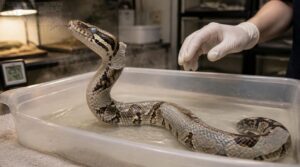
Not every snake sits still and relaxes in the tub. Some get anxious, and their body language will tell you fast. Here’s exactly what stress looks like, so you know when to act.
Frantic Climbing or Escape Attempts
A snake scrambling up the tub walls isn’t just curious, it’s frantic climbing, a clear stress signal. This mirrors stress-induced wall climbing seen in enclosures with poor humidity or temperature control.
If your snake claws at the sides trying to escape, end the soak now. Note the behavior, then recheck your enclosure’s secure lid and humid hide placement before trying again.
Open-mouth Breathing
Gaping during a soak isn’t always shedding stress, and that’s the tricky part. It can mimic early respiratory infection signs, so treat it as an emergency diagnostic indicator, not a quirk. Pull your snake out immediately.
If gaping continues on dry land, alongside wheezing or an elevated head posture, get a reptile vet involved. Don’t gamble with your snake’s health.
Repeated Head Submersion
Dunking its head over and over usually means progress, not panic. This is often a hydration mechanism, softening stuck eye caps in lukewarm, dechlorinated water. Expect 3-5 dips per soak, each lasting 30-60 seconds.
But rapid-fire dunks within 10-15 seconds signal a stress response. More than 8 cycles without resting? Stop the soak now.
Weakness or Poor Coordination
A snake going limp or listing sideways mid-soak isn’t "relaxing," it’s a red flag. True weak coordination during a soak can mirror coordination disorders seen with toxin exposure or metabolic issues, not normal shedding behavior.
If your snake struggles to right itself or lacks controlled movement, end the soak. This isn’t a job for balance exercises or physical therapy, it’s a vet visit.
Stop Immediately if Distressed
Trust your gut here. The moment you spot frantic climbing, gasping, thrashing, or your snake refusing to exit the water, pull it out right away. Don’t wait to see if things improve.
Dry your snake, move it to a warm space, and watch its breathing for 10-15 minutes. Skip the soak until distress clears, and call your vet if symptoms linger.
Handle Stuck Shed After Soaking
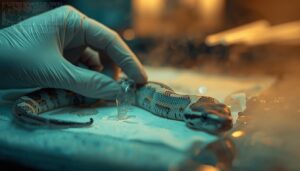
The soak loosened things up, but the shed doesn’t always come off on its own right away. That’s fine, patience matters more than speed here. Here’s exactly what to check and do next.
Let Loosened Skin Release Naturally
Once the soak softens things up, let your snake finish the job.
Return it to a warm enclosure with a humid hide packed with damp moss. Body twisting and rubbing against moss creates friction that peels skin away on its own.
Clear eyes confirm the process worked. That’s freedom done right, no yanking required.
Never Peel Shed Forcefully
Patience beats muscle every time here. Pulling stuck shed tears epidermis from dermis, exposing tissue to bacteria and cutting circulation by up to 70%. That damage brings infection risk, corneal scarring on eye caps, even necrosis within 48 hours.
Forcing off stuck shed tears skin from flesh, cutting circulation and inviting infection within 48 hours
Let soaking and moss friction do the work instead. Your snake’s reptile health depends on it.
Inspect Eyes and Tail Tip
Once the shed comes off, check two spots first: eyes and tail tip. Look for eye cap clarity, clear corneas with no milky film mean success. Any silvery patch signals a retained spectacle needing another soak.
Then inspect the tail tip for tight rings or double-skin texture. Left alone, that constriction can cut circulation and cause necrosis.
Offer a Humid Hide Afterward
Once your snake’s clear and any leftover skin is gone, give it a humid hide to recover in. Line a container with damp sphagnum moss, keep humidity around 70-85%, and place it away from heat vents.
This helps reptile hydration, eases shedding problems, and helps the enclosure return to normal fast.
Seek Reptile Veterinary Care
When soaking and gentle care don’t clear things up, don’t wait around hoping it resolves itself. Retained shed or stuck eye caps can signal a hidden health issue.
Reach out to a board-certified veterinarian promptly, since delays risk complications. They’ll run diagnostic testing and discuss options:
- Emergency care for urgent cases
- Specialist referral for tricky sheds
- Financial planning for treatment costs
Top 3 Products Unsuited to Snake Soaks
Not everything in your bathroom cabinet belongs in that soaking tub. Some products seem harmless but can irritate your snake’s skin or cause real toxicity. Here are three you should never add to the water.
1. Heavy Metals Well Water Filter
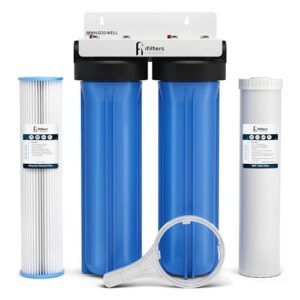
A whole-house well water filter might seem handy near your soaking setup, but it has no business anywhere near your snake’s tub.
These units run at up to 70 PSI through 1" NPT ports, built for plumbing systems, not reptile care. The GAC/KDF media targets chlorine, iron, and heavy metals, useful for your tap, useless for shedding help.
Bottom line: grab dechlorinated water from your regular supply. Skip anything with proprietary cartridges or pressure valves near your reptile setup.
| Best For | Homeowners on well water who want whole-house protection from sediment, chlorine, iron, sulfur, and heavy metals. |
|---|---|
| Product category | Whole-house water filter |
| Package dimensions | 4.5 x 20 in housing |
| Weight | 27.8 lbs |
| Primary function | Filters household water |
| Form factor | Cartridge housing |
| Target user | Homes with sediment |
| Additional Features |
|
- Dual-stage filtration handles both sediment and chemical/metal contaminants in one system
- Commercial-grade housing supports high flow rates for whole-house use
- Long filter life of up to 100,000 gallons means fewer changes per year
- Requires proprietary replacement cartridges, adding to long-term costs
- Carbon filter has been reported to crack internally and leak
- Non-standard housing threads limit compatibility with off-the-shelf filters
2. Curamin Extra Strength Pain Relief
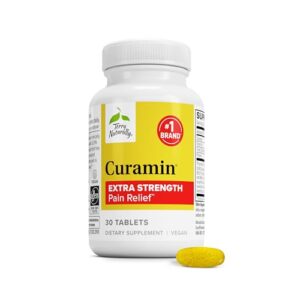
A joint pain capsule sitting by the tub? That’s Curamin Extra Strength, and it’s meant for human hands, not reptile skin.
It packs BCM-95 curcumin and boswellia for inflammation, plus DLPA. None of that belongs in bathwater. Mixed reports even flag potential liver toxicity in people.
Skip supplements near your soak entirely. Plain dechlorinated water at 85-90°F is all your snake needs to loosen skin safely.
| Best For | Adults dealing with arthritis, tendinitis, or general joint pain who want inflammation support and better sleep, not something to add to a pet’s bathwater. |
|---|---|
| Product category | Curcumin supplement |
| Package dimensions | 2.13 x 2.13 x 4.06 in |
| Weight | 2.4 oz |
| Primary function | Supports joint comfort |
| Form factor | Capsules |
| Target user | Adults with inflammation |
| Additional Features |
|
- BCM-95 curcumin offers enhanced absorption for more effective inflammation relief
- Combines boswellia and DLPA to support pain relief, mood, and exercise performance
- Free from sugar, gluten, dairy, and common allergens
- Capsules may be too large for some people to swallow comfortably
- Mixed safety reports raise concerns about potential liver toxicity
- International orders may face shipping delays, making it less ideal for urgent needs
3. Tarte Tubing Mascara Lash Extensions
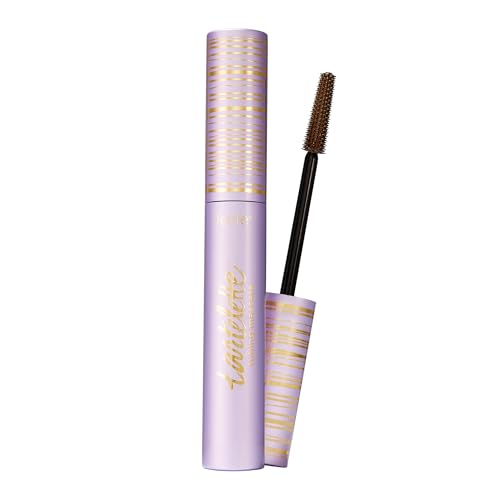
Lash extensions in a tube, sitting near your soaking setup? Leave it in the makeup bag. Tarte’s formula uses micro tubing technology with shea butter, castor oil and carnauba wax, none of which belong anywhere near reptile skin.
It’s built for 24-hour wear and warm water removal, which sounds similar to your soak routine, but that’s coincidence, not compatibility. Cosmetic ingredients can irritate a snake’s skin during shedding. Stick with plain, dechlorinated water for every soak.
| Best For | People who want a low-maintenance, all-day mascara that gives a fanned-out, extension-like lash look without the fuss of actual extensions. |
|---|---|
| Product category | Mascara |
| Package dimensions | 5.2 x 1.18 x 0.75 in |
| Weight | 1.45 oz |
| Primary function | Enhances lash appearance |
| Form factor | Liquid tube |
| Target user | Users wanting defined lashes |
| Additional Features |
|
- 24-hour longwear formula that resists smudging and flaking
- 360° comb with 296 bristles separates and lifts lashes for a defined look
- Vegan, cruelty-free formula with skin-loving ingredients like shea butter and castor oil
- Some users report occasional flaking or smudging despite the longwear claim
- Higher price point compared to typical mascaras
- Only available in brown, so shade options are limited
Frequently Asked Questions (FAQs)
How long should you soak a snake with a stuck shed?
Time to shed some light on the timing: give it 15 to 20 minutes for typical stuck shed. Tough cases may need up to 30 minutes, but never push past what your snake tolerates.
Is it good to soak your snake?
Only when it’s actually needed. Soaking helps loosen stuck shed or dry patches, but it’s stressful for your snake. Skip routine soaks, fix humidity first, and soak only for genuine shedding trouble.
How do I help my snake finish shedding?
Fix humidity first with a damp hide, then soak 15 to 20 minutes in lukewarm water if skin stays stuck. Let it release naturally, never peel, and call your vet if problems persist.
How long can a snake go without shedding?
A few days too long, and something’s off. Most snakes complete a full shed cycle every 4 to 8 weeks, with blue eyes clearing within days, not weeks, before the skin releases cleanly.
Can I soak my snake right after feeding it?
Hold off. Digestion is a vulnerable window, and handling too soon risks regurgitation. Give your snake 48 to 72 hours after a meal before any soak, longer for bigger prey or bulkier species like boas.
Is it safe to soak a snake alone at home?
Yes, but stay close by. Never leave your snake unattended in water, even briefly. Watch for frantic climbing or open-mouth breathing, and be ready to dry it off and stop immediately if distress appears.
Can different snake species be soaked together?
Nope, keep soaks solo. Mixing species during soaking invites stress, bites, and disease spread. Each snake has different temperature and duration needs anyway, so separate tubs protect everyone’s skin, safety, and sanity.
Does soaking help with mites or parasites too?
Only a little. A soak might dislodge some surface mites, but it won’t touch internal parasites or wipe out an infestation living in your enclosure. Treat the habitat and consult your vet for real parasite control.
Should I soak a snake during brumation or winter?
Skip routine soaking during brumation. Focus on fixing enclosure humidity first if shedding stalls mid-cool-down. Only soak for genuine stuck shed or dehydration signs, and always keep cooling temperatures stable rather than adding stressful interventions.
Conclusion
A snake shedding its skin is a lot like you shedding old limits: slow, uncomfortable, but freeing once it’s done.
Soaking a snake for shedding isn’t a quick fix. It’s a deliberate act of care. Get the humidity right first. Keep water shallow and warm. Watch your snake the entire time. Do that, and stuck shed stops being a crisis. It becomes proof that patience, done right, sets creatures free.