This site is supported by our readers. We may earn a commission, at no cost to you, if you purchase through links.
Your green tree python’s enclosure reads 45% humidity, and no amount of extra misting seems to fix it. Meanwhile that expensive fogger you researched sits at $80 online, and you’re not convinced it’s worth the risk of mold or a shorted-out unit near standing water.
Here’s the truth most care sheets skip: humidity control without a fogger comes down to physics, not equipment. Substrate choice, water bowl placement, and ventilation balance do most of the work that a fogger only mimics. Desert species like ball pythons need just 30-40% relative humidity, while tropical species such as green tree pythons demand 70-80%, and hitting those targets consistently depends on understanding how moisture moves through your tank.
Get the fundamentals right, from substrate depth to vent placement, and you’ll maintain stable humidity using tools you likely already own.
Table Of Contents
- Key Takeaways
- Check Your Snake’s Humidity Requirements
- Raise Humidity Without a Fogger
- Choose Moisture-Retaining Snake Substrate
- Balance Ventilation, Heat, and Airflow
- Troubleshoot Humidity and Health Problems
- Frequently Asked Questions (FAQs)
- How to get rid of humidity in a room quickly?
- Does a fogger help with humidity?
- Will a bucket of water humidify a room?
- What household items can dehumidify a room?
- Can I use a room humidifier near the enclosure?
- Will lowering humidity too fast harm my snake?
- How does seasonal weather affect indoor enclosure humidity?
- Conclusion
Key Takeaways
- Matching your substrate, water bowl placement, and ventilation to your snake’s native humidity range does the job a fogger only imitates, and it costs you nothing extra.
- Deep, moisture-holding substrate like coconut husk or cypress mulch (3-4 inches) acts as a slow-release reservoir, buffering humidity swings between mistings far better than shallow bedding.
- Good airflow, not a sealed tank, is what actually prevents mold and stagnant air, so balancing intake and exhaust vents matters as much as adding moisture.
- Daily hygrometer checks paired with quick fixes, like a bigger water bowl, a humid hide, or short mistings, let you catch and correct humidity swings before they turn into shedding problems or health issues.
Check Your Snake’s Humidity Requirements
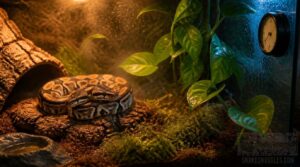
Before you reach for any tool, you need a clear target to aim for. Every species carries its own baseline needs, and your enclosure’s readings only mean something once you know what to compare them against. Here’s what to check before adjusting anything.
For temperature and humidity targets by species, and a rundown of how thick your snake handling gloves should be, check both before your next handling session.
Species-Specific Humidity Targets
Before you fight humidity, know your snake’s baseline. Desert species like ball pythons or corn snakes thrive at 30-40% relative humidity, while tropical species such as green tree pythons need 70-80%. Arboreal snakes require 60-70% for skin and respiratory health.
Match your indoor humidity targets to native habitat, and boost levels 10-20 points during shedding. Keep in mind that typical indoor relative humidity levels in many buildings often fall below 40%, so you may need active measures to reach the higher ranges tropical and arboreal species require.
Digital Hygrometer Placement
Knowing your target humidity means nothing without accurate readings. Place your digital hygrometer at breathing height in the tank’s central location, away from corners where drafts skew results. Avoid heat sources like basking lamps and stay 6 inches from water dishes. Mount it on a stable surface, since movement causes fluctuating readings and unreliable humidity monitoring.
Daily Humidity Fluctuations
Once your hygrometer is placed correctly, watch the numbers move. Humidity peaks near dawn from morning dew, then drops as afternoon warming kicks in.
Track daily cycles against substrate moisture sync for accuracy:
- Dawn: highest relative humidity
- Midday: sharpest moisture reduction
- Evening: gradual indoor moisture levels rebound
Closed doors overnight trap humidity fast, so consistent hygrometer checks reveal your enclosure’s true rhythm.
Shedding Cycle Adjustments
Those daily readings matter most right before a molt. Watch for dulling skin, opaque eyes, and dropped appetite, classic pre-molt behavior signaling it’s time to raise targets 5-10% above baseline.
Humidity consistency across the enclosure, not just peak numbers, prevents patchy sheds. Track shedding frequency against your hygrometer log so recovery time and skin condition stay predictable each cycle.
Raise Humidity Without a Fogger
Foggers aren’t the only route to healthy humidity, and honestly, they’re not always the most reliable one. You can raise moisture levels using simple tools already sitting in your supply closet, from a spray bottle to a handful of sphagnum moss. Here are five practical methods worth adding to your routine.
Safe Manual Misting
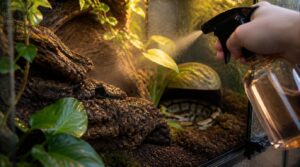
A spray bottle beats a fogger for quick humidity fixes. Use short bursts, 2 to 5 seconds, with dechlorinated water, targeting substrate and decor, never the snake.
Space sessions at least 10 minutes apart for humidity stabilization. Clean clogged nozzles promptly.
Keep hands damp, watch for hissing or writhing, and pause misting if your snake seems stressed.
Larger Water Bowl Placement

Swap that shallow dish for one spanning 4 to 6 inches in diameter. Bigger surface area means steadier evaporation, raising ambient humidity without the spikes.
For more tips on balancing airflow and moisture levels, check out this guide on setting up proper humidity and ventilation in a snake habitat.
- Keep water halfway up the rim
- Set the bowl away from heat sources
- Choose a wide, stable base
- Wipe rims weekly to curb mineral buildup
Position matters as much as size, since substrate saturation risk climbs near overfilled bowls.
Creating a Humid Hide
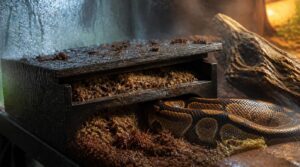
Think of a humid hide as a personal sauna for your snake, a retreat it visits on its own terms. Line it with damp sphagnum moss under coconut fiber, adding a 2 to 3 inch base. Place it at the cool end, away from heat, with a small entrance gap. Check often; discard if it smells sour or grows mold.
A humid hide is a personal sauna your snake visits on its own terms, damp moss and coconut fiber offering a private retreat
Partially Covering Screen Tops
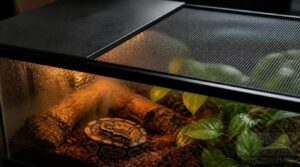
A mesh panel over half the screen top slows excess airflow while still letting your snake breathe easy. Position it above the warm zone for heat retention, leaving a gap for ventilation and condensation prevention.
This mimics indoor spaces where humidity surpasses 60% naturally, stabilizing moisture without sealing the enclosure completely.
Adding Damp Sphagnum Moss
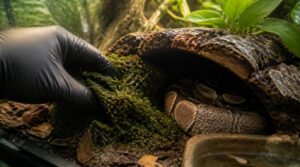
Few tools work as quietly well as damp sphagnum moss. Hydrate it in distilled water, squeeze out excess, and tuck it into the humid hide.
- Holds moisture steady, cutting spray frequency
- Rehydrate when it feels dry or pale
- Replace if musty or moldy
- Layer near substrate, away from heat
- Eases shedding by softening skin
Swap it monthly for lasting humidity reduction.
Choose Moisture-Retaining Snake Substrate
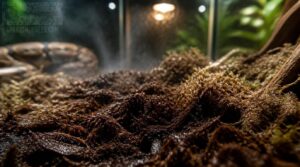
Your substrate does more than cushion the tank floor; it acts as a reservoir that holds moisture and releases it slowly over time. The right material can buy you hours of stable humidity between mistings, easing the workload on the rest of your setup. Here’s what to look for when picking bedding that actually earns its keep.
Coconut Husk and Fiber
Coconut husk holds several times its weight in water, releasing moisture slowly for stable humidity. Capillary action spreads it evenly through the substrate.
With 0.69 g/cm³ density and tubular microfibrils, it insulates without becoming a heat sink. It’s fully biodegradable within months to years, making it a sustainable alternative to desiccant dehumidification products in your enclosure.
Cypress Mulch Benefits
If coconut husk controls the slow release, cypress mulch brings its own strengths to the substrate mix. Its dense fibers offer strong moisture retention, keeping enclosure humidity stable longer than lighter beddings.
Aromatic oils in cypress wood provide natural pest deterrence, while decomposition adds organic nutrients over time. It also suppresses odor-causing bacteria and resists compaction, supporting consistent humidity without daily maintenance.
Increasing Substrate Depth
Depth matters as much as material. Aim for 3 to 4 inches, deep enough to buffer humidity swings yet shallow enough to avoid uneven temperature zones. This creates moisture retention zones and aids burrow depth simulation snakes crave.
Press the substrate gently: if it compresses and holds moisture, depth is adequate. That layered substrate benefit means slower drying and steadier airflow optimization throughout the enclosure.
Adding Water to Corners
Once your substrate holds moisture well, place a wide, shallow bowl in a rear corner to build a humidity gradient without soaking the bedding. Ceramic retains water longer than plastic.
Keep rims slightly raised, lift the bowl for airflow, and change water daily to curb algae and odor, the same maintenance habit you’d use for basement corners prone to dampness.
Avoiding Waterlogged Bedding
A water bowl in the corner helps, but the rest of the bedding still needs preventing substrate saturation.
Check daily for cool, dark patches that never dry between mistings; that’s a diagnosis of trouble ahead.
Fluff compacted spots to restore airflow, and pull out any bedding that feels heavy or smells sour before mold takes hold.
Balance Ventilation, Heat, and Airflow
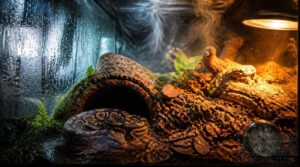
Humidity doesn’t exist in a vacuum inside your enclosure; it’s tied directly to airflow and temperature working together. Get the balance wrong, and you’ll fight stagnant air, mold, or a stressed snake gasping for stable conditions. Here’s how to line up ventilation, heat, and airflow so they support each other instead of working against you.
Adjusting Enclosure Ventilation
Vents work like lungs: one side draws air in, the other lets it out. Place an intake near substrate level and an exhaust up top, so warm, moist air rises and escapes naturally.
Passive vents suit stable humidity needs, while adjustable flaps handle sudden shifts, keeping airflow balanced without drying your snake out.
Maintaining Proper Temperatures
Humidity and heat work as a team, so thermal regulation matters just as much as moisture control. Keep ambient room temp between 75-80°F, with a basking zone at 88-92°F.
- Calibrate thermostats monthly
- Check gradient with two thermometers
- Allow nighttime cooling of 5-10°F
- Avoid spikes above 95°F
Passive cooling protects both temperature and humidity balance.
Preventing Stagnant Air
Rarely does an enclosure need to stay sealed tight; trapped air breeds mold faster than moisture itself.
Balance vent placement on opposite walls to guide airflow direction across the tank, not just upward through lid openings. A small fan nearby aids circulation without drafts. Keep interior doors open nearby, too, since stagnant house air compounds enclosure problems.
This is strategic ventilation, not guesswork.
Managing Condensation Safely
Fogged glass isn’t decoration, it’s a warning sign that dew point has been reached.
- Wipe surfaces each morning with a dry cloth
- Track readings with a reliable hygrometer
- Reposition water bowls away from cool walls
Eliminate standing moisture sources promptly, since dripping condensation invites mold. Improve air circulation rather than sealing vents, and pooling water signals bigger ventilation problems ahead.
Positioning Heat Sources Correctly
Where you place your heat source shapes humidity as much as any water bowl. Align it along the enclosure rear for stable ambient distribution, keeping the basking spot from spiking surface temps past 95°F.
This creates the thermal gradient your snake needs while avoiding misting zones, so warm air won’t collide with damp substrate and spike readings above 60% humidity.
Troubleshoot Humidity and Health Problems
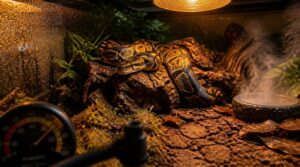
Even with careful setup, humidity problems still show up, and knowing how to read them saves you time and stress. Some issues point to equipment or habits, while others point straight to your snake’s health. Here’s what to watch for and how to respond when something’s off.
Humidity Drops Too Quickly
Watch for four culprits before refilling the water bowl: too much ventilation adjustment, low outdoor relative humidity pulling moisture through mesh, excessive heat source output, or dry substrate shedding moisture fast.
- Seal gaps letting dry air in
- Deepen substrate moisture retention
- Lower basking wattage slightly
- Check hygrometer placement near hides
Uneven microclimates inside hides often cause quick, patchy drops your hygrometer won’t catch elsewhere.
Humidity Stays Too High
Too much humidity is the opposite problem, and it’s just as damaging. Screen tops left partially covered, oversized water bowls, or overly moist substrate can all push readings past 60%.
| Cause | Fix | Result |
|---|---|---|
| Blocked ventilation | Uncover screen | Airflow improves |
| Wet substrate | Dry, replace | Moisture drops |
| Sealed edges | Crack vents | Air circulates |
Mold and Odor Prevention
Sustained high humidity invites mold, and a musty odor is often your first warning sign.
- Eliminate the moisture source driving dampness
- Dry wet substrate within 48 hours
- Scrub nonporous surfaces with detergent and water
- Discard moldy porous items like wood or moss
Track readings with a hygrometer, ventilate consistently, and replace natural dehumidifiers like DampRid quarterly to protect indoor air quality.
Dehydration Warning Signs
Even with humidity dialed in, dehydration can creep up. Check skin elasticity by pinching gently; tenting means trouble. Sunken, dull eyes and stuck shedding signal problems too.
| Sign | Healthy | Dehydrated |
|---|---|---|
| Skin | Snaps back | Tents |
| Urates | Soft, moist | Chalky |
| Eyes | Bright | Sunken |
Watch behavior closely for lethargy or refused meals.
When Veterinary Care Helps
Tenting skin or refused meals sometimes points past husbandry. Persistent mouth breathing, lethargy, skin lesions, or odd shedding warrant clinical evaluation, not more tweaking.
- Watching your snake gasp for air, terrified something’s badly wrong
- Feeling helpless as lesions spread despite your best efforts
- Dreading a vet bill you can’t avoid
- Relief when telemedicine catches issues early
- Guilt over missing early warning signs
Behavioral change assessment matters: if humidity fixes don’t help, call your vet.
Frequently Asked Questions (FAQs)
How to get rid of humidity in a room quickly?
A dehumidifier can drop room humidity from 70% to 50% in 1 to 3 hours. Run exhaust at the source, use a small fan for air circulation, and open windows only when outdoor air is drier.
Does a fogger help with humidity?
Yes, foggers raise relative humidity within minutes using micron-sized droplets, but poor ventilation invites mold and condensation.
Track results with hygrometer monitoring, use clean water to avoid mineral buildup, and keep electrical parts shielded from mist for safety.
Will a bucket of water humidify a room?
A single bucket won’t make much of a splash, humidity-wise. Evaporation rate depends on surface area and airflow, so a small bucket in a still corner barely nudges indoor humidity, let alone gets your snake tank near proper levels.
What household items can dehumidify a room?
Silica gel buckets, calcium chloride absorbers, and rock salt dehumidizers pull moisture from small spaces effectively. Recharge silica gel monthly by baking it, and pair with activated charcoal bags to control odor alongside excess humidity.
Can I use a room humidifier near the enclosure?
Think of it as weather from another room, not a rainstorm overhead. Keep the humidifier several feet away, aim airflow away from glass to prevent condensation, secure the water reservoir, and verify readings with accurate hygrometer placement.
Will lowering humidity too fast harm my snake?
Dropping relative humidity too quickly can shock a ball python, especially mid-shed, causing rapid moisture loss, retained skin, and respiratory irritation.
Let enclosure conditions reach equilibrium gradually rather than forcing sudden swings that stress your snake’s system.
How does seasonal weather affect indoor enclosure humidity?
Your enclosure breathes with the seasons like a lung syncing to outdoor air. Humidity swings track outdoor dew point closely; winter dryness pulls moisture out, while summer evaporation raises it, unless ventilation timing offsets the shift.
Conclusion
Why buy a fogger when your tank already holds the tools to master moisture? Substrate depth, water bowl placement, and smart ventilation deliver humidity control without a fogger that’s more reliable than any plug-in device. Your green tree python doesn’t care about gadgets; it cares about consistent conditions.
Check your hygrometer daily, adjust substrate before symptoms appear, and you’ll build the instinct no equipment manual teaches. That instinct is what real reptile keeping demands.