This site is supported by our readers. We may earn a commission, at no cost to you, if you purchase through links.

Reptile keepers lose more snakes to humidity problems than most hobbyists realize. Retained shed piles up around the eyes, constricts the tail tip, and signals a care problem that compounds over time. Ball pythons need 55 to 70 percent humidity as a baseline. Corn snakes need 40 to 60 percent. Drop below those numbers consistently, and skin health suffers fast.
Small enclosures make this harder to control. Moisture escapes quickly, and without steady replenishment, levels fall before you notice. Choosing the right snake humidifier for small enclosures removes that uncertainty and gives your animal the stable environment it needs.
Table Of Contents
- Key Takeaways
- Why Your Snake Needs Proper Humidity Control
- Fogger Vs. Mister: Which Works Better?
- Key Features That Actually Matter
- Humidity Targets for Popular Snake Species
- Top 8 Humidifiers for Small Snake Enclosures
- 1. Coospider 3.8L Reptile Fogger Mister
- 2. Vivosun Reptile Humidifier Fogger
- 3. Repti Zoo 4L Reptile Fogger Mister
- 4. Repti Zoo 10L Reptile Misting Fogger System
- 5. Evergreen Pet Supplies Reptile Fogger Humidifier
- 6. Exo Terra Mini Fogger
- 7. Zoo Med Reptirain Automatic Habitat Mister
- 8. PETSPIONEER Reptile Humidifier Fogger
- How to Set Up Your Snake Humidifier
- Cleaning and Maintaining Your Reptile Fogger
- Safety Features Every Snake Humidifier Needs
- Choosing The Right Humidifier for Your Setup
- Frequently Asked Questions (FAQs)
- How to keep humidity up in a snake enclosure?
- Can you put a humidifier in a snake tank?
- How to get humidity up in a snake tank?
- What is the best room humidifier for reptiles?
- Can humidifiers cause mold growth in small enclosures?
- Do snake humidifiers work with bioactive setups?
- How does ambient room humidity affect enclosure levels?
- Can humidifiers stress snakes with sensitive temperaments?
- Are reptile humidifiers safe around young children?
- Conclusion
Key Takeaways
- Ball pythons need 55–70% humidity and corn snakes need 40–60%, so knowing your snake’s exact range before buying a humidifier prevents stuck sheds and respiratory problems.
- Ultrasonic foggers raise humidity in minutes and run as quietly as 26 dB, making them the better fit for small enclosures where moisture drops fast.
- Auto shut-off and dry-run protection aren’t optional extras — without them, a dry pump burns out overnight and leaves your snake’s enclosure unprotected.
- Pairing your humidifier with a digital hygrometer turns guesswork into automation: humidity drops, it mists; target reached, it stops.
Why Your Snake Needs Proper Humidity Control
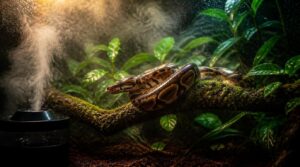
Humidity isn’t optional for snakes — it’s the difference between a healthy shed and a painful stuck skin. Get it wrong, and your snake faces respiratory problems, dehydration, and chronic stress. Here’s what every snake keeper needs to know before picking a humidifier.
A humidity box for shedding snakes gives your snake a microclimate escape hatch when the enclosure’s ambient levels aren’t quite enough.
Humidity isn’t optional for snakes — it’s the line between a healthy shed and serious harm
Shedding Problems From Low Humidity
When humidity drops in a reptile enclosure, your snake’s shed skin dries out fast. Dry air makes the old scale layer stick to new tissue, so the shed won’t come off cleanly. Retained eye caps and skin stuck around the mouth are common results.
A snake humidifier with steady mist output keeps humidity control consistent, giving shedding assistance where it counts most.
Research shows that optimal relative humidity between 40% and 60% is key to preventing moisture loss and maintaining healthy skin barrier function across species.
Respiratory Risks in Dry Enclosures
Dry skin isn’t the only risk. Dry air also irritates your snake’s respiratory tract, making normal breathing harder over time.
Low humidity leaves airways more vulnerable to bacteria and mold particles that collect inside enclosures. That’s why respiratory infections in snakes often link to poor terrarium moisture regulation. A consistent humidity level protects your snake’s lungs, not just its scales.
How Humidity Affects Snake Hydration
Your snake’s health goes beyond just breathing. Skin absorbs moisture from the air too, so terrarium moisture regulation plays a key role in preventing dehydration risk.
How humidity shapes hydration:
- High humidity reduces drinking frequency
- Low humidity forces more bowl visits
- Moist air keeps skin supple
- Proper snake tank moisture control prevents dryness
- Balanced levels support respiratory health reptiles need
Signs of a Too-Dry Enclosure
Your enclosure gives clear warnings. Stuck shed skin, cloudy eye caps, and nasal crust signal moisture loss. Dehydration risk builds fast. An ultrasonic fogger with solid water tank capacity helps maintain humidity control.
| Sign | What You See | What It Means |
|---|---|---|
| Skin shedding | Retained skin | Low moisture |
| Behavior | Yawning, open mouth | Dry throat |
| Enclosure | Dusty substrate | Poor humidity |
Fogger Vs. Mister: Which Works Better?

Not all humidifiers work the same way, and the type you choose makes a real difference for your snake. Foggers and misters each have their strengths depending on your tank size, species, and how hands-on you want to be. Here’s what you need to know before picking one.
How Ultrasonic Foggers Produce Mist
A tiny vibrating disc does all the work. Ultrasonic technology uses a ceramic transducer to shake water at high frequency, breaking the surface into fine droplets of 1 to 5 microns. No heat is involved. That means better humidity control without temperature spikes. Your water tank capacity and adjustable hose determine where and how much fog output reaches the enclosure.
| Component | Function | Why It Matters |
|---|---|---|
| Ceramic transducer | Vibrates to atomize water | Creates consistent, fine droplets |
| Water tank | Stores water supply for the disc | Larger capacity means fewer refills |
| Adjustable hose | Directs mist into the enclosure | Controls placement and coverage |
Misters Vs. Foggers for Small Tanks
Both systems handle humidity control differently. A reptile humidifier fogger uses ultrasonic technology to raise moisture in minutes. Misters produce larger drops that cling to plants and hides longer. Use an adjustable hose to aim either option into your small tank.
| Feature | Fogger | Mister |
|---|---|---|
| Droplet size | 10–50 microns | 50–100 microns |
| Humidity speed | Fast (minutes) | Slow (hours) |
| Water use | Higher | Lower |
| Surface moisture | Minimal | Longer lasting |
| Best use | Quick humidity spikes | Steady moisture |
Noise Levels and Enclosure Disruption
Noise is easy to overlook. Foggers run at a 26dB quiet level. Misters can climb to a 35 dB noise level near the tank. That low rumble travels through the frame and into your enclosure.
| Device | Noise Level | Disruption Risk |
|---|---|---|
| Fogger | ~26 dB | Low |
| Mister | ~35 dB | Moderate |
| Both | Variable | Varies |
Quiet operation humidifiers keep your snake calmer at night.
Best Use Cases for Each Type
Pick the right tool for your setup. Foggers suit small enclosures where humidity drops fast between cycles. Misters handle targeted zones in larger reptile terrariums.
For classroom setups where both space and runtime matter, reptile humidifiers built for educational enclosures offer the right balance of compact size and long tank life.
| Device | Best Use Case |
|---|---|
| Fogger | Small snakes terrarium, even humidity distribution |
| Mister | Larger tanks, localized basking humidity |
| Both | Multi-enclosure setups with misting interval scheduling |
A quality Snake Humidifier should match your tank size.
Key Features That Actually Matter
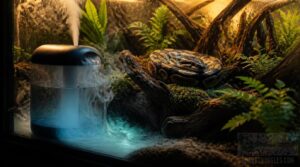
Not every feature on the spec sheet will make a difference in your snake’s enclosure. The ones that do come down to four things: tank size, hose reach, safety shutoffs, and noise. Here’s what to look for in each.
Tank Capacity and Refill Frequency
Most humidifiers for small enclosures hold between 1.0 and 4.0 liters. A 3.8-liter water tank runs 4 to 6 hours before needing a refill, so expect 1 to 3 days between refills at moderate humidity settings.
Topfill design makes refill convenience simple and mess-free. Check your water level monitoring indicator daily. Don’t let the tank drop below the pump intake.
Hose Length and Placement Flexibility
A short hose limits where mist lands. Look for 6 to 10 feet on 20 to 40 gallon tanks. Hose adjustability lets mist reach basking spots and water dishes.
Need more reach? Add a hose extension with quick connect fittings. Run a hose compatibility check first. Suction cup stability keeps nozzles fixed. Topfill water access should stay easy after mounting.
Auto Shut-Off and Dry-Run Protection
Placement flexibility matters, but safety features protect your snake when you’re away. Look for:
- Automatic shutdown when water drops below the sensor
- Dryrun protection that stops misting within 1 to 2 seconds
- Dryburn protection so the pump never overheats
Some brands label this dryoff protection. Without it, a dry pump burns out fast. Always check the manual before you buy.
Noise Level During Operation
Safety features protect your snake, but noise level decides your comfort. An ultrasonic mister runs quietly, usually 20 to 35 dB at the tank. Look for quiet operation under 40 dB at room distance.
Louder units hum and buzz through glass walls. Cool mist output stays steady without added fan noise. Check owner reviews for low decibel sound before buying.
Humidity Targets for Popular Snake Species
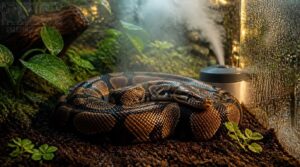
Before you buy any humidifier, you need to know your snake’s target humidity range. Each species has its own needs, and guessing often leads to stuck sheds or breathing problems. Here are the exact numbers for the most popular pet snakes, plus how to adjust them during shedding season.
Ball Python Humidity Requirements
Ball pythons need humidity levels between 55 and 70 percent. That range prevents stuck sheds and keeps skin healthy in most reptile terrariums. During shedding, raise it to 75 or 80 percent briefly.
A fogger with cool mist output and automatic shutdown holds these numbers without soaking the substrate. Check your hygrometer daily at the cool end of the tank.
Corn Snake Moisture Needs
Unlike ball pythons, corn snakes need less. Keep ambient humidity at 40 to 60 percent. Raise it to 65 or 75 percent during sheds. This creates an easy enclosure hydration balance.
A fogger with a timer function and adjustable mist intensity controls brief shed boosts. In a water tank capacity comparison, smaller tanks win here since you’ll run it rarely.
Boa Constrictor Enclosure Humidity
Boas need steady moisture. Boa constrictor enclosure humidity works best at 55 to 75 percent, with 60 percent as your baseline.
A reptile humidifier using ultrasonic fogger technology holds this range well. Pair it with sealed glass and coconut husk bedding.
Avoid readings above 80 percent. That causes respiratory irritation. Good humidity control also means a large clean water dish.
Adjusting Humidity During Shedding
Adjusting humidity during shedding is simple. Raise your baseline by 5 to 10 percent, starting 24 to 48 hours before the shed.
Use reptile fogger timer settings for intermittent misting in short morning bursts. Ultrasonic atomization technology softens old skin without soaking substrate. A built-in hygrostat holds the peak automatically. Stop misting once skin loosens. Then return to normal levels.
Top 8 Humidifiers for Small Snake Enclosures
A good humidifier should hold enough water, run quietly, and shut off on its own. We compared this year’s models against those standards before ranking them. Here are the eight units that earned a spot for small snake enclosures.
1. Coospider 3.8L Reptile Fogger Mister
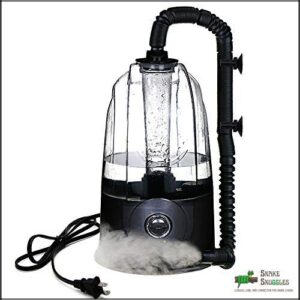
The Coospider 3.8L wins on runtime. Its tank runs up to 26 hours at the medium setting, so you refill less often. Mist output tops out at 380 ml per hour, controlled by a front rotary knob. The hose stretches from 1.5 to 6.3 feet, and suction cups hold it steady.
Dry-run protection shuts the unit off when water runs low. It stays under 35 dB, quiet enough for nighttime use. It lacks a built-in timer. Add an external one.
| Best For | Keepers of humidity-loving reptiles and amphibians—like dart frogs, iguanas, and hermit crabs—in 10–40 gallon terrariums who want long, quiet misting runs without constant refills. |
|---|---|
| Tank Capacity | 3.8L |
| Mist Type | Ultrasonic cool mist |
| Mist Output | Up to 380ml/hr |
| Delivery System | Adjustable hose, suction cups |
| Power Source | AC power |
| Auto Shut-off | Yes |
| Additional Features |
|
- 3.8L tank runs up to 26 hours at the medium setting, so you refill far less often
- Silent operation under 35dB makes it safe for nighttime use without disturbing resting animals
- Dry-run protection automatically shuts the unit off when water runs low
- No built-in timer or humidity monitoring, so you’ll need external devices for automated schedules
- Multiple users report water leaking from the reservoir base and hose connections
- Durability concerns, with some units failing within 3–6 months of use
2. Vivosun Reptile Humidifier Fogger
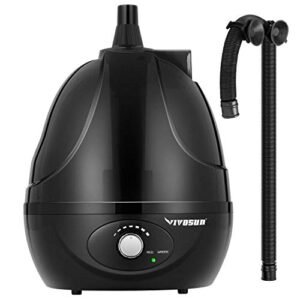
The Vivosun keeps things simple. Its 2.5 liter tank runs on three output settings: 100, 200, or 300 ml per hour. The hose extends from 1.5 to 5 feet, and suction cups hold it in place.
Auto shut-off stops the unit when the tank empties. Remove the tube and it works as a room humidifier.
Two warnings. The tank is opaque, so check levels often. Use distilled water to protect the ultrasonic head.
| Best For | Reptile and amphibian keepers with 20- to 40-gallon terrariums who want hands-free humidity control instead of daily manual misting. |
|---|---|
| Tank Capacity | 2.5L |
| Mist Type | Ultrasonic cool mist |
| Mist Output | 100–300ml/hr |
| Delivery System | Extendable hose, suction cups |
| Power Source | AC power |
| Auto Shut-off | Yes |
| Additional Features |
|
- Three mist settings (100, 200, or 300 ml/hr) plus auto shut-off let you dial in humidity and walk away
- Extendable hose with suction cup mounts makes it easy to fit most small-to-medium enclosures
- Silent ultrasonic operation won’t disturb your pets, and it doubles as a room humidifier when the hose is detached
- Durability is hit or miss, with some users reporting failures within weeks
- The opaque tank hides the water level, so you’ll need to check it often
- Mist output can be inconsistent, and the ultrasonic head needs distilled water to prevent mineral buildup
3. Repti Zoo 4L Reptile Fogger Mister
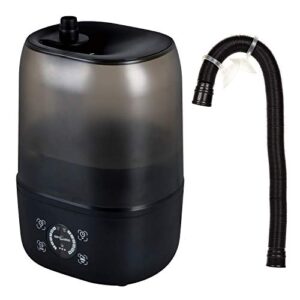
The Repti Zoo 4L balances capacity and control. Its 4 liter tank runs up to 12 hours of misting at full output. Pick 100, 200, or 300 ml per hour. The tube stretches from 15.6 to 63.6 inches, and suction cups hold it steady.
The touch screen remembers your last settings after power cuts. Top-fill design means no spills when refilling.
Watch for seal leaks. Some units fail within 2 to 4 months. Clean it monthly with distilled water to prevent clogs.
| Best For | Reptile and amphibian keepers—especially those housing chameleons, frogs, or other humidity-sensitive species—who want long-lasting, automated misting without constantly refilling a small tank. |
|---|---|
| Tank Capacity | 4L |
| Mist Type | Ultrasonic cool mist |
| Mist Output | 100–300ml/hr |
| Delivery System | Flexible extension tube |
| Power Source | AC 100–240V |
| Auto Shut-off | Yes |
| Additional Features |
|
- 4-liter tank delivers up to 12 hours of continuous misting, cutting down on refills and manual spraying
- Three mist output settings (100, 200, or 300 ml per hour) plus an adjustable tube with suction cups for flexible, secure placement
- Smart touch screen remembers your last settings after power cuts, and the top-fill design makes refills mess-free
- Reliability is a concern, with multiple users reporting units failing within 2–4 months
- Seals can degrade or leak, especially after cleaning if the unit isn’t reassembled correctly
- Touch screen is sensitive enough that minor contact or vibrations can accidentally change your settings
4. Repti Zoo 10L Reptile Misting Fogger System
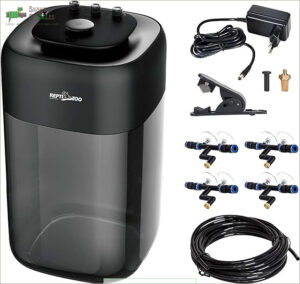
Need serious misting power for multiple tanks? This system’s 10 liter tank (2.6 gallons) cuts refill chores dramatically. It grips up to 20 nozzles, and 4 come included. The diaphragm pump runs quiet, and the 360° nozzle with timed spray mimics natural rainfall.
Backwatering technology limits dripping to less than 1 drop after each spray.
Reliability is mixed. Some units fail within 33 days. Clean the canister regularly to prevent bacterial buildup in standing water. For a single small enclosure, it’s overkill.
| Best For | Hobbyists running multiple reptile or amphibian enclosures who want automated, high-volume misting without constant refilling. |
|---|---|
| Tank Capacity | 10L |
| Mist Type | Pressure spray |
| Mist Output | Adjustable |
| Delivery System | Up to 20 spray nozzles |
| Power Source | AC power |
| Auto Shut-off | Not specified |
| Additional Features |
|
- The 10L tank dramatically cuts down on refill frequency compared to smaller systems
- Supports up to 20 nozzles, making multi-tank setups easy from a single unit
- Quiet diaphragm pump and near-drip backwatering design keep operation clean and unobtrusive
- Reliability is hit or miss, with some units failing within a few weeks of use
- Spray output can be inconsistent, including weak misting or water flowing back into the reservoir
- Standing water requires regular canister cleaning to prevent bacterial buildup
5. Evergreen Pet Supplies Reptile Fogger Humidifier
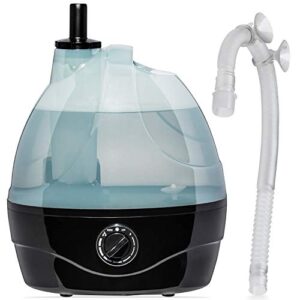
Overkill isn’t your only route. The Evergreen fogger targets small enclosures up to 20 gallons, and its 4 liter tank lasts days between refills.
Fog output adjusts from low to high, maxing near 300 ml per hour. Low settings keep substrate dry. High settings suit shed cycles.
It refills from the top, no tipping. Dry-run protection stops the unit when water runs low. Controls stay simple: one on/off switch and one output dial. Beginners run it straight out of the box.
| Best For | Reptile and amphibian keepers—especially owners of snakes, bearded dragons, tortoises, frogs, or hermit crabs—who want quiet, adjustable humidity control for their enclosures. |
|---|---|
| Tank Capacity | 2L |
| Mist Type | Ultrasonic cool mist |
| Mist Output | Adjustable dial |
| Delivery System | Adjustable hose |
| Power Source | AC power |
| Auto Shut-off | Yes |
| Additional Features |
|
- Adjustable fog output with dial control for precise humidity regulation
- 2-liter water tank with automatic shut-off to prevent dry runs
- Runs quietly enough to use in living spaces without disturbance
- Requires refilling from the bottom, which can be inconvenient and prone to spills
- Some units experience leakage or failure within a year of use
- Hose positioning can be finicky, with mist escaping if not seated correctly on tank screens
6. Exo Terra Mini Fogger
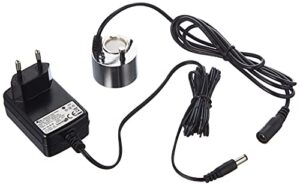
Compact has its place too. The Exo Terra Mini Fogger sits inside the tank itself. It runs in just 2 inches of water. Ultrasonic transducers push humidity toward 100% in small habitats. No external tank, no hose.
It lacks a built-in timer, so you control the cycles manually. The ceramic diaphragm wears out and needs replacement. Use distilled water to slow mineral buildup. Some users report overheating during long runs. Best suited for nano setups and Exo Terra waterfall displays.
| Best For | Keepers of small or nano terrariums—especially tropical reptiles and amphibians like Chinese Water Dragons and iguanas—who want an in-tank humidity boost with realistic fog effects and no external tank or hose. |
|---|---|
| Tank Capacity | In-water reservoir |
| Mist Type | Ultrasonic cool mist |
| Mist Output | Continuous |
| Delivery System | Submersible direct fog |
| Power Source | AC adapter |
| Auto Shut-off | Not specified |
| Additional Features |
|
- Runs in as little as 2 inches of water, so it sits right inside the tank for simple setup
- Pushes humidity toward 100% with a cool mist and visual fog that simulates natural dew and clouds
- Compact design fits Exo Terra waterfall systems and other small enclosures, with a replaceable ceramic diaphragm for extended use
- The ceramic diaphragm wears out and builds up minerals from hard water, so you’ll need replacements and distilled water
- Lacks a built-in timer and consumes water quickly, meaning manual cycle control and frequent refills
- Reports of overheating during extended runs, plus intermittent operation or failure within days to weeks
7. Zoo Med Reptirain Automatic Habitat Mister
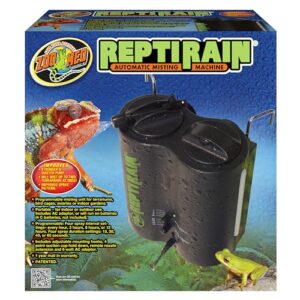
The Zoo Med Reptirain fixes the timer problem. It programs spray cycles every 1, 3, 6, or 12 hours. Durations run 15 to 60 seconds. It runs on a 6-watt AC adaptor or 4 C batteries, so it works during power outages. The remote nozzle extension covers two enclosures.
Watch the weak points. The output is a stream, not a fine mist. The reservoir is small, and there is no auto shut-off when it runs dry. Pump failures within 30 days have been reported.
| Best For | Reptile keepers who want hands-free, programmable humidity control for one or two terrariums and need a mister that keeps running even during power outages. |
|---|---|
| Tank Capacity | Unspecified small |
| Mist Type | Pressure spray stream |
| Mist Output | Adjustable intervals |
| Delivery System | Remote nozzle extension |
| Power Source | AC or 4 C batteries |
| Auto Shut-off | No |
| Additional Features |
|
- Flexible scheduling with spray cycles every 1, 3, 6, or 12 hours and adjustable durations from 15 to 60 seconds
- Dual power options — runs on the included 6-watt AC adaptor or 4 C batteries for portable use and backup during outages
- Versatile setup with adjustable mounting hooks, a suction cup base, and a remote nozzle extension that can cover two enclosures
- Output is a stream rather than a fine mist
- Small reservoir requires frequent refills, and there’s no auto shut-off when the water runs dry
- Durability concerns, including reported pump failures within 30 days of use
8. PETSPIONEER Reptile Humidifier Fogger
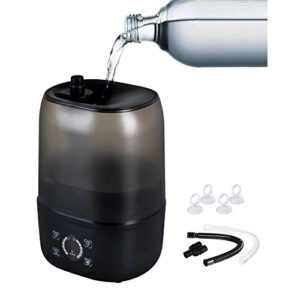
The PETSPIONEER switches back to fog. It holds 4 liters and outputs 100, 200, or 300 ml per hour. Digital timing lets you set mist frequency, interval, and duration. The memory function keeps your settings after power cuts.
Two hoses extend from 1.3 to 5.3 feet, so one unit covers two zones. Top-fill refills take seconds.
Know the risks. Condensation can pool in the tubing. Some units fail after 5 to 8 months, and the low water alarm may quit.
| Best For | Reptile and amphibian owners who need precise humidity control across multiple enclosures or vivarium zones. |
|---|---|
| Tank Capacity | 4L |
| Mist Type | Ultrasonic cool mist |
| Mist Output | 100–300ml/hr |
| Delivery System | Dual extendable hoses |
| Power Source | AC adapter (ETL) |
| Auto Shut-off | Yes |
| Additional Features |
|
- Digital timing lets you customize misting frequency, interval, and duration — and the memory function keeps your settings even after a power outage
- The dual hose system (extendable up to 5.3 feet) lets one unit humidify two separate zones at once
- Top-fill 4-liter reservoir makes refilling quick and easy without any disassembly
- Condensation can build up in the tubing, reducing output or causing leaks over time
- Some users report the unit failing after just 5–8 months of regular use
- The low water alarm may stop working with age, so you’ll need to keep a manual eye on the water level
How to Set Up Your Snake Humidifier
Getting your humidifier set up right makes a big difference in how well it works for your snake. Placement, timing, and a few simple tools are all it takes to dial things in. Here’s what you need to know to get everything running smoothly.
Optimal Placement in Small Enclosures
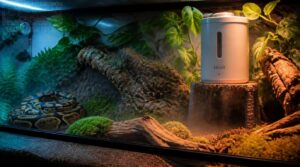
Place your humidifier near the warm side of the enclosure to get the most evaporation. Keep it 2 to 3 inches above the substrate so mist drifts downward naturally.
Stay 2 inches from the doors to prevent direct spray on your snake. Raise it on a stable stand. Don’t place it under basking lights. The heat dries mist too fast.
Hose and Nozzle Positioning Tips
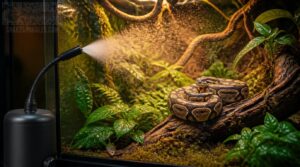
Route the hose along the tank edge and angle the nozzle at 45 degrees toward the center. A 360-degree spray nozzle covers all zones without repositioning.
Keep hose diameter wide enough to prevent kinks. A short nozzle extension lifts mist above substrate. Models with an easy cleaning design save maintenance time. A tipover protection system keeps alignment locked if bumped.
Setting Mist Intervals and Duration
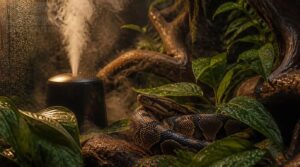
Getting your mist intervals right keeps humidity stable. Most humidifiers use a timed spray function with a built-in timer function to set cycles from 15 minutes to 2 hours. Start at 30 minutes and adjust.
Intermittent mist timing prevents pooling in small tanks. Use spray interval control to fine-tune output. Smaller droplets from mist particle size optimization spread moisture evenly.
Pairing With a Hygrometer
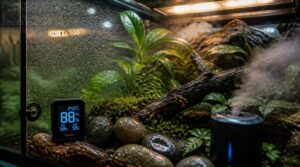
Your humidifier works best when paired with a digital hygrostat. Set it at snake height, away from direct spray, so readings stay accurate.
Hygrostat connection links your humidifier to live sensor data. This automates relative humidity control for you. Humidity drops, it mists. Target reached, it stops.
That’s smart humidity control. Calibrate to within 5% for the humidity regulation reptiles need.
Cleaning and Maintaining Your Reptile Fogger
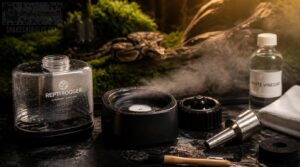
Even the best fogger will fail without regular care. Hard water deposits and bacteria build up fast inside tanks, hoses, and nozzles. The four steps below cover cleaning schedules, water choice, clog prevention, and membrane replacement.
Recommended Cleaning Schedule
A clean fogger works better and lasts longer. Weekly maintenance keeps mist flowing strong. Wipe the tank and hose with a vinegar solution to stop nozzle clogging.
Every two weeks, deep clean the reservoir and tubes. Any water type works fine, but minerals build up fast. Mark each cleaning date on your calendar. Easy cleaning now prevents big problems later.
Distilled Vs. Tap Water for Foggers
Tap water contains minerals that coat your fogger’s parts over time. Distilled water has almost none. That’s why distilled water for foggers wins for daily use. It prevents mineral buildup and keeps mist strong.
Even so, tap water works in a pinch. Expect faster scaling and more cleaning. Distilled costs more per gallon, but it protects your device long term.
Preventing Nozzle Clogs and Buildup
Distilled water helps, but clogs can still form. Wipe the nozzle weekly with a soft brush. Check the tip for tiny scratches that trap deposits. A leakproof design keeps water flowing one way, which stops debris from backing up.
Choose polished nozzle types with smooth passages. This is mineral buildup prevention. Your ultrasonic transducer stays clear, and mist stays strong.
Replacing Ceramic Membranes When Needed
Brushing helps, but membranes wear out. Most ceramic membrane discs last 6 to 12 months. Hard water cuts that by 25 to 40 percent. Look for pitting or dark spots. Replace when mist drops 20 percent over 6 hours. Keeping a spare ceramic membrane disc set on hand means you can swap it out the moment mist output dips, with no gap in humidity for your reptiles.
Order matching replacement parts, same pore size, before your reptile humidifier fails. Good maintenance keeps terrarium humidity steady. Log each swap.
Safety Features Every Snake Humidifier Needs
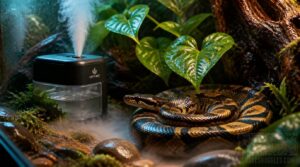
A humidifier often runs for hours while you’re away, so safety features matter as much as mist output. A unit without basic protections can burn out overnight and leave your snake’s enclosure dry. Check these four features before you buy anything.
Auto Shut-Off for Tank Protection
An auto shut-off stops misting the moment your tank runs low. You don’t want a burned-out pump. It boosts power efficiency too. Look for dry-run protection as well. This safety feature shuts the unit off within 0.5 to 2 seconds of detecting low water.
Both features prevent leaks in your reptile gear. They also protect your tank capacity from overfilling.
LED Indicators for Water Levels
LED indicators show your water tank status at a glance. Red means refill now. Yellow means the tank sits half full. Green means full capacity. Some models add indicator light alerts for overflow. A water level sensor triggers each color.
Choose units with topfill convenience. You refill without moving the fogger. Check the LED display daily before misting cycles start.
Voltage Compatibility and Power Range
Before you plug in any fogger, check the label. Most units accept 100 to 240 volts with voltage autosensing. That means the power input adjusts to your outlet safely. Match the plug to your wall, or use an adapter.
Look for overload protection too. It cuts power during a surge or short. A voltage protection plan guards your snake’s habitat.
Warranty and Replacement Coverage
When a fogger fails, warranty coverage saves you money. Most brands offer a 90-day to one-year warranty period. Some sellers extend warranty protection plans for an extra fee. Check what’s covered. Filters and membranes often aren’t included.
Good customer service matters too. Reliable brands ship replacements within days. Pair that with a dry-run safety feature, and your setup stays safe.
Choosing The Right Humidifier for Your Setup
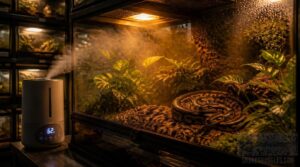
Not every humidifier fits every setup, and the right choice comes down to your budget, how many enclosures you’re running, and where you’re plugging it in. The sections below break it down so you can match the right unit to your exact situation. Here’s what to look for before you buy.
Best Picks for Budget-Conscious Owners
Spending less doesn’t mean caring less. The Coospider 3.8L is a solid budget reptile humidifier with a 3.8-liter tank. The Vivosun works as an affordable reptile fogger for tanks up to 20 gallons. The Repti Zoo 4L is a low-cost terrarium humidifier covering enclosures up to 40 gallons. These reptile misters under $30 are top budget snake enclosure humidifier picks.
Single Vs. Multi-Enclosure Options
One snake, one enclosure? A single-piece water reservoir controls that easily. You get simpler wiring, centralized refills, and stable humidity control automation without extra equipment.
If you keep multiple snakes, multienclosure humidification takes more planning. Each terrarium setup may need its own fogger. That means separate adjustable mist output settings per tank.
Start simple. Add units as your collection grows.
Top Choices for Beginner Snake Keepers
Starting fresh as a snake keeper? The Repti Zoo 4L Humidifier gives you room to grow, with adjustable output control and suction cups for easy nozzle placement.
Smaller tanks do well with the Exo Terra Mini Humidifier. It’s compact, simple, and stays quiet.
The Zoo Med Repti Rain Humidifier controls programmable intervals, taking the guesswork out of daily humidity management.
Power and Electrical Considerations
Most reptile humidifiers run on 110 to 120 volts. Always check yours before plugging in.
Here are four electrical basics to confirm:
- Voltage requirement matches your local outlet
- Plug compatibility works with your socket type
- Power cord length reaches your enclosure without strain
- Dry-run safety feature shuts the unit off automatically
Energy efficient misting also helps keep overall wattage low.
Frequently Asked Questions (FAQs)
How to keep humidity up in a snake enclosure?
A misting system for reptiles keeps reptile enclosure humidity steady. Use substrate moisture retention materials like coconut fiber. Track levels with a hygrometer. Your vivarium environment needs humidity levels between 60 and 80 percent.
Can you put a humidifier in a snake tank?
Yes, you can put a humidifier in a snake tank. Reptile-specific foggers and misters are designed for this. They help maintain the 50–60% humidity your snake needs to shed and stay healthy.
How to get humidity up in a snake tank?
Raise humidity by misting the enclosure daily and adding a damp hide. Use a reptile fogger or misting system, and cover part of the screen lid to trap moisture effectively.
What is the best room humidifier for reptiles?
A dedicated reptile humidifier beats any room humidifier. Room-level ambient humidity spreads too thin and can’t target your enclosure. Choose an ultrasonic humidifier built for reptiles instead.
Can humidifiers cause mold growth in small enclosures?
Humidifiers can cause mold. When humidity climbs above 60% in a small space, moisture builds fast on surfaces. Condensation on glass, wet substrate, and poor airflow create the perfect conditions for bacterial and fungal growth.
Do snake humidifiers work with bioactive setups?
They work in bioactive dart frog vivariums, and they support any bioactive terrarium just as well. Short timed bursts keep bioactive enclosure misting safe, protecting bioactive setup compatibility and substrate moisture prevention for healthy roots.
How does ambient room humidity affect enclosure levels?
Your room’s ambient room humidity directly affects enclosure humidity levels. Dry rooms pull moisture out faster, forcing more frequent enclosure misting. High-humidity rooms reduce that demand noticeably.
Can humidifiers stress snakes with sensitive temperaments?
Easy does it. Noise levels from a reptile fogger and sudden enclosure misting can stress sensitive snakes. Use automated misting schedules with slow ramp-ups and stay current on humidifier maintenance to keep reactive snakes calm.
Are reptile humidifiers safe around young children?
Yes, but placement and supervision matter. Keep the unit on a high, stable surface out of reach, secure all cords along walls, and always choose a model with auto shut-off to prevent leaks and spills.
Conclusion
A keeper once watched her ball python shed perfectly for the first time after adding a fogger. No stuck scales. No worried soaking sessions at midnight.
Snake humidifiers for small enclosures do one thing well: they hold the line when small spaces can’t hold moisture on their own. Pick the right unit, set it up correctly, and your snake gets exactly what it needs every single day. Stable humidity isn’t a luxury. It’s the baseline.
- https://www.animalsathome.ca/how-to-increase-humidity-in-a-terrarium
- https://www.lllreptile.com/library/care-and-husbandry-articles/increasing-cage-humidity
- https://tsi.com/indoor-environments/learn/understanding-the-hazards-of-aerosols-and-dust-in-the-workplace
- https://www.hse.gov.uk/lung-disease/a-z.htm
- https://www.condairgroup.com/know-how/relative-humidity