This site is supported by our readers. We may earn a commission, at no cost to you, if you purchase through links.

You lift your snake to check its enclosure and spot a flush of red across its belly. Your stomach drops. That color can mean a damp corner that went unnoticed for a week, a heat rock that burned scales in minutes, or mites feeding where you can’t see them.
A snake belly turning red is rarely cosmetic. It’s your snake’s earliest warning, and the difference between a simple fix and septicemia often comes down to days.
Here’s how to tell which cause you’re facing, which signs mean you should call your vet today, and how to keep that belly healthy.
Table Of Contents
- Key Takeaways
- Why is My Snake’s Belly Turning Red?
- Is Belly Redness Normal Before Shedding?
- When Does Belly Redness Need Urgent Veterinary Care?
- How is a Snake’s Red Belly Treated?
- How Can You Prevent Snake Belly Redness?
- Frequently Asked Questions (FAQs)
- What are the symptoms of scale rot in snakes?
- What are the symptoms of a red belly black snake bite?
- Why are my snakes underbelly pink?
- What snakes have a red belly?
- Can red belly spread to other snakes?
- Does belly redness affect my snakes appetite?
- Which snake species are prone to belly redness?
- How long does belly redness take to heal?
- Can bathing help a snake with red belly?
- Conclusion
Key Takeaways
- A red snake belly is rarely cosmetic, and it usually points to scale rot, heat burns, mites, or a bloodstream infection, so you shouldn’t guess which one without a vet’s help.
- Mild, flat, symmetrical pinkness just before a shed can be normal, but redness that spreads, darkens, or comes with sores isn’t.
- Call a reptile vet the same day if redness comes with lethargy, refusing food, open-mouth breathing, or red-purple scales, because septicemia can kill within days.
- Prevent most cases by keeping the enclosure clean and dry, using a thermostat with safe heating, holding proper humidity, and quarantining new or sick snakes.
Why is My Snake’s Belly Turning Red?
A red belly on your snake can signal anything from a harmless color change to a serious medical problem. You need to know which one you’re dealing with before you decide what to do next. Here are the four main causes of snake belly redness to check for in your own animal.
If you also notice swelling or blisters along the belly or sides, compare them against these snake skin infection symptoms to judge how urgent the problem is.
Scale Rot and Skin Infections

A red belly often points to scale rot, and you shouldn’t ignore it. Damp, dirty enclosures let bacterial infections take hold on the ventral scales, causing red, brown, or yellow patches, crusty or swollen scales, and sores. Fungal infections can look similar.
Switch to proper substrate, keep the enclosure clean, and see a reptile veterinarian quickly. Untreated scale rot can lead to secondary infections and septicemia, which is why antibiotics from a vet are usually required for healing.
Heat Burns and Substrate Irritation

Not every red belly comes from infection. Heat burns are a common cause. Heat rocks and unregulated mats can cause thermal injury, and your snake may not feel it. Always use a thermostat and safe heating elements.
Substrate irritation matters too. Pine, cedar, gravel, and rough decor scrape ventral scales. Choose smooth substrate and keep proper temperature and humidity.
Mites and Skin Inflammation

Irritated skin isn’t always from your setup. Snake mites feed on blood and trigger skin inflammation, often as parasitic dermatitis around the chin, vent, and belly. Look for:
- Black specks moving on scales
- Grey debris in the water bowl
- Snake soaking longer than usual
Parasitic infections spread fast, so strengthen enclosure hygiene today and call your exotics vet promptly.
If you notice swelling, discolored gums, or cheesy buildup in your snake’s mouth, this guide on when to see a vet for snake mouth rot can help you judge how urgent it is.
Septicemia and Systemic Illness
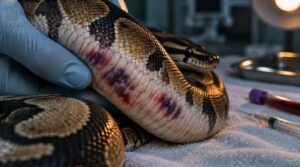
Mite bites and untreated skin damage can let bacteria into your snake’s bloodstream. That’s septicemia, a life-threatening systemic illness. Don’t wait. Book a veterinary examination for blood work and antibiotic therapy.
Septicemia can kill within days. Early treatment gives your snake the best chance.
| Sign | What it means |
|---|---|
| Purple belly | Bleeding under scales |
| Open-mouth breathing | Severe infection |
| Lethargy | Early warning |
Is Belly Redness Normal Before Shedding?

Because shedding changes your snake’s appearance, Understanding Snake Shedding and Redness helps you spot what’s normal. Before a shed, your snake’s skin dulls across the whole body, and the belly may flush a mild pink. The eyes often turn blue, and your snake may hide more and eat less. This pink tint is symmetrical, flat, and fades once the old skin comes off.
If you want to see how each stage unfolds from dull skin to a clean shed, this snake skin shedding process explained guide walks you through it step by step.
Proper Shedding depends on humidity and a stable environment. A Naturalistic Substrate, such as cypress mulch or coconut fiber, holds moisture and gives your snake surfaces to rub against. Environmental Enrichment, like rough branches and a humid hide, encourages natural movement.
Shedding Assistance should stay gentle. Raise humidity, offer a soak, and never peel stuck skin off.
When Does Belly Redness Need Urgent Veterinary Care?

You shouldn’t wait on belly redness when your snake also looks sick. Mild pinkness alone can often be watched, but red scales paired with other symptoms point to septicemia, a bloodstream infection that moves fast.
Call a reptile vet the same day if you see:
- Lethargy, weakness, or refusing food
- Open-mouth breathing, wheezing, or bubbles at the nostrils
- Red-purple scales with trouble lifting the head
- Tremors, seizures, or sudden collapse
Redness from burns, poor temperature regulation, or parasitic dermatitis can also need a veterinarian examination when sores appear, the color spreads, or it doesn’t improve after husbandry changes. Skip home antibiotics and improvised wound care until a professional has looked closely. Delays beyond 24 hours can sharply cut survival odds.
How is a Snake’s Red Belly Treated?

Treating a red belly starts with finding the cause, and you can’t safely guess your way there. The steps below show how a proper treatment plan usually works, from the first vet visit to follow-up care. Read them in order so you know what to expect and what your part is.
Veterinary Examination and Diagnostic Tests
A red belly isn’t something you can diagnose by eye. A Veterinary Examination starts with a thorough Physical Examination, where your vet checks scales, mouth, vent, and hydration.
Next comes Diagnostic Skin Scraping to spot mites. A Culture and Sensitivity Test identifies bacteria and the right antibiotic. Blood Work reveals whether the infection has spread, so please don’t skip it.
Safe Supportive Care at Home
Picture a ball python with pink, blotchy belly scales and a damp substrate that hasn’t been changed in days. You can’t wait on a vet slot without protecting him, so start Safe Supportive Care at Home now.
- Clean Enclosure: paper towel, changed daily
- Best Temperature and Humidity: 78–92°F, 50–60% humidity
- Proper Substrate: dry, spot-cleaned immediately
- Regular Health Checks: inspect scales daily
Vet-Prescribed Medications and Follow-Up
Never guess at medication. Your vet chooses the drug after cultures, drawing on Veterinary Dermatology expertise.
| Cause | Medication |
|---|---|
| Bacterial rot | Antibiotics |
| Fungal rot | Antifungals |
Mites need Antiparasitic Medications. Courses run 4 to 8 weeks, so don’t stop early. Give every dose. Your snake may also need pain relief like meloxicam while ulcers heal. Rechecks keep Treatment and Prevention on track.
How Can You Prevent Snake Belly Redness?

Most belly redness starts with a husbandry slip, not bad luck. Preventive husbandry is your strongest defense, and it costs far less than a vet bill.
Most belly redness comes from a husbandry slip, not bad luck, and prevention costs far less than a vet bill
Start with these four habits:
- Maintain Ideal Temperature and Humidity: a basking spot near 90°F, ambient temps of 85-87°F, and 50-60% humidity for ball pythons. Check with digital gauges.
- Keep a Clean Enclosure. Spot clean daily and replace substrate weekly.
- Follow Quarantine Protocols for every new snake, and isolate sick ones right away.
- Stick to weekly Enclosure Hygiene: disinfect with reptile-safe cleaner, and use diluted bleach monthly.
Rinse everything well.
Skip moisture-trapping substrates like cypress mulch. Inspect your snake’s belly weekly, and wash your hands before and after handling.
Frequently Asked Questions (FAQs)
What are the symptoms of scale rot in snakes?
Picture belly scales gone swollen, crusty, and stained brown. Scale Rot shows as fluidfilled blisters, foul odor, and lethargy.
Visual Inspection spots it early, and diagnostic skin scraping confirms it. Call your vet right away.
What are the symptoms of a red belly black snake bite?
A red belly black snake bite hits hard and fast.
You’ll see bleeding, swelling, and intense pain at the wound, then nausea, vomiting, weakness, and red-brown urine. Skip home wound care. Seek urgent medical help.
Why are my snakes underbelly pink?
Your snake’s pink belly is a warning flare.
Redness on a snakes belly can mean the scale shedding process, but bacterial infection, improper heating, or poor hygiene need ruling out. Have a vet check it.
What snakes have a red belly?
Some species naturally have red bellies. You’ll find them in the red-bellied snake, the red-bellied black snake, and Kirtland’s snake. In these snakes, red is normal. It isn’t a sign of scale rot, burns, or parasites.
Can red belly spread to other snakes?
Could your snake’s red belly threaten your other snakes? It can, if infectious lesions or mites are behind it.
Start a quarantine protocol, tighten environmental hygiene, and limit contagious disease spread and secondary infections.
Does belly redness affect my snakes appetite?
One ball python refused three mice before its keeper noticed the red belly.
Yes, redness suppresses appetite. Scale Rot, Bacterial Infections, and Environmental Stressors cause pain. Immune System Compromise worsens it. Use Proper Handling Techniques.
Which snake species are prone to belly redness?
Ironically, some snakes are born with red bellies, like red-bellied and black swamp snakes. Any captive snake species, though, can develop painful redness from poor Husbandry Practices and Enclosure Design, so ask a Reptile Veterinarian.
How long does belly redness take to heal?
Healing runs on a slow clock.
Wound Healing in Reptiles takes weeks: an Inflammatory Response fades in 3-6 weeks with a Clean Enclosure, Ideal Temperature and Humidity, Topical Creams or Ointments; severe cases need months.
Can bathing help a snake with red belly?
Bathing is a bandage on a leaking pipe. A brief, supervised soak can loosen stuck shed, but it won’t fix a red belly. Scale rot, burns, and mites need a vet, not water.
Conclusion
Picture a pale belly scale gone pink, a small flush you could easily mistake for nothing. That flush is a message. A snake belly turning red points to damp bedding, burns, mites, or infection, and each one has a different fix.
Check your enclosure tonight. Confirm your temperatures, keep the substrate dry, and photograph redness. If it spreads, darkens, or comes with lethargy, call your vet today. Catching it early keeps a small problem small.