This site is supported by our readers. We may earn a commission, at no cost to you, if you purchase through links.

Some morphs grab attention with wild color. The Enchi ball python does the opposite. It strips away black pigment, cleans up the pattern, and lets yellow and orange bleed across the edges, producing a snake that looks brighter with every shed.
First traced to stock from the Enchi region of Ghana, this codominant gene has become a breeder favorite for good reason: it pairs beautifully with everything from Pied to Cinnamon.
Whether you want to understand the genetics, set up an enclosure, or figure out why a Super Enchi can top $2,000, this guide walks you through all of it.
Table Of Contents
- Key Takeaways
- What is an Enchi Ball Python? Origin and Key Traits
- Enchi Ball Python Appearance, Size, and Temperament
- Enchi Ball Python Genetics and Breeding Outcomes
- Enchi Ball Python Care Guide
- Enchi Ball Python Price and Popular Morph Combinations
- Frequently Asked Questions (FAQs)
- What does Enchi do in ball pythons?
- How much does an enchi ball python cost?
- Which ball python morphs to avoid?
- What is the difference between pastel and Enchi ball pythons?
- How big do Enchi snakes get?
- What is an Enchi ball python?
- How to tell if your ball python is enchi?
- Is Enchi a spider morph?
- What to breed an enchi ball python?
- How does the Enchi gene interact with other Ball Python genes?
- Conclusion
Key Takeaways
- The Enchi ball python carries a codominant (incompletely dominant) gene traced to Ghana stock that fades black pigment, boosts yellow and orange, and cleans up the pattern, so the snake actually brightens with each shed.
- Breeding outcomes follow simple ratios: Enchi x normal gives about 50% visual Enchi, Enchi x Enchi yields a 1:2:1 split (25% normal, 50% Enchi, 25% Super Enchi), and Super Enchi x normal produces all visual Enchi.
- Care is standard ball python husbandry: a thermal gradient of 88–92°F basking and 78–82°F cool end, 50–60% humidity (raised to 70% during shed), appropriately sized frozen/thawed rodents, and gentle full-body handling.
- Prices range from $150–$600 for a single-gene Enchi, $700–$1,200 for combos like Enchi Pied or Cinnamon, and over $2,000 for Super Enchis, with documented lineage and multi-gene stacking protecting long-term value.
What is an Enchi Ball Python? Origin and Key Traits
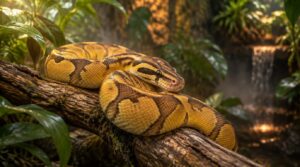
The Enchi ball python is a color and pattern morph first produced from stock traced to the Enchi region of Ghana. Breeders stabilized the look through selective pairing, and it’s now a foundation morph in the hobby.
Because some morphs carry genetic quirks alongside their striking looks, it’s worth reading up on ball python morph health concerns before choosing one.
The Enchi Ball Python Morph carries a codominant gene at the C locus. One copy changes the animal’s appearance; two copies produce the stronger Super Enchi form.
What does the gene actually do? It drives pattern reduction and color enhancement together. Black pigment fades, so the background lightens. Yellow and orange tones expand across the saddles, and cheek markings brighten. The reticulated pattern softens and cleans up as the snake matures.
The Enchi gene fades black pigment while boosting yellow and orange, softening the pattern as the snake matures
Because the gene pairs well with almost anything, Enchi works as a building block morph. You’ll see it combined with pastel, fire, and clown to brighten and simplify complex combos.
Enchi Ball Python Appearance, Size, and Temperament
You’ve seen what the gene does. Now let’s look at what the snake actually looks like, how big it gets, and how it behaves.
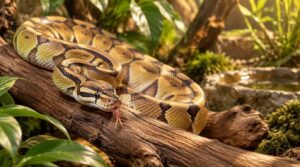
The Enchi ball python shows clean pattern reduction with brightened saddles. Expect faded black bands after each shed, plus expanded yellow tones along the pattern edges. Drier conditions during growth sharpen contrast. Adults usually reach 4.5 to 5.5 feet, and females often outgrow males under identical care.
Watch these five things as your snake matures:
- Darkening base color in the subadult stage
- A lighter belly that stays bright
- Blotch shapes ranging from connected to broken lines
- Calmer behavior after 3–6 weeks of regular handling
- Stable coloration once fully grown
Snake temperament matches the wild type, though juveniles can be nervous. Heavy breathing, hissing, or tail-waving signal stress from poor enclosure setup or feeding delays.
Once your snake settles in, gentle handling with slow movements helps build trust, and these ball python handling techniques for kids show how to keep interactions calm and safe.
Enchi Ball Python Genetics and Breeding Outcomes
The Enchi gene follows incomplete dominance, so what you breed determines what you hatch. You’ll want to know the difference between a single-gene Enchi and a Super Enchi before planning pairings. Below, you’ll find the genetics broken down, along with the odds for each pairing outcome.
Single-Gene Enchi
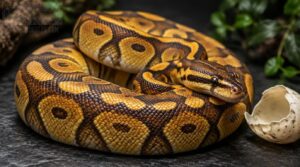
Take a normal ball python paired with an Enchi. Half the clutch carries one copy of the gene, and those hatchlings show the trait right away. That’s a single-gene Enchi: one allele, visible phenotype.
In ball python morph genetics, this codominant pattern means you don’t need two copies to see results. Expect brighter gold tones, cleaner pattern edges, and stronger contrast. Genetic inheritance stays simple here.
Super Enchi
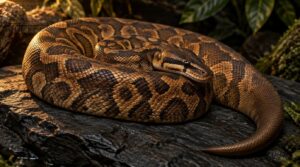
Breed two Enchis together and you can hit the jackpot: the Super Enchi. This form carries two copies of the gene, and it shows.
Expect:
- Deeper chocolate-bronze ground color
- Heavy dorsal and tail pattern disruption
- A tessellated, almost "giraffe" look
Some lines show variable expression, so not every double-gene hatchling looks identical. Still, Super Enchis command a premium in ball python pricing, and they anchor many high-contrast ball python morph combos you’ll see among Enchi Ball Pythons for Sale.
Enchi Pairing Odds
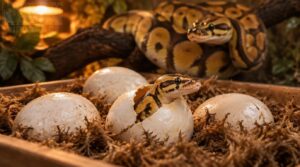
Pairing odds in ball python breeding depend on parental zygosity. If you breed a heterozygous Enchi to a wild-type, expect roughly 50% Enchi offspring. Enchi x Enchi gives a classic 1:2:1 ratio: 25% wild-type, 50% Enchi, and 25% Super Enchi. A Super Enchi x wild-type pairing yields all visual Enchi.
Remember, each egg is an independent roll, so small clutches rarely match exact morph probability. Track every genetic marker and pedigree to sharpen predictions for future morph combinations.
Enchi Ball Python Care Guide
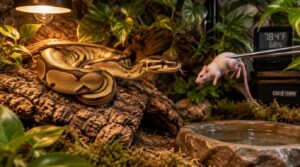
Enchi ball pythons aren’t hard to keep, but they need the right setup from day one. Your snake’s health depends on four things: its enclosure, heat, humidity, and diet. Get these right and you’ll have a hardy animal that colors up beautifully with age.
Enclosure and Substrate
Your Enchi’s enclosure shapes everything else. Start with a 36-inch tub or vivarium for adults, 18–24 inches for hatchlings. Pick coconut fiber or aspen, 3–6 inches deep, so burrowing stays easy. Add vertical hides, climbing branches, and a shallow water dish.
- Use smooth walls to prevent snags
- Secure the lid; ventilation matters
- Spot-clean daily, deep clean quarterly
- Layer cypress mulch under a dry top for stable enclosure humidity
- Upgrade housing as your snake grows
Solid habitat tank conditions setup prevents stress and stuck sheds.
Temperature and Humidity
Picture condensation beading on the cool glass at dawn while the basking side holds steady warmth. That balance is your climate control goal.
| Zone | Target | Check |
|---|---|---|
| Basking | 88–92°F | Daily |
| Cool end | 78–82°F | Daily |
| Humidity | 50–60% | Weekly |
Build a thermal gradient with a thermostat. Bump humidity levels to 70% during shed. Ventilate to prevent mold. Log readings weekly.
Feeding and Growth
A hatchling fed appropriately sized mice every 5–7 days can double its weight by six months. Match your prey size to the widest part of your snake’s body, about 0.8–1.0 times its girth.
Keep your rodent feeding schedule consistent: every 5–7 days for hatchlings, every 7–10 days after six months, and every 10–14 days for adults. Use frozen and thawed small rodents when possible. Growth slows naturally as your snake matures, so adjust feeding frequency by body condition.
Handling and Health
Good handling starts with support. Hold the full body, never the tail. Keep sessions short and slow, especially after feeding or during shed.
Watch for stress signals: hiding, striking posture, or going limp. End the session if you see them.
Check weekly for Respiratory Infections, Mouth Rot, and mites. Consistent warmth prevents most illness. Quarantine new animals before handling them near your collection.
Enchi Ball Python Price and Popular Morph Combinations
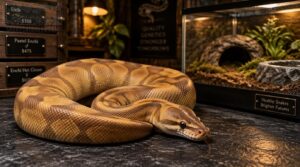
Wondering what you’ll actually pay for one? A standard single-gene Enchi Ball Python runs $150 to $600. Popular genetic combinations push the price higher. Enchi plus Cinnamon or Enchi plus Pied usually lands between $700 and $1,200, depending on lineage. Super Enchi projects from reputable breeders often exceed $2,000.
Several factors shape your final ball python cost:
- Breeder reputation and documented lineage
- Phenotypic quality, like belly islets or head stamps
- Seasonal availability, with post-hatch dips
- Age, since sub-adults cost less than proven hatchlings
- Shipping and health guarantees, adding $20 to $40
Verify genetics with paperwork before you buy. Confirm feeding readiness and a clean vet check. Multi-gene morph stacking holds resale value better, so treat your purchase as a long-term investment.
Frequently Asked Questions (FAQs)
What does Enchi do in ball pythons?
The Enchi gene brightens your snake’s coloration. It reduces dark outlining, intensifies yellows and reds, and blends pattern blotches smoothly. As a single-gene ball python morph, it’s an incompletely dominant trait, meaning one allele produces the effect.
How much does an enchi ball python cost?
A snake’s pattern tells a story, and Enchi’s is prized. Expect standard Enchi ball pythons at $150 to $600. High-grade or combo morphs from reputable reptile vendors run $700 to $1,500.
Which ball python morphs to avoid?
You might assume all morphs carry health risks, but most don’t. Avoid spider and woma for head-wobble, and cull-suspect combos like super spider. Check each morph’s genetic stability before buying.
What is the difference between pastel and Enchi ball pythons?
Pastel and Enchi are separate genes in ball python genetics. Pastel brightens yellows and creams, while an enchi ball python deepens reds and oranges. Each morph coloration pattern differs, so pairing them produces richer contrast.
How big do Enchi snakes get?
Your Enchi ball python follows standard ball python size rules. Males reach 120–150 cm, females 140–180 cm. Good reptile husbandry, consistent feeding, and solid health help them hit full Adult Size within 2–3 years.
What is an Enchi ball python?
You’ll recognize an Enchi ball python by its golden sides, warm brown dorsals, and pattern reduction. This co-dominant ball python morph brightens with age, making its color enhancement valuable for building new morph coloration patterns.
How to tell if your ball python is enchi?
Picture a python glowing like sunset amber instead of muddy brown. That’s your clue. Check for golden sides, a blushed crown, bold yellow eye stripes, and reduced alien-head spots. Breed to a normal; Enchi offspring confirm it.
Is Enchi a spider morph?
Two different paintbrushes on the same canvas. Enchi is not Spider. They’re separate genes in ball python genetics. Your Enchi ball python traces to Ghana stock; Spider comes from an unrelated founder. Enchi morph genetics never produce Spider’s wobble.
What to breed an enchi ball python?
Take a male Enchi paired with a female pastel: expect roughly half Enchi pastels with boosted yellows. For Super Enchi offspring, breed Enchi to Enchi. Pastel, banana, and Fire pairings strengthen color enhancement through smart morph selection.
How does the Enchi gene interact with other Ball Python genes?
Enchi works like a filter over other genes. Paired with Fire or Pastel, it deepens golds and reduces busy markings. With Mojave or Ultramel, it boosts lavender tones. Super Enchi (homozygous) intensifies contrast further.
Conclusion
Ultimately, the Enchi ball python succeeds by doing less, not more. It cleans up a normal’s pattern and brightens it with every shed, then plays well with almost any other gene.
Whether you buy a single-gene animal for $100 or chase a Super Enchi combo, you’re working with a morph that rewards patience.
Get the husbandry right, pick your pairings carefully, and the results speak for themselves.