This site is supported by our readers. We may earn a commission, at no cost to you, if you purchase through links.

A corn snake can live 15 years or more, which means the tiny hatchling in the pet store today becomes a four-foot companion through college graduations, apartment moves, and everything in between. That’s the part most beginners miss.
Corn snake pet ownership looks easy on the surface, and honestly, it is one of the most forgiving reptile hobbies you can start. But forgiving isn’t the same as easy. Temperature gradients, feeding schedules, and enclosure hygiene all shape whether your snake thrives or merely survives. You want thrives.
So here’s everything you need, from tank setup to thawed mice, laid out step by step.
Table Of Contents
- Key Takeaways
- Is a Corn Snake The Right Pet for You?
- How Do You Set Up a Corn Snake Habitat?
- What and How Often Should Corn Snakes Eat?
- How Do You Keep a Corn Snake Healthy and Its Terrarium Clean?
- How Should You Handle and Bond With a Corn Snake Safely?
- Frequently Asked Questions (FAQs)
- Can you own a corn snake as a pet?
- What’s the friendliest snake to own?
- Can a corn snake be left alone for a week?
- Do corn snakes get attached to their owner?
- Are corn snakes good pets?
- Are corn snakes legal to own as pets?
- How long do corn snakes live in captivity?
- Do corn snakes need a vet?
- Are corn snakes easy to care for?
- How much does a corn snake cost?
- Conclusion
Key Takeaways
- Corn snakes are forgiving, docile beginner pets, but they’re a 15+ year commitment, growing to 4–5 feet, so plan for the long haul before buying.
- Habitat success hinges on a 20–40 gallon secure enclosure with a proper temperature gradient (78–82°F ambient, 88–92°F basking), 40–60% humidity, and 2–4 inches of aspen or cypress substrate.
- Feed appropriately sized thawed mice on an age-based schedule—every 5–7 days for hatchlings stretching to 10–14 days for adults—and avoid handling for 48 hours after meals or around sheds.
- Most corn snake health problems stem from enclosure issues rather than genetics, so daily spot-cleaning, temperature checks, fresh water, and annual reptile vet visits put the outcome largely in your hands.
Is a Corn Snake The Right Pet for You?

Choosing the right pet is a big deal, and corn snakes check a lot of boxes. Before you commit, there are four key factors worth thinking through honestly. Let’s walk through each one.
If you’re wondering how those calm temperaments translate into everyday interaction, this guide to safe snake species handling breaks it down step by step.
Temperament and Beginner Suitability
If you want a snake that won’t bite your confidence, the corn snake delivers. Its docile temperament makes it a top beginner-friendly pet. Imagine this:
- A calm body resting in your palm.
- Slow, deliberate movements.
- A gentle touch during short sessions.
- Relaxed tongue flicks, not stress indicators.
Master basic handling techniques, and you’ll build trust fast.
Size, Lifespan, and Commitment
That gentle friend grows up fast. Expect a Corn Snake size of 4 to 5 feet within 18 to 36 months, so upgrade your Corn Snake enclosure as it stretches.
Tracking each growth spurt is easy with a corn snake size chart, so you always know when it’s time for a bigger home. And as your snake grows, keep an ear out for breathing changes — this guide to corn snake clicking sounds explains what’s normal and when to call a vet.
Here’s the real deal: a Corn Snake lifespan of 12 to 15+ years means you’re signing up for the long haul.
Keep Corn Snake feeding consistent, temps steady at 78 to 84°F, and you’ll enjoy years of trust together.
Ownership Costs and Budgeting
Corn Snake cost adds up, so plan ahead. Your initial setup costs run $150–$300. Then budget smart:
- Monthly care: $15–$25
- Frozen rodent diet: $1–$3 per feed
- Annual veterinary and care expenses: $50–$150
- Substrate yearly: $40–$120
- Emergency fund: 1–2 months of expenses
Track spending, split it 60/20/20, and you’re golden!
Morphs and Breeder Selection
Now the fun part: picking your snake! Corn Snake morphs range from common Snows ($50–$150) to designer patterns topping $1,000. Match your budget, then vet your breeder reputation carefully.
Before you fall in love with a pricey morph, it helps to see what a typical corn snake actually costs, since even basic healthy hatchlings make wonderful pets.
Ask for genotype proof, health records, and health guarantees of 14–30 days. Reputable sellers document lineage, protecting genetic diversity and ensuring your color morphs are honestly labeled. Choose wisely!
How Do You Set Up a Corn Snake Habitat?
When you bring your corn snake home, the terrarium setup makes or breaks everything. Get it right, and your snake thrives. Get it lazy, and you’ll battle stress and health issues.
Here’s your five-step foundation:
- Choose a 20–40 gallon enclosure with a secure lid. Escape artists, these guys.
- Layer 2–4 inches of aspen or cypress mulch for burrowing. Skip cedar and pine.
- Build a temperature gradient: 78–82°F ambient, 88–92°F basking, 70–75°F at night. Thermostat, always.
- Nail humidity regulation at 40–60%, bumping to 60–70% during sheds. Add a moist hide.
- Furnish two hides, a climbing branch, and a shallow water bowl you refresh daily.
Check your heater daily. Your snake will thank you with calm, curious behavior.
What and How Often Should Corn Snakes Eat?

How often should dinner show up? Your feeding schedule depends on age. Hatchlings eat every 5–7 days, subadults every 7–10 days, and adults every 10–14 days. Simple, right?
Stick with freshly thawed frozen mice sized to your snake’s thickest point. Here’s why that rule matters:
- Too big? You risk regurgitation.
- Too small? Growth stalls.
- Just right? A confident, thriving snake.
Make every feeding frequency adjustment based on appetite and body condition, not just the calendar. Skip meals near a shed, when your snake’s vision fades and stress climbs. After eating, hands off for at least 48 hours so digestion proceeds undisturbed.
How Do You Keep a Corn Snake Healthy and Its Terrarium Clean?
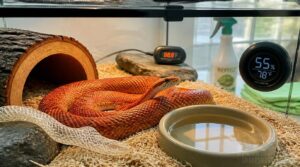
Here’s a number that should grab you: reptile veterinarians report that the majority of corn snake health problems trace back to enclosure issues, not genetics. That means you control most of the outcome. Nice, right?
Most corn snake health problems stem from enclosure issues, not genetics—so you control the outcome
Your weekly rhythm looks like this:
- Spot-clean feces and shed daily; swap soiled paper substrate immediately.
- Refresh water on a set schedule to stop biofilm buildup.
- Check your thermostat-controlled heat source and verify temps at the basking surface.
- Confirm humidity allows a one-piece shed, especially during the feeding schedule recovery days.
Deep clean monthly with reptile-safe disinfectant on hides, decor, and tools. Keep airflow steady so nothing stays cold and wet. And never skip the secure lid check; escape artists love an open top. Watch eyes, skin, mouth, and stool. Early beats expensive, always.
How Should You Handle and Bond With a Corn Snake Safely?
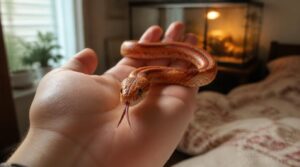
Imagine this: your corn snake glides onto your palm, tongue flicking, muscles rippling like liquid silk. That moment? Totally achievable with the right handling techniques.
Start slow. Slide your hand under the midsection, lift gently, and never grab the tail. Keep sessions short, two to three times weekly, so familiarity builds without stress. Wash your hands before and after; scented lotions confuse your snake’s senses.
Follow these snake handling tips:
- Handle away from feeding times and after shedding.
- Move slowly; jerky motions trigger escape reflexes.
- Watch for stress signals: tail shakes, hissing, or flattening mean "wrap it up."
- Support the body fully and supervise kids closely.
These safe handling practices turn nervous flinches into calm exploration. You’ve got this!
Frequently Asked Questions (FAQs)
Can you own a corn snake as a pet?
A corn snake makes a great beginner-friendly pet. It’s calm, rarely bites, and tolerates handling well. Expect a 3–5 foot adult, a 10+ year commitment, and modest setup costs.
What’s the friendliest snake to own?
Thinking snakes can’t be friendly? Think again. The corn snake wins for temperament: calm, curious, and tolerant of Corn Snake handling. Most acclimate within 2–4 weeks, making this beginnerfriendly pet your best bet.
If you’re eventually tempted by something bigger, our guide to boa constrictor snake ownership covers what changes when your snake hits eight feet.
Can a corn snake be left alone for a week?
Yes, you can! Feeding schedule is your real hurdle. Skip the meal, then double-check temperature control, thermostat function, fresh water, and enclosure security. A secure lid plus stable heat means your snake’s fine solo.
Do corn snakes get attached to their owner?
My client’s corn snake, Noodle, glides calmly onto her hand every evening. That’s habituation, not dog-style devotion. Corn snakes learn your scent and routine familiarity, tolerate handling techniques well, but don’t truly bond.
Are corn snakes good pets?
Corn snakes make excellent beginner pets. Their docile temperament means they tolerate handling well, they stay a manageable 4–5 feet, and they live 6–10+ years. Add stunning morphs and simple Corn Snake care, and you’ve got a rewarding, low-drama companion.
Are corn snakes legal to own as pets?
Great news: corn snakes are legal in most places. These North American native snakes are a popular nonvenomous pet. Still, check your state and local wildlife regulations first, since some areas require permits or ban certain species.
If you’re ready to bring home a new pet snake, buying a boa constrictor legally and responsibly means sourcing from a reputable captive-bred breeder who follows regional husbandry guidelines.
How long do corn snakes live in captivity?
How long do corn snakes live in captivity? Longer than most goldfish you’ve "loved," sadly. Expect 15–20 years with proper care. Nail Corn Snake care: right temperatures, sized prey, regular reptile vet visits. Commit accordingly!
Do corn snakes need a vet?
Do corn snakes need a vet? Yes! Find an experienced reptile vet before problems start. Annual vet checkups catch issues early, like a respiratory infection or parasites. Keep up health monitoring, parasite prevention, and call your vet if anything seems off.
Are corn snakes easy to care for?
Are corn snakes easy to care for? Yes! Their docile temperament, simple feeding schedule, and hardy nature make them ideal for beginners. Nail temperature and humidity control, add secure screened lids, and proper care keeps yours thriving.
How much does a corn snake cost?
My neighbor paid $30 for a normal hatchling, then $400 on its setup. Expect a corn snake cost of $20–$200+ by morph, plus $150–$300 for habitat, heat, and supplies.
Conclusion
Etch this into stone: corn snake pet ownership rewards patience more than flawlessness. You’ll miss a feeding someday. You’ll fumble a humidity reading. Your snake will forgive you, because that’s what these resilient little serpents do best.
Keep the heat gradient steady, the water fresh, and your hands slow and gentle.
Fifteen years from now, that hatchling will still be greeting you at the glass. Show up consistently, and thriving isn’t a hope. It’s a habit.