This site is supported by our readers. We may earn a commission, at no cost to you, if you purchase through links.
A ball python refusing food is annoying. A ball python with blistered, blackened scales is a five-alarm emergency. Reptile skin health problems can escalate from a subtle flaky patch to life-threatening tissue death faster than most keepers expect, and the tricky part is that reptiles hide illness until they can’t anymore.
Skin is your animal’s first line of defense against bacteria, fungi, and parasites. When husbandry slips, that barrier fails fast. A soggy substrate, a missing basking spot, or one skipped shed can start a chain reaction most owners don’t catch until the vet bill arrives.
This guide covers exactly what to look for, why it happens, and how to fix it.
Table Of Contents
- Key Takeaways
- Reptile Skin Problem Symptoms That Need Attention
- Common Reptile Skin Disorders and Infections
- What Causes Reptile Skin Health Problems
- Veterinary Diagnosis and Treatment for Reptile Skin Disease
- Preventing Skin Problems With Species-Appropriate Husbandry
- Frequently Asked Questions (FAQs)
- What are the common skin diseases in reptiles?
- What are the top 10 skin diseases?
- What are some common skin disorders and diseases?
- What diseases can humans get from reptiles?
- What happens if a reptile sheds irregularly?
- What factors affect a reptile’s health?
- Why do reptiles shed their skin?
- Do reptiles have scaly skin?
- Is Dysecdysis normal for a reptile?
- Do Reptiles need medical attention?
- Conclusion
Key Takeaways
- Reptile skin problems almost always stem from fixable husbandry mistakes — getting temperature, humidity, and substrate right prevents the vast majority of infections, shedding failures, and parasitic infestations before they start. For owners who spot early warning signs like stuck shed or unusual scales, this guide to common reptile skin issues walks through what each symptom usually means and how to fix the underlying setup.
- Reptile "pus" is a firm, solid mass that antibiotics can’t penetrate, so abscesses require surgical removal, not home draining — incomplete excision is the main reason they keep coming back.
- Blackened or dying scales and blisters are never a "wait and see" situation; both signal rapidly spreading tissue damage that needs immediate veterinary attention, not a habitat tweak and a hopeful attitude.
- Retained shed on toes or over the eyes is a circulation and vision emergency in disguise — if boosting humidity and a warm soak don’t resolve it, your vet needs to step in before permanent damage sets in.
Reptile Skin Problem Symptoms That Need Attention
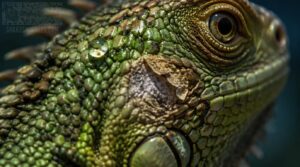
Your reptile’s skin tells you everything. Most problems start small, but a few symptoms mean it’s time to act fast. Here are the warning signs you should never ignore.
From redness and swelling to labored breathing, knowing the full range of reptile and snake disease symptoms helps you catch trouble before it becomes critical.
Blisters
look like small fluid-filled bubbles on your reptile’s skin, and they’re never "wait and see" material. They signal trapped fluid under damaged tissue, often from constant moisture, rough substrate, or friction.
Left alone, they rupture and invite bacterial dermatitis. Check your temperature and humidity levels, fix wet spots, and get gentle wound cleaning guidance from your vet fast.
Pus
Now pus, and here’s the twist: reptile "pus" isn’t liquid. It’s a firm, cheesy lump called a reptile abscess. Your pet walls it off in a capsule, so antibiotics can’t reach it. You’ll see a hard swelling, sometimes oozing yellowish fluid. Don’t squeeze. Don’t drain. These need surgical removal plus culture-guided antibiotics. Incomplete removal of the solid center is the main reason these reptile fibrescesses recur, so full excision matters. Book your vet.
Or Ulcers
Then there are ulcers: open, sunken sores where scales should be. Unlike a sealed abscess, these expose raw tissue, so bacteria and fungi move right in. Watch for lesions on pressure points like limbs and chin.
Persistent reptile skin health sores need culture-guided antimicrobial therapy and often wound debridement. Keep the area dry, fix rough cage fixtures, and see your vet.
Spreading Crusty Patches
Ulcers leave the door open, and spreading crusty skin lesions walk right through it. These dry, scaly patches widen when your reptile rubs or scratches, dragging pathogens onto healthy scales.
Track the clues:
- Patches starting at pressure zones point to poor husbandry.
- Worse after soaking? Moisture is feeding it.
- Spread along scratch paths means mechanical transfer.
- Recurring with each shed signals barrier damage.
Most common reptile skin issues like this need vet cultures, since mixed bacterial and fungal infections are typical. Fix damp hides, boost wound healing, and protect reptile skin health.
Mites Around Eyes
Check your reptile’s eyes. See tiny moving dots or crusty debris at the margins? That’s likely mites, and they love thin, warm skin near the eyes.
Beyond the eyes, watch for restless soaking and ash-gray specks in enclosure corners — all classic warning signs covered in this guide to recognizing snake mite infestation symptoms.
| Sign | Likely Cause | Your Move |
|---|---|---|
| Red, crusted eye margins | Mite feeding | Call your reptile vet |
| Tiny crawlers on the head | Active infestation | Start mite removal now |
| Recurring irritation | Eggs in the enclosure | Deep-clean everything |
Don’t panic. Ectoparasite management works, and proper reptile vet care restores healthy skin fast.
Retained Shed Pieces
Losing a shed in pieces isn’t normal. Retained shed clinging to toes, eyes, or the vent signals reptile dysecdysis, and stuck shed can cut off circulation fast.
Consider this:
- A flaky ring tightening around a toe
- Grayish film clouding an eye
- Crusted bits near the vent
- Dull, patchy scales instead of one clean peel
- A snake dragging half its old skin
Fix humidity control now, and see your vet if swelling appears.
Blackened Or Dying Scales
Picture a patch of your snake’s belly looking exactly like scorched leather. That’s blackened or dying scales, and it’s serious. These signal necrotic dermatitis or a thermal burn, where dead tissue spreads fast.
Poor husbandry, especially unstable temperature and humidity, accelerates the damage. Even dysecdysis can expose raw skin to bacteria. Reptile skin health collapses quickly, so call your vet.
Common Reptile Skin Disorders and Infections
Reptile skin problems usually fall into a handful of distinct, identifiable categories. Knowing which one you’re dealing with changes everything about how you respond. Here are the most common disorders your scaly friend is likely to face.
Mucus discharge is one symptom worth watching closely, and understanding what abnormal nasal discharge in snakes looks like can help you catch a respiratory issue before it turns serious.
Bacterial Infections and Scale Rot
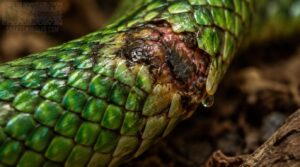
These reptile skin problems can escalate fast. Scale rot starts with wet bedding, a small scrape, and bacteria that don’t wait for your attention. Bacterial dermatitis turns healthy tissue dark and ulcerated before you know it.
Fix the habitat now. Dry it out, strip soiled bedding, and tackle wound cleaning right away. Serious cases need prescription antibiotics from your vet.
Fungal Skin Infections
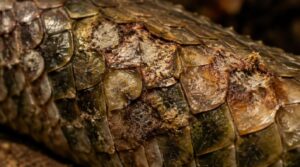
Fungal dermatitis spreads fast on damp, damaged skin. Keratinophilic fungi thrive in warm, moist microclimates, and poor husbandry hands them exactly that environment.
Five signs you’ve got a fungal reptile skin problem:
- Spreading crusty plaques
- Flaky debris between scales
- Irregular expanding borders
- Scale rot that worsens
- Chronic environmental stress
Antifungal treatments plus a full enclosure cleanup stop the reinoculation cycle.
Stuck Shed and Dysecdysis

Stuck shed happens when the outer skin layer doesn’t release cleanly. Dysecdysis and other shedding problems trace back to low temperature and humidity almost every time.
| Area | Risk Level | Quick Fix |
|---|---|---|
| Toes/digits | High | Warm water soak |
| Eye caps | Critical | Vet visit |
| Body patches | Moderate | Boost humidity |
Retained shed on digits can cut off circulation fast. Check your enclosure setup first.
Mites, Ticks, and Parasites

Shed problems aren’t the only thing to watch for. Mites and ticks spread fast through bedding, decor, and direct contact.
Parasite detection starts near the eyes, where ectoparasites cluster on thin skin. Mite removal requires treating the whole enclosure too, not just your lizard. Larvae survive off-host. Miss that and you’re starting over. Tick prevention means sealing every substrate gap.
What Causes Reptile Skin Health Problems

Reptile skin problems don’t just appear out of nowhere. Six primary culprits drive the vast majority of cases, from microscopic pathogens to gaps in your husbandry routine. Here’s what you’re actually dealing with.
Bacterial And Fungal Pathogens
Behind most reptile skin problems sits bacterial dermatitis, fungal dermatitis, or both together.
- Bacteria invade damaged tissue, causing deep necrosis and spreading ulcers
- Fungi spread outward in patches as surface biomass accumulates
- Microbial cultures identify exactly what organism is causing the problem
- Antibiotic treatment won’t clear fungi, so guessing always fails
Knowing which pathogen you’re fighting changes the treatment entirely.
Parasitic Infestations
Pathogens aren’t the only threat. Parasitic infestations bring their own misery. Mites cluster around eyes and skin folds, feeding on blood and multiplying surprisingly fast.
Mite removal means treating both your reptile and the enclosure, or they’ll come right back. Tick prevention follows the same logic. Mites and ticks spend time off-host, so ectoparasite management always targets the whole setup.
Poor Habitat Conditions
Parasites love a bad enclosure, but so do bacteria and fungi. Soggy substrate and poor ventilation break down your reptile’s skin barrier fast. Chronic over-humidity macerates skin, making infection easy.
Temperature and humidity gradients matter just as much. No dry basking zone means skin never fully dries. Poor UVB exposure slows immune response too. Fix the habitat, fix the problem.
Nutritional Deficiencies
Why does your reptile’s skin look persistently dull or just refuse to heal? Vitamin deficiencies and poor reptile nutrition are often the culprits. A skewed calcium phosphorus ratio quietly triggers metabolic bone diseases that drag your overall skin health down. Here’s how nutritional support helps:
- Dust feeders with calcium regularly
- Balance vitamin A carefully
- Vary prey items
- Gut-load insects weekly
Abnormal Shedding
When your reptile’s shed stalls or leaves patchy remnants behind, that’s dysecdysis at work.
Retained shed on the toes tightens like a constricting ring and cuts off circulation surprisingly fast. Stuck shed near the eyes is especially urgent since it easily blocks normal tear distribution.
Low humidity is usually the trigger, so add a moist hide and fix your gradient.
Underlying Systemic Disease
A sick tree bears poor fruit."
Sometimes skin lesions aren’t purely skin problems. Septicemia, Metabolic Bone Diseases, and Secondary renal hyperparathyroidism can all trigger systemic immune suppression, pushing skin infections to the surface.
Your vet uses reptile diagnostics, including bloodwork and imaging, to find the root cause. Treating the skin alone won’t work if something deeper is driving the damage.
Veterinary Diagnosis and Treatment for Reptile Skin Disease
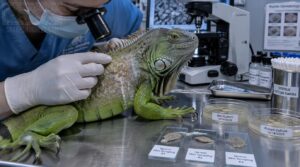
Think of a vet visit as detective work with a microscope. Your exotic animal vet starts with full husbandry history, covering temperatures, humidity, UVB schedules, and recent tank changes, because those details shape every diagnostic decision.
From there, diagnostic testing means skin swabs or scrapings. Microbial cultures identify whether bacteria or fungi are driving the problem. Deeper lesions may need histology to rule out unusual cases.
Debridement techniques clean necrotic tissue from ulcers before antibiotics can work. Treating infected tissue without removing the dead stuff? That’s like painting over rust.
Debridement clears necrotic tissue first—treating infection without removing dead flesh is just painting over rust
Drug choice depends on what’s found. Antibiotic or antifungal selection is targeted, not guesswork. Your vet tracks lesion margins and systemic signs like lethargy to confirm the treatment is working.
Preventing Skin Problems With Species-Appropriate Husbandry

Most skin problems are entirely preventable. Good reptile husbandry starts with matching your setup to your animal’s actual natural environment, not just what’s cool in photos.
Get your temperature gradient right. Your enclosure needs a warm basking zone and a cooler end so your reptile can thermoregulate properly. Poor temps slow shedding and immune response. Add UVB light therapy to support skin turnover, especially for diurnal species.
Habitat humidity matters too. Keep it species-appropriate, not just moist everywhere. Ventilation prevents the stagnant, damp conditions that let bacteria and fungi thrive. Spot-clean your substrate regularly, because waste contact inflames skin fast.
Prevention strategies are genuinely simple: dry substrate, clean surfaces, correct temps, and a vet check at least twice a year.
Frequently Asked Questions (FAQs)
What are the common skin diseases in reptiles?
Your reptile can develop bacterial dermatitis, fungal dermatitis, scale rot, dysecdysis, mite infestations, or skin abscesses. All of these common reptile skin issues create visible skin lesions that clearly tell you something is seriously wrong.
What are the top 10 skin diseases?
Your top ten: scale rot, bacterial dermatitis, fungal dermatitis, reptile abscesses, infectious dermatitis, mites, ticks, retained shed, thermal burns, and nutritional skin deficiencies. Spot them early, and your whole treatment plan gets a lot easier.
What are some common skin disorders and diseases?
Scale rot, fungal infectious dermatitis, dysecdysis, and mites are the big four reptile skin problems. Each one looks different, behaves differently, and needs a different fix, so knowing which one you’re dealing with really matters.
What diseases can humans get from reptiles?
Virtually every reptile is a walking zoonotic risk. Salmonella causes serious gastrointestinal illness, fungal infections like ringworm can spread through direct skin contact, and reptile mites trigger dermatitis. Always wash your hands thoroughly after handling.
What happens if a reptile sheds irregularly?
Dysecdysis, or irregular shedding, leaves old skin stuck in patches all over. That retained shed traps moisture, invites bacteria, and can restrict circulation to digits and toes. Fix humidity first, then soak your reptile gently.
What factors affect a reptile’s health?
Studies suggest over 90% of reptile health issues stem from poor husbandry. Temperature, humidity, diet, and cleanliness drive nearly everything. Environmental stress, parasites, or injuries can turn minor reptile skin problems into serious ones fast.
Recognizing these signs your snake enclosure is too dry early can prevent minor skin issues from escalating into serious infections.
Why do reptiles shed their skin?
Think of it as a built-in wardrobe upgrade. As your reptile grows, its keratin scales get too tight, so a shedding cycle kicks in to swap out worn, old skin for fresh, healthy layers underneath.
Do reptiles have scaly skin?
Over 10,000 reptile species have keratin scales covering their whole body. It’s tough, keratinized skin that actively helps with epithelial turnover, locks in moisture, and varies in texture, making scale health uniquely tied to each species.
Is Dysecdysis normal for a reptile?
Shedding problems like dysecdysis are not a normal part of your reptile’s life. Retained shed is a red flag, usually pointing to low humidity, stress, or illness. Fix the habitat, and clean sheds will follow.
Do Reptiles need medical attention?
Roughly one in three reptile vet visits is tied to reptile skin problems. Spot wounds, unusual skin conditions, or shedding issues early. Veterinary care means diagnosis, wound cleaning, and the right antibiotics before things worsen.
Conclusion
Think of your reptile’s skin as a living record of everything happening inside its enclosure. When conditions slip, that record starts writing problems you simply can’t ignore.
Reptile skin health problems almost always trace back to husbandry. Fix the humidity, the heat, the substrate, and most issues resolve before they escalate. Catch symptoms early, act fast, and lean on your exotic vet when you’re unsure. Your animal can’t ask for help. You’re its only advocate.