This site is supported by our readers. We may earn a commission, at no cost to you, if you purchase through links.

Your sneezing starts the second you walk into a pet store, so a snake sounds like the safe bet. No fur. No feathers. No shedding all over your couch.
But here’s the catch: no snake is truly allergen-free. Shed skin, dusty bedding, and even the mess from feeding time can set off itchy eyes, wheezing, or red patches on your forearms. Your own sensitivities matter more than any label.
The good news? Some hypoallergenic snake breeds for allergies come close, especially when you pair the right species with smart habits. Here are five calm, low-fuss picks, plus the care tricks that keep your nose happy.
Table Of Contents
- Key Takeaways
- Are Snakes Hypoallergenic? What Allergy Sufferers Should Know
- 5 Pet Snake Species to Consider if You Have Allergies
- Choosing a Snake for Your Space and Handling Comfort
- Snake Allergy Symptoms and Other Possible Triggers
- Keeping Allergens Down: Enclosures, Feeding, and Hygiene
- Frequently Asked Questions (FAQs)
- What’s the most hypoallergenic pet?
- What is the most powerful herb for allergies?
- Can someone be allergic to snakes?
- What is the most cuddly pet snake?
- What dog breeds are hypoallergenic?
- Are poodles hypoallergenic?
- Are there hypoallergenic pets?
- What are the best pets for allergies?
- Are lizards hypoallergenic?
- Are hypoallergenic dogs good for allergies?
- Conclusion
Key Takeaways
- No snake is truly allergen-free, so you can still react to shed skin, dusty bedding, or particles stirred up during cleaning and feeding, which means your own sensitivity matters more than any "hypoallergenic" label.
- Corn snakes, ball pythons, kingsnakes, rosy boas, and rubber boas are calm, low-fuss picks with no fur or feathers, but you should spend time around one and consider allergy testing before you commit.
- Watch for sneezing, wheezing, watery eyes, itchy red patches on your hands or forearms, and hives after contact, since both airborne dust and skin proteins from the snake can trigger reactions.
- You can keep allergens down by choosing low-dust bedding, controlling humidity to prevent mold, spot-cleaning daily with a damp scoop, thawing feeder prey in a sealed container, and washing your hands after every handling session.
Are Snakes Hypoallergenic? What Allergy Sufferers Should Know
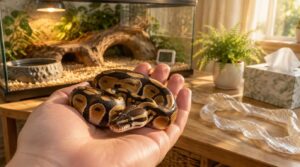
While shops love to advertise hypoallergenic snakes, the truth is simple. No pet is fully allergen-free, and that includes scaly ones!
If allergies are a concern, low-dander species like Corn Snakes and Ball Pythons are a gentler starting point, and this guide to the best snake species for kids explains why.
Despite what shops advertise, no pet is truly allergen-free, and that includes our scaly friends
Here’s the good news. Snakes have no fur to shed like cats and dogs, so some allergy sufferers do fine with them. Still, you can react to shed skin, dusty bedding, or particles stirred up during cleaning and feeding.
That’s why hypoallergenic snake breeds and lowallergen snakes aren’t backed by species-wide testing. Your own sensitivities matter more than any label.
Spend time near a snake before you commit. Keep proper temperature and humidity control in place too, since a stable enclosure means cleaner sheds and less airborne debris. Then you can handle your slithery new friend with total confidence!
5 Pet Snake Species to Consider if You Have Allergies
Ready to find a scaly pal that won’t make you sneeze? These five snakes are allergy-friendly picks that make great pets. Let’s meet them one by one, so you can find your perfect match!
Corn Snakes

top the list of hypoallergenic snakes for good reason! They have no fur, no feathers, and very little dander, so they’re gentle on sensitive noses. No pet is truly allergy-proof, but these cuties come close.
They’re also low-maintenance pets. A tank with a screen top, paper towels or aspen shavings, and proper temperature and humidity control (40–60%) covers the basics. That’s real space efficiency! Feed frozen, thawed mice, wash your hands after handling, and enjoy a calm, easy-to-hold companion in countless vibrant morphs.
Ball Pythons

Like corn snakes, ball pythons are hypoallergenic snakes with no fur or dander, and their quiet and calm temperament makes them easy to love.
Low maintenance care still means watching humidity, since damp enclosures grow mold, the real allergy risk. Keep things clean for minimal allergen exposure. Poor sanitation or inadequate heat can also lead to mouth and scale rot in ball pythons.
- Keep humidity at 50 to 60% for smooth sheds.
- Use dry aspen shavings, never damp bedding.
- Spot clean waste every single day.
- Remove uneaten prey right away.
- Offer a snug, ventilated hide for security.
Kingsnakes
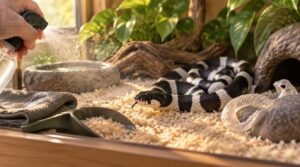
bring a quiet and calm temperament and low maintenance care to your home. Still, so-called hypoallergenic snakes don’t exist, and shed skin makes dust. Allergy sufferers, wipe down surfaces and spray bedding damp before scooping!
If you’re weighing a corn snake for a family with kids, their gentle corn snake temperament around children makes handling a calm, low-stress experience for everyone.
| Moment | Risk | Fix |
|---|---|---|
| Shedding | Skin dust | Mist, wipe |
| Cleaning | Airborne bits | Damp scoop |
Wash your hands after each handling, and keep feeding tools separate.
Keep a pump-style antibacterial hand soap beside the enclosure so you can wash up right after every handling session.
Rosy Boas
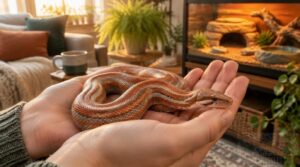
Allergy sufferers often find rosy boas manageable, though no pet is truly guaranteed among hypoallergenic snakes. Calm and slow-moving, they handle easily, and infrequent shedding means reduced allergen production.
Keep their warm, secure habitat in a quiet environment, feed once weekly, and wash your hands after every touch.
- Breathe easier at home
- Bond without constant worry
- Feel safe and proud
Rubber Boas
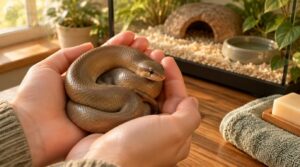
are calm, compact snakes that often top lists of hypoallergenic snake breeds, but no snake is truly allergen-free. Still, they’re allergyfriendly snakes for many people, since their small bodies shed less.
Keep handling sessions short and wash your hands right afterward. These lowmaintenance pets can even work as emotional support snakes. Use a low-dust substrate, and test your reaction first!
Choosing a Snake for Your Space and Handling Comfort

You’ve met the snakes, so now it’s time to find your perfect match! The right pick depends on the space you have, how you like to handle a pet, and how much upkeep fits your week. Check the four points below, and you’ll feel ready to choose with confidence.
Adult Enclosure Space
Think bigger than the snake in your hand! Adult Enclosure Space matters for allergies, because cramped homes concentrate waste and dust.
Use a tank size guide for your species, and check terrarium requirements before buying. Compact enclosures can work for rosy boas, but they need frequent spot-cleaning. Spaceefficient living setups with good airflow keep surfaces cleaner and your sinuses happier!
Handling Comfort
One keeper I know swears her corn snake calmed down after she cut sessions to ten minutes. Handling Comfort starts with short, calm contact.
Use clean, dry hands, support the whole body, and skip shoulder rides. That’s gentle handling. Wash up. Snake care and hygiene keeps allergens off your face, whether you want emotional support snakes or space-efficient living setups.
Feeding And Cleaning
Your feeding routine matters more than you’d guess. With hypoallergenic snake breeds, feeding and nutrition can stay simple: feeding once a week keeps prey handling minimal. For cleaning and maintenance, build an allergysafe environment:
- Thaw prey away from the enclosure.
- Use separate tongs for feeding.
- Spot-clean waste before it dries.
- Wipe surfaces instead of dry brushing.
- Change gloves between tasks.
Allergy Exposure
Here’s the catch: no snake is truly allergy-proof. Hypoallergenic snake breeds don’t exist, so exposure depends on you, not the species.
Allergy sufferers get the most exposure up close. Shed skin, dusty bedding, and prey handling all release particles. Sensitive owners can trigger respiratory issues or skin irritation just by cleaning the tank.
Keep the enclosure away from your bedroom and sofa!
Snake Allergy Symptoms and Other Possible Triggers

Snakes are a smart pick for allergy sufferers, but they’re not totally risk-free! Knowing the warning signs helps you stay safe and enjoy your pet with confidence. Here’s what to watch for, from skin and breathing symptoms to reactions after contact and triggers hiding in bedding and feeders.
Skin And Breathing Symptoms
Although hypoallergenic snake breeds don’t exist, you can still spot trouble early! Watch for sneezing, wheezing, a scratchy throat, or watery eyes after opening the enclosure. These respiratory issues often come from airborne shed and dust.
Skin irritation shows up as itchy, red patches on your hands or forearms. Sensitive owners should track symptoms after every handling and interaction session.
Reactions To Snake Contact
Touching your snake can cause trouble too, not just breathing in dust!
Skin proteins and secretions rub onto your hands, and protein sensitivity can trigger contact dermatitis. Watch for:
- Hives or swelling where the snake touched you.
- Skin irritation after a bite or lick.
- Itchy eyes or respiratory issues after touching your face.
Allergic reactions start fast, so wash up.
Bedding And Feeder Triggers
Your snake isn’t the only culprit. Dust from bedding and drips from a frozen rodent diet can spark allergic reactions.
Pick a low-dust substrate choice, and wet it slightly. Humidity control keeps residue from drying into fragments, and gentle scale maintenance helps.
| Trigger | Fix |
|---|---|
| Dusty bedding | Paper liners |
| Prey drips | Thaw in a sealed bag |
| Dried residue | Wipe tools damp |
Keeping Allergens Down: Enclosures, Feeding, and Hygiene

Spotting triggers is half the battle. Now let’s shrink them! A smart terrarium setup keeps your home fresh and your sniffles away.
Start with airflow. Good ventilation and humidity control stop stale, damp air from building up. Compact enclosures need extra care here, since particles pile up fast. Choose low-dust paper substrate and skip dry stirring. Your nose will thank you!
Here’s your quick routine:
- Spot-clean waste daily and remove uneaten prey right away.
- Thaw feeders in a sealed container, and stick to a weekly feeding schedule.
- Wash your hands after every cage session, or wear gloves.
Keep tools dedicated to the enclosure. Follow these steps and allergenfree pets feel a lot more doable! Small habits really add up fast! A pair of reptile feeding tongs keeps your hands out of the enclosure at mealtime and helps you remove leftover prey without touching it.
Frequently Asked Questions (FAQs)
What’s the most hypoallergenic pet?
No pet is truly allergen-free, but hypoallergenic reptiles come close! You’re skipping fur and dander, though reptile pets still shed, so you’ll want good reptile skin care and tidy, dust-free habitats for far fewer sniffles.
What is the most powerful herb for allergies?
One clinical trial found butterbur worked about as well as cetirizine for hay fever! That makes butterbur your strongest pick.
It eases sneezing and congestion without drowsiness. Just choose PA-free extracts to protect your liver.
Can someone be allergic to snakes?
Yes, you can. Allergic reactions to snakes happen when your immune system reacts to proteins in reptile dander, shed skin, or enclosure dust. So "hypoallergenic snakes" means lower risk, not zero. Consider allergy testing before adoption.
What is the most cuddly pet snake?
Ball pythons win the cuddle contest! Their calm reptile temperament and heavy, solid body feel great in your hands. They’re easy pet care, beginner-friendly snakes, and reptile bonding comes naturally. No emotional support animal needed, just patience!
What dog breeds are hypoallergenic?
Poodles, Bichon Frises, Schnauzers, Maltese, and Portuguese Water Dogs are your best lowshedding breeds. Their coats hold dander close, so dander control gets easier!
Brush often, though, because saliva spreads allergens too. Allergen reduction matters!
Are poodles hypoallergenic?
Picture a curly coat acting like a soft net, catching pet dander before it drifts. That helps with dander control, but "hypoallergenic" isn’t a guarantee. Your allergy symptoms depend on your sensitivity, so test first.
Are there hypoallergenic pets?
About 10 to 20 percent of people react to pets, so you’re not alone! No pet is truly allergen-free, but hypoallergenic reptiles like corn snakes suit sensitive owners well. They’re beginnerfriendly snakes and danderfree animals.
What are the best pets for allergies?
No pet is truly allergy-proof, but scaly ones like corn snakes, ball pythons, king snakes, rosy boas, and rubber boas skip fur.
Keep cages clean and you’ll breathe easier. Test your reactions around one first!
Are lizards hypoallergenic?
Think lizards are a free pass for pet allergies? Not quite! Reptile no dander means no allergen protein Fel d1, but shed skin and dusty bedding can still trigger symptoms.
Truly hypoallergenic pets? Not guaranteed.
Are hypoallergenic dogs good for allergies?
Hypoallergenic dog breeds shed less, easing pet allergies, but none are allergenfree pet options. Unlike cats’ allergen protein Fel d1, dog triggers hide in saliva, too. Hairless pets still need a trial visit first!
Conclusion
Think a snake can’t possibly be allergy-friendly? Fair doubt. No reptile is perfectly allergen-free, but your odds improve fast.
Pick from the hypoallergenic snake breeds for allergies above, then wash your hands after every handling session, spot-clean the enclosure, and choose low-dust bedding. Spend time around your future pet before you commit, so your body gets a vote.
Do that, and you won’t trade comfort for companionship. You’ll get a quiet roommate and easy breathing.