This site is supported by our readers. We may earn a commission, at no cost to you, if you purchase through links.

A baby snake slides out of its egg, flicks its tongue once, and slithers off into the leaf litter. No goodbye hug. No follow-up visit. That’s it.
So do baby snakes stay with their mother? For most species, the answer is a flat no. Snake moms skip the parenting playbook almost entirely, leaving newborns to hunt, hide, and thermoregulate on pure instinct within hours of arrival. A few species, like southern African pythons and rattlesnakes, stick around briefly, but even that care rarely lasts past two weeks.
What follows breaks down exactly when snakes part ways, which species bend the rules, and how hatchlings survive without a single lesson.
Table Of Contents
- Key Takeaways
- No—Most Baby Snakes Leave Their Mother Quickly
- When Do Baby Snakes Leave Their Mother?
- Which Snake Mothers Provide Brief Care?
- How Baby Snakes Survive Without Parents
- Why is Maternal Care Limited in Snakes?
- Frequently Asked Questions (FAQs)
- How soon do baby snakes leave their mother?
- What to do if you find a baby snake in your yard?
- Do female snakes stay with their babies?
- Do snakes stay together as a family?
- Do baby snakes stay with their mother?
- How long do baby snakes remain with their mother?
- Do baby snakes receive maternal care?
- How does maternal care affect baby snakes?
- How long can baby snakes survive without their mother?
- Can baby snakes survive completely alone from birth?
- Conclusion
Key Takeaways
- Most baby snakes are on their own within hours of hatching or being born, with no feeding, guarding, or hunting lessons from mom.
- A handful of species, like southern African pythons, rattlesnakes, and copperheads, stick around briefly (days to about two weeks), mainly to guard and warm their young, not to feed them.
- Newborn snakes come fully equipped with working venom, fangs, camouflage, and instinctive hunting and thermoregulation skills, so they don’t need to be taught how to survive.
- Snakes skip extended parenting because it’s costly in energy and unnecessary given precocial development, high offspring numbers, and predation pressure that favors quick dispersal.
No—Most Baby Snakes Leave Their Mother Quickly

So if you’re picturing a snake mom sticking around to raise her babies, it’s time to rethink that. Snakes just aren’t built for parenting the way mammals are. Here’s what actually happens once those babies hatch or are born.
There are exceptions though—rattlesnakes and some pitvipers actually stick around, and this guide on separating baby snakes from their parents breaks down when that brief bond typically ends.
Immediate Independence After Birth
Slither out, and you’re on your own. Baby snakes hit the ground independent from birth, no goodbye hugs needed.
Within hours, they’re picking basking spots for thermoregulation, testing camouflage against leaf litter, and choosing shelter. First shed hits around one to two weeks, cementing that instant independence. Hatchling vulnerability is real, but built-in instincts cover the gap fast.
Mothers Provide No Food
No brood pouch, no bottle, no bugs delivered to the nest. Once a baby snake hatches or is born, maternal care ends fast, and food is never on the menu.
Yolk sac dependence covers early energy needs. After that, it’s foraging without maternal aid: instinctive strikes, early prey detection, pure survival.
- Yolk sac fuels the first few days
- Instinctive feeding kicks in fast
- Hunger-driven dispersal spreads risk
No Hunting Lessons Needed
No mother snake ever taught a strike. Instinctive hunting skills kick in from day one, no coaching required.
| Skill | How It Works | When It Appears |
|---|---|---|
| Prey detection | Heat and movement cues | Birth |
| Ambush tactics | Camouflage hunting approach | Hours old |
| Strike accuracy | Trial-and-error learning | First weeks |
Independent from birth, neonates skip the classroom entirely. Innate behaviors handle the rest.
Brief Maternal Care Exceptions
Not every snake mom bolts immediately. A few species bend the rule.
Southern African pythons stick around two weeks, warming hatchlings. Rattlesnakes guard newborns days until first shed. Copperheads show maternal coiling for 5-14 days, deterring predators. Some pythons practice communal nest guarding too. Habitat matters: forested moms linger longer than desert ones. Still brief, but real.
When Do Baby Snakes Leave Their Mother?
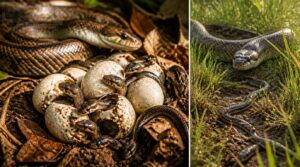
Timing depends on how a mother snake reproduces in the first place. Egg-layers and live-bearers part ways with their young on very different schedules. Here’s what actually shapes that departure timeline.
For a closer look at how long baby snakes stay with their mother, most species leave the nest fending for themselves within hours of hatching or birth.
Egg-Layers Abandon Their Clutches
Once she lays her eggs, that’s it. Egg layers deposit clutches in warm soil or rotting vegetation, then walk away for good.
- Zero brooding or guarding
- Yolk fuels the embryo, not mom
- Predator avoidance drives quick departure
Clutch abandonment saves her energy for future breeding, even as hatchling survival depends entirely on thermal incubation and location. Much like researchers who use a data-centered observation approach to interpret biological outcomes without direct intervention, herpetologists track abandoned clutches purely through environmental data rather than parental behavior.
Live-Bearers Separate After Birth
Unlike egg-layers, live bearers skip the shell entirely and give birth to fully formed young, ready to strike out on their own. Neonate dispersal starts fast, often within 24 to 72 hours. Mom might linger briefly for brief maternal guarding against threats, but that’s it. No nursing, no lessons. Independent thermoregulation and hunting kick in immediately.
First Shed and Dispersal
That first shed changes everything. Within 1 to 3 days, hatchlings split old skin for a brighter camouflage pattern, then start dispersing right after. Movement’s directed, not random, often several meters to a few tens of meters away. Newly shed skin stays vulnerable, so juveniles hide briefly, then push forward.
Neonate dispersal cuts sibling competition and predation risk fast.
Habitat Influences Departure Timing
Not all neonates leave on the same clock. Thermal cues trigger departure, while ground cover basking sites and prey density thresholds shape timing too.
Three habitat factors matter most:
- Microclimate shelter access for safe basking
- Refuge quality dispersal timing near burrows
- Habitat fragmentation delaying juvenile dispersal
Disturbed habitats slow offspring survival by limiting refuges snakes need for confident habitat selection.
Which Snake Mothers Provide Brief Care?

Not every snake mom skips out right away. A handful of species stick around, just briefly, to guard eggs or watch over newborns. Here’s who actually shows up for the job, even if only for a couple weeks.
Python Egg Brooding
Pythonidae moms don’t just guard eggs, they actively incubate them, coiling tight to trap body heat near 28-32°C. That’s real parental investment in reptiles.
Clutch coiling adjusts constantly for moisture conservation, preventing desiccation. Brooding duration varies by species and nest site selection, but the goal’s the same: healthy hatchlings, not a warm babysitter.
Southern African Python Care
Southern African pythons take mothering the furthest of any snake on record. After hatching, she sticks around for about two weeks, offering warmth and guarding against predators.
- Provides maternal warmth post-hatching
- Guards the nest site
- Sticks around roughly two weeks
- Doesn’t feed hatchlings
- Departs once young disperse
Rattlesnake Brood Guarding
Rattlesnake moms skip the two-week python routine, but they don’t just slither off either. Maternal vigilance lasts about a week, guarding neonates in rocky crevices until first shed. She’ll hiss, rattle, or strike at threats nearby. No feeding involved, just protection. Once babies shed their skin, brooding hatchlings scatter and the guarding job’s done.
Copperhead Newborn Defense
Copperhead moms stick around for a few days, shielding newborns while they get their bearings. Venom delivery works within hours of birth, fangs ready to go.
Camouflage does the heavy lifting too, that zigzag pattern breaks up their outline. Tail vibration adds another trick, mimicking insects to confuse predators before mom’s protection ends.
Care Rarely Exceeds Two Weeks
Add it all up and a pattern jumps out: no snake mother sticks around long. Pythons brood two months tops, then leave. Rattlesnakes and copperheads guard for days.
The brief maternal window never stretches past two weeks. Short brooding period, early dispersal, that’s the rule. Neonatal independence kicks in fast, whether it’s a few days or a few weeks.
How Baby Snakes Survive Without Parents
No mom, no problem. Baby snakes hit the ground running with a full toolkit already switched on. Here’s what makes that possible.
Instinctive Hunting Skills

No mother around to show them the ropes? No problem. Baby snakes hunt on innate hunting skills alone, tracking scent with a flicking tongue, using heat vision in low light, and timing ambush strikes with real precision.
It’s trial and error from day one, hunger driven foraging that just works, no lessons required.
Functional Venom and Fangs
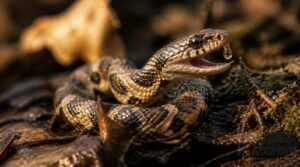
Since day one, a baby snake carries functional venom and fangs ready to work. No practice needed, no waiting around for potency to build up.
- Toxin composition mirrors adult chemistry from birth
- Fangs deliver fast-acting toxins immediately
- Defensive strikes work on instinct alone
Venom yield stays low early on, but it’s plenty for prey their size.
Camouflage and Defensive Behaviors
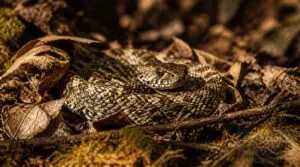
How does a newborn snake hide with no mother around to teach it? Instinct does the heavy lifting.
Background matching, disruptive blotches, and motionless coiling kick in immediately, no maternal care required. Flattened posture cuts shadows, deceptive markings confuse predators, and defensive strikes fire on cue.
Juvenile ecology depends entirely on these built-in tactics, not lessons learned.
Independent Thermoregulation

No thermostat, no mom, no problem. Within minutes of hatching, baby snakes start basking behavior on sun-warmed rocks, soaking up heat fast.
Get too toasty, and shade seeking kicks in. Surface selection matters too: south-facing rocks and dark ground boost heat absorption. This temperature response is instinctive. Independent thermoregulation runs the whole show, no maternal care needed.
Finding Prey and Shelter

Hunger kicks in fast, and so does the search. Baby snakes rely on thermal hunting cues to zero in on warm-bodied prey nearby.
Tongue-flicks track scent trails, guiding prey trail tracking toward ambush spots. Shelter matters too: leaf litter, rock crevices, and log piles offer both cover and hunting ground.
It’s trial and error at first. But microhabitat selection balances shelter access with predator avoidance from day one.
Why is Maternal Care Limited in Snakes?
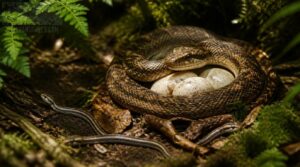
So why don’t snake moms stick around? It’s not neglect—it’s biology doing the math. Here are the five big reasons maternal care stays short and sweet.
Snake moms don’t stick around because it’s not neglect, it’s biology doing the math
Precocial Development at Birth
A baby snake hatches ready to survive, no training wheels needed. This is precocial development, and it explains why maternal care stays so brief.
- Functional venom and fangs
- Instant camouflage
- Working senses
- Independent thermoregulation
- Instinctive hunting drive
Newborns forage, bask, and hide within hours. Full readiness at birth makes prolonged parental investment unnecessary.
Energy Costs of Parenting
Sticking around costs calories, plain and simple. Guarding young raises metabolic rate by up to 15%, while foraging efficiency drops and fasting risk climbs.
| Energy Drain | Cost to Mother |
|---|---|
| Brood guarding | +15% metabolic rate |
| Thermoregulation | Constant heat shunting |
| Reduced foraging | Lower energy intake |
| Brood movement | Extra locomotion cost |
| Fasting risk | Skipped meals |
Snakes budget tight. Extended care just isn’t affordable.
High Offspring Numbers
Quantity beats quality here. Snakes play the r-selection game: pump out lots of young, skip the babysitting.
Bigger litters mean more mouths, more competition, but also better odds someone survives. It’s a numbers trade-off. More eggs offset the ones lost to predators or rough starts, so overall offspring survival rates stay decent even without mom around.
Predation Risk and Dispersal
More young means more mouths for predators too. That’s where predation risk shapes the whole game plan.
Sticking around invites trouble, so babies scatter fast.
- Predator pressure dispersal speeds up departure
- Habitat escape routes matter more than mom
- Early life migration cuts predator density avoidance
- Movement itself becomes a dispersal advantage
No Parental Teaching Required
Here’s the wild part: mother snakes never show up for hunting practice, and it doesn’t matter one bit.
Instinctive feeding kicks in immediately. Newborn snakes strike, swallow, and digest without a single lesson.
Self-foraging isn’t taught, it’s built in. Trial learning happens solo, through actual hunts, not demonstrations. Sibling dispersal just speeds up this independent start.
Frequently Asked Questions (FAQs)
How soon do baby snakes leave their mother?
No pager needed here, mama snake doesn’t call home. Departure timing runs hours to two weeks. Most hatchlings hit the ground hunting, self-feeding, thermoregulating right after their first shed, no maternal care required, no waiting around.
What to do if you find a baby snake in your yard?
Spot one? Keep six feet back, no touching. Note its markings, then let it slither off on its own. Nest nearby or venomous look? Call a wildlife rescue organization instead of handling it yourself.
Do female snakes stay with their babies?
Don’t expect a lasting bond. Most snake mothers rest briefly, then leave for good, offering zero maternal investment after birth. A few, like copperheads, linger nearby for weeks, guarding young before predation risk pushes everyone toward independence.
Do snakes stay together as a family?
Not really. Snake offspring survival depends on going solo, not sticking together. Neonate dispersal happens fast, though temporary aggregations form for denning or mating. True family bonds, with lasting maternal warmth or communal nesting, just aren’t part of snake biology.
Do baby snakes stay with their mother?
You might assume snake moms nurture their young like mammals do, but that’s not the case. Newborn snakes are independent within hours, with maternal guarding rarely lasting past two weeks before dispersal begins.
How long do baby snakes remain with their mother?
Timing varies, but most hatchlings bolt within hours. Vipers and pythons may linger up to two weeks, tied to first shed. Beyond that, maternal care in snakes basically doesn’t exist, no months-long babysitting here.
Do baby snakes receive maternal care?
Snake moms are ghosts, gone before the ink dries. Baby snakes rarely get maternal care; most mothers vanish after laying or birthing. A few, like pythons, buck the trend with brief egg guarding and newborn protection lasting days to weeks.
Even more dramatic than solo births, snake mating ball behavior sees dozens of males competing for a single female before she disappears into solitary motherhood.
How does maternal care affect baby snakes?
For most species, maternal influence is brief: mothers guard eggs or newborns for hours to two weeks, offering warmth and defense, not lessons. Instinct controls hunting, camouflage, and survival, so babies thrive fast, independent from day one.
How long can baby snakes survive without their mother?
Like a diver jumping straight into cold water, hatchlings can’t ease in, they just go. Survival instincts kick in fast: functional venom at birth, sharp camouflage, and independent thermoregulation carry most newborn snakes through their first solo days.
Can baby snakes survive completely alone from birth?
Yes, completely. Precocial development gives newborns working fangs, venom, and instinct-driven hunting skills right away. They handle independent thermoregulation, camouflage, and defense alone, no maternal care needed. Neonatal self-sufficiency isn’t rare here, it’s the rule.
Conclusion
Like a solo cross-country road trip, a hatchling snake sets out alone and figures things out fast. So do baby snakes stay with their mother? Rarely, and only very briefly when they do. That’s not neglect. It’s biology.
Snakes hatch fully equipped, fangs sharp, instincts loaded, ready to hunt within days. No lessons needed, no goodbyes required. Nature already gave them everything on the way out. That’s the wild, doing exactly what it does best.