This site is supported by our readers. We may earn a commission, at no cost to you, if you purchase through links.

A hatchling ball python fits in the palm of your hand. Give it three or four years, and you’re holding a snake that could stretch across your living room. That jump surprises a lot of new keepers.
So how big do ball pythons get, really? Adults usually land between 3 and 5 feet long, though your snake’s final size depends on genetics, sex, and how well you feed it early on. Females often outgrow males by a noticeable margin, sometimes packing on twice the weight.
Below, you’ll find the exact numbers by age and sex, plus what those measurements tell you about your snake’s health.
Table Of Contents
- Key Takeaways
- Most Adult Ball Pythons Reach 3–5 Feet
- Ball Python Growth Chart by Age
- Male Vs. Female Ball Python Size
- What Determines a Ball Python’s Size?
- How to Monitor Healthy Ball Python Growth
- Frequently Asked Questions (FAQs)
- Is a 75 gallon tank too big for a ball python?
- Do ball pythons like to be held?
- How big is a fully grown ball python?
- Do ball python bites hurt?
- How big do ball pythons get fully grown?
- What is the average lifespan of a ball python?
- What temperatures should a ball python’s enclosure be?
- What is the ideal humidity for a ball python?
- What kind of food should I feed my ball python?
- How often should I handle my ball python?
- Conclusion
Key Takeaways
- Most adult ball pythons reach 3 to 5 feet long and 600 to 1,500 grams, with females typically growing longer and heavier than males due to the energy demands of egg production.
- Growth happens fastest in the first three years, after which your snake’s body shifts energy from getting longer to supporting reproduction instead.
- Genetics sets your snake’s size potential, but consistent feeding, proper temperatures (88-92°F basking spot), and good humidity (50-60%) determine how well it reaches that potential.
- Tracking your snake’s weight and length over several weeks (not just single measurements) is the best way to catch health issues like obesity or stunted growth early.
Most Adult Ball Pythons Reach 3–5 Feet
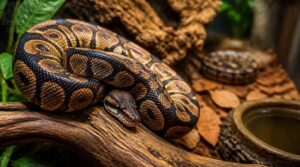
Ball pythons don’t grow into giants, but their adult size still varies more than you’d expect. Sex plays the biggest role in how long and heavy yours will get. Here’s what typical adult size looks like, broken down piece by piece.
For a closer look at how genetics and morph type can nudge these numbers up or down, check out this complete ball python size and growth guide.
Typical Adult Length Range
A grown ball python isn’t a giant snake, and that surprises a lot of new keepers.
Most adults land between 3 to 5 feet in total length, with 4 feet being average across captive populations.
Female ball pythons often reach that upper end, while male ball pythons tend to stay shorter.
Genetics play a role too, so some individuals naturally fall outside the norm.
Average Adult Weight Range
Length only tells half the story. Weight fills in the rest, and it varies a lot.
Typical adults weigh 600 to 1500 grams, with sex driving most of the difference. Female ball pythons often outweigh males by 15 to 40 percent at the same length. A healthy body shows smooth taper toward the tail, not sharp angles or excess bulk.
Size in Feet and Centimeters
Numbers only tell you so much until you picture them. Most adults land between 3 to 5 feet, or roughly 91 to 152 centimeters. If you grew up on imperial units, 120 cm (about 4 feet) makes a handy mental anchor. Growth rate and length measurement both matter when you’re checking your snake against any size chart.
How Large Females Can Grow
Females push past that average every time. Most adult females land in the 3.5 to 5 foot range, with some exceptionals topping 5 feet.
This female growth potential comes with more mass too, often 1200 to 2500+ grams. Genetics sets the ceiling, but steady feeding and good care get her there over three to four years.
Ball Python Growth Chart by Age
Watching a ball python grow is like tracking a slow, steady story, one that unfolds over years, not weeks. Every age brings its own milestones in length and weight, and knowing what’s normal helps you spot what’s healthy. Here’s what that timeline looks like, broken down year by year.
Hatchling Size at Birth
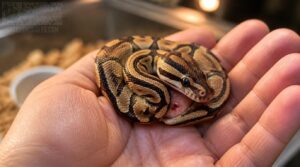
A hatchling ball python could curl up in your palm. Hatchling length ranges 8 to 17 inches, with birth weight between 50 to 80 grams. Yolk sac absorption finishes within a week.
| Trait | Range |
|---|---|
| Length | 8-17 in |
| Weight | 50-80 g |
Initial feeding starts after the first shed, once yolk reserves run out.
Before that first meal, measure your snake’s length along its spine with flexible tape to choose the right restraint gear using this snake handling hook size guide.
Size at One Year
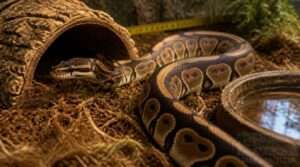
By the one year mark, growth rate really shows what your snake is made of. Expect 3 to 4 feet, 350 to 900 grams, though genetics and feeding drive real variation.
| Metric | Typical Range |
|---|---|
| Length | 3-4 ft |
| Weight | 350-900 g |
| Female Length | ~4 ft |
Size at Two Years
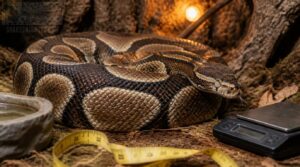
By two, your snake is closing in on adult proportions. Expect 3.5 to 4.5 feet and 400 to 900 grams, with females edging out males in both length and mass.
| Metric | Range |
|---|---|
| Length | 3.5-4.5 ft |
| Weight | 400-900 g |
Genetics and feeding history shape where your python lands.
Size at Three Years

Three years marks a real turning point: your python is nearly grown. Expect 3 to 5 feet, with weight between 300 and 900 grams.
| Sex | Length | Weight |
|---|---|---|
| Male | 2.5-3.5 ft | 300-600 g |
| Female | 3-5 ft | 500-900 g |
Females pull ahead here, a clear sign of sexual dimorphism in this species.
When Growth Slows Down
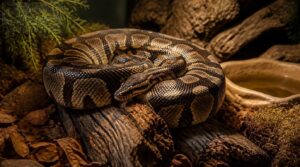
Growth doesn’t stop at three years, it just downshifts. After maturity, your snake’s body redirects energy toward reproductive needs instead of length. Ball pythons show indeterminate growth, meaning they grow slowly for life.
Growth never truly stops for a ball python—it just slows, shifting energy from length to reproduction for life
| Factor | Effect | Timeframe |
|---|---|---|
| Metabolic slowdown | Less mass gain | After year 3 |
| Appetite cycles | Fewer meals | Ongoing |
| Environmental stability | Steady pace | Year-round |
Male Vs. Female Ball Python Size
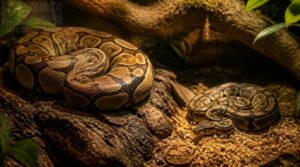
Male and female ball pythons don’t grow at the same pace, and the gap becomes obvious once you know what to look for. Sex plays a bigger role in adult size than most new owners expect. Here’s how males and females actually compare, size for size.
Adult Male Length and Weight
Male ball pythons stay on the smaller side. Adult male size settles at 3 to 4.5 feet, with average male weight between 900 and 1400 grams. Male growth pattern slows noticeably after year three.
| Measurement | Typical Range | Notes |
|---|---|---|
| Length | 3-4.5 ft | 90-140 cm |
| Weight | 900-1400 g | Lighter than females |
| Growth slows | After 3 yrs | Stabilizes near max size |
Adult Female Length and Weight
Females tell a different story on the growth chart. Adult female ball pythons reach 4 to 5 feet, weighing 900 to 1800 grams.
| Measurement | Typical Range |
|---|---|
| Length | 4-5 ft |
| Weight | 900-1800 g |
| Heavier specimens | Up to 1800 g near 4.5 ft |
| Growth plateau | After 3-4 yrs |
| Body mass | aids reproduction |
Why Females Grow Larger
Reproduction drives the gap. Egg production takes energy, and females store fat as backup fuel for that work.
| Factor | Role | Effect |
|---|---|---|
| Fat storage | Energy reserve | helps eggs |
| Hormones | Growth trigger | Bone, girth gain |
| Skeleton | Expands with mass | Room for eggs |
Bigger females simply carry more reproductive capacity than males ever need.
When Size Differences Appear
That extra fat storage doesn’t kick in overnight. Sexual dimorphism in snakes shows up gradually, often visible within months in the same clutch. Growth rate comparison between siblings can vary widely once feeding and temperature differ.
| Age | Female Sign | Male Sign |
|---|---|---|
| 6 mo | Faster gains | Steady pace |
| 1 yr | 2 ft+ | 1.5-2 ft |
| 2 yr | Noticeable gap | Plateau begins |
Track your own snake’s measurements regularly to catch its pattern early.
What Determines a Ball Python’s Size?

Genetics set the starting point, but they don’t tell the whole story. A handful of everyday factors quietly shape how big your snake ends up. Let’s look at what actually moves the needle.
Sex and Genetics
Genetic sex determination sets the blueprint for size before your snake ever hatches. Females inherit growth traits tied to reproductive genetic factors, like follicular development, that push their length and weight past males. This sex-linked size variation shows up on any growth chart. A genetic morph won’t change this pattern much, sex still drives the biggest size differences you’ll see.
Diet and Feeding Frequency
Genetics builds the frame, but what you put on the menu decides how well your snake fills it out. Feeding frequency and prey size are the two levers you control every week.
Hatchlings need meals every 5 to 7 days. Juveniles do well every 7 to 14 days. Adults slow to every 10 to 14 days, sometimes stretching to 3 to 6 weeks for big ones.
Match prey to your snake’s midbody girth, not a calendar. Frozen-thawed rodents beat live prey for safety every time.
- Fuzzy mice for hatchlings
- Small mice for juveniles
- Small rats for subadults
- Medium rats for adults
- Adjust frequency for growth spurts or cooler months
Early Nutrition and Development
Those first few meals matter more than you’d think. A hatchling needs food every 5 to 7 days to build muscle and bone during its fastest growth spurt.
Skimp on protein or calcium early on, and you’ll see it later in body size. Track weight weekly.
Good early feeding sets the stage for a healthy adult length down the road.
Temperature and Humidity
Warmth fuels growth. Keep a thermal gradient with a basking spot of 88 to 92°F and cooler areas near 78°F, so digestion stays efficient.
Humidity matters too. Hold levels at 50 to 60 percent for clean sheds, raising it slightly during shedding cycles. Good ventilation prevents stagnant air while still trapping moisture, keeping growth rate steady and weight chart progress on track.
Does Enclosure Size Limit Growth?
A bigger tank won’t turn your snake into a giant. That’s the enclosure size myth many beginners believe.
Genes and feeding drive growth, not square footage. A 40-gallon or 75-gallon home won’t push size past natural limits.
Roomy space just means better movement and hide access, supporting the same growth rate your size chart already predicts. What actually matters more for healthy growth is following proper enclosure size requirements appropriate to your snake’s age and weight.
How to Monitor Healthy Ball Python Growth
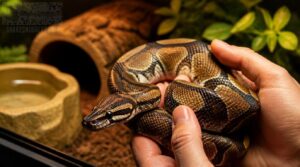
Knowing the numbers is only half the job. The real skill is checking on your snake regularly, so you catch problems early. Here’s what to watch for as your ball python grows.
Measuring Length Safely
Grab a flexible measuring tape, not a rigid ruler, since your snake won’t lie straight for you. Lay it flat, tail tip to base, and read the mark at eye level to dodge parallax error.
Calibrate your tape against a known standard first. Support the body gently, never grip the neck. Two people help if it’s a wriggler.
Tracking Weight Over Time
A digital scale beats a spring scale every time, since it gives you precise readings without guesswork.
Weigh your snake at the same time each week, right before feeding, and jot down a quick note about anything unusual. Track that data for 6 to 12 weeks to spot real trends, not just daily noise from hydration or a recent meal.
Healthy Body Condition Signs
Numbers only tell half the story. Look for clear eyes, smooth scales, and a pink belly without cracks or flaking. Regular tongue flicks show alertness, and a clean vent area means no infection. Good body condition looks rounded, not boxy or bulging, with steady girth along the whole length.
Obesity and Stunted Growth
Body condition tells you more than a scale ever will, but weight monitoring still catches trouble early. Too much weight means obesity, which throws off hormone balance and stresses joints and organs.
Too little food during early life often leads to stunted growth, where a snake simply never reaches its expected length.
Watch trends, not single numbers, and adjust your feeding schedule if something shifts.
Feeding for Steady Growth
Once you’ve adjusted for weight trends, feeding schedule matters just as much. Consistent intake every 5 to 7 days for juveniles and 7 to 14 days for adults keeps growth steady and predictable.
Choose prey filling no more than 25% of your snake’s girth, and rotate prey types for balanced nutrition. Skip meals during shedding, and always feed in a calm, stable environment.
Frequently Asked Questions (FAQs)
Is a 75 gallon tank too big for a ball python?
Like a house with room to spare, a 75 gallon tank isn’t too big. It allows healthy movement, easier humidity control, and enrichment options like hides and climbing branches for a full-grown adult snake.
Do ball pythons like to be held?
Many do, once they trust you. Calm, slow movements and a relaxed body signal comfort, while hissing or coiling tightly means stress. Temperament varies by snake, so support their full body and keep early sessions short.
How big is a fully grown ball python?
Coincidentally, most snakes settling into their final size do so around the same age you’d expect a growth plateau: full-grown ball pythons reach 3 to 5 feet, females often heavier, weighing 1,200 to 2,500+ grams.
Do ball python bites hurt?
Not much. Most bites feel like a quick pinprick, brief and startling more than painful. Defensive bites stay shallow, feeding bites may scratch a bit, and clean wound care with soap and water prevents any real trouble.
How big do ball pythons get fully grown?
Ball pythons don’t just grow, they python-tially surprise you. Adult length lands between 3 and 5 feet, with females stretching longer. Weight settles around 5 to 5 pounds, varying with genetics, diet, and years of steady, healthy growth.
What is the average lifespan of a ball python?
This is a long-term commitment. Captive ball pythons usually live 20 to 30 years, some reaching their 40s, while wild snakes survive just 6 to 10 years due to predators, disease, and food scarcity.
Choosing this kind of companion means understanding what you’re signing up for, and this python snake species guide breaks down how ball pythons compare to other species before you commit.
What temperatures should a ball python’s enclosure be?
Think of your vivarium as a sunny meadow meeting a shaded creek. Keep the basking zone at 88-92°F, cool side 75-80°F, humidity 50-60%. Use a thermostat, allow a gentle nighttime drop, never below 70°F.
Because damp or poorly regulated enclosures can quickly lead to scale rot, it helps to know the early signs of illness in pythons before problems take hold.
What is the ideal humidity for a ball python?
Keep humidity around 50 to 60 percent day to day, using a digital hygrometer near your snake’s hide. Bump it to 65 to 70 percent during shedding, and skip readings above 80 percent to prevent mold.
What kind of food should I feed my ball python?
Let’s talk prey and appetite, not puns about "snake charmers." Feed frozen-thawed rodents sized to your snake’s mid-body width. One properly sized mouse or rat per feeding meets its nutritional needs, on a schedule matched to age and weight.
How often should I handle my ball python?
Aim for 1 to 3 sessions weekly, each lasting 10 to 20 minutes. Skip handling during shedding and wait 48 to 72 hours after meals. Watch for tight coiling or refused food, both signal it’s time to pause.
Conclusion
Picture that palm-sized hatchling curled beside the five-foot adult it becomes. That leap is why growth charts matter.
Knowing how big do ball pythons get gives you a real point of reference, not a guessing game.
Your snake’s numbers won’t match a chart perfectly, and that’s fine. What matters is steady, healthy progress, no sudden weight loss, no stalled growth. Watch the trend, not the tape measure. That’s how you raise a python truly built to thrive.