This site is supported by our readers. We may earn a commission, at no cost to you, if you purchase through links.

A snake doesn’t strike out of malice. It strikes because it’s scared, cornered, or caught off guard. That single fact changes everything about how you should approach handling snakes.
Most bites happen from rushed movements or misread signals, not bad luck. Your snake is talking to you the whole time through posture, tongue flicks, and muscle tone. You just need to know how to listen.
Get the setup right, read the cues, and move with purpose. Confidence comes from preparation, not bravado. Here’s exactly how to do it, step by step.
Table Of Contents
- Key Takeaways
- Prepare a Safe Snake Handling Area
- Read Your Snake’s Body Language First
- Approach and Pick Up Your Snake Safely
- Handle Your Snake With Calm Confidence
- Return, Clean Up, and Respond to Problems
- Frequently Asked Questions (FAQs)
- How do you handle a pet snake?
- How do you handle a snake safely?
- What are the best snake management techniques?
- How do you handle a snake after feeding?
- Do snakes like to be handled?
- What does the Bible say about handling snakes?
- What is the proper way to handle a snake?
- Are snakes safe to handle?
- What is the best way to handle a snake?
- Do you have to wash your hands after handling snakes?
- Conclusion
Key Takeaways
- A snake’s strike is fear talking, not aggression, so reading its body language—posture, tail flicks, tongue movement—matters more than raw nerve.
- Set up a quiet, escape-proof space and check your gear beforehand, since good prep prevents most bites better than quick reflexes ever could.
- Always lift and support a snake at its mid-body with two hands, never grabbing the head or tail, to keep both of you safe.
- Start with short two-minute handling sessions and build up gradually, since slow trust-building beats forcing long holds before your snake’s ready.
Prepare a Safe Snake Handling Area

Before you ever touch a snake, get the room right. This isn’t optional prep work—it’s what keeps small mistakes from turning into real problems. Here’s what you need to check first.
If you’re prepping for a task like giving medicine, this step-by-step guide to safely handling snakes for medication walks you through setting up the space beforehand.
Quiet, Escape-proof Room
Your snake’s calm starts with the room itself. Pick a quiet, escape-proof room with thick walls, solid doors, and sealed gaps — sound isolation matters as much as security. Environmental quietness lowers stress in captive snakes fast.
Add climate control (65-67°F) and soft lighting for comfort design. Safety monitoring, like a camera or intercom, gives backup without adding noise.
Secure Doors and Gaps
A quiet room means nothing if there’s a gap for your snake to slip through. Grab a gap measurement tool first — seal anything over 1.3 cm.
Match your seal material (foam, vinyl, EPDM) to the gap. Install a door sweep, check frame alignment, and do quick weatherstripping maintenance.
That’s real escape prevention.
Clean Hands Before Handling
Doors are sealed, room’s ready. Now scrub up.
Before you begin, observing snake body language ensures the reptile is ready for handling.
Wash hands for 20 seconds with warm water and mild soap — this strips food scent and kills salmonella snakes carry naturally.
Rinse completely. Leftover soap or lotion can irritate scales. Skip the sanitizer smell too; let it evaporate fully first.
Dry hands. Clean, dry grip. That’s proper hygiene protocol, done right.
Check Tools and Gear
Hands dry? Good. Now check your gear.
Run your fingers over hooks and tongs — look for cracks, wobbly joints, rust. Inspect gloves for holes. Confirm locking mechanisms engage fully.
Gear maintenance isn’t optional. A cracked hook fails at the worst moment. Lay tools out, visible and ready. That’s real equipment readiness, and it’s what separates confident handlers from lucky ones.
Avoid Post-feeding Handling
Ever handled a snake right after it ate? Don’t. That full belly needs a feeding wait period of at least 24 hours before handling — digestive recovery time matters.
Watch for:
- Bulging midsection
- Sluggish movement
- Regurgitation risk
Keep the enclosure calm and vibration-free during this stress-free interval. Wash hands before and after — every time.
Read Your Snake’s Body Language First

Your snake talks to you constantly. Not with words, but with its body. Here’s what to watch for before you ever touch it.
Relaxed Movement Signs
A calm snake moves like water finding its path. Watch for smooth motion cues: even pace, no jerks or freezes. Limbs and coils stay loose, never clenched.
Posture stays open. Breathing’s steady. That’s real relaxed body language — no rushing, no tension, just fluid motion patterns telling you it’s safe to move forward.
Defensive Posture Cues
Watch the head lift off the ground. That’s a snake surveying the threat, often with a slight neck arch to look bigger.
Add tail flicking, a fixed gaze, and tight jaw alignment, and you’ve got a full defensive posture.
Don’t push closer. Warning signal recognition here means backing off, not testing limits.
Stress and Fear Signals
Fear talks fast, and a stressed snake gives you plenty to read.
Tail flicks jump from 4 to 12 per minute. Eyes shift, hunting the threat. Gape mouth opening plus hissing means back off now.
- Fast tail flicking
- Eye shifting/dilation
- Gape or hissing
- Tight coiled body
- Rigid freeze posture
That’s the flight-freeze-fight response kicking in. Respect it.
Shedding and Feeding Moods
Snakes don’t hide their calendar. During the shedding cycle, activity drops and movement turns slow and curling. Pre-shed appetite often fades entirely.
Feeding mood works the opposite way: alert, head-tracking, then sluggish after a meal.
Do not handle when shedding, and skip handling session duration entirely after eating. Stressed snakes stop eating too — stress feeding impact is real.
When to Wait Instead
Sometimes the right move is no move at all.
Skip handling if your snake seems lethargic, shows mucus, swelling, or odd color changes. Illness always outranks routine.
Postpone during power outages, uneven temps, or if the quiet room isn’t actually quiet. Defensive individuals or jumpy juveniles need extra patience too.
When in doubt, wait. Tomorrow’s session beats today’s bite.
When you’re unsure whether to handle your snake, wait—tomorrow’s calm session is better than today’s bite
Approach and Pick Up Your Snake Safely
Body language read, green light given. Now comes the part that actually matters: getting your hands on the snake without spooking it. Here’s how to do that approach and lift the right way.
For anything sizable, bring a second (or third) pair of hands and follow this large snake handling safety guide to space your grips properly and keep the session short and stress-free.
Approach From The Side

From the side is how you meet a snake, not head-on. This keeps your body aligned, cuts strike exposure, and steadies your stance—feet shoulder-width, hips angled in.
- Support the mid-body, hand near the rear third
- Never grip head or tail
- Watch for coil shivering
- Keep torso upright, leaning slightly forward
If it coils defensively, pause. Reassess.
Move Slowly and Calmly

Once you’re positioned right, everything else depends on speed. Or the lack of it.
Take one smooth step at a time. Keep hands relaxed at your sides until you’re ready. Breathe in for four counts, out for six. Steady breathing keeps your movements steady too.
Kill the background noise. Dim harsh lights. A calm room makes a calm snake.
Lift From Mid-body
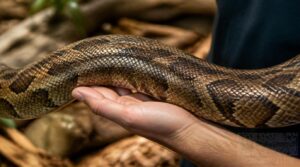
Time to make contact. Slide your hand under the middle of the snake’s body, palm up, fingers relaxed but firm.
This is your safe lifting zone.
- Tighten your midsection
- Keep your spine straight
- Grip gently, palms inward
- Breathe out as you lift
- Distribute weight evenly
Good weight distribution here keeps the whole lift smooth and controlled.
Avoid Head and Tail

Both ends bite back. The head strikes, the tail thrashes — head avoidance and tail contact prevention both matter.
| Zone | Risk | Rule |
|---|---|---|
| Head | Bites | Never grip |
| Tail | Thrashing | Never grip |
| Mid-body | Stable | Grip here |
Safe grip positioning stays centered. Give both ends room to move freely, and your proper snake support technique holds up.
Support Different Snake Sizes

Not every snake fits the same grip. Size-based grip adjustment matters, since a corn snake and a Burmese python need totally different support.
- Small snakes: gentle, close hand contact
- Medium snakes: two-handed, even weight distribution
- Large snakes: broad midsection support
- All sizes: no ribcage pressure
- Use a cloth for cushioning
Match hand placement to body diameter. Support the body, don’t squeeze it.
Handle Your Snake With Calm Confidence

You’ve got your snake in hand. Now comes the part that actually builds trust between you two. Here’s how to keep things calm and steady from here.
Use Two-handed Support
Two hands, always. One near mid-body, the other further back for balanced support. This isn’t optional—it’s how you prevent twisting and keep the spine straight.
Adjust hand width for the snake’s girth. Cradle, don’t squeeze. Watch for tension in the body. That’s your cue to shift grip before the snake decides to shift for you.
Keep Movements Smooth
Fast hands spook snakes. Move like water finds a path—curving, unhurried, never straight.
Keep constant contact along the midsection. Small grip shifts beat sudden ones.
- Broad, flat palm support
- Gentle guiding along the spine
- Smooth arcs, not sharp turns
- Steady tempo throughout
Skip jerky lifts. Let the snake feel your calm, predictable rhythm the whole time.
Start With Short Sessions
Two minutes. That’s it for round one.
Set a clear goal: just get the snake out, hold it, put it back. No test of nerve.
Pick a quiet spot, no TV, no kids underfoot. Minimize distractions, cap the clock, and stop while it’s still calm. Short and boring beats long and scary, every time.
Gradually Increase Handling Time
Once two minutes feels boring, add fifteen to thirty seconds. That’s the whole trick.
Watch for coiling or head jerks. Signs stay relaxed? Extend next time. Signs return? Pull back and rebuild trust.
Log each session. It shows real paced exposure increase, not guesswork, and builds genuine confidence over weeks, not days.
Use Hooks When Needed
Some snakes just don’t want bare hands near them yet. That’s what snake hooks are for.
Grab one when a snake feels fast, defensive, or the enclosure’s too tight for hand access:
- Check for burrs or nicks before lifting
- Lift gently just behind the head
- Rotate the snake toward you, low angle
- Sanitize after each use
Pair hooks with two-handed support always.
Return, Clean Up, and Respond to Problems

Handling doesn’t end when you set the snake down. What you do in the next few minutes matters just as much as the hold itself. Here’s how to wrap things up right, and what to do if something goes wrong.
Return Gently to Enclosure
Going back home matters as much as coming out.
Line up the enclosure at resting height, door open, nothing blocking the path.
Lower your snake slow and steady, head pointed away from you, and let it self-align into the space.
If it pauses, wait.
Don’t push.
Calm hands, calm exit.
Disinfect Hands and Surfaces
The snake’s back home. Your job isn’t done yet.
Wash hands 20 seconds with soap, or use 60% alcohol sanitizer till dry. Wipe tools with chlorhexidine or F10SC.
- Soapy hands under warm water
- Tongs soaking in chlorine
- Enclosure surfaces glistening with diluted bleach
- Timer running for that full 15-minute contact time
Rinse everything. Air dry completely. Hygiene protects both of you.
Monitor Behavior Afterward
Clean tools put away, don’t walk off yet. Watch the enclosure for 24 hours — activity level, appetite, posture. Coiled and resting or slow exploring? Good signs. Refusing food, head shaking, rapid gular pumping? Stress that hasn’t settled.
Check shed status and eye clarity over the next day or two. That’s your stress recovery readout, plain and simple.
Treat Minor Bites Calmly
Even careful hands get nipped sometimes. If it happens, stay calm and speak reassuringly — panic spreads faster than venom.
Wash the bite with soap and water, pat dry, and bandage loosely. Skip ibuprofen; grab acetaminophen instead. Keep your first aid kit stocked and nearby.
Sit still. Breathe deep. That’s half the battle won already.
Know Emergency Bite Steps
A venomous bite is different. Call 911 immediately — don’t wait for symptoms.
Keep the victim still, remove rings or tight sleeves, and note the bite time. Position the limb below heart level. Skip tourniquets.
Your emergency plan and first aid kit earn their keep here. Transport to a hospital stocking antivenom fast. Speed saves limbs — sometimes lives.
Frequently Asked Questions (FAQs)
How do you handle a pet snake?
Funny how mastery in any craft starts the same way: patience first, technique second. Wash hands, check gear, then approach from the side. Lift at mid-body, cradle gently, keep movements slow. That’s real control.
How do you handle a snake safely?
Approach from the side, wash hands first, and use proper grip techniques: mid-body support, no head or tail grabs. Inspect your snake hook, move slowly, keep sessions short, and stay ready for emergencies.
What are the best snake management techniques?
Good management blends proper tool selection, calm body support, and stress reduction. Read body language, wash hands before and after, wear protective gear, and keep an emergency plan ready. Mastering these builds real confidence and control.
How do you handle a snake after feeding?
Don’t handle for at least 48 hours after a meal. That gap prevents regurgitation risk. Keep the enclosure quiet, skip pickup, and let digestion finish undisturbed before any grip or lift begins.
Do snakes like to be handled?
Picture a giant scooping you up mid-nap—thrilling? Hardly. Most snakes merely tolerate gentle handling; it mimics predation, so stress reduction through slow, brief, consistent sessions builds trust better than daily handling ever could.
What does the Bible say about handling snakes?
Scripture ties snakes to judgment, healing, and spiritual authority — from the bronze serpent in Numbers to Mark 16:18’s promise of protection. Most scholars read it as a sign of faith, not a handling manual.
What is the proper way to handle a snake?
Approach from the side, never head-on. Lift with mid-body support, one hand steadying the head, avoiding head or tail grabs. Use two-handed distribution, keep sessions short, and wash hands after — simple habits that build real trust.
Are snakes safe to handle?
Safety depends on the snake, not just your nerve. Temperament varies by species and individual mood, and non-venomous snakes still bite or constrict when stressed.
Venomous snakes demand real training. Proper restraint, calm body language, and clean hands make handling genuinely safer.
What is the best way to handle a snake?
Some say instinct alone keeps handlers safe. Not true.
Real skill blends body language cues, side approach, mid-body lift, slow movements, tool-assisted handling, clean hands, and gentle return—every step protecting both you and your snake.
Do you have to wash your hands after handling snakes?
Yes, every time. Salmonella hides on skin and enclosure surfaces without any visible trace. Wash with soap for 20 seconds before touching your face or food—this simple habit blocks the main zoonotic disease risk tied to reptile contact.
Conclusion
Don’t let fear grip you tighter than you grip the snake. Handling snakes safely isn’t about luck. It’s about reading the signs before you ever reach out. Slow hands. Calm breath. A posture you actually understand. That’s the real skill here. Master those basics, and every session gets easier, safer, smoother. You’re not taming a wild thing. You’re building trust, one calm move at a time. That’s confidence worth holding onto.