This site is supported by our readers. We may earn a commission, at no cost to you, if you purchase through links.
A reptile can sit under a perfectly positioned heat lamp, on fresh substrate, behind locked doors, and still get sick because humidity swings went unnoticed for three days. That’s the hidden challenge of keeping reptiles: the enclosure looks fine until it doesn’t.
Reptile enclosure maintenance tips aren’t about scrubbing harder or spending more. They’re about knowing which details matter, like substrate depth, UVB positioning, and sealed gaps, and checking them on a schedule before small problems become vet bills. Knowing exactly what to check, and when, keeps your animal thriving and your setup genuinely dialed in.
Table Of Contents
- Key Takeaways
- Plan a Secure, Species-Appropriate Enclosure
- Maintain Temperature, Humidity, and Lighting
- Choose Safe Substrate and Decor
- Follow a Consistent Cleaning Schedule
- Prevent Health Problems Through Maintenance
- Frequently Asked Questions (FAQs)
- How to maintain a reptile enclosure?
- What is the hardest reptile to care for?
- Where to put a snake when cleaning an enclosure?
- How often should I replace UVB bulbs?
- What are signs of improper humidity levels?
- How do I safely introduce new décor?
- Can I use tap water for misting?
- What substrate depth is recommended for burrowing species?
- How do you support a reptile during shedding?
- Can multiple reptiles safely share one enclosure?
- Conclusion
Key Takeaways
- Humidity swings, UVB degradation, and substrate depth are the invisible variables most likely to cause illness, even when an enclosure looks perfectly set up.
- A three-tier cleaning schedule — daily spot checks, weekly habitat inspections, and monthly deep sanitization — catches problems early and prevents most common health issues.
- Over-cleaning is as harmful as neglect: stripping beneficial microbes and stressing your animal defeats the purpose of a good maintenance routine.
- Matching enclosure size, substrate depth, and security features to your reptile’s adult dimensions and species-specific needs is the foundation everything else depends on.
Plan a Secure, Species-Appropriate Enclosure

Getting your reptile’s enclosure right from the start saves you a lot of headaches down the road. The two biggest factors to nail first are choosing the right size and keeping your pet securely inside it. Here’s what you need to know about both.
From substrate depth to heat lamp placement, reptile tank habitat design essentials walk you through every layer of a setup that keeps your pet healthy and comfortable.
Choose The Correct Size
Three key measurements shape every reptile enclosure size: width, height, and length should hold a 2:1:1 ratio relative to your animal’s body length.
- Ground dwellers need substrate 2x body width deep
- Arboreal species require vertical space 1.5x body length
- Burrowers need a 6x snout-to-vent diameter footprint
Your reptile habitat setup must always account for your pet’s adult size, not today’s.
Prevent Escapes Safely
Once you’ve set your dimensions, reptile enclosure escape prevention becomes your next priority.
| Security Feature | Function |
|---|---|
| Exoterra locks | Secure front-opening doors |
| Reptile enclosure mesh panels | Allow airflow, block exits |
| Reptile enclosure lid security | Prevent prying or lifting |
| Neoprene gaskets | Seal gaps under 2 mm |
| Escapeproof backup container | Catch any ground-level escapes |
Test every latch weekly. Snakes will find every gap!
For a full breakdown of secure housing requirements, boa constrictor enclosure sizing and latch guidelines can help you choose a setup that leaves no room for escapes.
Maintain Temperature, Humidity, and Lighting
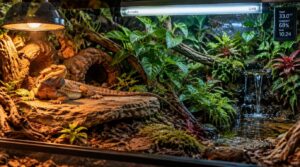
Reptiles can’t regulate their own body temperature, so your habitat setup has to do it for them. That means getting three things right: heat gradients, humidity, and UVB lighting. Here’s how to nail each one without guesswork.
Monitor Heat and Humidity
Picture your reptile basking in a warm, misty corner of the rainforest, air thick but never stagnant. That’s the microclimate you’re recreating.
Place digital thermometer hygrometers at basking, mid, and floor levels, since heat rises and humidity pools. Log readings daily; if values swing more than 10% in 24 hours, adjust ventilation.
Use humidity control tied to a humidistat, avoid spikes above 20% RH per hour, and verify your gradient with an infrared gun.
Position and Replace UVB
Your thermometer setup pairs perfectly with UVB lighting placement, since basking spots serve double duty. Mount UVB bulbs so the sweet spot lands on your reptile’s actual perch, never through mesh or glass.
Log lighting cycles daily, and respect UVB degradation: even glowing tubes fade. Mark replacement dates, and confirm output with a UVB meter at basking height.
Choose Safe Substrate and Decor
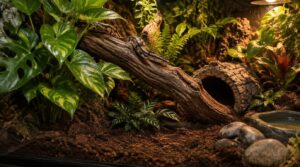
Because your reptile spends every hour in direct contact with its floor, substrate choice matters more than almost any other decor decision. Stick to reptile-safe substrates like coconut fiber or cypress mulch, and skip pine and cedar entirely; their aromatic oils irritate respiratory systems.
Match depth to your animal’s lifestyle. Burrowers need 4 to 6 inches to tunnel happily, while arboreal species do better with a cushioned base that softens falls.
When selecting reptile enclosure decor, follow these rules:
- Anchor branches and natural rocks firmly, then test each with a firm tug.
- Choose untreated wood with no peeling paint, coatings, or loose hardware.
- Verify every plant species is nontoxic before it goes inside.
Inspect decor every two weeks, and schedule substrate replacement promptly if you spot mold or odor.
Follow a Consistent Cleaning Schedule
A clean enclosure is a healthy enclosure, and consistency matters more than intensity. Your reptile’s habitat needs attention on three rhythms: daily, weekly, and monthly. Here’s how each one works, so nothing slips through the cracks.
Daily Spot Cleaning
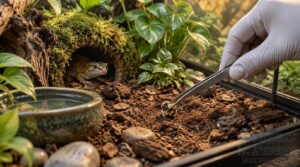
Ever wonder why some enclosures smell fresh and others reek? Daily spot cleaning is the difference. Remove feces, urates, shed skin, and uneaten prey the moment you see them, and replace water daily. Wipe dish rims with reptile-safe cleaners, lift damp substrate before mold settles, and bag waste in sealed bags. Good reptile waste management takes five minutes, tops.
Daily spot cleaning—removing waste, refreshing water, wiping rims—keeps your reptile’s enclosure fresh in five minutes flat
Weekly Habitat Checks
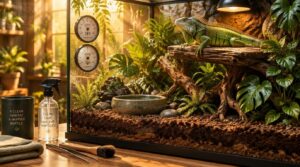
Sunlight cuts through the glass, and your weekly maintenance begins like a quiet inspection tour. Run your temperature mapping first: verify basking and cool zones with calibrated gauges. Check humidity control against condensation or dry patches.
Then inspect decor for cracks, stir compacted substrate, scrub water bowls, and watch your reptile’s behavior. Consistent weekly maintenance catches problems early!
Regular reptile habitat cleaning prevents bacterial growth, reduces stress, and helps avoid health issues like respiratory infections and parasite infestations.
Monthly Deep Sanitization
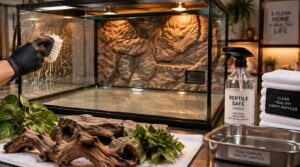
Picture your enclosure stripped bare, everything gleaming under the light, ready for a fresh start. That’s deep monthly sanitization done right.
Remove your reptile and all décor first. Scrub surfaces, then apply reptile-safe cleaning products and let them stay wet for the full label contact time. Rinse thoroughly and dry completely.
Replace porous items you can’t reliably scrub. In bioactive setups, sanitize only removable fixtures and preserve your clean-up crew’s media. Confirm heating and lighting work before reassembly.
Prevent Health Problems Through Maintenance
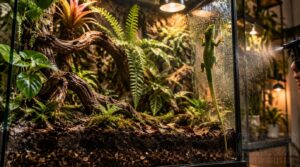
Good maintenance isn’t just about a tidy tank; it’s your reptile’s first line of defense against illness. A few preventable mistakes cause most health problems, so let’s make sure you’re not making them. We’ll cover cleaning errors to dodge, how to keep a bioactive setup thriving, and when it’s time to call your vet.
Avoid Common Cleaning Mistakes
Here’s the truth: most habitat problems come from well-meaning over-cleaning. Scrubbing everything strips beneficial microbes and stresses your animal.
Watch for these common mistakes:
- Using undiluted bleach or skipping the rinse
- Ignoring safety gear for cleaning, like gloves
- Letting your reptile roam during substrate changes
Stick to a sensible cleaning frequency, choose reptile-safe disinfectants, and monitor for irritation afterward.
Maintain Bioactive Enclosures
A bioactive enclosure is a living system. Isopods and springtails are your cleanup crew. Keep substrate moisture at 40–60%, checking monthly for anaerobic patches.
If your microfauna crash, don’t panic. Reintroduce a small sample from a healthy, established colony. Prune plants monthly so light and gas reach the beneficial microorganisms driving the environmental enrichment that’s keeping this whole setup balanced.
Know When to Call Veterinarians
Even the best reptile enclosure hygiene won’t catch every health issue. Call your vet immediately when you spot:
- Respiratory infections: open-mouth breathing or wheezing
- Tremors, seizures, or loss of coordination
- Sunken eyes with clear signs of dehydration
- Rapid swelling, uncontrolled bleeding, or severe trauma
- Multiple enclosure-mates suddenly showing similar symptoms
For zoonotic disease prevention, act quickly. When in doubt, call.
Frequently Asked Questions (FAQs)
How to maintain a reptile enclosure?
Good reptile enclosure maintenance combines daily spot cleaning, weekly habitat checks, and monthly deep sanitization. You’ll also need to monitor heat, humidity, and UVB output regularly, and use reptile-safe cleaning products before small problems escalate.
What is the hardest reptile to care for?
Jackson’s chameleons top the list. They demand nighttime temperature drops, precise UVB positioning, drip-only hydration, and strict single housing. Miss just one variable and their health quietly unravels long before you ever notice anything’s wrong.
Where to put a snake when cleaning an enclosure?
Nowhere near the cleaning supplies, obviously. Place your snake in a secure, escape-proof container with a hiding spot set up beforehand. Keep it warm, lid locked tight, and well away from fumes or wet surfaces.
How often should I replace UVB bulbs?
The bulb still glows, so why replace it? Because UVB output decays long before the light physically dies. Swap fluorescent UVB bulbs every 6–12 months, and use a UVB meter to catch any early drops.
What are signs of improper humidity levels?
Watch for retained shed on toes, dry chalky urates, or rapid substrate drying, which signal low humidity. On the flip side, mold growth and condensation on glass mean your ventilation airflow simply can’t keep up.
How do I safely introduce new décor?
One keeper learned the hard way when a loose branch trapped their skink overnight. Always test new décor on the floor for 24-48 hours first, then inspect for sharp edges or small gaps before mounting.
Can I use tap water for misting?
About 85% of U.S. households get chlorinated tap water.
You’re fine to mist with it, but dechlorinate first using a reptile-safe conditioner. Consistent water quality matters more than flawlessness, so pick one source and stick.
What substrate depth is recommended for burrowing species?
If your hognose keeps collapsing its burrow tunnel halfway down, that’s a classic substrate depth problem.
Burrowing species need at least 4–6 inches of loose, reptile-safe substrates, and bigger animals need considerably more than that.
How do you support a reptile during shedding?
Raise enclosure humidity and add a humid hide so your reptile can self-regulate its entire shed.
Don’t handle it during active shedding. If skin gets stuck, fix moisture and temperature gradients, never pull it off.
Can multiple reptiles safely share one enclosure?
It can sometimes work, but species compatibility is non-negotiable. Mismatched temperature needs, size differences, and competition for shared hiding spots make most pairings genuinely risky. When in doubt, always keep your animals in separate enclosures.
Conclusion
A keeper who caught a faint musty smell early stopped a respiratory infection before it became a vet visit. That’s what putting these reptile enclosure maintenance tips into a real routine buys you: time, confidence, and a healthier animal.
Small, scheduled checks catch what a quick glance misses. Keep the routine tight, stay curious about subtle shifts in behavior or humidity, and your enclosure won’t just look impressive. It’ll genuinely keep the animal inside thriving.