This site is supported by our readers. We may earn a commission, at no cost to you, if you purchase through links.
Your corn snake isn’t being mysterious. Every flick of its tongue, every rigid posture, every retreat into the hide box carries a clear signal once you know the code.
Corn snake behavior patterns reveal a surprisingly consistent inner logic rooted in biology, temperature, and instinct. Miss those cues and you’ll misread stress as calm, or curiosity as aggression. Get them right, and handling becomes easier, feeding goes smoother, and shedding stops catching you off guard.
This breakdown covers everything from body language and activity cycles to temperament and reproduction, so you can finally understand what your snake is actually telling you.
Table Of Contents
- Key Takeaways
- How to Read Corn Snake Body Language
- Corn Snake Activity Patterns and Seasonal Changes
- Corn Snake Feeding Behavior and Hunting Instincts
- What Shapes a Corn Snake’s Temperament
- Corn Snake Shedding and Reproductive Cycles
- Frequently Asked Questions (FAQs)
- How do corn snakes typically behave?
- How to tell if a corn snake is angry?
- How do you know if a corn snake is happy?
- Do corn snakes recognize you?
- What is the normal behavior of a corn snake?
- How do I know if my corn snake is happy?
- How to tell if a corn snake is stressed?
- How to know if a corn snake is angry?
- How do corn snakes interact with other pet reptiles?
- Can corn snakes recognize different human voices?
- Conclusion
Key Takeaways
- Your corn snake’s body language — from loose coils and slow tongue-flicks signaling calm, to rigid posture, head-raising, and mouth gaping signaling defensive arousal — is a reliable, readable system once you know what to look for.
- Corn snakes are crepuscular, most active at dawn and dusk, and their appetite, movement, and even temperament are heavily driven by enclosure temperature, so keeping a stable thermal gradient isn’t optional — it’s foundational.
- Feeding success depends on timing (offer food at dusk), prey sizing (roughly 1/4 to 1/3 of the snake’s girth), and using pre-killed thawed mice — getting these right prevents regurgitation and builds a consistent feeding response.
- Temperament isn’t fixed: genetics sets a baseline, but regular short handling sessions (10–15 minutes), predictable routines, and a well-enriched enclosure gradually reduce stress responses and build lasting tolerance over time.
How to Read Corn Snake Body Language
How your corn snake holds its body tells you almost everything. A loosely coiled, relaxed posture means it’s comfortable. Slow, deliberate movement confirms calm. Watch for those cues before you reach in.
Tongue-flicking paired with easy, unhurried movement is a great green light — recognizing calm versus stressed corn snake behavior helps you tell the difference with confidence.
Tongue flicking is your snake actively scanning its environment, not a threat signal. Frequent flicks near your hand signal curiosity. Reduced flicking often means disengagement or rising stress.
Know the warning signs: a wide mouth gape, lateral neck flattening, or a rigid body with a raised head all signal defensive arousal. A sudden stiffening recoil from contact often precedes a strike, so don’t push past it.
Consistent, gentle handling normalizes these responses over weeks. Your corn snake isn’t aggressive by default; it’s just trying to read you, too.
Your corn snake isn’t aggressive by default — it’s just trying to read you, too
Corn Snake Activity Patterns and Seasonal Changes
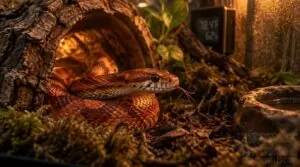
Once you can read your snake’s posture and tongue-flick rate, the next layer is timing. Corn snakes are crepuscular, meaning dawn and dusk activity peaks are normal. Don’t worry if yours hides all afternoon.
Seasonal shifts and ambient temperature also shape when your snake decides to explore, as explained in this guide to corn snake nocturnal and crepuscular behavior patterns.
Temperature drives everything. Your snake stays active above roughly 24–28°C (75–82°F) and slows noticeably once it drops below 18°C. Good temperature regulation and humidity control inside the enclosure keeps its rhythm stable year-round.
Seasonally, expect a natural brumation cycle: cooler temps and shorter days trigger reduced movement and appetite. This isn’t illness; it’s instinct. Habitat enrichment with hides and warm zones gives your snake the microhabitats it needs to self-regulate and behave naturally through every seasonal shift.
A reptile thermometer hygrometer combo lets you monitor both temperature and humidity at a glance, so you can catch enclosure shifts before they disrupt your snake’s natural rhythm.
Corn Snake Feeding Behavior and Hunting Instincts
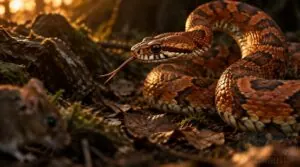
Those activity peaks at dusk aren’t random. That’s when your corn snake’s feeding behavior activates. It hunts by flicking its tongue to detect the heat of their prey and follow scent trails to the source.
This crepuscular rhythm is deeply instinctual — explore the full picture of corn snake hunting and reproductive behavior to understand how these drives connect across their life cycle.
Once contact is made, it’ll constrict tightly around the meal, cutting off circulation in seconds. Then it’ll swallow their prey whole, head-first.
Understanding your snake’s hunting strategies helps you feed it effectively. Keep these in mind:
- Offer food at dusk, when your snake is most alert and ready to strike.
- Match prey size to roughly 1/4 to 1/3 of your snake’s girth to prevent regurgitation.
- Use thawed, pre-killed mice for safety and consistent feeding responses.
Juveniles often hesitate. That sharpens with consistent feeding exposure.
What Shapes a Corn Snake’s Temperament
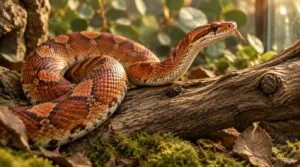
A corn snake’s temperament isn’t fixed—it’s shaped by a mix of factors you can actually influence. Genetics, age, and morph traits lay the foundation, but your husbandry choices build on top of that. Here’s what matters most.
Genetics, Age, and Morph Traits
Picture two hatchlings from the same clutch behaving completely differently. That’s genetics at work.
Co-dominant morph alleles can influence more than color; some lineages carry moderate heritability in activity levels, meaning bolder parents often produce bolder offspring.
Younger snakes are naturally skittish, but by six months of consistent handling, temperament stabilizes.
Your snake’s personality is partly inherited, not a flaw.
Handling, Enrichment, and Environment
Environment shapes behavior more than most keepers realize. Keep a thermal gradient running and your snake will move with purpose rather than huddle defensively.
Limit handling to 10-15 minutes per session. If tail flicking escalates, that’s your signal to stop. Rotate hides and add scent-based enrichment weekly. Predictability calms snakes, and disruptions near the enclosure raise their startle response noticeably.
Corn Snake Shedding and Reproductive Cycles
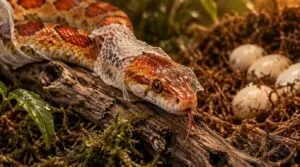
Shedding is one of the most visible markers of a healthy corn snake. Corn snake shedding behavior starts with pre-shed cues: dull coloration, cloudy or milky eyes, and reduced activity. In juveniles, shedding usually takes place over 12 weeks in multiple cycles due to rapid growth. Adults settle into 4-6 week intervals, and the shed completes within 24-72 hours. A complete tail-tip confirms a clean molt.
Corn snake mating behavior emerges in spring, when females show increased movement and abdominal fullness. After mating, she’ll lay a clutch of 12-24 eggs within 1-2 months. Sexual maturity arrives around 18-24 months, so younger snakes won’t display these patterns yet. Incubate eggs at 28-32°C with high humidity to give them the best start. A dedicated reptile egg incubator helps maintain the steady 28–32°C and humidity levels that give corn snake clutches the best hatch rates.
Frequently Asked Questions (FAQs)
How do corn snakes typically behave?
Corn snakes are curious, generally calm reptiles. They explore actively, tongue-flick constantly, and move with relaxed, deliberate purpose when comfortable. Stress tightens them; ease loosens them.
How to tell if a corn snake is angry?
Your snake won’t file a complaint. Watch for a coiled posture, an S shape ready to strike, rapid tail flicks, hissing, and a defensive posture with raised front body. These stress signs are clear warnings.
How do you know if a corn snake is happy?
Your corn snake’s happy when it moves with smooth, deliberate motions, flicks its tongue slowly, and settles into a loose, relaxed coil. These are calm signals that it trusts its space and feels genuinely secure.
Do corn snakes recognize you?
Probably not in the way you’d hope. What they do build is tolerance through routine, gradually responding to your scent and consistent handling patterns over time. It’s familiarity, not recognition, but it still truly matters.
What is the normal behavior of a corn snake?
Your pet’s normal routine involves active exploration at dusk, steady tongue flicking to read the air, and calm, loose body movement. A healthy corn snake moves with clear purpose and rests without any rigid tension.
How do I know if my corn snake is happy?
A relaxed, curious explorer is a content one. Watch for slow, deliberate movement, steady tongue flicking, and a genuine willingness to eat. Those three signals together clearly tell you your snake feels safe and settled.
How to tell if a corn snake is stressed?
Studies on captive reptiles show stress is among the top three causes of your snake’s refusal to eat. Watch for frequent hiding, defensive coiling, rapid tail flicking, head flattening, and a significant drop in appetite.
How to know if a corn snake is angry?
You’ll spot an angry corn snake by its S-shaped body coil, raised head, and loud hissing. If it then strikes or rattles its tail, it’s already past simple warning and into full defensive threat mode.
How do corn snakes interact with other pet reptiles?
Corn snakes are solitary by nature. Housed with other reptiles, they’ll hiss, coil defensively, and stress from persistent scent cues. Keep yours in its own enclosure. It’s not being antisocial; it’s just how they thrive.
Can corn snakes recognize different human voices?
Your snake can detect your voice, but vibrations and scent do the real recognition work. They don’t meaningfully tell apart human voices, and chemical cues matter far more than anything you ever say to them.
Conclusion
Picture your corn snake resting coiled under warm light, calm and unhurried. That stillness isn’t indifference. It’s trust, earned through attention.
Corn snake behavior patterns follow a consistent logic once you stop guessing and start observing. Every posture, feeding response, and shed cycle feeds into the same picture: a healthy animal communicating clearly. Read those signals right, and you stop reacting to problems and start preventing them. Your snake doesn’t need much, just someone paying attention.