This site is supported by our readers. We may earn a commission, at no cost to you, if you purchase through links.

Kitchen mistakes are the root of most snake feeding errors. A feeder pulled straight from the freezer, rushed under hot tap water, or left to sit on the counter can carry bacteria that silently harm your snake before the meal even begins.
Frozen snake food thawing sounds straightforward, but the difference between a lukewarm pinky and a properly warmed one shows up weeks later in your snake’s health.
Get the process right. Every feeding becomes predictable, safe, and stress-free for both of you.
Table Of Contents
- Key Takeaways
- Choose The Right Prey Size
- Store Frozen Prey Correctly
- Thaw Feeders Safely by Size
- Warm Prey for Feeding
- Feed Safely and Prevent Errors
- Frequently Asked Questions (FAQs)
- How long does it take to thaw snake food?
- How to feed a snake frozen and thawed?
- Can snakes eat frozen food?
- Can snakes eat thawed prey?
- How do you Thaw a snake?
- Should I Feed my snake frozen or thawed?
- How do you prepare frozen food for snakes?
- How do you feed a frozen thawed rat to a ball python?
- Can you feed snakes frozen food?
- How do you dispose of unused thawed prey?
- Conclusion
Key Takeaways
- Match prey width to your snake’s widest body point before every feeding, because size errors — not thawing mistakes — are the most common trigger for dangerous regurgitation.
- Always thaw using lukewarm water for small feeders or an overnight fridge thaw for large rodents, and never use the counter, microwave, or boiling water — those methods push prey into bacterial danger territory fast.
- Warm thawed prey to 95–105°F right before offering it, since that surface temperature mimics live prey and gives your snake the heat signal it needs to strike confidently.
- Once prey is thawed and warmed, it’s a one-shot deal — if your snake refuses, seal it and toss it immediately, because refreezing only pauses bacterial growth, it doesn’t undo it.
Choose The Right Prey Size
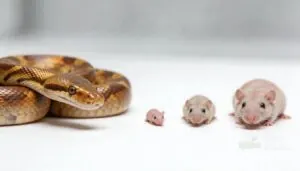
Getting the prey size right is the single most important step before you even think about thawing. Too big, and your snake may regurgitate — which is stressful for both of you and can lead to real health problems.
A good rule of thumb: match prey width to your snake’s widest body point — and if you’re unsure about the full feeding process, this guide on thawing frozen rodents safely for snakes walks you through each step so nothing gets missed.
Here’s what to know before you pull anything from the freezer.
Match Prey Girth to The Snake’s Widest Body Point
One quick measurement can prevent a world of digestion trouble. When choosing appropriate prey size for snakes, always measure the widest point of your snake’s midbody — not its head. The string tape technique works great here: wrap a soft string around the thickest section and compare it to your prey’s girth.
Body condition impacts this reading, and juvenile snakes’ widths change quickly, so check before every meal.
A small visual bulge after feeding is acceptable, but a dramatic ridge is not.
Use Supplier Sizing Charts for Mice and Rats
Once you’ve measured your snake’s girth, charts from suppliers like RodentPro streamline prey selection. Weight range precision is critical—for instance, pinky mice weigh 1.5–3 grams, while medium rats range from 120–200 grams. Prioritizing label consistency and supplier comparison ensures accurate orders. Always follow the general prey sizing guideline to maintain prey weight at 1–1.5 times the snake’s girth.
Look for three key elements in any sizing chart:
- Stage labels (e.g., "fuzzy" or "weaner")
- Gram ranges per size category
- Notes on weight span precision
Adjust Feeder Size for Hatchlings, Juveniles, and Adults
Your snake’s stage drives prey sizing more than age alone. A 200-gram juvenile still needs smaller feeders than a 400-gram juvenile — weight-based sizing matters most. Growth tracking helps catch size transitions early, especially for fast-growing juveniles.
| Life Stage | Typical Prey Choice |
|---|---|
| Hatchling | Pinky mice or rat pups |
| Juvenile | Fuzzies, hoppers, or rat pups |
| Adult (small) | Adult mice or small rats |
| Adult (large) | Medium or large rats |
Adjust your feeding schedule whenever body width changes.
Avoid Oversized Prey That Can Cause Regurgitation
Even with the right life stage matched, prey size selection can still go wrong. A visibly stretched body after swallowing is one of the clearest regurgitation indicators — and it means the meal was too big.
- Keep prey girth at or below your snake’s widest body point
- Watch body shape monitoring closely after every feeding
- Lower stress reduction risk by avoiding handling post-meal
- Space out feeding frequency — every 2–3 weeks for reluctant eaters
- Reassess prey weight ratios after any regurgitation event
Store Frozen Prey Correctly
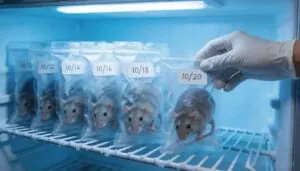
Good storage is what stands between a quality feeder and a wasted one. How you bag, label, and rotate your frozen stock matters more than most keepers realize.
Here’s exactly what to do to keep every feeder fresh from freezer to feeding day.
Use Airtight Zip-top Bags to Prevent Freezer Burn
Freezer burn is the silent feeder-killer — and a zip-top bag is your best defense. Air removal is everything here. Press out excess air before sealing, so the bag sits flat against the rodents. Flat packing means less exposed surface, fewer ice crystals, and better texture when you thaw.
For a full walkthrough on technique, proper frozen snake food preparation covers everything from storage to safe thawing without rushing the process.
| What to Check | Why It Matters |
|---|---|
| Bag material | Freezer-grade bags resist cracking in cold storage |
| Double seal | Adds a second barrier against dry freezer air |
| Seal inspection | Gaps let cold air in, causing pale, leathery spots |
| Flat packing | Speeds up freezing and protects feeder texture long-term |
Always use a proper sealed plastic bag — preventing freezer burn in frozen feeder rodents starts before they ever hit the freezer.
Label Each Bag With Size and Date
Two things belong on every zip-top bag: the rodent size and freeze date. Grab a waterproof marker and write clearly — label readability matters after months of freezer storage. A color-coded system works great for bulk buyers.
- Mark size (pinky, fuzzy, adult rat)
- Note the freeze date for tracking freezer storage duration
- Add weight for smarter portion planning
Follow First-in, First-out Stock Rotation
Think of your freezer like a mini warehouse. FIFO labeling keeps older stock up front — always use it before the new batch. Shelf zoning makes rotation checks fast and obvious.
| Batch | Position | Action |
|---|---|---|
| Oldest | Front/top | Use first |
| Mid stock | Middle | Use second |
| Newest | Back/bottom | Use last |
Good inventory lot tracking and consistent cold chain logistics mean nothing gets buried and forgotten.
Discard Prey Stored Too Long or Showing Freezer Damage
Once prey shows signs of freezer burn — those grayish, leathery patches — or has been stored past six months, it’s time to let it go.
Packaging damage accelerates spoilage indicators like off-odors and discoloration. Temperature abuse during storage means bacterial contamination becomes a real risk after thawing.
Don’t hesitate: safe disposal protects your snake. When storage history is unclear, discard the frozen rodents.
Keep Feeders in a Chest or Kitchen Freezer
Both freezer types work—it’s really about your setup and how many feeders you keep on hand.
- Chest freezer — Best for bulk buyers. The top-opening design keeps cold air in, and Space-Saving Bins organize your stock by size.
- Kitchen freezer — Fine for small supplies with quick rotation and overnight storage.
- Dedicated Feeder Section — Separates feeders from family food and simplifies Freezer Temperature Monitoring.
Thaw Feeders Safely by Size
Thawing isn’t one-size-fits-all — a tiny pinky mouse and a jumbo rat need very different treatment. Get it wrong and you risk uneven temperatures, bacterial growth, or prey that just doesn’t smell right to your snake.
Here’s exactly how to handle each size safely.
Thaw Pinkies and Fuzzies in Lukewarm Water
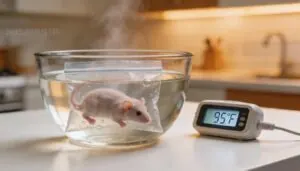
For pinkies and fuzzy mice, lukewarm water around 90°F is all you need. Perform a quick pre-feeder inspection — ensuring no ice at the core and no stiff spots. Seal your feeder in a zip-top bag, then submerge it.
Water bath duration varies: a pinky mouse thaws in minutes, while fuzzy mice require under an hour.
Safe thawing techniques for reptile prey emphasize temperature management during rodent thawing — never rush it.
Refrigerator-thaw Medium and Large Rodents First
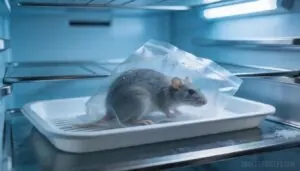
Bigger feeders need a slower start. For medium and large frozen rodents, refrigerator thaw is the right move — set your fridge to around 40°F and use night-before placement so the center has time to fully soften. A drainage tray underneath catches any liquid.
Mice need roughly 8 hours; rats often need 12 or more for an even core thaw.
Use a Sealed Bag During Water Baths
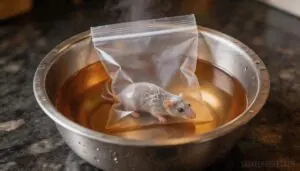
Whether you’re using a warm water bath or a cold water bath, always keep the feeder sealed inside a ziptop bag or sturdy plastic bag. This isn’t just about cleanliness — its your contamination barrier. A tight seal maintains temperature consistency throughout the thaw, prevents leakage, and protects scent compounds.
Compromised seal integrity means waterlogged prey and a snake that loses interest fast.
Change Cold Water Regularly if Using That Method

Cold water loses heat fast once a frozen rodent sits in it — so water change frequency matters more than most keepers realize. For reliable temperature consistency and thawing efficiency, swap the water every 30 minutes. Large rats may need changes every 10–15 minutes.
Keep these cold water bath guidelines in mind:
- Change water every 30 minutes for mice
- Swap every 10–15 minutes for large rats
- Fresh water prevents uneven thaw between outer and inner tissue
- Stagnant water collects blood and debris — hygiene control matters
- Consistent changes keep the thawing process on schedule
Never Counter-thaw, Microwave, or Boil Prey

Stagnant water poses risks, but three shortcuts are even more dangerous. Counter-thawing leaves prey in the 40–140°F temperature danger zone, where bacterial growth accelerates rapidly. Microwaving causes uneven heating, cooking the exterior while the core remains frozen. Boiling creates similar issues, destroying texture irreversibly.
| Method | Problem |
|---|---|
| Counter-thaw | Bacterial growth in danger zone |
| Microwave | Uneven heating, partial cooking |
| Boiling water | Ruins texture, hot outside/frozen core |
Stick to safe thawing techniques for reptile prey—your snake’s health depends on precise temperature control.
Warm Prey for Feeding
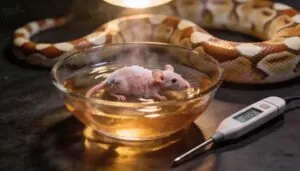
Getting the temperature right before feeding makes a real difference in whether your snake strikes or ignores the prey. A properly warmed feeder mimics the feel of live prey, which is exactly what triggers a feeding response.
Here’s how to nail the warm-up step by step.
Finish With a Warm Water Bath After Thawing
Once your feeder is fully thawed, a warm water bath bridges "cold to done" to ready to eat. This step focuses on heat cue amplification — warming the surface so your snake’s heat-sensing pits register the prey as food.
Keep these bath timing precision rules in mind:
- Always confirm the thawing process is completely finished before starting the warm bath
- Use lukewarm water (around 110–120°F) with strict temperature control
- Maintain bag seal integrity — a broken seal causes surface sogginess and scent loss
- Use temperature monitoring tools like an infrared thermometer for accuracy
- Apply safe thawing techniques: brief soaks only, never prolonged submersion
Target a Surface Temperature Around 95–105 °F
That 95–105 °F sweet spot is your target for a reason — it closely mimics the surface warmth of live prey, giving heat-sensitive snakes a clear thermal signal.
Use an infrared thermometer for accuracy, but dry the surface first; moisture creates emissivity effects that skew readings.
Check the body mass, not just the tail, to avoid hot-spot surprises.
Use a Brief Hot-water Dip for Final Warmth
Once your prey is fully thawed, a quick hot water bath brings the surface to feeding temperature fast. Keep it sealed — Bag Integrity Assurance means no waterlogging, no scent loss.
Here’s how Dip Duration Precision works:
- Fill a bowl with hot tap water
- Submerge the sealed bag for 10–15 seconds
- Use Temperature Monitoring Tools to confirm 95–105 °F
- Lift, squeeze, and pat dry
- Offer immediately with tongs
Temperature matters — Rapid Surface Warmth triggers your snake’s heat receptors naturally.
Watch for Signs of Overheating or Partial Cooking
Overheating is easier to miss than you’d think. Watch for Color Indicators like fur peeling or grayish skin, Texture Changes such as rubbery or crumbly flesh, and Surface Damage where the outer layer splits.
Odor Warnings are hard to ignore — a boiled-meat smell means you’ve gone too far. Use Thermometer Readings to confirm 95–105 °F and avoid that temperature danger zone.
Pat Prey Dry Before Offering It
Once everything looks good, dry off the rodent before it goes into the enclosure. A quick pat with a paper towel manages moisture control, grip stability, and heat preservation all at once — wet prey slips from tongs and cools faster. It’s a small step, but it’s a genuine sanitation boost.
Good prey aesthetics and hygiene in feeding matter for food safety for reptiles, preventing bacterial contamination during feeding.
Feed Safely and Prevent Errors
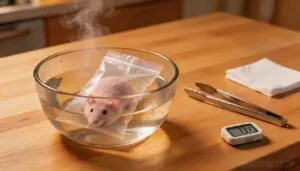
Getting the prey ready is only half the job. How you offer it — and what you do right after — makes a real difference in keeping both you and your snake safe.
From the moment tongs enter the enclosure to the time you’re cleaning up, what to keep in mind includes careful handling and post-feeding precautions. This ensures a controlled, secure process for all involved.
Offer Thawed Prey With Long Feeding Tongs
Long feeding tongs are your best tool here — they keep your hand out of the strike zone and your snake focused on the meal, not you. Tong length selection matters: 12 to 24 inches works for most setups.
- Choose rubber-tipped tips to protect your snake’s mouth on hard strikes.
- Use a controlled wiggle technique — slow, steady movement mimics live prey without confusing the snake.
- Practice hand-free positioning, gripping the prey firmly so it doesn’t slip mid-presentation.
Consistent tong use also reinforces calm feeding habits over time.
Present Prey in Low-light or Evening Hours
Timing matters more than most keepers realize. A dim lighting setup and evening routine can flip a reluctant feeder into a reliable one — because snakes hunt by nighttime cues, not daylight.
| Light Level | Feeding Response |
|---|---|
| Bright room | Often refused |
| Dimmed lights | Moderate success |
| Lights-out | Strong response |
| Evening routine | Most consistent |
A low-light environment, combined with proper handling and presentation of thawed prey, naturally reduces stress in reptiles.
Reinforce The “tongs Mean Food” Response
Once your snake sees tongs consistently, that Visual Tongs Signal becomes a reliable feeding cue — like a dinner bell, it actually understands. Consistent Cue Timing and a Predictable Motion Pattern build trust fast.
Here’s what reinforces the response:
- Always use the same tongs
- Offer prey at the same angle
- Move slowly and steadily
- Release cleanly after the strike
Never Refreeze Thawed Prey After Warming
Once your snake refuses a meal, don’t be tempted to refreeze that warmed feeder. Refreezing hazards are real — you’ve already started the safety clock.
Warming prey triggers bacterial proliferation fast, pushing it deep into the temperature danger zone (40–140°F). Refreezing only pauses that bacterial growth risk; it doesn’t reset it.
Refreezing thawed prey pauses bacterial growth — it never resets it
Quality degradation follows too, with texture and scent breaking down.
Thaw once, offer once, discard if uneaten.
Sanitize Bowls, Tongs, and Prep Surfaces Afterward
Now that the feeder is gone, don’t skip the cleanup — bacterial contamination doesn’t care that feeding is over. Cleaning before sanitizing matters: scrub bowls and tongs with soap first, then apply a food-safe sanitizer with complete surface coverage, including grips and seams.
- Scrub all equipment with soap and water
- Apply food-safe sanitizer; let it sit
- Air-dry fully before storage — drying protocols prevent recontamination
Avoid cross-contamination by storing clean tools separately.
Avoid Handling The Snake Until Digestion is Complete
Once your snake takes that meal, step back — digestion is serious business. Most keepers wait at least 48 to 72 hours as a digestion rest period, and longer for larger prey. Handling stress effects can shift blood flow away from the gut, raising the risk of regurgitation.
Avoid enclosure disturbance, practice post-feeding observation, and remember: these postfeeding tips protect your snake’s digestive health more than almost anything else.
Frequently Asked Questions (FAQs)
How long does it take to thaw snake food?
Thaw time depends on size. Pinkies need about an hour in lukewarm water. A fridge thaw timeline for rats runs 8–12 hours overnight.
Never leave prey at room temperature — that’s where spoilage wins.
How to feed a snake frozen and thawed?
Proper presentation, patience, and persistence pay off. Grip the thawed prey with long feeding tongs, lower it slowly toward your snake’s head, and let scent amplification do the rest.
Can snakes eat frozen food?
Yes, snakes can absolutely eat frozen prey — and most thrive on it.
It’s cost-efficient, safer than live feeding, and with proper thawing techniques, it preserves full nutritional adequacy for your snake’s long-term health.
Can snakes eat thawed prey?
Absolutely — snakes digest thawed prey just as well as live prey. Veterinary recommendations consistently support it.
Warm it to 95–105 °F, and your snake’s feeding behavior and digestive efficiency stay completely on track.
How do you Thaw a snake?
To warm frozen prey safely, use a warm water bath set between 95–105 °F. Gradual acclimation through temperature monitoring ensures proper thawing frozen rodent prey safely without cooking the tissue.
Should I Feed my snake frozen or thawed?
Always feed thawed — never frozen. Thawed prey improves scent attraction, aids nutritional retention, and eliminates injury prevention concerns. Frozen rodents served cold get ignored or cause digestion problems.
How do you prepare frozen food for snakes?
Pick the right size, thaw the food safely, and warm it to about 95–105°F before feeding.
Match the prey’s girth to your snake’s widest point, then use a warm water bath for proper temperature management.
How do you feed a frozen thawed rat to a ball python?
Grip the thawed rat with long feeding tongs and lower it slowly toward your ball python’s head in low light. That gentle movement triggers a natural strike response without stressing your snake.
Can you feed snakes frozen food?
Yes, snakes can absolutely eat frozen prey — and most experienced keepers prefer it. It’s safer, more cost-efficient, and removes live-feeding risks entirely. Just make sure it’s fully thawed first.
How do you dispose of unused thawed prey?
If your snake refuses, seal the thawed feeder in a bag and toss it immediately. Don’t refreeze it.
Wipe down tongs and surfaces, wash your hands, and start fresh next feeding.
Conclusion
Like a puzzle, thawing frozen snake food safely requires each piece to fit perfectly. By following these steps, you’ll create a healthy feeding routine.
Mastering this process ensures your snake’s meals are predictable, safe, and stress-free. With practice, you’ll navigate this process with ease, giving your pet the best chance to thrive.