This site is supported by our readers. We may earn a commission, at no cost to you, if you purchase through links.

Most respiratory infections I treat trace back to one thing: an enclosure that looked fine to the owner but failed the snake physiologically. Wrong humidity, no thermal gradient, a hide crammed in the wrong corner. Snakes can’t tell you something’s off until symptoms show up, and by then you’re often looking at a vet bill instead of a simple fix.
Building healthy snake habitats isn’t guesswork. It comes down to specific measurements, correct materials, and a maintenance routine you actually follow.
Get the enclosure size, temperature zones, and substrate right from day one, and you’ll spend less time treating problems and more time watching your snake thrive.
Table Of Contents
- Key Takeaways
- Choose The Right Snake Enclosure Size
- Create Proper Temperature and Humidity Gradients
- Add Safe Substrate, Hides, and Enrichment
- Set Up Feeding and Water Areas
- Clean and Monitor The Snake Habitat
- Frequently Asked Questions (FAQs)
- What is the best habitat for a snake?
- What is the lowest maintenance snake?
- How can you tell if a snake is healthy?
- What state has the worst snake problem?
- Can snakes live with other reptile species together?
- How often should I handle my pet snake?
- What are signs of stress in captive snakes?
- Do snakes need veterinary checkups and vaccinations?
- How do I safely transport my snake?
- Can different snake species share one enclosure?
- Conclusion
Key Takeaways
- Size your snake’s enclosure for its adult length (not its current size), with width equal to length plus a third, so it has room to stretch, turn, and thermoregulate comfortably.
- Set up two distinct temperature zones—a warm basking spot (28-32°C) and a cooler retreat (22-26°C)—using thermostat-controlled heaters and digital probes, since guessing at temperature is what leads to most health problems.
- Choose safe substrates like coconut fiber or aspen (never cedar or pine), and place matching hides on both the warm and cool sides so your snake always has somewhere to retreat.
- Stick to a weekly cleaning routine and watch closely for warning signs like wheezing, mouth gaping, or lethargy, since catching respiratory issues early can mean the difference between a quick fix and an emergency vet visit.
Choose The Right Snake Enclosure Size
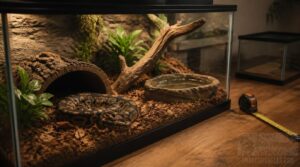
Enclosure size sits at the foundation of every healthy snake habitat, affecting everything from digestion to stress levels. Get this wrong, and no amount of fancy decor or perfect temperatures will fix it. Here’s what you need to think about before picking a tank or terrarium.
If you’re just starting out, this guide to choosing the right enclosure for beginner snake owners breaks down sizing and ventilation basics species by species.
Match Length to Adult Size
One rule guides every enclosure decision: size it for the snake your pet will become, not the one you’re holding today.
Size the enclosure for the snake your pet will become, not the one you’re holding today
Full-length habitat sizing prevents costly upgrades later.
- Measure adult length, add a few inches
- Research your species’ growth rate
- Use a snake enclosure size calculator
- Plan upgrades before your snake outgrows its space
Provide Adequate Turning Space
Length alone won’t stop a snake from feeling boxed in. Width needs to equal length plus one third, giving room for body curvature allowance during full turns.
| Snake Length | Min Width | Turning Radius |
|---|---|---|
| 4 ft | 5.3 ft | 3 ft |
| 6 ft | 8 ft | 4.5 ft |
| 8 ft | 10.6 ft | 6 ft |
Favor a rectangular footprint over square setups for lateral movement.
Prioritize Height for Arboreal Species
Floor space matters, but arboreal species measure home by height, not width. Green tree pythons and emerald tree boas need vertical climbing structures reaching the top third of the enclosure. This mirrors patterns seen in wild ecosystems, where research on vertical climate stratification in rainforests shows that temperature and moisture can shift dramatically between ground and canopy levels, reinforcing why height-based zones matter for arboreal species.
- Sturdy branches at varying diameters
- Elevated basking platforms near heat sources
- Height-based temperature zones (2-6°F gradient)
- Secure vertical aids rated for body weight
- Multi-level hiding spots at different elevations
Plan Juvenile Enclosure Upgrades
Juveniles outgrow their first setup fast, so plan enclosure upgrades before they’re overdue. Track growth monthly and size housing at 1.5 to 2 times body length. Use a size-based upgrade cue: once your snake fills two-thirds of floor space, move up.
Species research and a growth rate planning log keep transitions smooth and stress-free.
Ensure Ventilation and Escape Prevention
Snakes are escape artists first, pets second. Mesh vents placed high and low keep air moving without drafts hitting your snake directly.
For sizing and placement that actually work, check out these snake-friendly tank design tips before you drill a single hole.
Locking lids, smooth interior surfaces, and secondary door seals stop climbing or squeezing out. PVC enclosures with aquarium-grade silicone resist warping. Check screens weekly for gaps, and confirm airflow with a probe near vents.
Create Proper Temperature and Humidity Gradients
Getting the size right is only step one—your snake also needs a habitat that mimics its natural thermal world. Temperature and humidity aren’t just comfort features; they drive digestion, shedding, and overall physiological health. Here’s exactly what your setup needs to get right, zone by zone.
Establish Warm and Cool Zones

Your snake’s enclosure needs two distinct climates, not one uniform temperature. Aim for a basking spot temperature of 28-32°C and cool zone temperature around 22-26°C, with 5-15°C separating them. Provide warm side hides and cool side hides so your snake chooses freely.
Once those temperature zones are set, a bioactive vivarium setup for snakes helps hold steady humidity and gives your snake natural places to retreat.
- Basking surface: 28-32°C
- Cool zone: 22-26°C
- Gradient span: 5-15°C
- Hides on both sides
- Unrestricted zone access
Install Thermostat-Controlled Heat Sources

Skip loose heat bulbs sitting in a dish.
Thermostat-controlled heat sources keep temperatures locked within 1-3°F of target. Under tank heaters need thermostats to prevent substrate overheating, while ceramic heat emitters radiate infrared warmth without light, safely reaching basking zones near 90°F.
Place your probe near the basking surface, never touching skin or substrate directly, for accurate calibration and burn prevention.
Monitor Temperatures With Digital Probes

A thermostat controls the heater, but only a probe tells you the truth about your gradient.
- Use two digital thermometers, one per zone
- Mount probes at basking height, not floor level
- Keep sensors off substrate and heat sources
- Calibrate probes monthly for accuracy
- Log readings every 30-60 minutes
Accurate probe placement prevents blind spots that harm thermoregulation and shedding cycles.
Adjust Species-Specific Humidity Levels

Desert species and rainforest natives don’t share a hygrometer setting, and treating them the same invites illness. Ball pythons need 60-80% humidity, corn snakes only 40-50%.
Build a humidity gradient with targeted misting, checking twice daily during seasonal shifts. Raise levels 5-15% during shedding windows, then dial back. Juveniles need higher humidity than adults, adjusted gradually over one to two weeks.
Set Lighting and UVB Schedules
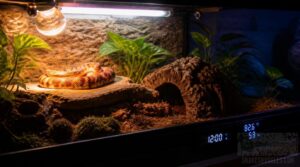
Light drives circadian rhythms as much as temperature does, and skipping UVB scheduling undercuts every other effort in the enclosure.
- Lamp placement: 12-18 inches above basking spots
- UVB intensity: UV index 2-6, species-dependent
- Photoperiod: 12-hour on/off timer cycle
- Bulb replacement: every 6-12 months
Match UVB requirements to species, then let the timer hold that day-night cycle steady.
Add Safe Substrate, Hides, and Enrichment

Once your thermal gradient is dialed in, the enclosure still needs the right materials underneath and around your snake. Substrate, hides, and enrichment items aren’t just decoration—they directly affect your snake’s physical health and stress levels. Here’s what to choose, and what to avoid, when filling out the rest of the habitat.
Choose Low-Risk Substrate Materials
Substrate choice affects your snake’s health daily, from shedding quality to respiratory function.
Choosing the right bedding is one of the most impactful decisions you’ll make for your snake’s long-term wellbeing, and these snake habitat health tips explain exactly why inert substrates like aspen outperform aromatic wood shavings every time.
| Substrate | Moisture Control | Impaction Risk |
|---|---|---|
| Coconut fiber | Excellent | Low |
| Reptile bark | Good | Low |
| Paper substrate | Poor | Minimal |
Nontoxic materials like coconut husk and sphagnum moss stabilize humidity. Replace fully every 6-12 months, spot-cleaning weekly between changes.
Avoid Cedar and Pine Shavings
Coconut fiber and reptile bark handle moisture well, but cedar and pine still show up on store shelves. Their oils irritate airways and skin, and dry out enclosures fast. Skip them entirely.
Better bedding choices:
- Aspen substrate
- Reptile carpet
- Recycled paper
Toxin-free bedding keeps humidity stable and cuts cleaning time. Your snake’s lungs will thank you.
Place Hides on Both Sides
Bedding choice solves one problem, but snakes still need somewhere to disappear. Place a security hide on the warm end and another on the cool end, mirroring each other across the tank. This dual hide placement creates symmetric refuge points, giving your snake thermoregulation access without crossing exposed space.
Balanced retreat zones also improve visual monitoring angles, so you can check on your snake without forcing it out of hiding.
Add Branches and Basking Platforms
Once hides are set, add climbing features. Choose branches 1.5 to 3.0 inches in diameter, secured at varying angles for multi-level exploration.
Basking platforms need a non-slip, inert surface, slate or treated resin works well. Position them within the warm zone, 6 to 12 inches above substrate for tropical species, adjusting lower for smaller snakes.
Choose Non-Toxic Terrarium Plants
Live greenery adds cover, but only after plant safety verification.
Boston fern and bromeliad varieties handle 60-80% humidity well, suiting most tropical setups. Match light requirement matching to your enclosure’s UVB output, plan for growth space planning, and rinse roots to make sure they’re pesticide-free preparation.
Skip anything marketed loosely as "petsafe plants" without confirming toxicity data first.
Set Up Feeding and Water Areas
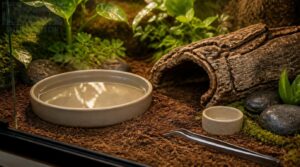
Feeding and hydration deserve the same attention you give temperature and substrate. A poorly placed water bowl or an oversized meal can undo weeks of careful habitat work fast. Here’s what you need to get this part right.
Choose a Stable Water Bowl
A tipped bowl means a flooded, moldy enclosure, so stability isn’t optional. Choose circular, weighted bases with non-skid bottoms and gradual slope walls.
- Reduced spill risk
- Easier daily cleaning
- Fewer bacterial hotspots
- Lower stress at drinking time
Match capacity to body size (100-600 mL) and prioritize stainless steel or ceramic for safe, sanitizable, corrosion-resistant material.
Keep Water Clean and Accessible
Stagnant water breeds bacteria fast. Daily water changes keep bowls fresh, using dechlorinated water free of chlorine irritants.
Weekly, scrub bowls with hot water and unscented soap. Monthly, run a deep disinfection cycle.
Place bowls on the warm side, elevated slightly if substrate splashes, and wipe rims often to prevent biofilm and contamination.
Match Prey Size Appropriately
Prey width matters more than length. Match rodent size to your snake’s thickest body section, not overall size.
Juveniles eat baby mice sized one-third their girth. Adults handle prey near their own width.
Track feeding response each meal, reassess after molting, and source rodents ethically. Frozen prey reduces injury risk and impaction concerns a lot.
Prevent Substrate Ingestion
Feeding strikes turn risky when substrate clings to prey. Use a separate feeding enclosure with bare, smooth flooring, or feed on paper towel strips instead.
Keep substrate particle size above 1/4 inch to reduce ingestion odds. Run daily substrate inspection for missing chunks.
Maintain proper humidity level maintenance too, damp substrate sticks to tongues far more easily than dry.
Remove Uneaten Prey Promptly
A rat left overnight isn’t just wasted food, it’s a bacterial liability. Remove uneaten prey within 2 hours to curb spoilage and odor buildup.
For a full breakdown of enclosure hygiene alongside sizing, these ball python cage setup tips cover how proper space and cleanliness routines work together to keep your snake healthy.
Frozen-thawed prey decomposes fast at basking temperatures, inviting mites and pests. Align cleanup with your feeding schedule, check the water dish too, and log regurgitation issues, which often signal deeper husbandry problems.
Clean and Monitor The Snake Habitat
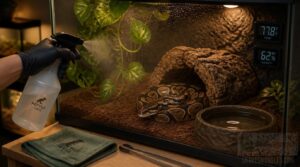
A well-built habitat still needs routine upkeep to stay healthy long-term. Cleaning schedules and daily observation catch problems before they become veterinary emergencies. Here’s what your maintenance routine should cover, from weekly tasks to warning signs worth watching for.
Spot-Clean Waste Every Week
Check the enclosure floor daily after feeding, and commit to spot-cleaning waste weekly regardless.
Glove up, bag feces in a sealed trash bag, and wipe the area with reptile-safe disinfectant. Ventilate the room to control odor, keep the lid closed during removal, and log waste amount and timing.
This weekly cleaning schedule catches health changes early.
Replace Substrate on Schedule
Spot-cleaning controls daily waste, but full substrate replacement is a different job. Swap it out every four to six weeks in most enclosures, or one to two weeks if it’s compacted or moldy.
This controls ammonia buildup, balances humidity, and stops mold before it starts. Check ventilation each time you refresh it.
Disinfect Enclosure and Decor Monthly
Substrate swaps handle waste, but bacteria and mold cling to surfaces too.
Once monthly, relocate your snake to a heated temp container, then wipe walls with chlorhexidine diacetate at 10%, letting it sit 2 minutes. Rinse thoroughly, dry 24 hours. Wear gloves, ventilate the room, and skip pine-scented cleaners entirely. Log the date for your records.
Check for Mites and Scale Rot
Disinfecting kills bacteria you can’t see, but pests and infections need eyes-on checks. Look for tiny moving dots near the vent and eye caps, plus ash-colored droppings on scales. Run fingers against the grain to feel raised, irritated scales. Dark belly patches or oozing spots signal scale rot. A jeweler’s loupe helps confirm mites on shed skin.
Watch for Respiratory Warning Signs
Because respiratory infections can turn fatal within 24 hours, hold your snake near your ear weekly to listen for wheezing or gurgling.
Watch for:
- Mouth gaping without recent feeding
- Nasal discharge or bubbles
- Head raised above body
- Lethargy past three days
Same-day vet care prevents pneumonia from advancing.
Frequently Asked Questions (FAQs)
What is the best habitat for a snake?
There’s no single "perfect" enclosure, but there’s a clear formula. The best habitat matches proper sizing (5x adult length), a solid thermal gradient, species-specific humidity, safe substrates, and secure hiding spots on both ends.
What is the lowest maintenance snake?
King snakes top the list for low maintenance care, tolerating 72-84°F swings, moderate humidity, and reliable feeding every 7-14 days.
Their escape resistance and calm temperament make routine care simple, even for first-time keepers managing a beginner-friendly enclosure.
How can you tell if a snake is healthy?
Bright eyes, dull days: a healthy snake shows clear eyes, smooth skin, stable weight, and regular droppings. Consistent breathing and steady body condition matter too, since sluggish behavior often signals trouble before symptoms turn obvious.
What state has the worst snake problem?
That question falls outside wild population data and snake bite statistics, not enclosure design. Your focus should stay on captive care: proper temperature gradient, humidity control, safe substrate, and hiding spots keep any species healthy, regardless of regional wild snake prevalence.
Can snakes live with other reptile species together?
Mixing species is generally not recommended. Differing temperature, humidity, and feeding needs raise stress, predation, and cross-contamination risks. Keep snakes housed separately, and always quarantine new arrivals before introducing them near any existing collection.
How often should I handle my pet snake?
Keep handling to once or twice weekly, sessions under 30 minutes, in a room near 75-80°F. Skip handling one to two days before feeding and two days after, letting digestion settle undisturbed.
What are signs of stress in captive snakes?
Your snake won’t send an SOS, but its body practically screams one. Watch for feeding behavior changes, excessive hiding, mouth breathing, or shedding problems. These signal stress, so adjust husbandry and reduce handling immediately.
Do snakes need veterinary checkups and vaccinations?
Yes. Schedule annual checkups with a reptile veterinarian for fecal parasite testing and a health baseline. Vaccinations aren’t necessary, but watch for respiratory infection signs, appetite changes, or skin issues between visits.
How do I safely transport my snake?
A lockable, ventilated carrier sized to your snake’s length prevents escape and reduces stress. Line it with soft substrate, maintain stable warmth, and handle gently, supporting the whole body during loading.
Can different snake species share one enclosure?
Picture two gladiators forced to share a tent. Most snakes are solitary, so cohabitation raises real risks: competition, cannibalism, and stress. A proper Species Compatibility Assessment and vet guidance matter before ever housing snakes together.
Conclusion
Yes, this takes more effort than tossing a snake in a tank with a water bowl. But that effort pays off in fewer vet visits and a calmer, healthier animal.
Healthy snake habitats aren’t built once and forgotten. They’re maintained through consistent temperature checks, clean water, and weekly monitoring.
Get the fundamentals right, and your snake’s biology does the rest. Watch closely, adjust as needed, and you’ll rarely see the inside of my exam room for the wrong reasons.