This site is supported by our readers. We may earn a commission, at no cost to you, if you purchase through links.

Most snakes escape not because their owner was careless, but because the enclosure was never quite right to begin with—wrong size, poor ventilation, a lid that didn’t lock properly. Snakes are patient problem-solvers, and they will find every flaw you missed.
Getting your indoor snake habitat right from day one means your snake stays safe, stress levels drop, and you actually enjoy the experience instead of dreading it. The right setup covers five things: enclosure type, substrate, temperature, humidity, and enrichment. Nail those, and you’ve built a home your snake can thrive in for years.
Table Of Contents
- Key Takeaways
- Choosing The Best Indoor Snake Enclosure
- Selecting Safe and Effective Substrate
- Creating Proper Temperature and Humidity
- Designing a Comfortable Snake Environment
- Step-by-Step Indoor Habitat Setup Guide
- Maintaining Cleanliness and Monitoring Health
- Frequently Asked Questions (FAQs)
- What do snakes need in their vivarium?
- What are signs of stress in snakes in enclosures?
- How often should I handle my snake?
- Can snakes live together in one enclosure?
- Whats the average lifespan of indoor snakes?
- Do snakes need special lighting or UVB?
- How much does maintaining indoor snakes cost?
- How often should I feed my pet snake?
- Can snakes recognize their owners over time?
- What causes bad breath or odors in snakes?
- Conclusion
Key Takeaways
- Most snake escapes happen because the enclosure was wrong from the start — wrong size, flimsy lid, or gaps a snake’s head can fit through, so security isn’t optional.
- Matching your substrate, temperature gradient, and humidity to your snake’s specific species is what separates a snake that thrives from one that’s constantly stressed.
- Skipping daily spot cleaning and regular deep cleans isn’t just a hygiene issue — it’s how bacteria, parasites, and respiratory problems quietly build up before you notice anything’s wrong.
- A well-designed habitat isn’t just functional; hides, climbing structures, and a proper water bowl give your snake the mental and physical stimulation it needs to behave naturally for its entire 15–30 year lifespan.
Choosing The Best Indoor Snake Enclosure
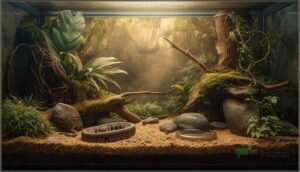
Picking the right enclosure is honestly one of the most important decisions you’ll make for your snake. The material, size, and security features all play a bigger role than most new keepers expect.
Getting these fundamentals right early on sets your snake up for a healthier life, and the same careful thinking applies when you’re choosing ball python safe bedding options to pair with your setup.
Here’s a look at the main options so you can figure out what fits your snake best.
Glass, PVC, and Wooden Options
Your enclosure choice shapes everything — temperature, humidity, and your snake’s daily comfort.
Glass aquariums offer crystal-clear visibility and suit drier species, but their mesh tops make humidity control a real struggle. PVC enclosures win on thermal insulation and ventilation systems, holding heat efficiently with less energy. Wooden options insulate well too, though they demand proper sealing.
For reptile enclosure setup success, match enclosure durability and material to your snake’s habitat requirements. For more details on the strengths and weaknesses of each, see this overview of reptile enclosure materials explained.
Sizing for Different Snake Species
Getting the size right depends on your snake’s species, age, and habits. Snake Length Guidelines suggest matching enclosure length to body length. That’s your starting point for Habitat Dimension Planning.
- Corn snakes: 48″L × 24″W × 24″H minimum
- Adult ball pythons: 4′ × 2′ × 1′ for floor space
- Adult boas (6–8 ft): 6′ × 3′ × 3′
- Hognose females: 40-gallon, roughly 36″ × 18″ × 16″
For thorough reference, see these. Growth Stage Considerations matter too — plan ahead.
Security Features and Escape Prevention
Once you’ve got the right size nailed down, security is your next priority. Snakes are genuinely gifted escape artists — if their head fits through a gap, the rest usually follows.
Use secure lids with screen clips on opposite sides, add door locks on front-opening enclosures, and take cable management seriously. A thermostat probe running under a lid lifts it just enough for escape. Solid escape proofing means no gaps, no shortcuts.
Selecting Safe and Effective Substrate
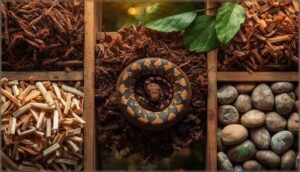
The substrate you choose is more than just bedding material — it shapes your snake’s comfort, health, and daily life inside the enclosure.
Some materials hold humidity levels beautifully, others excel at controlling odors, and a few should never go anywhere near your snake. Here’s a look at the most common substrate options and what each one brings to the table.
Aspen, Coconut Fiber, and Reptile Carpet
Substrate selection for snakes really comes down to matching the bedding to your snake’s lifestyle. Aspen shavings are a go-to for dry-environment species like corn snakes — they’re low-dust, absorbent, and let burrowing needs play out naturally at 2–4 inches deep.
A reptile hide placed over warm substrate gives burrowing snakes both security and easy access to their preferred temperature zone.
Coconut fiber shines for humidity control in tropical setups, while reptile bark and reptile carpet offer easy cleanup. Odor management and snake behavior both improve when substrate choices feel species-appropriate.
Substrates to Avoid for Snake Health
Some substrates look harmless but are real threats to snake health. In reptile care, choosing unsafe materials can mean serious trouble fast.
Three toxic substrates to cut from your habitat setup immediately:
- Cedar/pine shavings — Respiratory risks are severe; phenolic oils erode lung tissue.
- Sand or gravel — Digestive hazards from ingestion, plus skin irritants from abrasion.
- Clumping litter — Swells inside the gut, causing fatal blockage.
Substrate Maintenance and Replacement
Think of substrate like a bedroom floor — let it get messy, and everyone suffers. Daily spot cleaning removes waste before ammonia smells build up, protecting your snake’s respiratory health.
For most indoor setups, a full substrate swap every three to six months keeps odor reduction on track. Maintain a depth of two to three inches for burrowers, and top it up regularly for proper humidity control and effective habitat maintenance.
Creating Proper Temperature and Humidity

Getting the temperature and humidity right inside your snake’s enclosure is honestly one of the most important things you’ll do as an owner.
Too hot, too cold, or too dry — and your snake will feel it fast. Here’s what you need to know about the three key areas that keep the environment dialed in.
Setting Up Temperature Gradients
Your snake can’t regulate its own body heat, so your job is to build a thermal gradient that does it for them. Temperature control comes down to placing heat sources on one end only — never the whole enclosure.
A good gradient design drops about 10 to 15 degrees from warm to cool:
- Warm side: 85–92°F
- Cool side: 75–80°F
- Nighttime floor minimum: 70°F
- Thermostat settings prevent dangerous spikes above 140°F
Always use a thermostat.
Humidity Requirements by Species
Not every snake wants the same air humidity. Humidity levels vary a lot by species, so species research matters before you set up anything.
A Kenyan sand boa thrives around 30–40%, while a ball python needs closer to 50–60%, and tropical forest species push toward 70–80%. Getting species-specific requirements right shapes snake behavior, fosters healthy sheds, and drives smarter environmental controls across the whole snake habitat.
Heating and Misting Equipment Choices
Getting your heat source options right starts with the setup itself. Under-tank heat mats create a warm floor zone, while a heat lamp provides radiant warmth from above. Pair both with thermostat controls — no exceptions.
For humidity management, misting systems like the Exo Terra Monsoon handle consistent moisture automatically. Add hygrometers to track conditions in real time, and maintain your temperature gradient by placing probes at snake level.
Designing a Comfortable Snake Environment
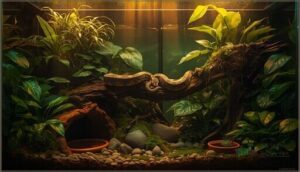
Once the temperature and humidity are dialed in, it’s time to think about what actually goes inside the enclosure.
A comfortable snake habitat isn’t just functional — it gives your snake places to hide, explore, and stay hydrated.
Here’s what you’ll want to include.
Providing Hides and Hiding Spots
A hide isn’t just a decoration — it’s your snake’s idea of home. Without proper hiding spots, even a beautifully designed enclosure becomes a source of stress. Follow these Hide Size Guidelines and placement tips to get it right:
- Snug fit matters — Snake Hide Materials like plastic, cork, or ceramic work best when sized so your snake barely fits inside.
- Two hides minimum — Place one on the warm side, one on the cool side for proper thermoregulation.
- Humid Hide Benefits — A moss-filled hide aids complete sheds by keeping skin moist.
- Hiding Spot Placement — Push hides against enclosure walls to mimic natural burrows.
- Secure Hide Designs — Heavy ceramic or resin options resist tipping from active snakes.
Climbing Structures and Enrichment
Once your hides are sorted, it’s time to think upward. Vertical Design matters more than most people expect — arboreal and semi-arboreal snakes use height daily.
Natural Climbing Materials like cork bark, grapewood, and hardwood branches give them real grip and support Snake Agility. Rotating Enrichment Objects periodically adds Sensory Stimulation, keeping your snake mentally active.
Good vivarium design and habitat design aren’t just pretty — they’re core to reptile health and safety.
Water Bowls for Soaking and Hydration
Now that the walls and branches are set, don’t overlook what’s sitting on the floor — your water bowl does more than just quench thirst. Proper Bowl Size matters: it should be wide enough for your snake to coil inside comfortably.
Place it on the cooler end of the temperature gradient to manage humidity levels naturally. Soaking Behavior often signals health changes, so monitoring Water Quality and Bowl Placement keeps your snake habitat supporting reptile health and safety and Snake Hydration daily.
Step-by-Step Indoor Habitat Setup Guide
Now it’s time to bring everything together and actually build your snake’s new home.
Setting it up in the right order makes the whole process easier and helps you avoid having to rearrange things later.
Here’s how to do it, step by step.
Choosing The Right Location in Your Home
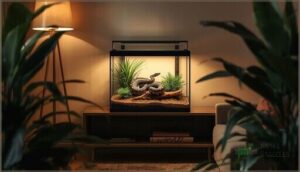
Before you place your snake habitat anywhere, think about the room itself — because location quietly controls everything inside it.
For stable indoor enclosures, aim for a spot that offers:
- Low traffic to reduce stress and defensive behavior
- Indirect light exposure, never direct sun through glass
- Distance from HVAC vents for steady humidity and temperature gradient
Room selection, draft prevention, and ambient stability aren’t extras — they’re the foundation of smart enclosure selection.
Installing Lighting, Heating, and Monitors
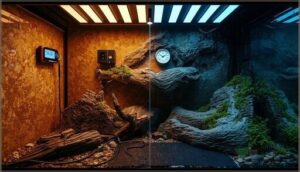
Once your location is locked in, it’s time to wire everything up. Mount your heat source options on the warm side — a heating pad underneath or a ceramic emitter overhead works well for thermoregulation. Connect each to its own thermostat settings for precise control.
Add UVB lighting designs along the top, run 10–12 hours daily. For monitor placement, use two digital gauges — warm side and cool side. Always plug into surge protectors as basic safety precautions.
Arranging Decor and Accessories
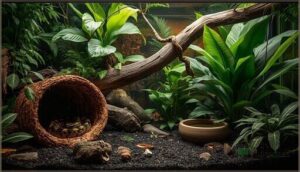
Decor placement is where the habitat really comes to life. Think of it as arranging furniture — everything should serve a purpose. Use visual barriers like cork tubes and plants to create private corridors between hides and the water bowl, so your snake can move without feeling exposed.
Good snake enrichment means layering options:
- Hiding spots snug enough to feel secure on both warm and cool sides
- Climbing structures secured at multiple points, with travel lanes kept clear
- Substrate left undisturbed beneath decor for natural burrowing behavior
Keep temperature and humidity in mind as you arrange — dense cover near the cool side helps maintain moisture without destabilizing your warm zone.
Maintaining Cleanliness and Monitoring Health
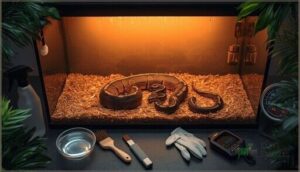
Keeping your snake’s home clean isn’t just about appearances — it’s one of the most important things you can do for their health. A dirty enclosure invites bacteria, parasites, and stress, all of which can sneak up on you before any obvious symptoms appear.
Here’s what you need to stay on top of it.
Daily Spot Cleaning and Monthly Deep Cleans
Think of cleaning as your snake’s first line of defense. Daily spot clean tasks take just a few minutes — scoop out waste, swap soiled substrate, and refresh the water bowl to stop bacteria before it builds up.
Daily spot cleaning is your snake’s first line of defense against bacteria and disease
Monthly deep clean steps go further: empty everything, scrub all surfaces with safe disinfectants like diluted F10SC or chlorhexidine, and let it fully dry. Consistent cleaning schedules are the backbone of solid reptile care and maintenance.
Observing for Stress or Illness Signs
Awareness is your sharpest health monitoring tool. Watch for stress signals like constant glass-surfing, defensive striking, or sudden lethargy — these aren’t random quirks, they’re your snake’s way of waving a red flag.
Key illness indicators include refusal to eat beyond a month, noisy breathing, visible wounds, or unusual posture. Snake behavior tells a story, so listen closely. When something feels off, veterinary care should be your next call.
Preventing Parasites and Bacteria Build-Up
Parasites and bacteria don’t announce themselves — they build quietly until your snake is already sick. Solid biosecurity measures start with strict quarantine protocols: isolate new snakes for at least 60 to 90 days using separate tools and water bowls.
For disinfection methods, chlorhexidine and F10 SC are both reliable choices. Check skin folds regularly for mites, follow consistent cleaning protocols for animal habitats, and never skip hygiene practices after handling.
Frequently Asked Questions (FAQs)
What do snakes need in their vivarium?
Your snake’s vivarium is its whole world — every corner shapes its health and thermal gradients.
It needs humidity control, smart enclosure design, and proper substrate choices to truly thrive.
It also requires environmental enrichment, and vivarium lighting to thrive in its environment.
What are signs of stress in snakes in enclosures?
Constant pacing, nose-rubbing the glass, refusing food, or staying rigidly coiled are all classic stress behavior signs.
Abnormal posture and feeding issues often point directly to environmental factors worth fixing fast.
How often should I handle my snake?
Think of it like visiting a neighbor—too often feels intrusive, too rarely feels awkward.
Most snakes thrive with handling two to three times weekly, keeping sessions short, calm, and always guided by your snake’s temperament.
Can snakes live together in one enclosure?
Honestly, for most species, the answer is no. Most pet snakes are solitary by nature and don’t benefit from company — they just compete, stress out, and sometimes eat each other.
Whats the average lifespan of indoor snakes?
Most pet snakes thrive indoors for 15 to 30 years.
Ball pythons lead in species lifespan, often hitting 30-plus years.
Corn snakes average 15 to 20, with genetics and habitat impact playing a big role.
Do snakes need special lighting or UVB?
Snakes don’t technically need UVB to survive, but offering it’s like giving them a little slice of sunshine.
It boosts Vitamin D3 naturally, promotes bone health, and encourages more lifelike behavior.
How much does maintaining indoor snakes cost?
Keeping a pet snake is surprisingly affordable. Initial costs run $100–$500 for setup, while ongoing expenses like food budgets stay around $60–$180 yearly. Veterinary fees and maintenance costs average roughly $200–$250 annually.
How often should I feed my pet snake?
Most adult pet snakes eat every one to two weeks, while juveniles need feeding every five to seven days.
Meal frequency, snake nutrition, and digestion times all depend on your species, age, and size.
Can snakes recognize their owners over time?
Your pet snake probably knows you better than you think. Through scent and vibration, and routine, reptile intelligence allows owner familiarity to build real recognition cues — no emotional bonding required, just consistent sensory perception doing its quiet work.
What causes bad breath or odors in snakes?
Bad breath in your snake usually points to Mouth Rot, Respiratory Issues, Digestive Problems, or Cloacal Musk.
Each of these affects pet snake health and wellness differently, so identifying the cause early matters.
Conclusion
Once your indoor snake habitats are dialed in, something shifts—your snake starts behaving like a snake, not a prisoner. You’ll notice more natural movement, calmer feeding responses, and that satisfying stillness of an animal that feels genuinely secure.
Every choice you made, from substrate depth to hide placement, quietly adds up to that result. The enclosure you built isn’t just functional—it’s the reason your snake thrives long after setup day is forgotten.
- https://reptifiles.com/corn-snake-care-guide/corn-snake-terrarium-size/
- https://www.anapsid.org/enclsize.html
- https://www.kwikpets.com/blogs/reptiles/7-bedding-options-for-your-pet-snake
- https://reptilekages.com/blogs/blog-kages-ethical-reptile-keeping-starts-here/how-to-heat-and-light-your-pvc-reptile-enclosure
- https://www.zenhabitats.com/blogs/reptile-care-sheets-resources/3-simple-tips-on-keeping-your-pet-snake-secure-in-a-zen-habitats-enclosure