
This site is supported by our readers. We may earn a commission, at no cost to you, if you purchase through links.
Your bearded dragon’s skin looks dull. The shed won’t come off cleanly. You notice retained patches around the toes and tail tip. These aren’t just cosmetic issues. Poor shedding signals vitamin deficiencies that can lead to infections and serious health problems.
Vitamin A aids skin cell turnover. B vitamins drive new cell growth. Without them, your reptile struggles through each shed cycle. The right vitamin supplement makes the difference between clean, complete sheds and problem after problem.
We tested seven products to find which ones actually work for reptile shedding issues.
Table Of Contents
- Key Takeaways
- Why Reptiles Need Vitamins for Shedding
- Key Vitamins and Minerals for Shedding
- Top 7 Reptile Vitamins for Shedding
- How to Use Vitamin Supplements Safely
- Tips for Preventing Shedding Problems
- Frequently Asked Questions (FAQs)
- What helps reptiles shed?
- Does Repti shedding aid work?
- Which vitamin is the best for hair fall?
- Can I give vitamins to a gravid female reptile?
- Do baby reptiles need different shedding vitamins?
- Are natural supplements safer than synthetic vitamins?
- Can vitamin overdose harm my reptiles shedding?
- Which reptile species shed most frequently?
- Conclusion
Key Takeaways
- Poor shedding in reptiles signals vitamin deficiencies (particularly A and B vitamins) that require targeted supplementation to prevent infections and health complications.
- Vitamin A supports skin cell turnover and prevents hyperkeratosis, B vitamins drive cellular energy for new skin growth, and vitamin E protects against oxidative damage during the shed cycle.
- Proper dosing varies by age (juveniles need weekly supplementation, adults monthly) and must be coordinated with UVB lighting to avoid toxicity from fat-soluble vitamins like A and D3.
- Supplements work only when paired with correct environmental conditions—adequate humidity, hydration, and temperature gradients are essential for clean, complete sheds.
Why Reptiles Need Vitamins for Shedding
Shedding isn’t just skin falling off. It’s a full-body process that pulls from your reptile’s stored vitamins and minerals, and when those run low, sheds go wrong.
If you notice stuck patches, milky eyes, or incomplete peeling, these are common signs your reptile’s shed is going sideways.
Here’s what happens when nutrition falls short—and how the right vitamins keep your reptile’s skin coming off clean.
Common Shedding Problems in Reptiles
Retained shed ranks among the most common reptile shedding issues you’ll see. Stuck patches of old shedding skin trap moisture and raise the risk of skin infections.
You might notice your reptile’s shedding cycle dragging on for weeks instead of days. Poor shedding often ties back to humidity issues and dehydration effects that prevent clean, complete removal of shedding skin.
Keeping an eye on environmental factors affecting shedding can help prevent these issues.
Role of Vitamins and Minerals in Healthy Sheds
Vitamins and minerals for reptiles work together to fuel every stage of the shed cycle. B vitamins drive cell turnover so new skin forms on schedule. Vitamin A builds smooth outer layers that lift away cleanly. A proper vitamin and mineral blend maintains mineral balance—calcium and magnesium help muscles flex to push off old skin.
Without this nutritional supplement, nutrient deficiency disrupts skin health and your reptile shedding aid efforts fall short. For additional support, consider using a to help soften and remove old skin during the shedding process.
Signs of Vitamin Deficiencies Affecting Shedding
When vitamin imbalance disrupts your pet’s shedding cycle, the body sends clear signals. Nutritional deficiencies show up fast:
- Dull, patchy skin that won’t release in clean sheets
- Swollen eyelids and eye problems from low vitamin A
- Retained rings around toes and tail tips that tighten over time
- Skin lesions and rough texture where poor shedding becomes chronic
Addressing nutrient deficits through vitamin therapy prevents these shedding issues and protects long-term reptile health.
Key Vitamins and Minerals for Shedding
Not all vitamins work the same way when your reptile sheds. Some build skin layers while others protect cells or help muscles push off old scales.
Understanding which nutrients matter most lets you choose supplements that actually support the shedding process.
Vitamin a for Skin Health and Eye Protection

Your reptile’s skin renewal depends on vitamin A to help old layers loosen while new skin replaces them cleanly. When vitamin A runs low, hyperkeratosis can thicken the outer layer, making complete sheds harder.
Adequate levels keep eye and mouth linings smooth, preventing stuck shed around sensitive areas. Balance is key—deficiency and toxicity both disrupt healthy shedding cycles.
B Vitamins for Cell Turnover and Energy

Your reptile’s cells burn fuel to build a fresh skin layer before the old one lifts. B vitamins drive that energy metabolism, acting as coenzymes that turn protein and fat into usable power.
When levels drop, lethargy follows and the shed cycle slows. A balanced B vitamin mix in your reptile’s nutrition keeps cell renewal steady and skin health strong through every shed.
Vitamin E as an Antioxidant During Sheds
Oxidative stress damages skin cell membranes while your reptile gets ready to shed. Vitamin E acts as a fat-soluble antioxidant that protects the outer layer, limiting lipid peroxidation so the barrier stays flexible. That flexibility helps old skin separate cleanly from new.
Vitamin E protects skin cells from oxidative damage during shedding, keeping the barrier flexible so old skin separates cleanly
Good nutrition keeps vitamin E and other antioxidants balanced, supporting brighter sheds and reducing cracks between cycles.
Importance of Calcium and Magnesium in Shedding Cycles
Strong bones and smooth sheds share a common thread: mineral balance. Calcium deficiency often appears alongside dull, incomplete sheds because low levels disrupt cell signaling in the skin.
Magnesium roles include supporting enzymes that build structural proteins, so your reptile nutrition plan should include a calcium supplement like Repti Calcium.
Balanced minerals through the shed cycle prevent reptile shedding issues and provide nutritional support for reptiles during every skin renewal.
Top 7 Reptile Vitamins for Shedding
You need vitamins that target the specific challenges your reptile faces during a shed. The right supplement delivers vitamin A for skin layers, B vitamins for cell turnover, and vitamin E to protect against oxidative stress.
Here are seven products that provide the nutrients your reptile needs for complete, healthy sheds.
1. Gargeer Reptile Vitamin A Supplement
This dual source formula pairs retinyl palmitate with beta carotene to cover both quick and long term vitamin A needs. You get immediate support for eyes and skin, plus a slower converting backup that won’t risk overdose.
The powder includes vitamin E, spirulina, and carrot to protect cells during sheds. Mix it with salads, insects, or pellets twice a month.
It’s made in the USA and works well for geckos, dragons, tortoises, and snakes that don’t eat whole prey regularly.
| Best For | Reptile owners whose pets don’t regularly eat vitamin A-rich whole prey and need a safe, balanced supplement to support eye health, shedding, and immune function. |
|---|---|
| Form | Powder |
| Weight | 3oz |
| Made In | USA |
| Target Species | All reptiles |
| Key Vitamin | Vitamin A |
| Application Method | Mix with food |
| Additional Features |
|
- Dual-source vitamin A formula reduces overdose risk while providing both immediate and long-term benefits
- Fortified with vitamin E, spirulina, and carrot for extra antioxidant and cellular support during sheds
- Works across multiple species (geckos, bearded dragons, tortoises, turtles, snakes) and mixes easily with any diet type
- Requires careful dosing at twice monthly to avoid vitamin A toxicity
- May not suit reptiles with specific health conditions or sensitivities without vet consultation first
- Doesn’t replace whole prey nutrition for insectivores that should be eating varied insects naturally
2. Gargeer Reptile Multivitamin Supplement
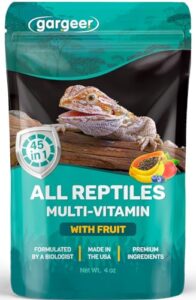
When your lizard won’t touch plain greens, fruit flavors can turn the tide. This powder blends organic banana, papaya, mango, and blueberry with a full vitamin and mineral spread.
You get 200,000 IU of vitamin A per pound, 2000 IU of vitamin E, and 24.8% calcium minimum. The bee pollen and spirulina boost amino acids for skin turnover.
Dust insects lightly or mix one tablespoon per pound of salad. It’s safe for daily use with indoor reptiles.
| Best For | Reptile owners who struggle with picky eaters or want to add vitamins and fruit flavor to their lizard’s diet without changing their feeding routine. |
|---|---|
| Form | Powder |
| Weight | 4oz |
| Made In | USA |
| Target Species | All reptiles |
| Key Vitamin | Vitamins A, E, C |
| Application Method | Mix with food |
| Additional Features |
|
- Real fruit flavors (banana, papaya, mango, blueberry) help entice finicky reptiles to eat their greens and insects
- Packed with essential vitamins A, E, and C plus calcium, potassium, and iron for bone health and immunity
- Easy to use—just dust insects or mix a tablespoon per pound of salad for daily supplementation
- No specific dosage instructions for different reptile species, so you’ll need to experiment or consult a vet
- Works best as a supplement, not a replacement for a well-rounded diet with fresh foods
- Results vary by individual reptile—some may not respond as well to the fruit flavoring or formula
3. Reptile Vitamin A Supplement
When dry eye patches and stuck sheds won’t quit, a targeted vitamin A capsule can fix the root problem. This supplement delivers preformed retinyl palmitate in easy-open capsules that mix straight into food.
You can use one capsule weekly for maintenance or daily for five days during a tough shed. It promotes new skin layer growth and keeps mucous membranes in the eyes and mouth from thickening.
At $16.83 for thirty capsules, you get a simple fix for insect-eating species that struggle to convert plant carotenoids.
| Best For | Reptile and amphibian owners dealing with vitamin A deficiency symptoms like eye problems, poor shedding, or weakened immune systems in their pets. |
|---|---|
| Form | Capsule |
| Weight | 30 capsules |
| Made In | Global ingredients |
| Target Species | Reptiles & amphibians |
| Key Vitamin | Vitamin A |
| Application Method | Mix capsule contents |
| Additional Features |
|
- Fixes the root cause of common issues like dry eye patches and stuck sheds with targeted vitamin A delivery
- Flexible dosing lets you use one capsule weekly for maintenance or daily for tougher cases
- Affordable at under $17 for a 30-week supply when used for regular maintenance
- Capsules can be tricky to open according to some users
- Risk of overdosing if you don’t follow the instructions carefully
- May not work for reptiles with severe health issues or certain species that need different treatment
4. Gargeer Reptile Multivitamin Powder Supplement
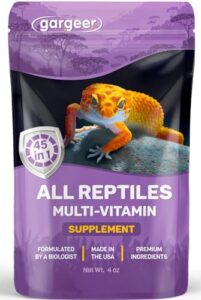
If you need broad-spectrum support instead of single-vitamin fixes, Gargeer’s 4 oz multivitamin powder covers every shed phase at once. You’ll get vitamins A, D3, E, and C plus a mineral blend of calcium, magnesium, zinc, and copper in each ultrafine dust.
Mix one tablespoon per pound of salad or shake insects in a bag with powder before feeding. At around $15, it’s designed for daily use without over-supplementing your lizard, turtle, or snake.
| Best For | Reptile and amphibian owners looking for an all-in-one daily supplement that covers vitamins, minerals, and amino acids without needing multiple products. |
|---|---|
| Form | Powder |
| Weight | 4oz |
| Made In | USA |
| Target Species | Reptiles & amphibians |
| Key Vitamin | Multivitamin blend |
| Application Method | Dust on food |
| Additional Features |
|
- Covers a wide range of nutrients in one powder—vitamins A, D3, E, C plus calcium, magnesium, zinc, and copper
- Ultrafine texture makes it easy to dust insects or mix into salads without clumping
- Affordable at around $15 for 4 oz, especially for daily use across different reptile species
- No clear dosage instructions provided, which can lead to guesswork or risk of over-supplementation
- Actual weight is 3.2 oz despite being labeled as 4 oz
- Limited details on potential interactions with other supplements or suitability for reptiles with dietary restrictions
5. Zilla Reptile Vitamin Supplement Spray
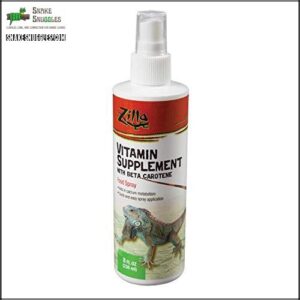
When powder dusting feels messy or your reptile dodges coated insects, Zilla’s 8 oz vitamin spray offers a practical workaround.
You simply shake the bottle, mist wet or dry food, wait fifteen seconds, and serve. The liquid formula delivers vitamins C, B1, B2, B6, B12, D3, niacin, folic acid, and beta carotene in each spray.
At roughly $10, it works for bearded dragons, geckos, snakes, frogs, and turtles, covering daily vitamin gaps without the cleanup hassle of loose powder.
| Best For | Reptile owners who want a no-mess alternative to powder supplements and need an easy way to add vitamins to their pet’s daily food. |
|---|---|
| Form | Liquid Spray |
| Weight | 0.6 lbs |
| Made In | USA |
| Target Species | Reptiles & amphibians |
| Key Vitamin | Vitamins C, D3, B-complex |
| Application Method | Spray on food |
| Additional Features |
|
- Quick spray-on application eliminates the dust and mess of traditional powder supplements
- Covers a wide range of essential vitamins (C, B-complex, D3, and beta carotene) in one bottle
- Works for multiple species including bearded dragons, geckos, frogs, and turtles at an affordable price point
- Several users report the spray nozzle sticks or breaks, making application frustrating
- Doesn’t include calcium, so you’ll need to buy a separate supplement for complete nutrition
- The spray can get messy and requires waiting 15 seconds before feeding, which may not work for all feeding routines
6. Honey And Sun Bee Pollen Supplement
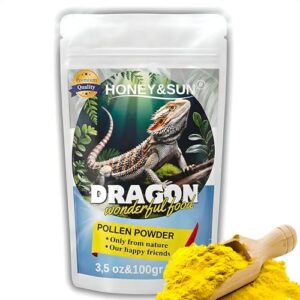
Bee pollen brings a different angle to shedding support. Honey And Sun’s 100-gram powder packs amino acids, vitamins A, C, D, and E, plus minerals like calcium and magnesium into a natural supplement your reptile might actually enjoy.
You dust it over salads or feeder insects—many bearded dragons and iguanas respond to the smell and eat more willingly. Around $10 for 3.5 ounces, it complements your usual calcium routine without replacing dedicated multivitamins.
Sprinkle about one-eighth teaspoon up to four times weekly for small reptiles.
| Best For | Reptile owners looking for a natural appetite booster and shed support supplement that adds variety to their pet’s calcium and vitamin routine. |
|---|---|
| Form | Powder |
| Weight | 100g |
| Made In | Not specified |
| Target Species | Herbivorous reptiles |
| Key Vitamin | Natural nutrients |
| Application Method | Sprinkle on food |
| Additional Features |
|
- Natural nutrient blend with vitamins A, C, D, E and minerals that many reptiles find appealing by smell
- Affordable at around $10 for 3.5 ounces and easy to sprinkle over salads or insects
- Works well alongside regular supplements without replacing core calcium and multivitamin products
- Results vary widely and some reptiles show no response to the product
- No clear dosage guidelines make it tricky to figure out the right amount for your specific pet
- Hard to measure whether it’s actually helping with shedding or health since benefits aren’t always visible
7. Fluker’s Reptile Vitamin Supplement
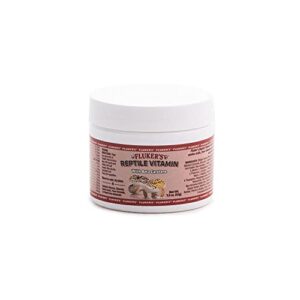
Fluker’s Repta Vitamin with Beta Carotene delivers 50,000 IU of vitamin A per pound alongside a full B complex, vitamin D3, and essential minerals in a 2:1 calcium-to-phosphorus ratio.
You’ll shake feeder insects in the powder or mix one tablespoon per pound of vegetables. The beta carotene and canthaxanthin boost natural color, while amino acids like lysine and methionine support tissue repair.
At around $5 for 1.5 ounces, it works as a daily multivitamin rather than a specialized shed treatment.
| Best For | Reptile owners looking for an affordable daily multivitamin that enhances natural coloring while covering basic nutritional needs across multiple species. |
|---|---|
| Form | Powder |
| Weight | 1.5oz |
| Made In | USA |
| Target Species | All reptiles |
| Key Vitamin | Beta carotene |
| Application Method | Sprinkle on food |
| Additional Features |
|
- Delivers a complete spectrum of vitamins (A, B complex, D3) plus minerals in a balanced 2:1 calcium-to-phosphorus ratio for overall health
- Beta carotene and canthaxanthin naturally enhance your reptile’s colors without artificial dyes
- Versatile application—dust insects, mix with veggies, or sprinkle on various foods for under $5
- No included scoop makes consistent dosing tricky without a separate measuring tool
- Functions as a general multivitamin rather than targeting specific issues like shedding problems
- May not fit every reptile’s dietary needs, so you’ll want to check with your vet first
How to Use Vitamin Supplements Safely
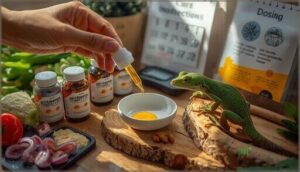
Using supplements correctly makes the difference between helping your reptile and creating new problems. You need to know how much to give, how to apply it, and how often to use it during a shed cycle.
Let’s walk through the safe way to add vitamins to your reptile’s routine.
Proper Dosing and Application Methods
Dosing most reptile nutritional support products starts with body weight. Many mineral and vitamin powder products recommend 50 to 100 mg per kilogram per dose.
Juveniles need supplementation weekly because they shed frequently. Adults shed slowly and may only need ShedSupport monthly.
Always coordinate oral vitamin A with your UVB lighting. Strong UVB means you skip daily D3 products.
Injectable forms carry higher toxicity risk than oral shedding aid supplements.
Dusting, Spraying, and Mixing With Food
You can apply reptile nutritional support through several food dusting methods and spray vitamin supplements. Each approach fits different feeding strategies.
- Dust live insects by shaking them in a container with powder just before feeding—one light scoop coats 10 to 15 crickets or roaches without clumping.
- Spray food surfaces with reptile health supplements, letting the mist dry for 15 seconds so vitamins stick to greens or pellets.
- Mix powder techniques work best for wet foods like chopped vegetables—add roughly ½ teaspoon per 140 grams of prepared diet.
- Combine dusting with gut-loading by feeding insects nutrient-rich foods for 24 hours, then applying a final light dusting to boost supplementation during reptile shedding issues and solutions.
Always follow supplement safety guidelines to avoid over-supplementation.
Frequency of Supplementation During Shedding
Most healthy adults need reptile supplements just once weekly, but you’ll want to adjust vitamin dosage slightly during the shed cycle.
Growing juveniles benefit from twice-weekly molting support because faster growth demands more reptile nutrition.
If you notice recurring reptile shedding issues and solutions aren’t working, review your supplement timing and consider ShedSupport for targeted shed support to boost overall reptile health and wellness.
Tips for Preventing Shedding Problems
Vitamins alone won’t solve shedding issues if your reptile’s environment isn’t right. You need to combine proper supplementation with adequate hydration and humidity levels.
Here’s how to create the best conditions for smooth, complete sheds.
Combining Vitamins With Hydration and Humidity
Vitamins work best when you pair them with smart Hydration Methods and Humidity Control. Your reptile’s body needs moisture to move nutrients through the skin and separate old layers. Here’s how to create the right balance:
- Offer fresh drinking water daily to support internal hydration and vitamin absorption.
- Use humid hides with damp sphagnum moss for localized moisture during pre-shed days.
- Mist tropical species regularly to maintain ambient humidity under basking lamps.
- Add water-rich foods like gut-loaded insects to boost internal fluid levels.
- Apply Shedding Aids containing vitamin E between sheds to keep skin supple.
When you fine-tune Environmental Factors like temperature and moisture alongside consistent Vitamin Balance, most Reptile Skin Care Products become more effective. Well-hydrated reptiles with proper vitamin intake usually shed in one clean piece instead of patchy flakes.
Monitoring Your Reptile’s Shedding Cycle
Keeping a written log of each shed date helps you spot your reptile’s normal interval and track shedding stages. Record pre-shed signs like dull skin and cloudy eyes to build patterns. Use simple charts or apps to monitor shed cycle tracking alongside feeding and weight. Comparing these trends reveals reptile health signs early, so you catch skin health issues before they escalate.
| What to Track | Normal Pattern | Red Flags |
|---|---|---|
| Shed interval | Every 4–6 weeks (snakes); every few weeks (lizards) | Sudden long gaps or very frequent sheds |
| Skin removal | Clean, one-piece or even patches | Patchy, stuck skin around toes or eyes |
| Duration | Few hours to 2 days | Shed dragging on unusually long |
| Pre-shed signs | Dull skin, cloudy eyes, hiding | Persistent dull color or sores after shed |
| Post-shed appearance | Bright, vivid colors | Discolored scales or swelling |
Creating an Optimal Environment for Healthy Sheds
Your reptile’s enclosure acts like a spa for shedding—it needs the right temperature gradients, humidity control, and lighting options working together. Proper enclosure design and moisture management lay the foundation for reptile health and smooth shedding cycles.
- Set humidity zones so your reptile chooses its ideal moisture level
- Provide rough surfaces like branches for improving reptile skin health through natural rubbing
- Install UVB lighting at correct distances to support nutritional support for reptiles
- Maintain stable temperature gradients with warm basking spots and cooler retreats
Understanding reptile shedding cycles means creating spaces where your animal controls its own reptile shedding assistance needs.
Frequently Asked Questions (FAQs)
What helps reptiles shed?
Think of shedding like peeling off tight clothing—environmental factors make it easier. Humidity control and proper hydration help separate old skin from new.
Nutrient balance through nutritional support for reptiles improves skin health during natural shedding cycles.
Does Repti shedding aid work?
Repti Shedding Aid works well for loosening stuck shed when you spray it on dry skin. The glycerine and jojoba oil soften retained pieces, making removal easier alongside proper humidity.
Which vitamin is the best for hair fall?
When your hair falls like leaves in autumn, vitamin D benefits stand out most. Iron deficiency and low ferritin often drive shedding, but vitamin D3 and biotin supplements work best when nutrient balance is restored together.
Can I give vitamins to a gravid female reptile?
Yes, you can give vitamins to a gravid female reptile. She needs extra calcium and balanced multivitamins for egg production. Use moderate doses and consult your vet about proper supplement timing.
Do baby reptiles need different shedding vitamins?
Just like a snake outgrowing its skin, your baby reptile’s needs are magnified.
They don’t need different shedding vitamins, but they require more frequent dosing during rapid reptile development and accelerated shedding cycles.
Are natural supplements safer than synthetic vitamins?
Neither natural nor synthetic vitamins are automatically safer. Natural ingredients like bee pollen offer broader nutrient profiles, but synthetic vitamins provide precise dosing.
Toxicity risk depends on frequency and species-appropriate absorption rates.
Can vitamin overdose harm my reptiles shedding?
Too much vitamin A or D3 causes dry, cracked skin and irregular sheds in reptiles.
Fat-soluble vitamins build up in the liver, so heavy supplement dosing can damage skin cells and worsen shedding cycles over time.
Which reptile species shed most frequently?
Juvenile snakes and lizards shed most often, with baby bearded dragons shedding weekly and young corn snakes every four weeks.
Chameleon sheds occur every week or two in hatchlings, driven by rapid growth rate impact.
Conclusion
Healthy sheds happen when you take action before problems start. The best reptile vitamins for shedding won’t fix poor husbandry. They work alongside proper humidity and hydration.
Your bearded dragon or gecko needs consistent supplementation, not just during visible sheds. Use vitamin A for skin cell renewal and add B vitamins for growth.
Monitor each shed cycle and adjust your routine as needed. Clean, complete sheds protect your reptile from infection and long-term health issues.
- https://exoticskeeper.com/blog/what-is-in-a-reptile-vitamin-supplement-and-why/
- https://reptifiles.com/reptile-vitamins-reptile-calcium/
- https://www.monkfieldreptile.com/arcadia-earth-pro-shed-support-30g
- https://healthyanimals4ever.com/blogs/news/top-5-natural-supplements-for-reptile-health
- https://todaysveterinarypractice.com/exotic-medicine/hypervitaminosis-a-in-reptiles/