This site is supported by our readers. We may earn a commission, at no cost to you, if you purchase through links.
A gecko’s stuck shed can cut off circulation to a toe in hours, and by the time you notice, the damage is done. That’s the sneaky thing about reptile skin problems: they hide under scales until they’re serious.
Most skin trouble traces back to one culprit, husbandry, which drives over 70% of cases, from damp substrate breeding bacteria to low humidity sabotaging a shed. The good news? You can catch these issues early and fix most of them yourself.
Here’s how to spot the warning signs, treat what’s treatable, and know when your vet needs to step in.
Table Of Contents
- Key Takeaways
- Reptile Skin Problem Symptoms: What to Look For
- What Causes Skin Problems in Reptiles?
- When Reptile Skin Problems Require Veterinary Care
- How Reptile Skin Problems Are Diagnosed and Treated
- How to Prevent Reptile Skin and Shedding Problems
- Frequently Asked Questions (FAQs)
- What are some common skin problems?
- What are some common skin diseases in lizards?
- What are some common skin infections?
- What are some common skin conditions?
- What is the skin disease in reptiles?
- What are the symptoms of dermatitis in reptiles?
- How do you fix reptile skin?
- What rash looks like reptile skin?
- Can reptiles get sunburned from UV lighting?
- How often should I clean my reptiles skin?
- Conclusion
Key Takeaways
- Over 70% of reptile skin problems stem from poor husbandry—wrong humidity, temperature, substrate, or hygiene—so most issues are both preventable and fixable at home.
- Watch for early warning signs like dull or cloudy skin past the normal shed window, red or crusting lesions, tiny moving specks near eyes and scale folds (mites), or firm lumps that soften or drain (abscesses).
- Stuck shed is time-sensitive: retained skin on toes, tail tips, or eye caps can cut off circulation within hours, so soften with humidity or soaks—never peel forcefully—and see a vet if it persists.
- Escalate to a reptile vet when lesions spread rapidly, wounds show pus or foul odor, your pet stops eating or becomes lethargic, or problems keep returning despite treatment, since relapsing issues usually signal a deeper root cause.
Reptile Skin Problem Symptoms: What to Look For
Reptile skin problems rarely announce themselves loudly — you have to know what you’re looking for. Symptoms vary widely depending on whether you’re dealing with bacteria, parasites, shedding issues, or wounds. Here’s what each condition usually looks like so you can spot trouble early.
A quick look at our guide to common reptile skin issues can help you match symptoms to the right condition before things get worse.
Bacterial and Fungal Infections
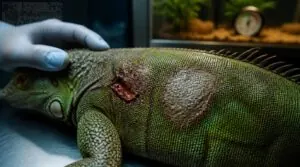
Spotting bacterial dermatitis early keeps small problems from turning serious. Look for:
- Focal ulcers or crusting with raw, discolored tissue
- Pale, thickened patches that signal fungal dermatitis
- Persistent lesions that won’t shed off normally
Wound cleaning and debridement paired with antibiotics and antifungals clears most infections, but environmental adjustments like cutting humidity and improving substrate hygiene matter just as much.
Mites, Ticks, and Parasites
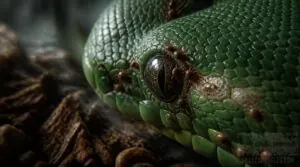
While infections often stem from skin trauma, mites and ticks can be the original culprits. Ophionyssus natricis, the snake mite, is a classic example. Look for tiny moving specks near eyes and scale folds.
Parasite identification matters because ectoparasite management requires treating both your reptile and its enclosure. Missing that step means parasite infestations restart from eggs hiding in substrate.
Stuck Shed and Dysecdysis
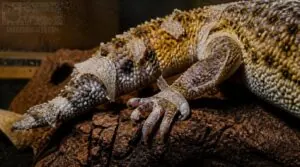
Unlike parasite issues, reptile dysecdysis is purely a shedding failure. It happens when the outer skin layer doesn’t separate cleanly, leaving old keratin stuck on toes, tail tips, and eye caps. Watch for skin that stays dull and cloudy past the normal window.
Pressure points like limbs and chin are especially vulnerable, as detailed in this guide to reptile skin health problems and dysecdysis warning signs.
Retained shed on digits can restrict circulation fast. Low humidity during pre-shed is almost always the driver.
Abscesses, Wounds, and Shell Lesions
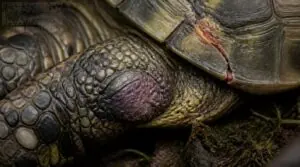
Wounds and abscesses don’t always look dramatic at first. Watch for:
- A firm lump that softens or drains
- Warmth, redness, or pain on touch
- Foul discharge from wound edges
- Lifted or cracked scutes in shell lesion zones
- Lethargy alongside visible skin changes
Both bacterial dermatitis and fungal dermatitis can cause overlapping signs, so a vet visit confirms which you’re dealing with.
Our guide to snake skin infections and ulcerated skin walks through the visual differences and treatment options for each type.
What Causes Skin Problems in Reptiles?

Reptile skin problems rarely come out of nowhere — there’s almost always a root cause behind those worrying lesions, retained shed, or mysterious bumps. Five main culprits are responsible for the majority of cases you’ll encounter as a keeper. Knowing what you’re dealing with makes treatment faster and prevention a whole lot easier.
Bacterial And Fungal Infections
Reptile skin is a living barrier, and when it’s compromised by moisture, trauma, or ongoing stress, opportunistic microbes move in fast. Bacterial dermatitis usually shows up as red, swollen, weeping tissue, while fungal dermatitis often produces dull, flaky, or crusty patches. Both thrive in damp enclosures with poor ventilation, so your husbandry choices directly shape your reptile’s skin health.
Parasitic Infestations
Among the sneakiest culprits, mites and ticks lurk in skin folds and around joints.
Parasite infestations often mimic shedding issues, so watch for tiny moving dots, localized crusting, or papules clustered in the same spots. Those persistent skin lesions are your red flag. Good reptile parasite control means treating the animal and the enclosure, since off-host life stages cause reinfestation.
Shedding Disorders
Picture old skin clinging in ragged patches instead of sliding off clean and whole. That’s dysecdysis, and it’s rarely random.
Mechanical shed failure happens when humidity drops, moisture can’t loosen the outer layer, and retained skin tightens around digits or the tail tip like a slow-constricting band. Left untreated, those patches restrict circulation and invite bacterial colonization surprisingly fast.
Poor Husbandry
Studies show over 70% of reptile skin issues link directly to poor husbandry. Your enclosure setup really does matter. Focus on these four areas:
- Temperature and humidity – fix gradients to allow proper drying
- Maintaining clean living conditions – spot-clean daily; waste raises infection risk
- Ventilation – damp stagnant air drives fungal growth
- Substrate – avoid rough or soiled bedding
Environmental stress compounds everything fast.
Nutrition And Hydration
Vitamin deficiencies and dehydration quietly wreck your reptile’s skin. A balanced diet and supplementation matter more than most keepers realize. Offer fresh, clean water daily, mist humid-climate species regularly, and let proper nutrition and hydration do the heavy lifting.
| Deficiency | Skin Effect |
|---|---|
| Vitamin A | Abnormal keratinization, rough texture |
| Calcium | Disrupted skin turnover |
| Protein/fat | Reduced moisture retention |
| Dehydration | Dysecdysis, skin tightness |
When Reptile Skin Problems Require Veterinary Care
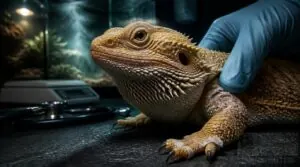
Here’s the truth: most reptile skin problems don’t start as emergencies, but they become them fast. Reptiles hide illness like pros, so by the time skin looks bad, your pet may have been struggling for weeks.
Reptiles hide illness so well that by the time skin looks bad, your pet has often been struggling for weeks
So when do you stop home care and call your vet? Watch for these five red flags:
- Lesions spreading rapidly across the body, not staying put.
- Pus, foul odor, or swelling around a wound, classic abscess formation.
- Your reptile skipping meals, acting lethargic, or hiding more than usual.
- Retained shed constricting toes, tail tips, or eyes despite proper humidity.
- Mites or sores that bounce back after repeated treatment attempts.
Any of these means it’s time for veterinary care. Persistent, relapsing, or worsening skin issues usually signal an root cause, and guessing wastes precious time. Immunocompromised reptiles, the very young, old, or chronically ill, need evaluation even sooner.
Trust your gut. If something looks off during your regular health checks, a professional exam with proper diagnostic testing beats watching and worrying every single time.
How Reptile Skin Problems Are Diagnosed and Treated
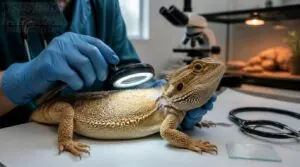
So you’ve spotted something off on your reptile’s skin, and now you’re wondering what happens next. Good news: diagnosis and treatment are usually more straightforward than you’d fear, and knowing the process puts you back in the driver’s seat. Here’s a rundown of the veterinary tests, treatments, and at-home support steps you can expect.
Veterinary Diagnostic Tests
Before any treatment starts, your vet plays detective. A skin scraping checks for mites, while microbial cultures identify the exact bacteria or fungus causing trouble. Deeper cases may need histopathological examination of a biopsy, plus xrays and blood tests to rule out systemic issues.
| Test | What It Reveals |
|---|---|
| Skin scraping | Mites, eggs |
| Cultures | Bacterial/fungal culprit |
| Biopsy | Tissue-level disease |
| Bloodwork | Root illness |
Negative results don’t always mean "all clear," so repeat testing sometimes helps.
Infection and Wound Treatment
Once your vet identifies the culprit, reptile infection treatment gets personal. Bacterial dermatitis often needs targeted antimicrobial therapy matched to culture results, while reptile wound care means debriding dead tissue so healthy skin can close the gap.
Abscesses? Those walled-off pockets usually require drainage, not just antibiotics. Biofilm-covered wounds may relapse, so expect cleaning, debridement, and patience.
Safe Parasite Removal
Infections handled, now let’s evict the squatters. Ectoparasite management starts with confirmation: skin scrapings and microscopy tell us whether you’re battling mites and ticks or something internal. Here’s your game plan:
- Quarantine the patient in a spare, bare enclosure.
- Treat every life stage, because the parasite life cycle hides eggs off-host.
- Deep-clean everything with proper enclosure maintenance, then re-test.
Gentle handling techniques matter too, since irritated skin tears easily.
Stuck Shed Support
Now the shedders. Dysecdysis means incomplete separation between old and new skin, often from poor husbandry: wrong temperature and humidity, or dehydration. Check toes, tail tips, and eyelids for constriction rings. Never peel forcefully; soften first.
| Sign | Location | Action |
|---|---|---|
| Pale patches | Body | Raise humidity |
| Tight rings | Toes/tail | Soak, then vet |
| Lid covering | Eyes | Veterinary care |
| Wrinkled shed | Folds | Warm misting |
If retained shed persists, see your exotics vet before reptile skin shedding turns into infection.
How to Prevent Reptile Skin and Shedding Problems
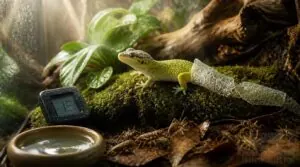
Usually, skin trouble starts long before you see a single scale out of place. Preventing skin problems comes down to daily habits, not heroics. Nail these five and you’re ahead of the game:
- Proper humidity control: use a hygrometer, add a humid hide, and ventilate so dampness doesn’t linger.
- Monitoring habitat conditions: check your temperature gradient daily; thermoregulation drives immune function and clean sheds.
- Spot-clean substrates and swap out damp bedding fast, since wet microclimates invite bacteria and fungi.
- Adequate nutrition and hydration: fresh water, gut-loaded prey, and balanced vitamins keep epithelium turning over normally.
- Regular health checks and gentle handling: inspect during sheds, but hands off while skin separates.
Do this consistently and most issues simply never show up.
Frequently Asked Questions (FAQs)
What are some common skin problems?
What are some common skin problems? Reptiles deal with bacterial and fungal infections, mites, ticks, stuck shed, abscesses, and wounds. Watch for skin lesions, scale abnormalities, skin discoloration, or flaking that persists.
What are some common skin diseases in lizards?
Wondering what’s bugging your lizard’s skin? The usual suspects include bacterial and fungal infections, mites and ticks, dysecdysis (stuck shed), and abscesses from wounds. Most trace back to poor husbandry.
What are some common skin infections?
Bacterial infections like scale rot often follow wounds or soggy enclosures, while fungal diseases thrive in damp, humid setups. You’ll also see abscesses, plus secondary skin infections where mites and ticks have chewed up the skin.
What are some common skin conditions?
Take a bearded dragon with a patch of crusty skin lesions that keeps spreading. Common reptile skin issues include bacterial and fungal infections, mites, abscesses, and dysecdysis, where stuck shed constricts toes and invites trouble.
What is the skin disease in reptiles?
The most common culprits are infectious dermatitis, bacterial or fungal, plus dysecdysis (stuck shed), abscesses, and mites. Fungal spores thrive in damp enclosures, and poor husbandry weakens the skin barrier, letting skin lesions develop.
What are the symptoms of dermatitis in reptiles?
"Dermatitis in reptiles usually shows up as redness, swelling, or darkened discoloration on the skin. Watch for flaky scales, crusting, discharge, odor, or unusual shedding. A bearded dragon rubbing constantly? That’s your clue."
How do you fix reptile skin?
Fixing reptile skin starts with correct humidity and temperature gradients, plus solid reptile enclosure hygiene. Treat infections with vet-prescribed medications, support stuck shed safely, and maintain balanced reptile nutrition with proper UVB lighting.
What rash looks like reptile skin?
If your skin resembles snake scales, you’re likely dealing with ichthyosis vulgaris, psoriasis, or eczema. These conditions cause dry, diamond-shaped patches with rough texture, mimicking genuine reptile scale damage.
Can reptiles get sunburned from UV lighting?
Can reptiles get sunburned from UV lighting? Absolutely, and faster than you’d think. Position your UVB lighting at species-appropriate distances and photoperiods, or you’ll see redness, skin discoloration, and painful lesions instead of healthy basking.
How often should I clean my reptiles skin?
Aim for a weekly check: gentle handling, a damp cloth wipe, and a quick once-over. During shed, go daily, since stuck skin hides trouble. And remember, enclosure hygiene matters more than wiping the animal alone.
Conclusion
Picture your gecko gliding across a warm branch, scales catching the light, every toe gripping clean and strong. That’s what healthy skin looks like, and it’s within your reach.
Most reptile skin problems start with husbandry, which means most of them end with you. Check your temperatures, tune your humidity, and inspect during sheds. Your reptile can’t tell you where it hurts, but its skin always will. Listen closely.