This site is supported by our readers. We may earn a commission, at no cost to you, if you purchase through links.

A snake fed exclusively on frozen mice for two years can look perfectly healthy right up until it can’t. Snake vitamin deficiencies develop silently over months, while owners interpret consistent feeding responses as proof everything is fine.
Vitamin A depletion clouds the spectacle. D3 collapse lets bones soften from the inside out. These aren’t rare exotic conditions; they’re the predictable result of a diet that looks complete but isn’t providing what your snake’s metabolism needs to absorb.
Knowing what goes wrong, and why, puts you in a position to correct it before the symptoms ever appear.
Table Of Contents
- Key Takeaways
- Common Vitamin Deficiencies in Snakes
- What Causes Snake Vitamin Deficiencies
- Signs of Vitamin Deficiency in Snakes
- How Veterinarians Diagnose Nutritional Deficiencies
- Preventing and Treating Vitamin Deficiencies
- Frequently Asked Questions (FAQs)
- What are the top 3 vitamin deficiency?
- What foods are toxic to snakes?
- What does D3 do to reptiles?
- What calms snakes down?
- Do snakes have a vitamin deficiency?
- Do snakes have a zinc deficiency?
- How do you know if a reptile has a vitamin A deficiency?
- Do snakes need vitamin C?
- What happens if a snake eats a vitamin D3 deficiency?
- Do snakes need vitamin D?
- Conclusion
Key Takeaways
- The four most common snake vitamin deficiencies—vitamin A, D3/calcium, vitamin E, and thiamine—develop silently over months and damage eyes and membranes, bones, muscle and fat, and the nervous system respectively.
- Most deficiencies trace back to six preventable husbandry failures: single-prey diets, calcium-phosphorus imbalance, blocked or expired UVB lighting, thiaminase-rich fish like goldfish, degraded frozen feeders stored beyond 90 days, and broken thermal gradients.
- Warning signs include retained eye caps and cloudy eyes, muscle tremors and soft jaws, patchy stuck sheds, stargazing posture, and seizures—any neurological symptom requires same-day veterinary care.
- Prevention beats treatment: rotate whole-prey species, replace UVB bulbs every 12 months at proper distance, use supplements cautiously (fat-soluble vitamins can be toxic in excess), and schedule annual reptile vet checkups.
Common Vitamin Deficiencies in Snakes

Your snake can be eating every week and still be starving for vitamins. Four deficiencies show up again and again in reptile exams, and each one damages your animal in a different way. Here’s what you need to recognize before the symptoms become permanent.
Understanding what each snake species needs in its diet is the first step toward catching these silent deficiencies before they leave permanent damage.
Your snake can eat every week and still starve for the vitamins that keep it alive
Vitamin a Deficiency
A diet short on preformed vitamin A quietly dismantles your snake’s defenses. Hypovitaminosis A thins mucous membranes, causing squamous metaplasia and glandular degeneration in eyes, mouth, and respiratory tract.
Snakes can’t convert plant carotenoids efficiently, so inadequate prey depletes stores over months, not days. Chronic gut disease worsens absorption. Plasma retinol levels confirm suspicion. Young, fast-growing snakes deteriorate fastest.
Vitamin D3 and Calcium
If vitamin A strips your snake’s defenses, vitamin D3 deficiency dismantles its skeleton. Without UVB lighting or dietary D3, gut calcium absorption collapses, and your snake mines its own bones to keep blood calcium stable. Metabolic bone disease follows.
Calcium and phosphorus imbalances make it worse: a calciumtophosphorus ratio below 1.5:1 binds calcium and starves bone. Watch for tremors, kinks, and soft jaws; serum chemistry and radiographs confirm it.
Vitamin E Deficiency
D3 and calcium problems shatter bone; vitamin E deficiency attacks muscle and fat. This fat-soluble antioxidant shields cell membranes from oxidative damage, and when it runs low, steatitis (inflamed, painful fat) and muscle tremors develop. Neurological symptoms like poor coordination follow, plus hemolysis risk. Causes include lean, poorly fed, or long-frozen prey. Rotate prey types and get serum testing done.
Thiamine Deficiency
If vitamin E damages muscle, thiamine deficiency attacks the nervous system itself. Snakes fed thiaminase-rich fish (goldfish, minnows) can’t absorb B1, so energy metabolism collapses.
Watch for neurological symptoms: muscle tremors, ataxia, torticollis (twisted neck), and seizures. Juveniles deteriorate fastest.
Stop thiaminase prey immediately, switch to rodents, and get injectable B1 supplementation from your vet without delay.
For a fuller picture of prevention, proactive snake health and nutrition strategies cover prey rotation and supplementation routines that keep deficiencies from taking hold.
What Causes Snake Vitamin Deficiencies
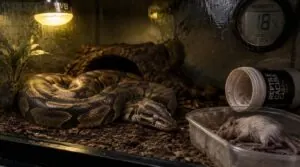
Your snake’s vitamin deficiency usually starts long before symptoms appear, and it starts with you. Every case I see traces back to one of six preventable husbandry failures, from weak prey to dead UVB bulbs. Here’s what’s actually putting your snake at risk.
Nutritionally Inadequate Prey
Your snake is only as healthy as what it eats. A whole prey diet delivers organs, bone, and muscle in balance, but a single prey species can’t.
Rotating prey types also supports smoother, more complete sheds, and this guide to snake diet for healthy shedding explains how nutrition shows up in your snake’s skin.
Prey rotation matters, and so does prey gutloading before harvest.
Remember: feeder insect nutrition reflects what that insect ate, and prey species diversity prevents slow, silent vitamin depletion.
Calcium-Phosphorus Imbalances
You must get the calcium phosphorus ratio right, because whole prey sits near 1.5:1 while muscle-meat-only diets can plunge below 0.5:1. That imbalance drives nutritional secondary hyperparathyroidism, where PTH strips your snake’s skeleton to keep blood calcium stable. Left unchecked, metabolic bone disease follows, softening jaws and spines. Remember:
- Excess phosphorus binds gut calcium, blocking calcium absorption reptiles need
- Bone resorption causes tremors and weakness
- UVB lighting helps vitamin D3, but diet must still match
Insufficient UVB Exposure
Picture a snake basking behind glass: warm, content, and getting zero UVB. Glass filters ultraviolet light completely, so your lamp’s effort dies at the pane.
| Failure | Consequence |
|---|---|
| Bulb past replacement date | Silent output loss |
| Lamp too far away | Weak irradiance |
| Basking spot too cool | Short exposure time |
| Glass/acrylic barrier | Total UVB blockage |
| Crowded, shaded layout | Reduced dose |
Result: impaired calcium absorption reptiles depend on, Vitamin D3 deficiency, and eventually metabolic bone disease. Replace UVB lighting every 12 months and verify distance.
Upgrading to a quality reptile UVB bulb for snakes every 12 months is one of the simplest ways to protect against these cascading health issues.
Thiaminase-Containing Fish
Consider a garter snake fed goldfish daily for six months: it develops muscle tremors, stargazing, and refuses food. That’s thiamine deficiency, caused by thiaminase-containing fish destroying Vitamin B1 during digestion. Goldfish, shiners, and some minnows carry this enzyme.
Rotate prey species, offer whole mice, or supplement with a Vitamin B complex. Consistency, not one meal, tips the balance.
Degraded Frozen Feeders
Your freezer isn’t a nutrient vault. Vitamin E degrades in frozen rodents after roughly 3 months of storage, and thiamine follows. Fat oxidation accelerates with temperature swings and freezer burn, quietly widening nutritional gaps. Buy from high-turnover suppliers, rotate stock, use prey within 90 days, and never refreeze thawed items. Storing long-frozen feeders? Supplement vitamin E at 200 IU/kg.
Thiaminase in feeder fish like goldfish can also trigger thiamine deficiency in garter snakes, causing neurological signs such as head tilt and stargazing.
Improper Thermal Gradients
Your snake can’t digest what it can’t warm up to. Reptiles rely on external heat sources to fuel digestion, and a broken thermal gradient quietly starves them of vitamins even when prey is perfect.
Because digestion happens in the trunk, which holds every vital organ from head to vent, snake organ placement and anatomy shows exactly where heat needs to reach.
Thermoregulation issues slash fat-soluble vitamin absorption, suppress appetite, and compound deficiency over multiple feeds. Track basking spots with temperature gradient tracking, verify thermostat probes, and audit husbandry mistakes before supplementing.
Signs of Vitamin Deficiency in Snakes
Those six husbandry failures don’t stay silent. Your snake’s body broadcasts the damage, and you need to read it fast.
Vitamin A deficiency shows up as retained eye caps, cloudy spectacles, and gritty, dry-looking eyes. Vitamin D3 deficiency delivers the scariest signs: muscle tremors, a kinked spine, soft jaw, and weak, wobbly posture from poor bone density.
Vitamin E deficiency produces progressive lethargy and muscle wasting, not a sudden collapse. B vitamin deficiencies, especially thiamine, cause incoordination, star-gazing posture, and appetite loss.
Watch for these red flags:
- Shedding problems: patchy, stuck sheds in pieces
- Cloudy eyes or retained spectacles after a shed
- Tremors, twitching, or an inability to right itself
- Refusing food with weight loss you can feel along the spine
- Abnormal posture or sluggish, weak movement
Any neurological sign means call your vet today.
How Veterinarians Diagnose Nutritional Deficiencies
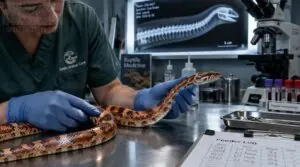
You’ve spotted the signs. Now your vet plays detective, and your homework matters as much as their exam.
Expect a full diet audit first: prey species, freeze duration, thaw method, and your UVB setup. Then comes the physical exam, checking body condition, eyes, jaw density, and posture. Because veterinary blood tests reptiles rely on are limited, your vet often reconciles husbandry history with clinical findings instead of chasing a single number.
Diagnostic testing may include:
- Plasma vitamin testing where labs support it
- Calcium and phosphorus ratios on bloodwork
- Radiographs to assess bone mineralization
- Fecal exams to rule out parasites mimicking deficiency
Remember, reptile veterinary diagnostics rarely confirm one vitamin in isolation. Overlapping deficits, like D3 plus calcium, explain most cases. Bring photos, feeder labels, and temps. That evidence drives targeted supplementation and faster recovery.
Preventing and Treating Vitamin Deficiencies

You now know what vitamin deficiencies look like and how your vet confirms them, but here’s the truth: prevention beats treatment every single time. The good news is that almost every deficiency you’ve read about is avoidable with the right husbandry. Below, you’ll find the four pillars of prevention**, from prey selection to recognizing when it’s too late to handle it alone.
Species-Appropriate Prey
Consider a garter snake fed only thawed minnows: within months, thiamine deficiency wrecks its coordination. That’s the cost of ignoring prey ecology.
Match the species-appropriate diet to what your animal evolved eating, then build prey rotation across life stages.
A whole-prey diet with prey species diversity, plus sound gutloading practices for insect feeders, closes most micronutrient gaps before they start.
UVB and Thermal Gradients
Prey variety alone won’t save a snake that can’t use its calcium. Unlike lizards, most snakes make little Vitamin D3 synthesis through skin, but UVB lighting still helps Calcium absorption in many species. Match your bulb’s output to Ferguson Zone matching guidelines, position it 12–18 inches above the basking site, and replace it every 12 months.
Pair that with Thermal gradient tracking, because cold snakes can’t metabolize what UVB provides.
Safe Supplementation Practices
Many keepers lack reliable supplementation practices, which leads directly to vitamin A deficiency or dangerous D3 toxicity. Fat-soluble vitamins accumulate in body tissue, so overdosing hits just as hard as any deficiency.
Match your calcium-phosphorus ratio carefully to a species-appropriate diet, supplement only to correct confirmed thiamine deficiency from thiaminase-rich fish, and apply your chosen product consistently across every meal.
When Veterinary Care is Urgent
Watch for seizures, opisthotonus, or stargazing immediately. These signal acute thiamine deficiency and demand same-day veterinary care. Open-mouth breathing alongside vitamin A deficiency means secondary pneumonia is developing. Retained eyecaps with corneal inflammation need immediate debridement.
Metabolic bone disease causing paralysis demands urgent imaging. If your supplementation practices haven’t resolved neurological symptoms within 48 hours, mortality risk climbs dangerously fast.
Frequently Asked Questions (FAQs)
What are the top 3 vitamin deficiency?
Whole prey doesn’t always guarantee complete nutrition.
Hypovitaminosis A tops the list, attacking skin and mucosal integrity. Vitamin D3 deficiency follows, wrecking calcium absorption. Third, thiamine deficiency silently destroys neurological function in captive fish-fed snakes.
What foods are toxic to snakes?
Some foods cause harm through nutrient toxicity, not direct poisoning. Thiaminase-rich fish rapidly deplete your snake’s thiamine. Excessive organ meat triggers vitamin A toxicity in reptiles. Improperly stored frozen feeders can silently create dangerous deficiencies.
What does D3 do to reptiles?
D3 is the key your snake needs to access calcium from its diet. Vitamin D3 synthesis, triggered by UVB lighting, allows calcium absorption and protects reptile bone health, but overdosing always risks vitamin D3 toxicity.
What calms snakes down?
Like a thunderstorm needing to pass, consistent gentle handling and stable thermal gradients calm snakes best. Minimize sudden movements, keep the lighting low, and note that nutritional imbalance in reptiles can heighten stress responses noticeably.
Do snakes have a vitamin deficiency?
Yes, snakes can. You might think whole prey covers everything, but Vitamin A deficiency, Vitamin D3 deficiency, and B vitamin deficiencies all occur in captivity when prey, UVB, or temperatures fall short.
Do snakes have a zinc deficiency?
A last vet conference panel I sat in on listed snake deficiencies: vitamin A, D3/calcium, thiamine. Zinc never made the list. Zinc deficiency in snakes is rare, poorly documented, and usually masked by broader nutritional imbalance reptiles experience.
How do you know if a reptile has a vitamin A deficiency?
Here’s the hard truth: ocular signs appear in most cases. Watch for cloudy eyes, retained eyecaps, swelling, or discharge. Add poor shedding or respiratory issues, and your snake needs a vet now.
Do snakes need vitamin C?
No. Unlike Vitamin A deficiency or Vitamin E deficiency, Vitamin C deficiency isn’t recognized in reptile nutrition. Snakes make their own, so you shouldn’t supplement it; focus on whole prey instead.
What happens if a snake eats a vitamin D3 deficiency?
If your snake develops a vitamin D3 deficiency, calcium absorption collapses, triggering nutritional secondary hyperparathyroidism.
Expect metabolic bone disease: soft, deformed bones, tremors, fractures, seizures.
Correct your UVB lighting and prey supplementation immediately, and see your reptile veterinarian.
Do snakes need vitamin D?
Yes, but indirectly. Snakes need Vitamin D3 to absorb calcium, and without adequate UVB lighting or dietary D3, you risk Metabolic bone disease and Nutritional secondary hyperparathyroidism. Check your husbandry now.
Conclusion
Consider a ball python that ate every frozen mouse for three years, then suddenly refused food and developed a rubbery jaw. That owner didn’t fail at feeding; they failed at nutritional completeness. Snake vitamin deficiencies rarely announce themselves early, so your job is to act before symptoms do.
Audit your prey quality, verify your UVB output, and schedule a reptile vet visit annually. Your snake can’t ask for better nutrition. You have to notice first.