This site is supported by our readers. We may earn a commission, at no cost to you, if you purchase through links.
A rodent bite during feeding lands your snake in the emergency vet roughly 8% of the time keepers aren’t paying full attention—a stat most hobbyists discover after, not before, their first incident. The live versus frozen feeding debate sounds straightforward until you’re watching a ball python regurgitate an oversized mouse at midnight, or trying to explain to a new keeper why their corn snake refused every live rodent for three weeks straight.
Freezing preserves over 90% of protein and amino acids, but lipid oxidation quietly degrades fat-soluble vitamins the longer prey sits in your freezer. This nutritional trade-off complicates choices for keepers balancing convenience against dietary needs.
Species, life stage, and individual temperament all push the decision in different directions. What works for a hatchling boa—prioritizing live prey to stimulate hunting instincts—won’t suit an adult arboreal hunter thriving on frozen-thawed meals. There’s no universal solution, only context-driven compromises.
Table Of Contents
- Key Takeaways
- Live Vs Frozen Feeding Overview
- Safety Risks for Your Snake
- Nutrition and Prey Quality
- Species-Specific Feeding Choices
- Frozen Feeding Best Practices
- Frequently Asked Questions (FAQs)
- Can you feed Frozen rodents vs live to reptiles?
- Is frozen prey better than live prey?
- Should I Feed my snake live or Frozen rodents?
- Can feeding methods affect snake longevity or lifespan?
- Are there differences in waste or odor production?
- What are signs of digestive issues after feeding?
- How can you tell if a snake is still hungry?
- How long can frozen feeders be stored safely?
- What are the cost differences between live and frozen?
- Do regulations restrict live feeding in certain regions?
- Conclusion
Key Takeaways
- Frozen prey retains over 90% of protein and amino acids but loses fat-soluble vitamins like A and E the longer it is stored in your freezer, so store at or below –18°C and feed within 30 minutes of thawing.
- Live feeding carries roughly an 8% injury rate when you are not watching closely, meaning a single unattended rodent can cause puncture wounds, eye trauma, or mouth lacerations that permanently change how your snake feeds.
- No single feeding method suits every snake—species, life stage, and individual temperament all shift the right call, with hatchlings often needing live prey to trigger hunting instincts while most adult constrictors accept frozen-thawed without issue.
- Feeding method affects long-term health in ways that compound quietly over years, as repeated injuries, poor nutrition, and chronic stress erode immune resilience and accelerate age-related decline well before obvious symptoms appear.
Live Vs Frozen Feeding Overview

Choosing between live and frozen prey is one of the first real decisions you’ll make as a snake keeper, and it’s not as simple as picking whichever seems easier.
Both options come with real trade-offs, so it’s worth understanding safe live prey feeding practices for snakes before you commit to a routine.
Each approach carries its own trade-offs around safety, nutrition, cost, and how well your specific snake actually responds.
Here’s what you need to know before you open that freezer or walk into the feeder room.
Key Differences
At their core, live feeding and frozen prey diverge across four practical dimensions: movement stimulus, injury likelihood, nutrient degradation, and economic impact.
| Factor | Live Feeding | Frozen Prey |
|---|---|---|
| Movement Stimulus | Continuous, real-time | Simulated with tongs |
| Risk of Injury | ~8% puncture rate | Eliminated |
| Nutritional Equivalence | Baseline | >90% protein retained |
| Ethical Concerns | Observable prey suffering | Minimal |
Species differences further complicate the choice.
Best Option for Beginners
Those species differences matter most when you’re just starting out, and for most beginners, frozen prey wins cleanly. It eliminates the risk of injury, simplifies prey handling safety, and requires minimal equipment needs or setup simplicity upfront. Your learning curve stays manageable because you’re not also monitoring a live animal.
| Factor | Live Feeding | Frozen Prey |
|---|---|---|
| Risk of Injury | ~8% puncture rate | Eliminated |
| Time Commitment | High supervision required | Minimal |
| Cost Comparison | ~$1.20 per mouse | ~$0.75 per mouse |
When Live Feeding Happens
Live feeding works best when your snake is alert, tongue-flicking, and positioned near the front of its enclosure. Enclosure temperature thresholds, light cycle influence, and snake activity patterns all determine whether a strike happens at all. Your handler timing technique and prey placement strategy matter too, because a poorly timed introduction just stalls the session.
| Condition | Live Feeding Readiness | Risk Level |
|---|---|---|
| Snake alert, tongue-flicking | High readiness | Moderate |
| Enclosure at ideal temp (≈30°C) | Strike likely | Moderate |
| Snake in shed cycle | Low readiness | High — prey-inflicted injury risk |
| Poor lighting or cold enclosure | Strike unlikely | Low immediate, high if forced |
| Prey hiding in corner | Session stalls | Escalating supervision demand |
Similarly, rapid telepsychiatry adoption was spurred by the COVID‑19 pandemic, illustrating how crises can accelerate clinical practice changes.
Frozen-Thawed Feeding Basics
Frozen-thawed feeding removes most of the unpredictability from the session.
Your pre‑feeding prep starts hours before: refrigerator thaw first, then finish with a water bath method in a sealed bag at roughly 30 °C.
Seal integrity matters—any breach invites bacterial contamination. Temperature verification with a quick touch confirms readiness.
For complete peace of mind, check out this guide on safe feeding practices for snakes, which walks through how to minimize stress and injury during every meal.
Done right, freeze‑thaw cycle effects on nutrition stay minimal.
| Step | Key Detail |
|---|---|
| Thawing Equipment | Sealed bag, warm-water container |
| Temperature Regulation of Prey | Match snake’s body temp (~30°C) |
| Pre-Feeding Prep | Refrigerator thaw, then water bath finish |
Safety Risks for Your Snake

Live feeding isn’t without its risks, and some of them can catch even experienced keepers off guard. Your snake’s safety depends on understanding exactly where things can go wrong before they do.
Here’s what you need to watch for.
Live Prey Bite Injuries
A single unattended rodent can turn a routine feeding into a veterinary emergency. Rodent bites deliver puncture wounds deep enough to reach muscle, and prey-inflicted injuries to the face—eye trauma, mouth lacerations, soft tissue bruising—can permanently affect how your snake feeds.
One unattended rodent can turn a routine feeding into a permanent injury for your snake
Live feeding hazards include:
- Infection risk from bacteria entering puncture wounds
- Eye trauma impairing vision and strike behavior
- Mouth lacerations disrupting normal feeding mechanics
- Soft tissue bruising causing lasting inflammation
Shedding and Poor Vision
When your snake enters a shedding cycle, cloudy spectacles impair vision-linked strike accuracy, making pre-shed feeding attempts risky—especially with live prey. This reduced clarity directly impacts their ability to hunt safely.
Humidity control is critical to ensure a clean shedding process. Inadequate humidity often leads to retained eye caps, complicating the shed.
| Shed Stage | Eye Condition | Feeding Recommendation |
|---|---|---|
| Early shed | Dull, milky spectacles | Skip or delay feeding |
| Mid-cycle | Fully opaque, cloudy | Avoid live feeding entirely |
| Eyes clear | Temporarily improved clarity | Wait; confirm shed completion |
| Active peel | Variable, unstable vision | Frozen prey only if feeding |
| Post-shed | Spectacles shed cleanly | Resume normal schedule |
Eye cap removal should only occur if the spectacle is retained after the full shed is completed. Never attempt removal prematurely.
Supervision During Live Feeding
Every live feeding session demands your full attention from the moment prey enters the enclosure. Keeper positioning matters—stand where you can see the strike zone clearly.
Continuous observation isn’t optional; documented injury rates stood at approximately 8% without it.
Wear protective gloves, keep tongs ready for rapid intervention, and remove any escaped prey immediately.
A quick post-feed review confirms no prey-inflicted injury occurred.
Prey Size and Risk
Prey size selection isn’t just about what your snake will eat—it’s about what it can safely handle. Gape limitation is real: when prey diameter pushes against jaw mechanics, swallowing stalls, handling time increases, and oversized prey regurgitation becomes likely. Digestive strain from an oversized meal can delay the next feeding cycle entirely, quietly compounding starvation risk over time.
- Match prey width to the snake’s widest body point, not its head length.
- Extended handling time increases prey-inflicted injury risk, particularly when a struggling rodent reverses contact.
- Size up gradually—sudden jumps in prey size raise regurgitation probability and digestive strain simultaneously.
Disease Transmission Concerns
Both live and frozen prey carry real disease risk—the difference is how you manage it. Live prey hazards include hantavirus, salmonella, and rat-bite fever, while improper frozen prey handling opens the door to E. coli contamination.
Cross-contamination paths run through tongs, water bowl sanitation gaps, and biofilm persistence on enclosure surfaces.
Shedding vulnerability compounds exposure risk, making consistent biosecurity non-negotiable.
Nutrition and Prey Quality

Once you’ve weighed the safety side of live versus frozen feeding, the next logical question is nutritional quality. It isn’t a simple win for either option — it depends on protein retention, fat stability, vitamins, and how well the prey is stored or raised.
Here’s what the science says across five key areas.
Protein and Amino Acids
Frozen prey retains over 90% of the protein and essential amino acids found in live prey, ensuring the nutritional value holds up well with proper freezing. This stability means your snake receives consistent essential amino acid coverage whether you offer live or frozen prey.
What changes slightly is amino acid metabolism efficiency: ice-crystal damage during freezing can marginally reduce protein digestibility. However, nitrogen ratio and amino acid profiles remain remarkably stable, preserving your snake’s essential amino acid coverage.
Fat and Vitamin Retention
Fat tells a more complicated story than protein. Omega-3 fatty acids and fat-soluble vitamins—particularly Vitamin A and Vitamin E—take the biggest hit from freezing. Ice-crystal formation accelerates lipid oxidation, while Vitamin E stability drops as it shields other fats from oxidative breakdown. Vitamin A oxidation follows, especially with extended storage or freezer-burn effects.
Oxidation-minimizing thawing matters here:
- Thaw in sealed bags submerged in warm water
- Never microwave—uneven heat accelerates vitamin degradation
- Feed within 30 minutes of reaching target temperature
- Store at or below –18 °C to slow nutrient loss
- Avoid refreezing thawed prey, which compounds omega-3 fatty acid breakdown
Calcium and Phosphorus Balance
Unlike fats and vitamins, minerals hold up well through freezing. Frozen prey maintains a calcium-to-phosphorus ratio of roughly 1.5:1—identical to live feeding—meaning your snake’s hormonal regulation, including vitamin D activation and kidney phosphate excretion, stays properly supported.
Ionized calcium monitoring in captive snakes rarely reveals deficiencies tied to prey nutrition quality alone, as the dietary Ca:P ratio in frozen prey remains nutritionally intact.
Freezer Burn Concerns
Minerals remain stable, but physical storage quality poses a distinct challenge. Freezer burn develops when airtight packaging fails, allowing oxygen to reach surface fats and sublimation to extract moisture.
This degradation leaves feeders dry and discolored, often causing snakes to refuse them. Vacuum sealing and maintaining consistent temperatures at or below –18 °C are critical barriers against freeze-thaw cycles that accelerate deterioration.
Always check for white patches before thawing, as these indicate advanced moisture loss.
Prey Colony Diet Quality
What your prey colony eats directly shapes what your snake actually absorbs. Feed formulation and breeding conditions affect nutrient bioavailability across every feeding.
- Seasonal diet shifts in prey colonies alter amino acid and lipid profiles
- Poor prey enrichment reduces vitamin retention before freezing
- Inconsistent prey colony management raises pathogen risk and nutritional intake variability
Track your supplier’s feeding protocols — it matters more than most keepers realize.
Species-Specific Feeding Choices

Not every snake plays by the same rules regarding feeding. What works perfectly for a corn snake might send a ball python on a week-long hunger strike.
Here’s how different species tend to respond, and what that means for your feeding approach.
Ball Python Preferences
Ball pythons are notorious for their individual prey bias — one snake locks onto frozen-thawed immediately while another refuses anything that doesn’t move. Morph-specific appetite differences are real, and seasonal feeding changes, particularly autumn slowdowns, complicate schedules further.
Feeding schedule consistency matters more than most keepers expect.
| Factor | Recommendation |
|---|---|
| Prey preference | Assess individually |
| Scent enrichment | Rub prey with live rodent bedding |
| Prey size | Match widest body girth |
| Live feeding risk | Prey-inflicted injury ≈8% puncture rate |
| Adjustment strategy | Gradual, with warming to 30°C |
Corn Snake Feeding Success
Most corn snakes take to frozen prey without much drama — a welcome contrast to ball pythons. Temperature cue optimization matters here: warming feeders to roughly 30°C dramatically improves acceptance.
Seasonal appetite shifts in autumn may slow feeding frequency, so don’t panic.
Feeder tube techniques help hesitant juveniles strike confidently, supporting injury prevention and preserving the full nutritional value of prey without live feeding risks.
Boa Constrictor Recommendations
Boa constrictors, once past the hatchling stage, shift to frozen-thawed prey reliably — reducing the risk of prey-inflicted injury considerably.
Juvenile feeding frequency is higher, so establish a consistent feeding schedule early. A calm, enclosed space facilitates techniques that reduce stress, improving acceptance of meals.
Seasonal feeding adjustments may be needed in cooler months, and a basic vitamin supplement protocol helps maintain long-term nutrient retention.
Arboreal Hunter Needs
Arboreal ambush predators like green tree pythons rely on visual tracking and prey movement stimulation to trigger a strike — frozen-thawed prey often won’t cut it without coaxing. Their natural hunting behavior depends on claw curvature, proprioceptive balance, and camouflage coloration honed for canopy life.
To address this, simulate slight movement using tongs, maintain a solid hydration strategy, and live feeding may still be necessary for reluctant individuals.
Hatchling Feeding Challenges
Hatchlings rarely eat on schedule — first meal timing often falls after their post-shed feeding window, not before. Offer starter prey sizing that stays narrower than their widest body point, warmed via temperature cue heating to roughly 30°C.
Stress-free handling should be minimized around feeding days, as disturbance delays acceptance considerably.
The shift challenges between feeding live rodents and feeding frozen rodents requires patience and consistent prey handling protocols.
Frozen Feeding Best Practices
Getting frozen feeding right comes down to a handful of habits that make a real difference in whether your snake eats well and stays healthy.
None of them is complicated, but skipping even one step can lead to a refused meal or, worse, a sick animal.
Here’s what you actually need to know.
Safe Thawing Steps

Start with refrigerator timing—transfer frozen prey several hours ahead so thawing remains controlled and slow.
Complete the process using sealed bag thawing: submerge the bagged prey in warm water for 15–20 minutes. If time is short, use cold water exchange, changing water every 30 minutes. Always avoid counter thawing; bacteria multiply rapidly at room temperature.
Skip microwave thawing entirely—uneven heating degrades your frozen-thawed feed.
Correct Prey Temperature
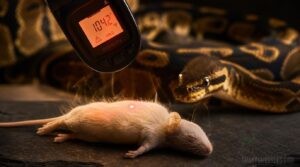
Once the prey is warm to the touch, check surface warming using an infrared thermometer—your target range should be 95–105°F across the body and head. Cold prey weakens the heat signal snakes rely on, reducing strike interest.
Heat loss timing matters too; if you’ve waited too long, rewarm briefly. Overheating avoidance is equally important—scalding temperatures produce an unnatural cue that confuses rather than triggers feeding.
Feeding Tong Techniques

Once your prey reaches the target temperature, tong technique becomes critical. Grip style matters: hold the prey firmly near the mid-body, not the head, to prevent it from twisting unpredictably.
Your approach angle is equally important—always come from the side, never straight-on. A subtle side-to-side movement cue will trigger the feeding response without causing chaos.
Transitioning From Live Prey

Making the switch from live prey to frozen-thawed feeding works best as a gradual pace shift, not a single hard cutover. Offer a freshly killed bridge item first—same scent, no struggle.
Then introduce warmed prey cue with tongs in a controlled presentation setup. Keep a live backup option available if refusal stretches across multiple sessions.
Handling Hunger Strikes

Even after a smooth change, some snakes still refuse meals for weeks. Think of it as the reptile equivalent of a hunger strike—frustrating, but rarely dangerous short-term if you track it clinically.
- Monitor weight weekly; a 10–15% drop signals escalation triggers worth acting on
- Document each refusal as part of your medical monitoring routine
- Revisit consent protocols with your vet before force-attempting refeeding risks
- Apply negotiation strategies: scent-rubbing prey, adjusting hide placement, or reducing handling
Frequently Asked Questions (FAQs)
Can you feed Frozen rodents vs live to reptiles?
Both options work, and each has real trade-offs worth knowing.
Frozen prey excels in feeding safety and storage logistics, while live feeding offers behavioral enrichment — though injury risk to your snake rises sharply.
Is frozen prey better than live prey?
For most captive snakes, frozen prey wins on feeding safety for reptiles, long-term health, and budget implications.
It removes feeding stress, cuts disease risk, and simplifies colony management without meaningful nutrient loss.
Should I Feed my snake live or Frozen rodents?
Frozen rodents are the safer, more practical choice for most keepers, balancing snake nutrition, budget considerations, and reduced risk of injury to the snake.
Though keeper skill level and prey availability ultimately determine the flexibility of the feeding schedule.
Can feeding methods affect snake longevity or lifespan?
Yes — feeding methods absolutely affect lifespan. Chronic metabolic stress from poor nutrition, repeated injuries, and immune resilience gaps compounds over years,
quietly eroding snake health and accelerating age‑related decline long before it becomes obvious.
Are there differences in waste or odor production?
Live prey waste carries higher ammonia emission levels from biological breakdown, while thawing frozen feeders introduces odor from thawing and contamination risk if mishandled.
But overall waste volume differential favors frozen feeding for cleaner carcass disposal impact.
What are signs of digestive issues after feeding?
Watch for regurgitation, vomiting episodes, abnormal stools, excess gas, feeding irritability, meal refusal, weight loss, stunted growth, respiratory symptoms, or parasite signs — all signal your snake needs a veterinary evaluation promptly.
How can you tell if a snake is still hungry?
A hungry snake does not stay still — tongue flicking intensifies, prey tracking kicks in, and its coiled S-shaped strike posture signals readiness.
This prey-drive response becomes fully active even before any offering is presented.
How long can frozen feeders be stored safely?
Frozen feeders stored at -18°C in airtight packaging maintain nutritional shelf life for up to 12 months.
Beyond that window, quality decline accelerates — fat degrades, texture suffers, and your snake’s acceptance rate may drop noticeably.
What are the cost differences between live and frozen?
Bulk frozen prey usually runs €75–€00 per unit, while live prey costs €50–€50 with added labor overhead, spoilage waste, supply chain costs, and regulatory fees factored into the cost structure.
Do regulations restrict live feeding in certain regions?
Yes, regional bans exist, but enforcement variability means legal definitions shift across jurisdictions. Veterinary exemptions apply in narrow cases.
Compliance documentation and permits matter where regulatory frameworks treat live feeding as unnecessary suffering.
Conclusion
Think of feeding as a dial, not a switch—live versus frozen feeding sits at opposite ends of a spectrum you’ll adjust as your snake grows, molts, and changes. Nutritional quality, injury risk, and individual temperament all inform where that dial belongs at any given point.
Lock in safe thawing protocols, match prey size to body girth, and stay present during every live session. These practices minimize hazards while ensuring proper nutrition.
Your snake’s long-term health lives in those details—meticulous attention to these factors fosters resilience and vitality.
- https://showmereptileshow.com/resources/-feeding-live-vs-frozen-rodents-to-snakes-exploring-the-pros-and-cons
- https://www.visionproducts.us/blog/frozen-vs-live-rodents-what-should-i-feed-my-snake
- https://www.reptiles.swelluk.com/help-guides/reducing-the-risk-of-salmonella-infection-from-reptiles-and-their-food