This site is supported by our readers. We may earn a commission, at no cost to you, if you purchase through links.
Your ball python’s belly shouldn’t look like bubble wrap. Those raised, fluid-filled lesions dotting the ventral scales aren’t normal shedding artifacts—they’re blister disease, a bacterial or fungal infection that demands immediate attention.
Left unchecked, what starts as a few isolated blisters rapidly escalates into widespread crusting, septicemia, and potentially fatal systemic infection. The culprit? Usually a trifecta of excessive humidity, poor ventilation, and contaminated substrate creating the perfect storm for pathogenic bacteria like Pseudomonas and Aeromonas to colonize your snake’s skin.
Royal pythons, corn snakes, and boas face particularly high risk due to their prolonged contact with enclosure flooring. Recognition matters—catching discoloration, behavioral changes, and early lesions before they progress dramatically improves treatment outcomes and prevents permanent scarring.
Table Of Contents
- Key Takeaways
- What is Blister Disease in Pet Snakes?
- Causes and Risk Factors for Blister Disease
- Recognizing Symptoms of Blister Disease
- Diagnosing and Treating Blister Disease
- Preventing Blister Disease in Pet Snakes
- Frequently Asked Questions (FAQs)
- How to treat blister disease in snakes?
- What diseases can you get from pet snakes?
- What is the most common cause of death in snakes?
- What are the symptoms of paramyxovirus in snakes?
- Can blister disease spread between multiple pet snakes?
- How long does full recovery typically take?
- Are certain substrates safer than others for prevention?
- What humidity level is ideal for most snakes?
- Can blister disease recur after successful treatment?
- Conclusion
Key Takeaways
- Blister disease—fluid-filled lesions on your snake’s belly scales—stems from bacterial or fungal infections triggered by excessive humidity, poor ventilation, and contaminated substrate, and escalates rapidly from isolated blisters to life-threatening septicemia without prompt intervention.
- Successful treatment requires 45-60 days of systemic antibiotics prescribed by a reptile veterinarian, complete enclosure disinfection, species-appropriate humidity control (40-60% for most snakes), and daily warm-water soaks to support healing.
- Prevention hinges on three non-negotiables: weekly substrate replacement with non-absorbent materials like aspen shavings or reptile carpet, maintaining precise temperature gradients (88-92°F warm side, 78-82°F cool side) with cross-flow ventilation, and daily spot-cleaning to eliminate moisture pockets where pathogens thrive.
- Early detection dramatically improves outcomes—watch for raised ventral scales, discoloration ranging from pale yellow to greenish-black, behavioral changes like feeding refusal or lethargy, and foul odors signaling bacterial invasion, then quarantine and seek veterinary care immediately.
What is Blister Disease in Pet Snakes?
Blister disease—also called vesicular dermatitis—is a painful bacterial or fungal infection that creates fluid-filled blisters on your snake’s belly scales.
If your snake stops eating, hides constantly, or shows other behavioral symptoms of a sick snake, blister disease could be the underlying cause.
Without treatment, these lesions can spread rapidly and become fatal.
Left untreated, blister disease spreads quickly and can kill your snake
Understanding what you’re dealing with starts with recognizing the basics: which species face the highest risk, what the condition actually looks like, and how it differs from similar skin problems.
Definition and Overview
Blister disease strikes when fluid-filled pockets develop under your snake’s skin layers, creating raised lesions along the trunk and scales. This skin infection differs from normal shedding because blisters persist and widen beyond single scale lines.
You’ll recognize clear or yellowish fluid beneath the skin, often accompanied by inflammation. Without prompt intervention, these blisters progress to crusting, signaling serious reptile health concerns requiring immediate disease prevention measures.
Commonly Affected Snake Species
Your snake species matters in terms of blister disease vulnerability. Boas and pythons from the boid family face the highest risk because they rest for hours on enclosure floors, keeping their belly blisters in constant contact with damp substrate.
Royal pythons, corn snakes, and Burmese pythons develop snake belly blisters most often, especially in poorly ventilated setups that compromise reptile health. Research has shown that improper humidity and hygiene can worsen reptilian health outcomes and greatly contribute to blister disease.
Difference Between Blister Disease and Scale Rot
Many keepers use blister disease and scale rot interchangeably, but veterinary care draws a clear line. Blister disease presents as fluid-filled vesicles on the belly—true vesicular dermatitis.
Scale rot encompasses broader ulcerative dermatitis including burns, abrasions, and necrotic patches without intact blisters. Both demand immediate reptile health intervention, yet the disease comparison matters for proper dermatitis management and targeted snake wound care.
Left untreated, scale rot can result in serious secondary infections and septicemia.
Causes and Risk Factors for Blister Disease

Blister disease doesn’t appear out of nowhere. Your snake’s environment creates the perfect breeding ground for bacterial and fungal invaders when conditions go wrong.
Understanding these risk factors puts you in control of prevention before blisters ever form.
Bacterial and Fungal Infections
When bacteria and fungi invade damaged scales, they turn minor skin irritation into full-blown bacterial infections that threaten your snake’s life. Pseudomonas and Aeromonas are common bacterial strains colonizing blister fluid, while fungal colonization follows when skin stays damp.
These infections often trigger unusual snake behavior like lethargy or refusing food, signaling that immediate veterinary care is needed.
Infection control starts with identifying skin lesions early—culture testing guides effective microbe management, ensuring proper snake wound care and thorough reptile skin care before septicemia develops.
Excessive Humidity and Poor Ventilation
When humidity climbs above your snake’s species-specific range and stale air lingers, you create a breeding ground for blister disease.
Poor ventilation systems trap moisture against scales, leading to maceration and bacterial entry. Install cross-flow airflow patterns with front and rear vents, use digital hygrometers at substrate level, and adjust enclosure design to prevent the persistent dampness that ruins reptile skin care efforts.
Unsanitary Substrates and Enclosure Conditions
When bedding soaked with urine sits against your snake’s belly for 24 to 48 hours, painful blisters erupt.
Dirty substrate traps feces and waste against ventral scales, creating prime conditions for bacterial invasion and scale rot.
Replace soiled bedding daily, disinfect hides weekly, and monitor water bowls to prevent chronic moisture buildup that fuels blister disease through poor enclosure cleaning and failed sanitary practices.
Skin Injuries and Compromised Barriers
Even tiny scratches break your snake’s protective outer layer and invite bacteria inside. Minor abrasions, bite wounds from live prey, pressure sores from damp bedding, ectoparasites like mites, and shedding problems all compromise the skin barrier.
Proper snake wound care prevents blister disease and dermatitis treatment emergencies:
- Inspect ventral scales after every rodent feeding for puncture wounds
- Switch to frozen-thawed prey to eliminate attack injuries
- Keep enclosures dry to prevent pressure sores from forming
- Treat mite infestations immediately to stop repeated irritation
- Address incomplete sheds before cracks invite skin infections and scale rot
Recognizing Symptoms of Blister Disease
Early detection makes all the difference when treating blister disease. You’ll notice physical changes on your snake’s skin first, but behavioral shifts often follow close behind.
Watch for these four critical warning signs that signal your snake needs immediate veterinary attention.
Fluid-Filled Blisters and Lesions
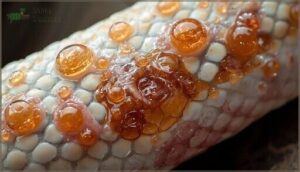
Your snake’s belly tells the story first. Look for raised blisters on the ventral scales—these blisters signal active blister disease.
Fluid accumulation under the skin creates visible swelling, often accompanied by skin lesions that weaken the barrier. Scale damage follows as infection spreads. Blisters range from tiny vesicles to large, angry sacs.
Wound healing won’t begin until you tackle the underlying issue and start treatment.
Discoloration and Raised Scales
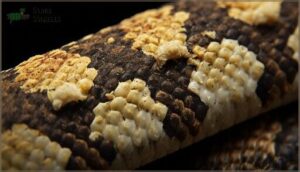
Discolored scales act like early warning flags for blister disease. Watch for these telltale signs:
- Scale color changes from normal shades to pale yellow, brown, red, or greenish-black patches, especially along your snake’s belly
- Raised scale patterns where skin feels spongy or lifted at the edges instead of smooth
- Skin lesion types that progress from dull patches to cracked, crusted areas exposing raw tissue
Abnormal elevation and discoloration signal active dermatitis requiring immediate veterinary attention.
Behavioral Changes and Appetite Loss
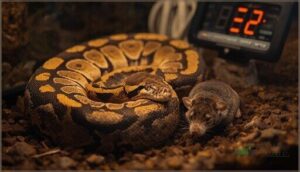
Pain changes your snake’s entire world—watch for sudden shifts. Feeding refusal often appears first; sick snakes ignore prey they’d normally strike immediately.
Lethargy signs include reduced movement and choosing inappropriate temperature zones. Extended hiding behaviors suggest discomfort, not just pre-shed patterns.
Stress responses like defensive strikes from previously calm snakes signal trouble. Anorexia consequences worsen quickly in reptile health, making early intervention vital for effective snake care and treating reptile diseases and treatment of blister disease.
Foul Odors and Discharge
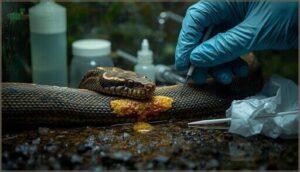
Beyond behavioral cues, your nose often detects trouble first. Strong, sour odors near infected blisters signal bacterial infections spreading rapidly beneath scales.
Watch for these discharge types indicating blister disease severity:
- Clear to yellow fluid leaking from ruptured vesicles
- Green, thick pus suggesting severe bacterial infections
- Foul metallic smell accompanying fungal growth
- Crusty residue around affected scales
- Discharge collecting near the vent area
Aggressive odor control and immediate veterinary intervention prevent septicemia in compromised reptile health and snake care situations.
Diagnosing and Treating Blister Disease

You can’t treat blister disease at home with topical creams or wishful thinking.
Your snake needs a veterinarian who can confirm the diagnosis through skin cultures and prescribe the right medications.
Here’s what proper treatment looks like and why every step matters for your snake’s recovery.
Veterinary Diagnosis Methods
Your reptile vet starts with a thorough physical exam—head to tail—checking skin integrity, hydration, and blister symmetry.
Laboratory tests follow: cytology of fluid reveals bacterial or fungal culprits, complete blood counts flag inflammation, and microbial cultures confirm the pathogen.
Imaging studies like radiographs or ultrasound assess deeper tissue damage. Histopathology of biopsied margins provides definitive answers, guiding targeted veterinary diagnosis and treatment.
Systemic Antibiotics and Medical Treatments
Once your reptile vet identifies the pathogen, systematic antibiotics become the cornerstone of medical therapy—usually for 45 to 60 days.
Common choices include:
- Amoxicillin or cephalexin for gram-positive bacterial infections
- Doxycycline targeting atypical and gram-negative organisms
- Fluoroquinolones reserved for severe cases due to cartilage concerns
Veterinary medicine tailors antibiotic treatment to culture results, minimizing antibiotic resistance while supporting wound care and infection control through reptile pharmacology.
Importance of Environmental Cleaning
While antibiotics attack infection from within, you’ll sabotage recovery if your snake returns to the same contaminated environment.
Strip the enclosure completely. Disinfect every surface with reptile-safe sanitation protocols. Replace all substrate. Adjust humidity control and ventilation systems to species-appropriate levels.
Think of it as resetting the stage—your enclosure management directly determines whether blister disease returns or stays gone.
Supportive Care and Water Therapy
Water therapy accelerates healing process by flushing bacteria while promoting skin hydration.
Soak your snake in warm water (40°C) for 5 to 10 minutes daily—hydrotherapy sessions that soften scabs and aid wound cleaning. Use sterile saline for gentle rinse, then pat dry carefully.
This daily water therapy enhances reptile health and wellness when paired with proper humidity control and ongoing animal husbandry protocols.
Preventing Blister Disease in Pet Snakes

Blister disease is preventable with consistent husbandry practices. Your snake’s enclosure environment directly controls infection risk—maintaining proper conditions isn’t optional, it’s essential.
The following prevention strategies will keep your snake’s skin healthy and eliminate the conditions bacteria and fungi need to thrive.
Proper Enclosure Hygiene
Think of your snake’s enclosure as a sterile operating room—cleanliness prevents infection. Establish strict sanitation protocols: clean surfaces weekly with reptile-safe disinfectant, replace substrate every 2-4 weeks, and sanitize water bowls daily.
Proper substrate management and ventilation systems reduce moisture pockets where bacteria thrive. Document your enclosure cleaning routine to track hygiene practices and prevent scale rot before it starts.
Maintaining Optimal Humidity and Temperature
Your hygrometer calibration should confirm relative humidity between 40 and 60 percent—deviations invite skin maceration and bacterial invasion.
Install dual thermometers to monitor temperature gradients: maintain 88–92°F warm side, 78–82°F cool side. Proper heat sources and ventilation systems prevent moisture buildup without drying the enclosure.
Record daily readings to catch fluctuations early. Precision in reptile enclosure management protects against blister disease better than any cure.
Safe Substrate Choices and Regular Cleaning
Your substrate materials determine whether snake belly blisters take hold or stay away. Aspen shavings resist moisture better than paper-based bedding—replace them weekly during spot cleaning schedules.
Coconut fiber needs complete drying between humidity control adjustments to prevent mold. ReptiSafe reptile carpet offers washable convenience for enclosure maintenance.
Proper ventilation systems paired with substrate choice form your first defense in scale rot prevention and treatment.
Monitoring Snake Health and Routine Vet Visits
Regular veterinary care catches blister disease before full-blown infections develop in your snake’s belly scales. Schedule annual exams with a reptile vet experienced in snake diseases—these visits include weight tracking, body condition scoring, and skin assessments that reveal early problems.
Health monitoring between appointments protects your investment in reptile care and maintenance:
- Weekly weight checks detect sudden drops signaling illness or parasitism
- Behavioral observations identify lethargy or feeding refusal requiring attention
- Skin inspections reveal redness or scale damage before blisters form
- Humidity logs document preventive measures supporting snake health and wellness
Professional reptile hygiene guidance and snake nutrition advice during checkups reinforce your home reptile care routine.
Frequently Asked Questions (FAQs)
How to treat blister disease in snakes?
Your snake needs systemic antibiotics for 45-60 days to combat bacterial infections.
Clean the enclosure completely, control humidity, and provide daily water therapy to support skin repair and healing under veterinary guidance.
What diseases can you get from pet snakes?
Pet snakes carry zoonotic diseases, including Salmonella bacteria shed in feces, respiratory pathogens like fungal spores, and parasites such as mites.
Proper hand hygiene and enclosure sanitation prevent bacterial exposure and parasite transmission.
What is the most common cause of death in snakes?
Bacterial infections, respiratory issues, and environmental toxins kill most snakes.
Poor husbandry causes infection control failures, leading to blisters, septicemia, and cardiac failure.
Snake malnutrition compounds these reptile diseases, demanding immediate treatment.
What are the symptoms of paramyxovirus in snakes?
Paramyxovirus causes respiratory issues like nasal discharge and labored breathing.
Neurological signs including head tremors and seizures follow.
Systemic infection leads to weight loss, lethargy, and behavioral changes, with high mortality rates in untreated cases.
Can blister disease spread between multiple pet snakes?
Cross contamination happens when snakes share enclosures or equipment. Disease transmission requires contact with contaminated substrates, water, or surfaces.
Quarantine protocols and snake isolation during treatment prevent infectious diseases in reptiles from spreading.
How long does full recovery typically take?
Most snakes show visible improvement within two to three weeks once treatment starts, but complete healing usually takes two to four months depending on severity and how quickly you correct their habitat.
Are certain substrates safer than others for prevention?
Yes. Choose non-absorbent substrates like newspaper, paper towels, or reptile-safe liners for ideal sanitation methods and humidity control.
These materials prevent moisture buildup that causes snake belly blisters and promotes skin health.
What humidity level is ideal for most snakes?
Ironically, there’s no single perfect number—most pet snakes thrive between 40 and 60 percent relative humidity, but your species determines the sweet spot.
Ball pythons need higher; corn snakes prefer lower ranges.
Can blister disease recur after successful treatment?
Unfortunately, yes—blister disease can return if you don’t fix the root problem.
Recurrence factors include high humidity, unclean substrates, or stopping antibiotics early, all sabotaging your snake’s skin regeneration.
Conclusion
Your snake’s health hinges on three non-negotiables: clean substrate, controlled humidity, vigilant observation. Blister disease in pet snakes doesn’t announce itself with fanfare—it creeps in through damp bedding and poor airflow, then explodes into systemic crisis.
Catch those first raised scales. Quarantine immediately. Disinfect ruthlessly. The difference between a treatable skin infection and a fatal septicemia often boils down to how quickly you act when something looks off. Your intervention timeline determines survival.