This site is supported by our readers. We may earn a commission, at no cost to you, if you purchase through links.
Most snake owners obsess over enclosure size, lighting, and feeding schedules—then grab whatever bowl looks right and call it done. That one oversight can cost their snake dearly.
A bowl too shallow leaves a shedding ball python struggling to soak off stuck skin. One too deep turns into a drowning risk for a hatchling that can’t climb out after drinking.
The size water bowl your snake needs isn’t guesswork—it comes down to body length, girth, and coiling width, measured against specific depth and diameter thresholds. Get those numbers right, and everything from hydration to humidity regulation falls into place.
Table Of Contents
- Key Takeaways
- How to Choose The Right Water Bowl Size
- Why Water Bowl Depth Matters for Snakes
- Species-Specific Water Bowl Recommendations
- Best Materials for Snake Water Bowls
- Maintenance Tips for Healthy Snake Water Bowls
- Frequently Asked Questions (FAQs)
- Can a snake live in a 10 gallon tank?
- Is a 20 gallon tank too small for a ball python?
- Can a snake live in a 20 gallon tank?
- Can a ball python live in a 50 gallon tank?
- Can snakes drink too much water daily?
- Should water bowls be covered or left open?
- Do snakes prefer warm or cold drinking water?
- How do I stop my snake from tipping bowls?
- Conclusion
Key Takeaways
- Match your snake’s bowl diameter to its coiled width and keep water depth no higher than halfway up its midsection to prevent drowning, especially for hatchlings.
- Soaking-heavy species like ball pythons need wide, shallow bowls with at least 16 oz capacity for adults, while drinkers like corn snakes do fine with a simple 6–8 inch ceramic dish.
- Ceramic, stainless steel, or glass are the only safe material choices—plastic scratches trap bacteria like E. coli and can leach harmful chemicals over time.
- Change the water daily, disinfect weekly with diluted chlorhexidine, and place the bowl on the cool side of the enclosure, never under a heat lamp.
How to Choose The Right Water Bowl Size
Getting the bowl size right comes down to knowing your snake’s current size and how it naturally uses water. A few simple measurements and some basic guidelines make the decision a lot easier than it sounds.
Species quirks matter too—this guide on choosing the right snake water bowl size breaks down how shedding habits and head size factor into the decision.
Here’s what to think about before you buy.
Measuring Your Snake for Bowl Selection
Grab a flexible tape measure — a rigid ruler won’t capture your snake’s natural curves accurately. Three measurements drive Bowl Size Selection:
- Body length from nose to tail tip
- Mid-body girth at the thickest point
- Coiled width on a flat surface
Bowl Footprint Matching, Rim Height Evaluation, and Coiling Behavior Analysis all depend on these numbers. Skip them, and your snake’s hydration needs go unmet.
General Size Guidelines by Snake Age and Size
Once you’ve got those measurements, the numbers translate directly into bowl size. Age matters here almost as much as species.
| Life Stage | Bowl Diameter | Capacity |
|---|---|---|
| Hatchling | 2–3 inches | ~8 oz |
| Juvenile | 4–6 inches | ~16 oz |
| Adult Small | 6–8 inches | 32+ oz |
| Adult Medium | 8–10 inches | 64+ oz |
| Adult Large | 10+ inches | 128+ oz |
Hatchling needs stay minimal — a small deli cup often works fine. Juvenile growth changes things fast, so don’t get too attached to one bowl size. Species variations mean a juvenile ball python and a juvenile corn snake won’t share the same setup, even at identical lengths.
Importance of Bowl Size for Drinking and Soaking
Bowl size affects more than just drinking. A water bowl size that lets your snake fully coil inside promotes soaking benefits like cleaner sheds and better hydration needs.
Too small, and your snake can’t regulate moisture effectively. Too large, and humidity control gets tricky. Snake comfort levels depend on that balance — room to soak without turning the enclosure into a swamp.
Getting that balance right starts with knowing your numbers — accurate humidity and temperature monitoring takes the guesswork out of keeping your snake healthy.
Why Water Bowl Depth Matters for Snakes
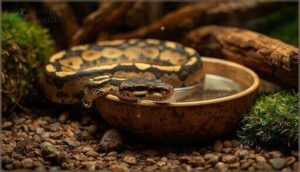
Size gets most of the attention, but depth is what actually keeps your snake safe.
A bowl that’s too deep can exhaust or even drown a snake that can’t keep its head above water. Here’s what you need to know about getting the depth right.
Safe Depth to Prevent Drowning
Depth is where water bowl safety quietly becomes life or death. Keep standing water at or below halfway up your snake’s body thickness — roughly 1 to 1.5 inches for most small species. Snake drowning risks spike fast when bowl depth forces swimming instead of resting.
Water bowl depth is a matter of life or death — keep it below your snake’s midsection thickness
Watch for these submersion hazards:
- Walls too steep to exit in one push
- Water displacing higher when the snake enters
- Hatchlings in adult-sized bowls
- Weak or shedding snakes left unattended
Impact on Shedding and Hydration
Hydration and the shedding process are directly connected — and your water bowl’s depth influences both. A bowl deep enough for soaking but shallow enough to touch bottom enhances your snake’s hydration levels naturally.
Snakes that soak before a shed consistently produce cleaner, one-piece skins. The relationship between snake behavior, hydration, and shedding outcome can be summarized as follows:
| Snake Behavior | Hydration Level | Shedding Outcome |
|---|---|---|
| Regular soaking | Well-hydrated | Clean, one-piece shed |
| Occasional drinking | Moderate | Partial stuck patches |
| Avoids bowl | Dehydrated | Retained eye caps, patchy shed |
Choosing Depth Based on Species and Age
Snake age factors and species depth needs aren’t interchangeable — and that distinction matters for water bowl safety. Hatchlings need just 1 to 1.5 inches of water so they can rest on the bottom without swimming.
For older snakes, depth requirements shift quite a bit — check out this guide on ball python water dish depth and placement to dial in the right setup as your snake grows.
Corn snakes stay shallow throughout life, while ball pythons graduate to around 3 inches as adults. Match bowl size and depth adjustment tips to your snake’s current size for solid reptile health.
Species-Specific Water Bowl Recommendations
Not every snake drinks the same way, and bowl size isn’t one-size-fits-all.
A ball python and a corn snake have completely different needs, and getting it wrong can affect hydration, shedding, and safety.
Here’s what works best for each type.
Ball Python Water Bowl Sizing
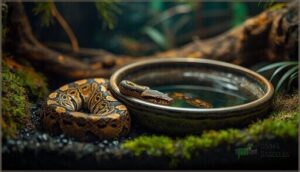
Ball pythons are notorious soakers, so water bowl size directly affects snake hydration and humidity control methods you rely on for clean sheds. Bowl shape matters too — wide and shallow beats tall and narrow every time.
- Adults: 16-ounce capacity minimum
- Hatchlings: 6–10 ounce shallow dish
- Depth: never exceed the snake’s midsection thickness
- Bowl placement strategies: cool side only
Boa Constrictor and Large Snake Needs
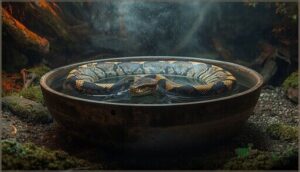
Boas are big snakes, powerful, and they soak — a lot. For adults over six feet, bowl size needs to match that muscle. Think 14 by 14 inches with about three inches of depth.
That’s enough for proper hydration and species-specific humidity control in large enclosures. Water quality drops fast in oversized bowls, so daily changes aren’t optional — they’re just snake care.
Corn Snake and Small Species Requirements

Corn snakes are drinkers, not soakers — that distinction drives everything about bowl size for small species enclosures. A 6 to 8-inch ceramic bowl with water no deeper than halfway up your snake’s body thickness keeps reptile bowl safety intact while supporting corn snake hydration.
Species-specific bowl sizing also doubles as a humidity control tip, preventing moisture spikes that throw off snake water quality and enclosure balance.
Adjusting Bowl Size as Your Snake Grows

Growth stage changes everything. A bowl that worked fine for a hatchling becomes a tipping hazard once your snake gains real weight and strength.
That’s why bowl upgrades matter at every enclosure size increase — not just when the snake looks cramped.
Match bowl size to body thickness, keep space balance in mind, and reassess soaking needs regularly.
Smart, species-specific snake care protects hydration needs at every stage.
Best Materials for Snake Water Bowls

The bowl itself matters just as much as the bowl size.
Material affects hygiene, stability, and how long the bowl actually lasts in a humid enclosure.
Here’s what you need to know before picking one.
Pros and Cons of Ceramic, Stainless Steel, and Glass
Material Comparison comes down to three solid options: ceramic, stainless steel, and glass. Ceramic water bowls win on weight factors — they’re heavy enough to stay put and blend naturally into a vivarium.
Stainless steel is dishwasher-safe and nearly indestructible, but lighter models tip easily. Glass is chemically inert, great for reptile hydration and snake care, though one hard knock can end it.
Avoiding Unsafe Plastic Bowls
Plastic might seem convenient, but it’s one of the worst choices for a snake water bowl. Scratches trap bacteria like E. coli and staph, making bacterial growth nearly impossible to fully scrub away.
Chemical leaching from BPA and phthalates adds a real plastic toxicity risk over time. For genuine material safety and long-term bowl durability, stick with ceramic, steel, or glass for safe reptile hydration.
Stability and Tipping Prevention Features
Beyond bowl materials, how a water bowl sits in the enclosure is just as important for water bowl safety. A spilled bowl means a wet snake, soaked substrate, and a mess you didn’t plan for.
Look for these features in your water bowl selection:
- Weighted bases — thick ceramic walls over 500 grams resist tipping when your snake leans against the rim
- Wide profiles — a flared, wide-bottom design keeps the center of gravity low and stable
- Non slip surfaces — rubberized pads or textured undersides grip glass and PVC floors, preventing sliding
Anchoring methods like packing substrate around the base add another layer of security, especially for heavy-bodied species that bulldoze everything in their path.
Maintenance Tips for Healthy Snake Water Bowls
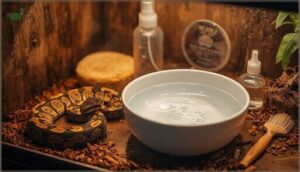
Getting the right bowl is only half the job — keeping it clean is where snake health is really won or lost.
A dirty water bowl can turn into a bacterial hotspot faster than you’d expect, especially with a snake that soaks regularly. Here’s what you need to stay on top of it.
Cleaning Frequency and Methods
Change the water every single day — that’s non-negotiable for reptile health. Daily sanitizing removes bacteria before biofilm takes hold, and if your snake defecates or sheds in the bowl, change it immediately.
Weekly bowl disinfection using reptile-safe disinfectants like diluted chlorhexidine keeps pathogens controlled. Always refill with dechlorinated water. These hygiene practices and consistent cleaning schedules are the backbone of water bowl safety.
Placement in The Enclosure
Where you place the water bowl in your snake enclosure matters more than most keepers realize. Keep it on the cool-to-middle side of the reptile habitat — never directly under a heat lamp.
Good water bowl positioning means your snake can access it along a natural travel path, ideally near a hide. Solid enclosure layout planning keeps the bowl stable, visible, and easy to check without disturbing your snake.
Monitoring Water Quality and Bowl Condition
Vigilance is your snake’s first line of defense. Clear water should let you see the bottom with zero cloudiness or film. Check daily — don’t wait for smell or color to tip you off.
Watch for these warning signs:
- Cloudy water or floating debris
- Slimy biofilm inside the bowl
- Feces, urates, or shed skin present
- Algae or discoloration on walls
- Cracks that trap bacteria despite cleaning
Frequently Asked Questions (FAQs)
Can a snake live in a 10 gallon tank?
A 10-gallon tank works short-term for tiny hatchlings, but most snakes outgrow it fast.
Tank size limits real habitat optimization — adult corn snakes and ball pythons need 40+ gallons for proper enclosure upgrades and space requirements.
Is a 20 gallon tank too small for a ball python?
Yes, for most adult ball pythons, a 20 gallon tank falls short of their space requirements.
Adults reach 3–5 feet, and proper ball python welfare demands at least a 4×2-foot enclosure for comfortable living.
Can a snake live in a 20 gallon tank?
Some snakes can, yes. Small species like Kenyan sand boas thrive in a 20-gallon long-term. Larger snakes need enclosure upgrades as they grow — tank size limits their movement, health, and behavior.
Can a ball python live in a 50 gallon tank?
A 50 gallon tank works well for an adult ball python. It meets their space needs, but you’ll need to manage humidity carefully and furnish it heavily so your snake feels secure.
Can snakes drink too much water daily?
Healthy snakes almost never experience water intoxication — their fluid balance is tightly regulated.
Daily hydration stays self-managed, making snake overdrinking from a normal water bowl extremely rare.
Dehydration risks are the real concern.
Should water bowls be covered or left open?
Leave it open. Open water bowls support Humidity Control, improve Airflow Benefits, simplify Mold Prevention, and match natural Snake Preference.
Covered bowls trap moisture and restrict reptile hydration, compromising water quality inside your snake enclosure.
Do snakes prefer warm or cold drinking water?
Room temperature wins every time. For reptile hydration, aim for 68–77°F — cold water stresses them, warm water overheats them.
Fresh, neutral water in their bowl aids steady snake hydration without any drama.
How do I stop my snake from tipping bowls?
Switch to a heavy ceramic bowl — bowl weight matters most here.
Stable base designs and secure bowl placement against a corner wall are your best snake proofing and tipping prevention tools.
Conclusion
Old-school keepers used to eyeball it—grab a dish, fill it up, hope for the best. But in the case of what size water bowl your snake needs, hope isn’t a care strategy.
Match the diameter to your snake’s coiling width. Keep depth species-appropriate. Check the material, anchor it firmly, and clean it twice weekly. Get those details right, and you’re not just filling a bowl—you’re building an environment where your snake actually thrives.