This site is supported by our readers. We may earn a commission, at no cost to you, if you purchase through links.
A black mamba doesn’t chase for sport—it strikes to survive, fast enough to end a life in minutes. Most snakes would rather slip away unseen, but a few defend their ground with lethal precision.
Across the world’s grasslands, forests, and wetlands, these aggressive snake species make no bluff when cornered. Knowing where they live and how they warn before striking can mean the difference between a safe encounter and a trip to the emergency ward.
Understanding their behavior turns fear into caution—and gives you the knowledge to avoid them entirely.
Table Of Contents
- Key Takeaways
- Most Aggressive Snake Species Worldwide
- Key Traits of Aggressive Snakes
- Dangerous Snake Habitats to Avoid
- Safe Practices for Snakebite Prevention
- Choosing Safe Snake Species for Ownership
- Frequently Asked Questions (FAQs)
- What is the snake’s worst enemy?
- What will vinegar do to a snake?
- What is the least aggressive snake species?
- How can climate change influence snake aggression levels?
- What sounds or vibrations attract aggressive snakes?
- How do seasonal changes affect snake encounter risk?
- Which human activities most often provoke aggressive snakes?
- Can aggressive snakes adapt to urban environments easily?
- Conclusion
Key Takeaways
- The world’s most aggressive snakes, like black mambas, taipans, cobras, and rattlesnakes, react defensively when cornered rather than seeking out conflict.
- Recognizing warning signals such as hissing, hooding, rattling, or gaping is key to avoiding sudden strikes.
- Snake aggression depends on venom potency, habitat conditions, and environmental triggers like temperature and prey availability.
- Staying safe involves wearing protective gear, steering clear of high-risk habitats, and retreating calmly when snakes appear.
Most Aggressive Snake Species Worldwide
Some snakes are calmer by nature, while others react fast and fiercely when threatened. Understanding which ones are more defensive helps you stay safer in their territory.
For instance, if you’re curious about how one large species tends to behave, this guide to reticulated python temperament explains what to watch for when reading their signals.
Here are seven species known for their intense responses when approached too closely.
Black Mamba
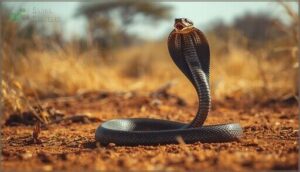
The Black Mamba sits near the top of any list of aggressive snake species you should avoid, mainly because of a rare mix of Mamba Speed, Neurotoxic Venom, and bold defense displays.
When threatened, this diurnal hunter may lift its body, flash its Black Mouth, and strike repeatedly, making calm retreat and strict snakebite prevention habits essential around venomous snakes like this.
Inland Taipan
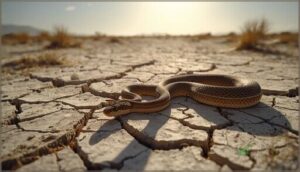
Unlike the mamba’s bold confidence, the Australian Endemic Inland Taipan stays mostly hidden, earning the “Fierce Snake Misnomer.” Its power lies in precision, not pursuit. You’ll want to avoid this venomous snake despite its shy nature.
It inhabits fragile arid ecosystems and depends on deep cracking clay habitats for shelter and hunting opportunities.
- Most toxic venom known
- Diurnal yet reclusive
- Noticeable Seasonal Coloration
- Prefers dry clay plains
- Calm behavior aids snakebite prevention
Coastal Taipan
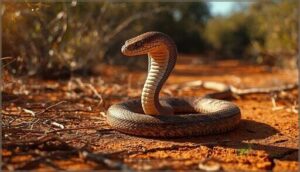
By contrast, the Coastal Taipan sits near the top of the most venomous snakes list, right beside the Inland Taipan, but behaves very differently. This large, athletic elapid (Taipan Taxonomy) reaches impressive Size Details, hunts Diurnal, and ranges widely across the Australian Range in warm coastal habitats.
Its fast‑acting Neurotoxic Venom, high yield, and alert nature mean any snakebite from this species ranks among encounters with the most dangerous snakes worldwide.
King Cobra

King Cobra behavior sits in a different league again, because this giant prefers to avoid you yet ranks among the most dangerous snakes. When threatened, they emit a distinctive low-frequency growling hiss that helps deter potential predators.
Its neurotoxic venom, delivered in large volumes, can shut down breathing fast after a snakebite, so distance is your best friend. In forest ecology, habitat destruction pushes King Cobras toward people, making snake conservation and venom research part of your safety story.
Many-Banded Krait

Silent danger describes the many-banded krait well, because this slim black-and-white elapid stays hidden by day yet ranks among Asia’s most dangerous snakes. Its strong nocturnal behavior, powerful neurotoxic venom composition, and preference for humid, human-shaped habitats mean you could meet it along ditches or rice fields without seeing it first. You’re dealing with elapid biology here, so a snakebite can quietly shut down breathing, even though this species is usually shy and not actively aggressive toward you, which is why it appears on lists of venomous snake species you should treat with real respect.
- Many-banded kraits are venomous snakes with highly neurotoxic venom that can cause respiratory paralysis and life-threatening snakebite in sleeping or unaware people in rural areas.
- Habitat preferences include marshy lowlands, rice paddies, irrigation ditches, and farm edges, so your regular path near wet fields may overlap directly with their snake characteristics and habitats.
- Nocturnal behavior means this species becomes active after dark while remaining hidden under stones or in burrows by day, which increases your risk if you walk barefoot at night or sleep on the floor.
- From a snake conservation angle, protecting wetland and farmland ecosystems also means you learn where dangerous snakes live, so you can give them space instead of fearing every patch of grass.
- Understanding its elapid biology, including potent pre- and postsynaptic neurotoxins in the venom composition, helps you see why early hospital care and correct antivenom are essential if a krait snakebite ever occurs.
Eastern Diamondback Rattlesnake
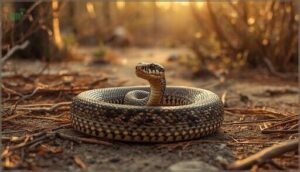
Eastern Diamondback Rattlesnake encounters remind you that dangerous reptiles don’t have to chase you to be high-risk venomous snakes. Rattlesnake behavior usually stays defensive, coiling and rattling first, yet a large individual can strike far and deliver a serious snake bite, so your wildlife safety plan should treat this species with respect in typical Rattlesnake Habitat and support ongoing Venom Research and Snake Conservation that protect both people and snakes.
For more insight into how its venom ranks among America’s deadliest serpents, see this guide on the most poisonous snake in the U.S..
| Aspect | Detail |
|---|---|
| Species | Eastern Diamondback Rattlesnake, heavy-bodied pit viper and one of North America’s most dangerous reptiles. |
| Rattlesnake Habitat | Dry pine flatwoods, sandhills, and coastal areas where Wildlife Encounters often happen on sunny edges and burrows. |
| Rattlesnake Behavior | Mostly shy, but when cornered it coils, rattles, and can strike about two-thirds of its body length. |
| Medical risk | Hemotoxic venom, high yield, and severe local damage make antivenom and fast hospital care critical after a snake bite. |
| Snake Conservation | Habitat loss and persecution pressure this species, so good wildlife safety means leaving it space instead of killing it. |
Cottonmouth

Cottonmouth, often called the Water Moccasin, thrives in swampy Cottonmouth Habitat where its Semiaquatic Lifestyle keeps it near lakes and marshes.
This venomous snake relies on strong Snake Venom and bold Defensive Behavior when cornered, flashing its white mouth as a warning.
Stay calm and back away—an aggressive strike often follows if a snake bite feels unavoidable.
Key Traits of Aggressive Snakes

Aggressive snakes share a few clear traits that make them more unpredictable when threatened. Their venom, behavior, and territory all play a role in how they respond to danger.
Here’s what to look for when understanding what sets these species apart.
Venom Potency and Effects
Venom Types and Toxicity Levels matter more than the snake’s attitude, because even a single bite from a highly venomous snake can overwhelm your body fast. Neurotoxic venom from species like mambas, taipans, or kraits can trigger Neurotoxic Reactions such as drooping eyelids, weak breathing, and full paralysis, while hemotoxic venom often brings bleeding Bite Symptoms and swelling.
Mixed-venom snakes may layer on myotoxic damage, quietly injuring muscle and kidneys at the same time. Antivenom Effects, when given early, can neutralize venom toxicity and sharply improve your odds, but it can’t reverse all tissue damage once it’s done.
Defensive Behaviors and Triggers
Defensive behaviors in aggressive, venomous snake species are really about warning you off, not hunting you down. Visual Warnings and Defensive Postures come first, like coiling, hooding, or gaping, followed by Sound Signals such as hissing or rattling.
Aggressive venomous snakes defend themselves through visual warnings and hissing displays meant to drive you away, not chase you down
If you ignore these snake defensive behaviors, Threat Escalation may include musk-based Chemical Defenses, but not true “predatory instincts in snakes” toward people.
Territoriality and Habitat Preferences
Territorial behavior in venomous snakes revolves around a small core territory inside a larger home range, not a vast defended kingdom. Within this core territory, reptilian territoriality focuses on key shelter sites, stable temperatures, and resource defense at prey-rich patches. That’s why snake habitat and habitat structure matter so much for snake habitats and behavior, because territorial defense follows the best cover, not a map line or fence.
- Core Territory usually stays under a few hundred square meters, centered on burrows, rock crevices, or dense vegetation that offer cover and steady conditions.
- Territorial Behavior often intensifies where food is concentrated, so territorial disputes flare up around rich resource patches like rodent colonies or nesting beaches.
- When a high-value habitat or Resource Defense site degrades or disappears, snakes often abandon territorial defense there and range more widely to locate new habitat and shelter.
Activity Patterns (Day Vs. Night)
A snake’s territory shapes when it moves. Many aggressive species follow set Snake Schedules based on heat and prey. Some, like the black mamba, show strict Diurnal Behavior, while others shift to Nocturnal Hunting during warmer nights. This Flexible Pattern helps venomous snakes conserve energy and match conditions in their habitat.
| Species | Activity Type | Typical Hunting Time |
|---|---|---|
| Black Mamba | Diurnal Behavior | Daylight hours |
| Eastern Diamondback | Crepuscular Activity | Dawn and dusk |
| Coastal Taipan | Diurnal Behavior | Early morning |
| Cottonmouth | Nocturnal Hunting | After sunset |
| King Cobra | Flexible Patterns | Varies by temperature |
Dangerous Snake Habitats to Avoid

Snakes often thrive in places where the climate suits their behavior and prey are easy to find. Some environments naturally support more aggressive species, making them risky for anyone exploring nearby.
Here’s where you’re most likely to encounter them and what areas deserve a little extra caution.
African Grasslands and Savannas
African grasslands and savannas keep warm all year, with rains packed into a short wet season that turns everything green and busy. African Savanna Ecosystems then draw wildlife migration, livestock, and rodents, which in turn attract venomous snakes like Black Mamba, Puff Adder, and tree-living Boomslang.
Tall grass, termitaria, and rock piles create ideal Snake Habitats, so your risk of venomous snake bites rises when you walk through long grass, collect firewood, or work around stored grain near kraals.
Frequent Grassland Fires, changing rainfall, and growing farms all shift where these snakes and their prey move, which is why African Conservation work in savannas matters for your safety as well as for wildlife.
Australian Outback and Bushlands
Outback Safety in Australia starts with knowing how snakes use the land, just as they do in African grasslands. Inland Taipan and Western Brown Snake favour remote floodplains and desert channels, while Eastern Brown Snake and Tiger Snake often hunt rodents around sheds, tanks, and scrubby paddocks.
For Bushland Encounters and Desert Survival, treat every log pile, dry creek bed, and rodent-rich Snake Habitat as a hotspot for Australian Venom.
Southeast Asian Forests
Like Australia’s deserts, Southeast Asian forests hide danger in their stillness. Beneath dense canopies, king cobras and many-banded kraits hunt quietly along trails and riverbanks. Forest Ecology here blends immense Biodiversity Conservation value with real wildlife safety risks shaped by Deforestation Impact.
- Watch for movement near fallen logs.
- Step carefully through leaf litter.
- Learn snake identification for safer Wildlife Preservation.
North American Wetlands and Plains
Across North American wetlands and Plains Ecosystems, you share space with venomous snakes that use cover better than you ever could.
In Wetland Snake Habitats, Aquatic Venomous Snakes like the Eastern Cottonmouth patrol swamps, ditches, and slow rivers where Wetland Conservation keeps prey abundant.
Along grassy plains edges, hidden rattlesnakes raise venomous snake bites risk, so you lean on snake identification skills and calm Snakebite Prevention habits.
Safe Practices for Snakebite Prevention

Staying safe around snakes starts with knowing how to avoid trouble before it happens. A few simple habits can go a long way in preventing dangerous encounters.
Here’s what to keep in mind regarding protecting yourself outdoors.
Protective Clothing and Gear
Think of protective clothing as your silent shield during unexpected snake encounters. Snake Resistant Boots and Leg Guards protect your lower legs, where most strikes land.
Safety Gloves and Face Shields guard your hands and face from defensive lunges. Durable Protective Fabrics block fangs, strengthening your reptile safety awareness and steadying your approach to snake bite prevention.
Avoiding High-Risk Areas
In any snake habitat, Terrain Risks often hide in plain sight. Avoid Water Edges, Rocky Outcrops, and dense forests where Snake Dens form. Choose clear paths on High Ground rather than low, wet spots or desert environments.
Venomous snakes favor shelter and prey cover, so keeping distance shows both wildlife safety and awareness in practice.
Recognizing Warning Signs and Postures
Ever wondered what a warning looks like before a strike? Learning Snake Body Language can save your life. Watch for these Defensive Postures and Visual Cues of venomous snake species:
- Coiled S-shape neck before lunging.
- Hood flared or body widened.
- Loud rattling vibration.
- Mouth open in display.
- Frozen stillness before serpent pursuit.
What to Do if You Encounter a Snake
In a close venomous snake encounter, your best Snake Encounter Tips start with a Calm Demeanor and stillness, not action. Hold your ground for a moment, watch for Warning Signs and defensive mechanisms, then use Safe Retreat Methods by backing away slowly in a wide arc, keeping children and pets behind you.
If anyone is bitten, follow Emergency Protocols immediately and call for medical help, not home treatment, to avoid serious harm or serpent pursuit.
Choosing Safe Snake Species for Ownership

If you’re thinking about keeping a snake, choosing the right species makes all the difference. Some are calm, easy to handle, and thrive in captivity with simple care.
Here are a few reliable options that stay manageable and safe for most owners.
Common Docile Pet Snakes
Curious which nonvenomous, gentle pet options make snake care and handling easier? These docile snake species stay calm, adapt well, and suit beginners learning Pet Snake Care and Snake Handling Tips:
- Corn Snake
- Ball Python
- California Kingsnake
- Rosy Boa
- Kenyan Sand Boa
Each offers manageable size, steady temperament, and reliable feeding habits—essential in choosing a pet snake.
Why Avoid Aggressive Species as Pets
Gentle corn snakes and ball pythons keep Snake Handling low risk, but aggressive venomous snake species flip that equation fast.
When you add snake aggression, unpredictable snake temperament, and Venomous Bites that can kill an adult, Pet Owner Risks rise far beyond normal pets.
Even careful handling, strict Safety Precautions, and tools can’t fully control Aggressive Behavior in truly dangerous, venomous species.
Legal and Ethical Considerations
Beyond the personal risks, aggressive snakes bring serious legal and ethical responsibilities. Ownership Laws and Trade Regulations control what species you can keep, while Public Liability makes you answer for any escape or injury.
True reptile care also means respecting Animal Welfare and choosing Ethical Sourcing, ensuring your wildlife interaction stays safe and responsible.
Frequently Asked Questions (FAQs)
What is the snake’s worst enemy?
Humans remain the snake’s worst enemy, driving declines through habitat loss, road mortality, and pesticide poisoning.
Natural snake predators—like hawks, mongooses, and secretary birds—play roles, but human threats overwhelm their instinctive balance between predator and prey.
What will vinegar do to a snake?
Vinegar’s effects on snakes are mild at best. Most reptiles simply crawl past it. While some claim it’s a snake deterrent, its repellent limitations are clear—vinegar offers temporary irritation, not real protection or vinegar safety assurance.
What is the least aggressive snake species?
It’s ironic that the least aggressive snake also sparks curiosity first. Corn snakes, known for calm behaviors and stable snake temperament, rank as the top gentle species—nonvenomous, easy to handle, and ideal for safe ownership.
How can climate change influence snake aggression levels?
Climate change can raise snake aggression by warming bodies (Temperature Effects) that speed strikes and Metabolic Changes, shifting ranges into new habitats (Habitat Shifts), and increasing bold behavior under Resource Scarcity during Climate Adaptation in venomous snakes’ animal behavior and reptilian aggression.
What sounds or vibrations attract aggressive snakes?
Low, irregular Ground Vibrations resembling Prey Movements often attract aggressive, venomous snakes during predatory hunts.
In contrast, sudden, strong Threat Signals or Airborne Sounds near them act as Defensive Triggers, provoking alert or defensive behavior during encounter.
How do seasonal changes affect snake encounter risk?
Like clockwork, snake behavior shifts with the seasons. Spring Emergence brings cautious movement, Summer Activity peaks with more encounters, Rainfall Patterns boost movement, and Autumn Retreat slows them down, while warmer Climate Trends subtly expand annual snake encounter risk.
Which human activities most often provoke aggressive snakes?
Human activities that most often provoke snake aggression include Stepping Near Snakes in tall grass, Handling Wild Animals at close range, Disturbing Hiding Spots like woodpiles, Entering Snake Habitats barefoot for work, and Risky Encounter Behavior that ignores basic defensive strategies and animal instincts, driving unnecessary human-wildlife conflict within normal predator-prey dynamics.
Can aggressive snakes adapt to urban environments easily?
Strangely enough, even by smartphone age standards, Urban Snake Adaptation happens fast. Some aggressive snake species show Adaptive Behavior Patterns in City Habitat Use, balancing instinct and caution.
Yet, snake aggression still fuels Snake Human Conflict despite modern Urban Wildlife Management efforts.
Conclusion
Like a map through tall grass, this knowledge guides your steps where venomous threats live. When you understand how snakes warn, strike, and retreat, your fear becomes planned caution.
You learn which habitats to pass by, which movements to avoid, and when to simply stand still. Using these patterns, you can identify aggressive snake species, avoid risky behavior, and choose safer paths.
Every calm, deliberate choice you make is another step home without a bite.