This site is supported by our readers. We may earn a commission, at no cost to you, if you purchase through links.
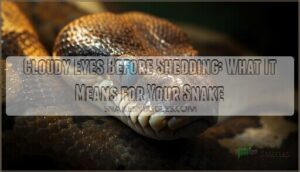
Your snake’s eyes turned a milky, bluish-grey overnight—and now you’re wondering if something’s wrong. That shift in color is one of the most reliable signals a shed is coming, and it happens for a specific biological reason.
A clear scale called the spectacle permanently covers each eye, fusing with the old skin layer as ecdysis begins. Fluid builds between the old and new eye cap during this process, creating that cloudy appearance. Cloudy eyes before shedding are normal, but knowing what to watch for—and when the process goes sideways—makes all the difference for your snake’s health.
Table Of Contents
Key Takeaways
- Cloudy, bluish-grey eyes before a shed are completely normal — fluid builds between the old and new eye caps as your snake’s body prepares to molt.
- Watch for dome-shaped swelling, yellow discharge, or cloudiness that lingers after the shed is done, as these signal a stuck eye cap or infection that needs attention.
- Keeping humidity at 65–75% when your snake’s eyes go cloudy is the single most effective way to prevent shedding problems and retained eye caps.
- If home care — warm soaks, a humid hide, and gentle moisture — doesn’t clear persistent cloudiness after a full shed, it’s time to see a reptile vet.
What Causes Cloudy Eyes Before Shedding?
Those cloudy eyes aren’t a sign something’s wrong — they’re actually your snake’s body doing exactly what it’s supposed to do.
It’s worth knowing the difference, though — signs your snake is actually sick look nothing like a normal shed cycle.
To understand why, it helps to look at how a snake’s skin and eyes are built, what really happens during a shed, and what’s going on just beneath the surface of those eye caps.
Here’s what’s actually happening at each stage.
Snake Skin and Eye Anatomy
Your snake’s eye isn’t like yours — no eyelid, no blinking, and no exposed cornea.
Instead, a clear, fused scale called the spectacle sits permanently over each eye, built from the same keratin layers as the rest of the skin. Beneath it, corneal fluid keeps the eye surface moist. This spectacle structure is everything for snake eye health.
normal pre‑shed cloudiness is a temporary, harmless change.
The Shedding (ecdysis) Process Explained
Ecdysis — the technical term for shedding — runs on a precise internal rhythm.
Here’s how it unfolds:
- Hormonal Triggers signal the body to build a fresh skin layer beneath the old one.
- Growth Rate determines frequency — juveniles shed every 2–3 weeks; adults, a few times yearly.
- Mechanical Rubbing against rough surfaces breaks the old skin loose at the snout.
- Parasite Removal happens naturally as mites attached to the outer layer shed away.
- Skin Flexibility improves immediately after, supporting better movement and overall reptile husbandry.
Maintaining an optimal humidity spike is key for successful shedding.
Fluid Buildup Under The Eye Cap
Once ecdysis begins, fluid quietly collects between the old eye cap and the new one forming beneath it. This is normal. But sometimes the nasolacrimal duct — the tiny drainage channel routing tear fluid away — gets blocked. That’s when subspectacular fluid dynamics shift from helpful to harmful.
| Indicator | What It Means |
|---|---|
| Uniform blue haze | Normal preshed fluid buildup |
| Dome-shaped spectacle swelling | Spectacle swelling indicators — possible blockage |
| Yellow/green discharge | Infection developing behind the cap |
| Hesitation or bumping objects | Vision impairment signs from pressure |
Retained eye caps can physically obstruct that drainage point over time, turning a temporary cloudiness into swollen eyes and real snake eye health issues.
If you’re already noticing puffiness or repeated shedding problems, snake incomplete shed and stuck eye cap solutions can help you act before bacteria take hold.
Recognizing Normal Shedding Signs
Once you know what’s happening inside your snake’s body, the signs start making a lot more sense. Shedding doesn’t just show up in the eyes — your snake’s whole appearance and behavior shift in the days leading up to it.
Here’s what to watch for.
Timeline of Eye Cloudiness Before a Shed
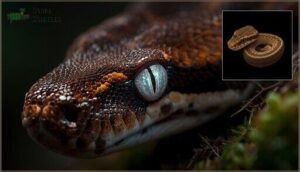
Eye cloudiness follows a predictable timeline — and knowing it helps you stay ahead of any reptile shedding problems.
- Onset Timing — Fluid dynamics begin on days 1–3, causing initial dulling.
- Peak Opacity Duration — Eyes turn grey-blue for 2–4 days.
- Clearing Phase Length — Eyes clear 3–5 days before the shed.
- Species Timeline Variations — Ball pythons run 9–14 day cycles; corn snakes, just 3–4.
- Eye Caps — Retained eye caps become a risk if cloudiness persists after clearing.
Associated Behavioral Changes in Snakes
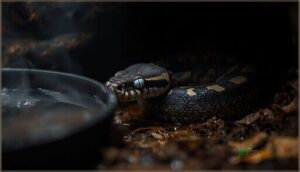
When your snake’s eyes go cloudy, its whole personality shifts. Hiding behavior increases as impaired vision makes open spaces feel unsafe.
You’ll likely notice appetite loss — don’t panic, that’s normal.
Increased defensiveness means even calm snakes may bluff‑strike during handling.
Soaking frequency often rises too.
These behavioral signs of vision impairment in snakes, including activity reduction, signal normal shedding, not stress.
Color and Texture Changes in Snake Skin
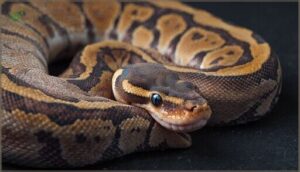
Your snake’s skin tells the whole story before the shed even begins. Pre-shed dulling makes bright patterns look dusty and washed out. A blue phase hue settles over the body as fluid separates the old and new layers.
Watch for a belly pink tint — that’s increased blood flow, completely normal. The scale texture shift turns smooth scales chalky and dry.
Post-shed gloss returns once that old layer finally comes off.
When Cloudy Eyes Signal a Problem
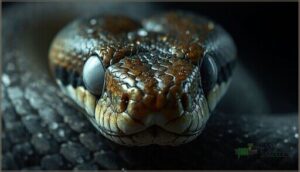
Cloudy eyes during shedding are normal — but they can become a warning sign if things don’t go as planned. Once the shed is done, snake’s eyes should be clear again, and if they’re not, that’s worth paying attention to.
Here’s what to watch for when a shed goes wrong.
Retained Eye Caps and Their Risks
A retained eye cap is more than a cosmetic issue — it’s a slow-building threat to your snake’s vision and comfort.
A retained eye cap is a slow-building threat that can silently steal your snake’s vision and comfort
When humidity drops too low, the old spectacle sticks instead of releasing cleanly. Here’s what can follow:
- Vision Impairment from cloudy, stacked layers blocking light
- Infection Risk as trapped bacteria cause subspectacular abscesses
- Scarring Consequences from chronic pressure damaging the cornea
- Parasite Influence — mites irritate tissue and disrupt normal separation
- Humidity Impact — consistently dry conditions are the leading cause
Improper Eye Cap Removal makes everything worse. Never pull without softening first.
Signs of Incomplete or Problematic Sheds
Not every shed goes smoothly — and your snake’s skin tells the whole story. Patchy retained skin, fragmented shed pieces, and dull persistent skin are classic clinical signs of dysecdysis.
Watch for excessive rubbing behavior lasting days longer than usual, or a prolonged shed timeline stretching past two weeks. These shedding problems in snakes often signal retained shed skin and, frequently, retained eye caps.
Secondary Infections From Retained Eye Caps
A stuck eye cap isn’t just uncomfortable — it can become a breeding ground for bacteria and fungi underneath the spectacle. Here’s what infection can look like:
- Spectacularitis symptoms: inflamed, thickened spectacle losing its glossy surface
- Subspectacular abscess treatment becomes necessary when pus collects, causing ocular edema and visible bulging
- Patchy yellow-white cloudiness — not the even milky blue of normal shedding
- Antifungal therapy options combined with antibiotics for mixed infections
- Untreated cases risk ocular tissue scarring, requiring veterinary surgical removal
Don’t wait. Shedding difficulties caught early rarely need aggressive intervention — but ignored retained eye caps can permanently damage vision.
Preventing Shedding and Eye Health Issues
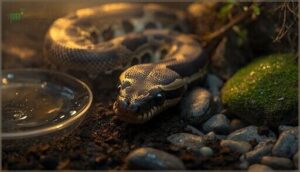
Most shedding problems are preventable with the right setup. The good news is you don’t need fancy equipment — just consistent habits and a little know-how.
Here’s what makes the biggest difference for your snake’s skin and eye health.
Ideal Humidity Levels for Shedding
Humidity is the quiet workhorse behind a clean shed. Most snakes do well with a Baseline Humidity Range of 50–60% day-to-day. Once eyes go cloudy, raise it to 65–75%—that’s your Humidity Spike Timing window.
| Species Type | Normal Range | Shedding Range |
|---|---|---|
| Ball Python | 50–60% | 65–75% |
| Corn Snake | 45–55% | 60–70% |
| Tropical Boas | 60–70% | 70–80% |
| Desert Kings | 40–50% | 55–65% |
| Tree Pythons | 60–70% | 70–80% |
Species-specific needs matter here. A damp sphagnum moss hide creates a Microclimate Solution without soaking everything. Use digital hygrometers as Monitoring Tools—place them at snake level for accurate reads.
Importance of Regular Habitat Monitoring
Getting humidity right is only half the battle. Consistent reptile health monitoring ties everything together. Check these daily:
- Temperature Consistency across warm and cool zones
- Substrate Cleanliness — spot-clean waste within 24 hours
- Enclosure Ventilation — watch for condensation buildup
- Lighting Schedule — stable cycles support healthy skin turnover
Small shifts in your snake’s habitat often signal trouble before cloudy eyes ever appear.
Safe Shedding Aids and Home Care Tips
Once your habitat checks are consistent, you can layer in a few targeted tools. A humid hide setup—damp moss in a small box with one entry hole—gives your snake a humidity pocket right where it needs it.
A warm soak routine of 15 to 20 minutes softens cloudy eyes and loosens retained eye caps gently. Commercial spray shedding aids help too, but work best alongside proper humidity, not instead of it.
Caring for Snakes With Persistent Cloudy Eyes
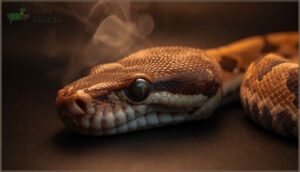
Sometimes snake’s eyes stay cloudy even after a full shed, and that’s worth paying attention to.
The good news is there are a few things you can try at home before calling your vet.
Here’s what to know about handling persistent cloudy eyes and keeping your snake’s long‑term health on track.
Home Remedies for Stuck Eye Caps
Treating retained eye caps at home starts with a warm soak — about 85–90°F, chin‑deep water, 10–20 minutes. That gentle warm water bath softens the old spectacle beautifully. Afterward, try these shedding aid steps:
- Set up a humid hide with damp sphagnum moss
- Dab petroleum jelly around (never in) the eye
- Use a Q‑tip rub or moist cloth in light circular motions
- Repeat daily; stop if the eye looks irritated
When to Seek Veterinary Assistance
Home care works — until it doesn’t. If persistent cloudiness remains after a complete shed, or asymmetric eye swelling appears in just one eye, it’s time to call a reptile veterinarian.
Before you panic, it helps to narrow things down — this guide to snake eye discoloration causes walks through what’s normal shedding and what’s a red flag.
| Warning Sign | What It May Indicate |
|---|---|
| Sudden vision loss | Emergency eye injury or abscess |
| Systemic lethargy post-shed | Infection or organ disease |
| Retained eye caps recurring | Chronic ophthalmic conditions |
| Discharge or swelling | Requires veterinary diagnosis for snakes |
Long-term Eye Health Monitoring Strategies
long-term monitoring as your snake’s health story, written one shed at a time.
Daily Eye Checks catch early cloudiness before it becomes a retained cap problem.
Shed Cycle Logs and Humidity Logging reveal patterns — blocked nasolacrimal duct issues often hide in the data.
Nutritional Tracking with a monthly Habitat Hygiene Audit, and you’ve built a solid foundation for catching ophthalmic conditions before they need professional assessment.
Frequently Asked Questions (FAQs)
Can cloudy eyes affect a snakes appetite?
Yes — cloudy eyes can completely shut down a snake’s appetite.
Vision Reduction during pre‑shed fasting dulls their confidence to strike, spiking Stress Levels and pausing normal feeding until Appetite Recovery follows a clean shed.
Do all snake species experience eye cloudiness?
Every snake species experiences eye cloudiness during snake shedding.
Spectacle thickness, pigmentation masking, and juvenile frequency affect visibility.
Burrowing visibility and aquatic cloudiness vary, but the process — fluid separating the eye caps — happens universally.
How often do healthy snakes shed their skin?
Oddly enough, the healthiest snakes shed the most often.
Juvenile Shedding Frequency runs high — young snakes shed every two to four weeks. Adult Shedding Intervals slow to a few times yearly.
Can stress trigger more frequent shedding cycles?
Stress can absolutely push shedding into overdrive.
Rising corticosterone levels from poor enclosure size, rough handling frequency, or lighting noise stress disrupts normal hormonal balance — triggering abnormal shedding cycles far more often than healthy intervals allow.
Does lighting in the enclosure impact shedding success?
Lighting does matter. Proper photoperiod timing, balanced UVB levels, and night light management all regulate your snake’s biological clock — directly influencing shed success and overall reptile husbandry best practices.
Conclusion
Those milky, glass-bead eyes are your snake’s quiet announcement that transformation is underway. Cloudy eyes before shedding are rarely a cause for alarm—they’re biology doing exactly what it should.
Your job is to watch, maintain proper humidity, and recognize when normal tips become problematic. A retained eye cap or persistent cloudiness deserves prompt attention. Stay observant, keep the habitat right, and your snake will move through each shed smoothly, emerging clear-eyed and renewed.