This site is supported by our readers. We may earn a commission, at no cost to you, if you purchase through links.
Your snake’s eyes have gone milky blue, and suddenly the animal that usually tolerates handling without complaint is coiled tight, refusing to move. That’s pre-shed—and misreading it costs keepers more than a defensive bite.
During this stage, a snake’s skin separates from the new layer forming beneath it, flooding its spectacle lenses with fluid and leaving it effectively half-blind. Everything feels threatening when you can’t see clearly.
Handling a snake during pre-shed without understanding what’s happening beneath that dull, faded skin can trigger stress responses that compound into real health problems—retained shed, immune suppression, long-term temperament shifts.
Table Of Contents
Key Takeaways
- Milky-blue eyes and dull skin mean your snake is half-blind and stressed—skip handling entirely for 7 to 14 days unless absolutely necessary.
- Picking up a pre-shed snake risks retained eye caps, torn skin, and long-term temperament damage that outlasts the shed itself.
- Keep enclosure humidity at 70–80% once eyes cloud over, maintain a heat gradient of 75–90°F, and add rough surfaces so your snake can shed cleanly on its own.
- If cloudy eyes, aggression, or patchy shedding persist more than a week after the shed completes, that’s your cue to call a reptile vet—not troubleshoot further at home.
Recognizing Pre-Shed Signs in Snakes
Before you can decide whether to handle your snake, you need to know what pre-shed actually looks like. The signs are physical and behavioral — and once you know them, they’re hard to miss. Here’s what to watch for.
Once you learn to spot them, you’ll find a full breakdown of every snake shedding sign to watch for makes the process a lot less stressful.
Physical Changes—Dull Skin and Cloudy Eyes
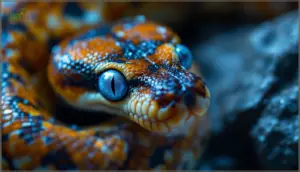
Your snake’s colors tell the story first. That vivid red or orange starts looking washed out—classic Color Fading Patterns signaling preshed signs have begun. Here’s what you’ll notice during the Dullness Onset Timeline:
- Belly scales lose their sheen first
- Body colors fade as Skin Layer Separation progresses
- Eyes shift cloudy—Eye Spectacle Fluid builds under each spectacle
- The blue phase arrives, obscuring vision markedly
- Post-Cloudy Eye Clarity returns before skin loosens completely
Cloudy eyes during this stage are usually normal shedding, but persistent cloudy eye issues should be checked by a reptile veterinarian.
Behavioral Shifts—Hiding and Restlessness
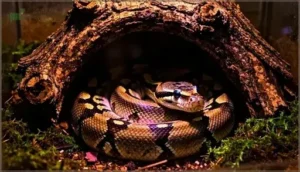
Once the eyes cloud over, behavior follows fast. Pre-Shed Hiding Routines kick in hard — your snake may spend 5 to 10 days buried in its hide box, cutting Hide Usage Frequency of normal roaming to almost nothing. You’ll also notice Restless Cage Pacing along enclosure walls, Nocturnal Roaming Shifts, and rare Emerging From Hides. These snake behavior changes during shedding are your clearest signal to back off.
These shifts often coincide with pre-shed physical changes like dulled skin, a pinkish belly tint, and milky-blue eyes that can leave snakes feeling especially vulnerable.
Reduced Appetite and Increased Aggression
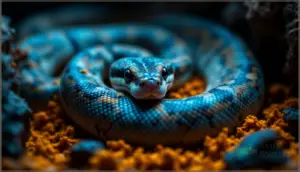
Hiding isn’t the only signal. Feeding Response Changes happen early — sometimes before the skin even dulls. Your snake may tongue-flick at prey but refuse to strike. That’s the Energy Allocation Shift at work; the body’s focused on building new skin, not digesting meals.
Watch for these Defensive Bite Triggers:
- Opening the enclosure too quickly
- Reaching from above while eyes are cloudy
- Offering prey during peak pre-shed aggression
Skip the feeding, mark the date, and plan for Post-Shed Appetite Rebound 24–48 hours after the shed completes.
How Pre-Shed Affects Snake Behavior
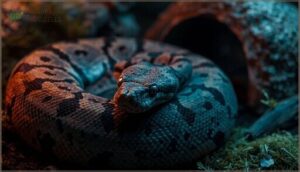
Pre-shed doesn’t just change how your snake looks — it changes how it thinks and reacts. Your normally calm ball python or corn snake may suddenly seem like a completely different animal.
Since stress and hydration are closely linked during this vulnerable time, making sure you’ve got the right water bowl size for your snake species can make a real difference in how smoothly the shed goes.
Here’s what’s actually happening behaviorally, and why it matters before you reach into that enclosure.
Sensitivity to Touch and Vibrations
During pre-shed, your snake’s skin mechanoreceptor sensitivity spikes noticeably. The loosening outer layer shifts against the new skin underneath, making normal handling pressure feel sharper than usual.
Cloudy vision startle responses increase too — your snake can’t see you clearly, so touch feels threatening first.
Substrate vibration perception also heightens, meaning footsteps or nearby appliances register more intensely. A vibration dampening setup under the enclosure helps markedly.
Defensive and Stress Responses
When vision drops, instinct takes over. Pre-Shed Threat Displays escalate fast — expect hissing, air strikes, and tight defensive coiling. This is Defensive Body Language, not personality.
Stress Hormone Responses spike during restraint, mimicking predator capture. Repeated handling locks in Learned Defensive Behaviors over time, creating Long-Term Temperament Changes.
Respect preshed aggression now, and your snake stays calmer for life.
Respect your snake’s pre-shed aggression today, and you’ll earn a calmer companion for life
Activity Level Changes During Pre-Shed
During the preshed period, your snake’s activity drops fast — and the numbers are striking. Enclosure Traversal Decline can hit 70 percent or more, with Basking Pattern Changes making normally diurnal species disappear entirely from their basking spots. Nocturnal Movement Shifts and Species-Specific Activity vary, but the pattern is consistent:
- Ball pythons slash activity by 80 percent and stay coiled for days
- Corn snakes retreat almost entirely, visible less than 10 percent of enclosure time
- Rat snakes cut open exploration to under 5 minutes daily
Baseline Activity Comparison tells the real story — a snake that once explored every evening now barely moves. Recognizing this shift in snake behavior during shedding keeps you from misreading stillness as illness. It’s not lethargy. It’s the preshed period doing exactly what it should, and handling snakes during shedding only interrupts that process, adding stress when your snake needs calm most.
Risks of Handling During Pre-Shed
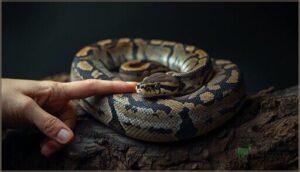
Pre-shed is one of the worst times to handle your snake, and most keepers learn that the hard way. The physical stress alone can throw off the entire shedding cycle — and that’s before factoring in the risk of bites or damaged new skin.
Here’s what you’re actually risking when you pick up a snake that isn’t ready.
Stress-Induced Health Issues
Handling a snake during pre-shed doesn’t just annoy it — it can trigger real health consequences. Chronic stress raises corticosterone levels, causing Immune System Suppression that opens the door to Respiratory Infection Risk and Long-Term Organ Damage.
Stress-Related Regurgitation wastes calories your snake can’t afford to lose. Chronic Appetite Loss compounds quickly.
Snake health and wellbeing during shedding depends on you giving it space.
Shedding Complications From Handling
Touch a pre-shed snake too often, and the shedding process itself starts to break down.
- Retained Shed Patches form when uneven skin tears leave dry strips stuck to the body
- Retained Eye Caps develop from friction across the head during cloudy-eye stages
- Friction Scale Damage scrapes new scales before they’re ever exposed
- Dehydration-Related Dysecdysis worsens when handling keeps your snake away from its humid hide
- Disrupted Shedding Mechanics occur when rubbing opportunities against cage décor are interrupted
Potential for Injury and Aggression
A pre-shed snake isn’t being difficult — it’s genuinely afraid. Cloudy eyes eliminate visual context, so sudden hand movements become Startle Strike Triggers. Bite Risk Factors spike when stress hormones drive the snake to strike before displaying warnings. Constriction Injury Risks rise as panicked snakes grip harder for security.
Always practice proper Handler Wound Care: rinse, disinfect, monitor. Stress-Hormone Aggression drops markedly when you simply wait.
Safe Handling Tips for Pre-Shed Snakes
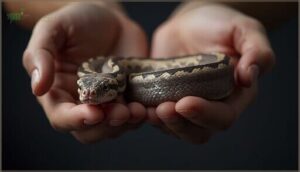
Sometimes handling can’t wait, even during pre-shed. When that’s the case, how you handle matters more than whether you do.
Here are the key techniques to keep stress low and your snake safe.
When Limited Handling is Unavoidable
Sometimes life doesn’t wait for your snake to finish shedding. Emergency Relocation Needs — like a flooded room or broken enclosure — and Scheduled Vet Transport for active infections can force your hand.
For snake handling tips during shedding, prep a soft-lined Travel Container Setup first. Keep sessions under a few minutes. Post-Handling Aftercare means returning your snake immediately to its warm hide.
Techniques to Minimize Stress
When those unavoidable moments arise, how you handle matters as much as whether you handle. Three techniques make a real difference:
- Slow Approach Strategies — Move from the side, never overhead, and let your hand rest inside the enclosure first.
- Scent-Neutral Handling — Wash hands with unscented soap; food smells trigger bites.
- Supportive Body Positioning — Cradle the full body, both hands, no squeezing.
Keep sessions under five minutes in a Quiet Room Setup.
Recognizing When to Avoid All Contact
Even brief handling becomes a bad idea once No-Handling Red Flags stack up together. Cloudy eyes, sustained hissing, and a defensive coil — those are your Handling Pause Thresholds.
Pre-shed snake aggression paired with a pre-shed warning like strike-risk posture signals High-Risk Shed Phases. Recognize Warning Body Language early.
Contact-Free Timeframes aren’t overreacting — they’re just smart snake shedding and handling precautions.
Optimizing The Enclosure for Shedding

Your snake’s enclosure does most of the heavy lifting during a shed — get it right, and the whole process goes smoother.
A few targeted adjustments can cut stress markedly and help your snake shed cleanly in one piece. Here’s what to focus on.
Humidity and Temperature Control
During pre-shed, your snake’s environment does most of the work. Ideal shed humidity sits between 60–70% normally, bumping to 70–80% once eyes turn cloudy. That’s your targeted humidity boost window.
For temperature, maintain a heat gradient — warm side 85–90°F, cool side 75–80°F. Place your hygrometer at mid-tank height for accurate snake humidity control readings, not near the lid.
Providing Secure Hides and Rough Surfaces
Once humidity is dialed in, your snake needs physical support too. Hide Size Guidelines matter here — a snug fit means your snake touches all interior walls when coiled.
Cork Bark Benefits make it a top pick: natural texture aids snake shedding habitat needs, resists mold, and holds humidity well. For Texture Selection Tips, add rough branches or driftwood.
Strategic Hide Placement means one on each side.
Reducing Environmental Stressors
Cutting down on stress is just as important as the right setup. Keep Temperature Stability and Consistent Humidity locked in — sudden swings trigger real hormonal stress responses. Minimize Noise and Vibrations by moving the enclosure away from speakers or heavy foot traffic.
Stick to a Lighting Routine with 10–12 hours of light daily. Reduced Room Traffic makes the biggest difference when handling a shedding snake safely.
When to Seek Veterinary Advice
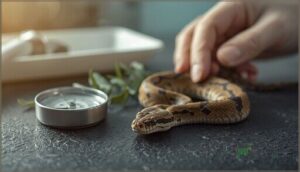
Most shedding issues resolve on their own with proper humidity and a hands-off approach — but not always.
Sometimes a snake signals that something’s actually wrong, and missing those signs can turn a minor problem into a real health setback.
Here’s when it’s time to stop troubleshooting on your own and call a reptile vet.
Signs of Improper or Incomplete Shed
Not every shed goes smoothly — and knowing what to look for can save your snake from serious complications. Dysecdysis, or incomplete shedding, shows up in several ways: Retained Eye Caps that stay cloudy days after shedding, Tail Tip Retention forming tight bands that cut off circulation, and Patchy Body Shedding leaving dry flakes across the scales.
Frequent Shed Cycles and visible Skin Damage Indicators — redness, swelling, or pitting — mean it’s time to call a vet.
Persistent Aggression or Illness
Pre-shed irritability has Normal Aggression Boundaries — it fades once shedding completes. When it doesn’t, that’s your signal. Watch for these Urgent Care Signals that separate Illness-Driven Behavior from typical pre-shed snake aggression:
- Strike risk persists beyond 4–8 weeks post-shed
- Wheezing or open-mouth breathing alongside defensiveness
- Weight loss and visible spine
- Pain Response Triggers when touching specific body areas
- Chronic Stress Indicators like constant glass-striking
Schedule snake veterinary care promptly.
Preventing Long-Term Health Problems
Routine wellness exams catch problems before they spiral. A vet familiar with reptiles can spot early signs of snake shedding complications and risks — retained eye caps, tail tip circulation issues, or immune system strain from chronic stress.
Long-Term Skin Health and Eye Cap Prevention depend on consistent snake health monitoring, not just reacting when things go wrong. Proactive snake shedding veterinary care protects your snake’s quality of life for years.
Frequently Asked Questions (FAQs)
How long does the pre-shed phase typically last?
Most snakes move through the General Pre-Shed Timeline in 7 to 14 days.
The Blue-Eye Phase Length alone usually lasts just a few days before eyes clear and the shed follows within 1 to 5 days.
Does pre-shed frequency change as snakes age?
Yes, it changes a lot. Juvenile shedding frequency runs every 2–4 weeks in hatchlings. Adult shedding intervals stretch to every 2–6 months. Senior snake sheds may drop to just twice a year.
Should feeding schedules change during pre-shed?
Most snakes benefit from a flexible feeding schedule during pre-shed. If your snake is in the blue phase, skip that session and offer food 24–48 hours after the shed completes.
Can two snakes shed simultaneously in shared enclosures?
Two snakes in a shared enclosure can absolutely shed simultaneously. Shedding Synchrony happens because both animals share identical temperature, light, and feeding schedules — basically syncing their snake shedding process without any deliberate coordination.
Conclusion
Think of pre-shed as a signal, not an inconvenience—your snake is doing exactly what its biology demands, and your job is simply to get out of the way.
Handling a snake during pre-shed without caution turns a natural process into a health risk. Lower the humidity, dim the disturbances, and trust the process.
A snake that sheds cleanly, unbothered, is a snake that stays healthy, calm, and handleable long after the old skin is gone.