This site is supported by our readers. We may earn a commission, at no cost to you, if you purchase through links.

Dirty bedding is one of the fastest ways to make a healthy snake sick. Ammonia from waste builds up quickly, especially in enclosed spaces, and even a substrate that looks clean can harbor bacteria long before you notice a smell.
Most keepers either change bedding too rarely out of convenience, or too often and disrupt their snake’s sense of security. Knowing how often to change snake bedding—and what to watch for between changes—keeps your enclosure stable without unnecessary disruption.
The right schedule depends on your bedding type, your snake’s species, and a few easy daily habits.
Table Of Contents
Key Takeaways
- Spot clean your snake’s enclosure every day—removing waste quickly stops ammonia and bacteria before they become a real problem.
- How often you do a full bedding swap depends on your substrate type, your snake’s size, and how well you keep up with daily cleaning—loose bedding can last 1–3 months, while paper needs changing every day or two.
- Match your substrate to your snake’s humidity needs: coconut husk for tropical species like ball pythons, aspen shavings for drier species like corn snakes.
- Don’t wait for your schedule—swap bedding immediately if you spot bad odors, mold, damp patches, or signs that your snake is stressed or unwell.
How Often to Change Snake Bedding
Keeping your snake’s enclosure clean isn’t complicated, but timing matters more than most people realize.
A solid routine—paired with safe snake handling and hygiene practices—keeps both your snake and your household healthier in the long run.
How often you change the bedding depends on a few key factors — the type of substrate you use, your snake’s size, and how well you stay on top of daily maintenance.
Here’s what you need to know.
Daily Spot Cleaning for Feces and Urates
Daily spot cleaning is the backbone of good snake bedding maintenance guidelines. Check the enclosure every day and remove feces and urates the moment you spot them — warm habitats let bacteria multiply fast.
- Waste Identification: Dark feces and chalky urates signal digestion health
- Ammonia Control: Prompt removal keeps air quality safe
- Tool Hygiene: Rinse scoops after every session
- Humidity Monitoring: Waste decay disrupts moisture balance
- Health Indicators: Runny urates may mean dehydration
Monthly Full Changes as a General Rule
Even with consistent spot cleaning, waste still builds up in the lower layers. A monthly full change is the standard Enclosure Reset Timing most keepers follow — it clears hidden Waste Accumulation Indicators before Mold Prevention becomes a real concern. Humidity Monitoring matters here too, since damp substrate breaks down faster.
| Species Frequency Guidelines | Substrate Type | Full Change Interval |
|---|---|---|
| Corn Snake | Aspen Shavings | Every 1–3 months |
| Ball Python | Coconut Husk | Monthly or sooner |
| King Snake | Newspaper | Weekly or as soiled |
Consider using sphagnum moss benefits for high moisture retention and burrowing.
When 1 to 3 Months is Acceptable
A monthly change isn’t always necessary. When you keep up a clean routine — pulling waste daily and replacing only soiled sections — 1 to 3 months becomes completely realistic. Spot cleaning versus full substrate change comes down to four key factors:
- Species Size — smaller snakes produce less waste, stretching Substrate Longevity further.
- Burrowing Depth — deeper layers hide lower waste while the surface stays manageable.
- Humidity Stability — stable Enclosure Ventilation prevents breakdown.
- Bedding type — loose substrates outlast paper products considerably.
Regular spot cleaning can extend substrate life, as noted in the guide on optimal snake bedding replacement.
Why Paper Bedding Needs Faster Replacement
Paper bedding plays by different rules.
Unlike loose substrates, newspapers and paper towels can’t bury waste — feces and urine spread across the surface fast, making Odor Accumulation and Bacterial Growth almost immediate concerns.
Poor Moisture Retention means wet spots linger against your snake’s belly, putting Scale Health at risk.
Waste Visibility is the one upside: you’ll spot it quickly, so your cleaning routine for snake terrariums should treat paper as a same-day swap.
How Spot Cleaning Extends Full-change Timing
spot cleaning is buying time. Every time you pull out feces, urates, or a wet patch early, you’re stopping Waste Accumulation Delay before it spreads through clean bedding.
That’s Moisture Spread Prevention and Bacterial Growth Reduction working together — keeping Odor Control Benefits real and your Extended Substrate Lifespan on track. A solid clean routine can push full changes from weeks to one to three months.
Follow a Simple Cleaning Schedule

Keeping your snake’s enclosure clean doesn’t have to feel complicated. A consistent routine makes it easier to catch problems early and keep things under control.
Choosing the right substrate for your snake’s habitat — like coconut husk for humidity-loving species — is one of the easiest ways to simplify long-term enclosure maintenance.
Here’s a simple schedule you can follow to stay on top of it.
Check The Enclosure Every Day
A daily visual health check takes less than two minutes, but it tells you a lot. Scan your snake’s body, check the temperature and humidity readings, do a quick water level check, and run a fast security inspection on the lid and locks.
This clean routine keeps spot cleaning simple, enables enclosure humidity control, and sets the right frequency of substrate replacement before problems develop.
Remove Wet or Soiled Bedding Immediately
Leaving soiled or wet bedding even a few hours too long can turn a clean enclosure into a health hazard fast. Bacteria multiply quickly in damp organic matter, and ammonia from urine starts irritating your snake’s respiratory tract almost immediately.
Soiled bedding becomes a health hazard fast — bacteria thrive in damp matter and ammonia attacks your snake’s airways almost immediately
Keep these removal habits tight:
- Pull feces and urates the moment you spot them
- Replace any water-soaked substrate the same day
- Check under hides where moisture and mold spores hide unnoticed
- Wear gloves every time to avoid spreading pathogens
- Restore dry bedding right after removal to prevent humidity spikes
Replace Only The Dirty Section When Possible
You don’t always need to tear everything apart — targeted substrate removal keeps things efficient. When waste stays localized, pull only that section and replace it with fresh bedding.
| What to Check | Tool to Use | Action |
|---|---|---|
| Feces or urates | Scoop or gloves | Remove and replace |
| Wet or soiled patch | Paper towel | Lift and discard |
| Corner hide zones | Small scraper | Scoop deeper if needed |
| Damp coconut fiber | Sectional humidity monitoring | Remove damp section |
| Enclosure surface | Reptile-safe spray | Localized disinfection protocol |
Modular bedding design facilitates a clean routine without constant full teardowns — smart waste management in terrariums at its simplest.
Do a Full Substrate Change on Schedule
Even with daily spot cleaning, a full substrate change is non‑negotiable — it’s your reset button for a truly clean routine. Here’s a simple schedule to follow:
- Every 1–3 months for loose bedding in dry setups
- Monthly if your enclosure runs humid, supporting mold prevention
- Immediately if you spot persistent odors or hidden waste
- Seasonally, since seasonal adjustments affect humidity monitoring needs
Disinfect The Enclosure During Full Changes
A full change isn’t complete until the enclosure itself is clean. Wipe down all surfaces using a bleach solution (1 part bleach to 9 parts water), or try F10SC application, hydrogen peroxide, or a chlorhexidine protocol depending on what you have. Each option treats bacteria, fungi, and parasite prevention well.
Thorough rinsing after any disinfectant is non‑negotiable — leftover residue irritates skin and airways. Let everything dry completely before adding fresh substrate.
Adjust Changes by Bedding Type

Not all bedding works the same way, and your cleaning schedule should reflect that.
The type of substrate in your snake’s enclosure plays a big role in how often you’ll need to swap it out. Here’s what to expect from each common option.
Paper Towels and Newspaper
Paper towels and newspapers are the cheapest, easiest substrates you can use. Their absorbency rate is low compared to loose bedding, so replacement frequency is high — swap them out every one to three days, or the moment you spot waste.
Ink safety is rarely a concern with modern soy‑based inks, but blank newsprint eliminates that worry entirely.
Regular care here means a quick, thorough cleaning routine that takes under two minutes.
Aspen Shavings
Aspen shavings are a step up from paper in both longevity and comfort. Their impressive absorbency rating manages waste and excess fluids well, and the dust‑free property keeps your snake’s respiratory system safe.
Kiln‑dried aspen also offers real burrowing softness, which matters for active diggers.
As an eco‑friendly source, it’s renewable and affordable. With regular spot cleaning, a full change every four to six weeks works well.
Coconut Husk and Coir
Coconut husk and coir take humidity control methods to another level. Both excel at moisture retention and absorbing excess fluids, making them ideal for tropical species.
The soft texture also offers burrowing comfort for snakes that like to dig.
Check it daily for waste, do a full swap monthly, and you’ve got a sustainable material that’s hard to beat for odor control.
Soil and Soil Blends
Soil and soil blends work differently than coir. They’re built for burrowing stability and humidity control in reptile enclosures, but ingredient safety matters — skip anything with fertilizers or pesticides.
- Spot clean daily; full change every 2–3 months
- Moist soil provides for bioactive microfauna like isopods
- Good moisture management prevents soggy, bacteria‑prone spots
- Use organic topsoil as your soilless substrate base
Reptichip and Coir Chips
ReptiChip stands out for its triple washing process, which strips away tannins and dust before the substrate ever reaches your enclosure. This coir-based eco‑friendly material offers strong humidity retention, making it a solid fit for ball pythons and other moisture‑loving species.
Spot clean every few days, and a full substrate change every two to three months keeps your cleaning schedule for reptiles manageable.
The Microchip size works well for snakes preferring shallower burrowing depth.
Reptile Carpet Cleaning and Replacement
Reptile carpet needs daily spot cleaning — pull out feces and urates the moment you see them. Weekly washing with hot soapy water works well for routine care, while Bleach Dilution or Steam Sterilization provide deeper disinfection.
Always use proper Drying Techniques before returning it to the enclosure. Watch for Carpet Lifespan Indicators like fraying or persistent odor, and follow a strict Quarantine Carpet Protocol for sick snakes.
Change Bedding Sooner When Needed
Even when you’re sticking to a regular schedule, some situations call for a bedding change ahead of time. Your snake’s health depends on catching those warning signs early, before small problems turn into bigger ones.
Here are the key situations where you shouldn’t wait.
Bad Odors Coming From The Enclosure

A bad smell is your first clue that something needs attention. Waste accumulation — especially feces and urates from defecating — breaks down fast and drives ammonia buildup prevention to the top of your priority list.
Poor ventilation issues and weak airflow design make odors linger.
Avoid chemical cleaners with phenols, as they irritate respiratory systems. Prioritize moisture control and change the bedding immediately.
Damp Substrate After Spills or Soaking
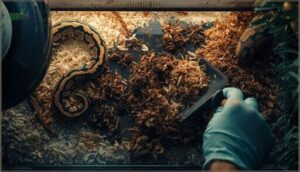
Spills happen fast, and a damp substrate is a quiet threat. Moisture retention in loose bedding traps humidity against your snake’s skin, which directly impacts snake health over time.
Scoop out the wet section right away — don’t wait. Check deeper layers too, since a dry surface layer can hide soaked bedding underneath.
Better airflow enhancement and spreading bedding thinner speeds drying considerably.
Mold, Bacteria, or Pest Concerns
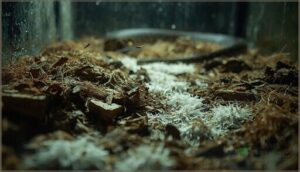
Mold doesn’t announce itself — it quietly spreads while you’re not looking.
White or black fuzzy patches on your substrate signal a moisture retention problem that directly affects the impact of bedding on snake health.
Damp organic material can grow mold within 24 to 48 hours, so humidity monitoring and ventilation management matter daily.
Remove contaminated sections immediately, and don’t overlook bacterial growth or fungus gnats — both thrive in neglected, wet substrate.
Hidden Waste in Deep Burrowing Substrate
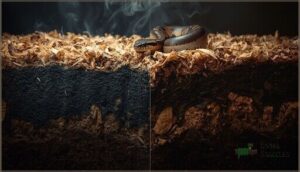
Deep substrate hides more than you think. Your snake’s burrowing behavior can push waste below the surface, leaving the top layer looking clean while buried waste detection becomes a real challenge.
Press down gently during spot cleaning to check for moisture pocket identification — damp, compacted zones signal hidden bacterial growth underneath. Substrate compaction issues and buried contamination directly affect the impact of bedding on snake health.
Heavy Waste Output From Larger Snakes
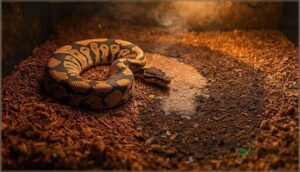
Bigger snakes produce bigger messes — it’s that simple. Larger waste zones mean increased odor builds up fast, and frequent substrate saturation raises the risk of higher ammonia for your pet snakes.
Single waste spot can soak deep into the snake bedding, spreading beyond what’s visible.
That’s why expanded cleaning frequency matters here. Check large enclosures more often and replace contaminated substrate before odor takes over.
Humid Enclosures That Break Substrate Down Faster

High humidity speeds up substrate breakdown — warm, damp bedding invites mold and bacteria faster than you’d expect.
Check for condensation on enclosure walls as an early warning sign.
Good ventilation strategies and consistent humidity monitoring help slow this down, but even with proper water bowl management and substrate drying routines, humid setups usually need a full change every four to eight weeks.
Match Bedding Care to Species
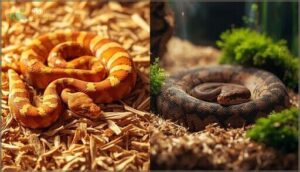
Every snake is a little different, and your cleaning routine should reflect that.
What works for a corn snake won’t always work for a ball python, and that gap matters more than people think.
Here’s how to match your bedding care to the specific needs of your snake.
Ball Python Humidity and Bedding Checks
Ball pythons need steady humidity between 50% and 60%, rising to about 70% during shedding.
If humidity dips too low, you may notice dull, dry patches of retained skin, and this guide to fixing an incomplete shed walks you through safe ways to help.
Keeping levels consistent is easier with the right equipment — humidifiers designed specifically for ball python enclosures can help maintain that sweet spot without constant manual adjustments.
Check your hygrometer daily — that’s your most reliable humidity monitoring tool.
Coir moisture retention makes coconut fiber the right bedding for this species, since it holds humidity naturally.
Spot cleaning frequency matters here too; remove damp substrate right away to support mold prevention strategies and keep the enclosure balanced.
Corn Snake Substrate Replacement Timing
Corn snakes are drier animals than ball pythons, so humidity control in reptile enclosures matters less here — but that doesn’t mean substrate selection gets ignored.
A full change every 3 to 4 months works well for most setups, with daily spot cleaning in between. Aspen is a popular right bedding choice, though it can mold if it stays damp.
Boa Constrictor Waste and Enclosure Size
Boas produce more waste than most pet snakes, so keeping up with spot‑cleaning frequency matters more here than with smaller species. Waste visibility is also trickier in large enclosures with deep substrate — feces and urates can hide under hides or decor easily.
Watch for these signs you need to act fast:
- Urates sitting on snake bedding longer than a day
- Soiled substrate near water bowls from spills
- Odor changes that signal hidden waste
- Damp sections disrupting the temperature gradient
- Enclosure volume making daily checks feel incomplete
A full change every 3 to 6 months works for most setups.
Burrowing Species and Deeper Bedding Layers
Species that love to dig — like hognose snakes and sand boas — need more than a shallow sprinkle of substrate.
Burrow depth directly affects tunnel stability, thermoregulation zones, and stress reduction.
Safe burrowing behavior and substrate choice go hand in hand.
| Species | Recommended Depth |
|---|---|
| Hognose snake | 3–5 inches |
| Sand boa | 4–6 inches |
| Kenyan sand boa | 5–6 inches |
| Rosy boa | 3–4 inches |
| Western hognose | 4–5 inches |
Moisture-retaining mixes support natural burrowing behavior and help maintain thermoregulation zones without collapsing tunnels.
Choosing Substrate Based on Humidity Needs
Picking the right substrate starts with knowing your snake’s humidity needs. Tropical species thrive with coconut husk or coir, since Coir Moisture Retention keeps enclosures consistently humid.
Cypress Mulch Humidity works well for moderate setups. Aspen Drying Speed makes aspen shavings ideal for drier species like corn snakes. Reptichip Balance Control suits ball pythons well, while Soil Blend Ventilation helps prevent soggy conditions in high humidity enclosures.
Balancing Cleanliness, Comfort, and Stress Reduction
A clean enclosure isn’t just about hygiene — it’s about trust.
Snakes settle faster when you keep a Consistent Routine, use Scent‑Free Cleaning products, and return hides to familiar spots.
Gentle Handling during changes reduces stress, while Humidity Monitoring and Temperature Stability keep the substrate working the way it should.
Good reptile health maintenance starts with understanding that purpose of snake bedding goes beyond cleanliness — it facilitates burrowing behavior and substrate choice, and temperature regulation too.
Frequently Asked Questions (FAQs)
Where do snakes go in October?
When the cold calls, snakes answer.
In October, they head toward denning sites — rock crevices, burrows, and root systems — beginning brumation initiation as cold‑blooded reptiles seek stable overwinter shelters before the frost sets in.
Can old bedding make my snake sick?
Yes, old snake bedding can make your snake sick. Dirty substrate raises bacterial infection risk, mold growth hazards, and skin irritation causes — all real threats to your snake’s health.
How deep should snake substrate actually be?
Depth depends on your snake. Most species do fine with 2 to 3 inches, but burrowing species need 4 to 6 inches to dig comfortably and stay stress-free.
Does bedding affect a snakes shedding process?
Bedding absolutely affects shedding. Substrate Choice determines humidity regulation, moisture balance, and surface texture — all factors that help skin separate cleanly.
Clean bedding care keeps conditions stable, making each shed smoother and less stressful for your snake.
What signs show a snake dislikes its bedding?
Your snake tells you plenty — watch for escape attempts, hiding avoidance, feeding refusal, body irritation, or health symptoms like sneezing. These behaviors signal the substrate isn’t meeting your reptile’s needs.
Can you mix different substrate types together?
Mixing substrate types is absolutely fine, and many keepers do it. A common blend is 40% topsoil, 40% coconut fiber, and 20% play sand — balancing burrowing depth, humidity gradient, and species suitability perfectly.
Conclusion
What happens inside that enclosure when you’re not watching matters more than most keepers realize. Waste breaks down, moisture creeps in, and bacteria spreads quietly before any visible sign appears. Knowing how often to change snake bedding—and acting before problems develop—is what separates a snake that merely survives from one that genuinely thrives.
Spot clean daily, follow your full‑change schedule, and adjust for your species and substrate. Your snake can’t ask for a clean home. You have to stay ahead of it.