This site is supported by our readers. We may earn a commission, at no cost to you, if you purchase through links.
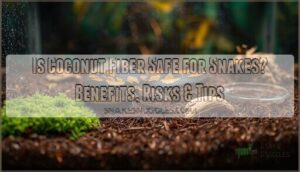
Choosing the wrong substrate can quietly stress a snake for months before you notice something’s wrong.
Coconut fiber sits on nearly every beginners’ recommended list, but that popularity doesn’t mean it works for every setup. It holds moisture well, facilitates burrowing, and keeps odor down—real advantages when matched to the right species.
The catch is that those same qualities become problems in the wrong conditions.
Knowing whether safe for your snake is safe for your snake comes down to how you use it, not just what it is.
Table Of Contents
Key Takeaways
- Coconut fiber is safe for snakes only when it is kept lightly damp, well-ventilated, and matched to species that actually need higher humidity.
- Dry fiber kicks up dust that can irritate your snake’s lungs, while soggy fiber breeds harmful bacteria — so moisture balance isn’t optional, it is the whole game.
- Desert-adapted snakes like hognose and kingsnakes don’t belong on coconut fiber at all, since its moisture retention works directly against their health needs.
- Always use reptile-grade coconut fiber, not garden coir, because the difference in salt content, dust, and pathogen treatment has a real impact on your snake’s safety.
Coconut Fiber Basics for Snakes
Coconut fiber is one of those substrates that sounds simple but has a few layers worth knowing. It comes compressed in a brick, expands when soaked, and behaves more like loose soil than shavings or chips.
If you’re just starting out, this beginner’s guide to snake substrate and bedding breaks down exactly why that soil-like texture matters for burrowing species.
Here’s what you need to understand before deciding if it’s right for your snake’s setup.
What Coconut Fiber Is
Coconut fiber comes from the outer husk of a coconut — a byproduct of its plant origin, not something manufactured in a lab. It’s made mostly of lignin and cellulose, which gives it a coarse, fibrous structure. Reptile‑grade versions go through a sterilization method and washing process to remove salts and debris.
Here’s what makes it stand out:
- It’s part of an eco‑friendly production cycle — using husk waste that would otherwise go unused
- The lignin‑cellulose ratio gives it natural strength and excellent water retention
- The harvest process strips away outer husk material, leaving clean, workable fiber
- Reptile‑grade versions are processed specifically to be safer for sensitive animals
Its high humidity retention properties make it ideal for moisture‑loving reptiles.
How It Differs From Coconut Husk
There’s a real difference between coconut fiber and coconut husk — they come from the same plant but behave very differently in an enclosure.
| Feature | Coconut Fiber | Coconut Husk |
|---|---|---|
| Chip Size | Fine, hairlike strands | Large, chunky pieces |
| Weight Density | Packs tightly | Stays loose and open |
| Decomposition Speed | Breaks down slower when damp | Dries and turns over faster |
| Cost Availability | Widely sold, budget-friendly | Slightly less common |
| Aesthetic Appearance | Dark, soil-like look | Natural, bark-like texture |
Husk chips provide natural comfort and skin health for reptiles.
Fiber burrows easily. Husk doesn’t.
Soil-like Texture, Dust, and Moisture Retention
Unlike husk chips, fiber feels almost like potting soil — soft, fine, and easy to burrow through. That texture comes with trade-offs worth knowing.
- Particle Size Distribution stays small, so dry fiber releases airborne dust easily
- Moisture Gradient builds from bottom to top when dampened correctly
- Surface Compaction increases if you over-mist or skip fluffing
- Airflow Management prevents soggy spots between Cleaning Frequency sessions
- Lightly damp fiber stays loose — soggy fiber clumps into mud
Why Reptile-grade Coconut Fiber Matters
Not all coconut fiber is made the same. Garden-grade coir often carries salts, pesticides, and bacteria that can harm your snake. Reptile-grade versions go through Chemical-Free Processing, Low Dust Content sifting, and Pathogen-Free Treatment to make them genuinely safe.
That’s why many keepers trust reptile-safe coconut husk bedding specifically processed to be organic, biodegradable, and low-dust for healthier enclosures.
| Feature | Garden-Grade | Reptile-Grade |
|---|---|---|
| Salt content | High | Rinsed low |
| Dust level | Unfiltered | Sifted fine |
| Pathogen risk | Present | Treated safe |
That difference matters for Impaction Safe Digestion and Hygienic Odor Control.
Yes, if Used Correctly
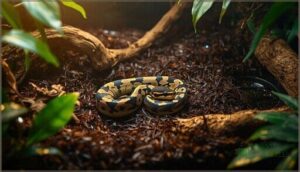
Coconut fiber can be a solid choice for your snake, but the setup matters more than most people realize. A few key factors determine whether it works well or causes problems.
Here’s what to think about before deciding if it’s right for your enclosure.
When Coconut Fiber is Safe for Snakes
Yes, it’s safe — but only under the right conditions. Reptile-grade coconut fiber works well when your enclosure has proper Ventilation Control, your snake’s Temperature Suitability is met, and you’re keeping up with Health Monitoring.
Enclosure Size matters too; larger setups dry out faster and stay cleaner. Seasonal Adjustments as needed to keep the substrate lightly damp, never waterlogged.
Why Humidity Needs Determine Safety
Your snake’s humidity needs are the real deciding factor here. Species Humidity Preferences vary widely — ball pythons thrive in moist environments, while hognose snakes need things drier.
Coconut fiber stays safe when you respect those Humidity Thresholds.
Use Moisture Monitoring Tools, like a hygrometer, to stay on track.
Excess Moisture Hazard and poor Ventilation Requirements cause real problems fast.
Which Setups Make It Safer
The right setup does most of the heavy lifting. Good Ventilation Control keeps air moving without drying the substrate too fast. A Drainage Base under the fiber prevents soggy pockets.
Match your Enclosure Size to your snake’s needs, then create Humidity Zones — one dry hide, one moist. Use a Feeding Tray at mealtime to cut down on accidental fiber ingestion.
When Another Substrate is Better
Sometimes coconut fiber just isn’t the right fit. Here’s when you’re better off switching:
- Aspen for Desert species like kingsnakes or rosy boas keep humidity low and waste visible
- Paper Towel Hygiene wins in quarantine or hospital setups — easy to replace, nothing hidden
- Tile Cleanliness or Cypress Moisture Control work well for snakes with respiratory sensitivities
Trust what your snake’s needs are telling you.
Benefits of Coconut Fiber Bedding
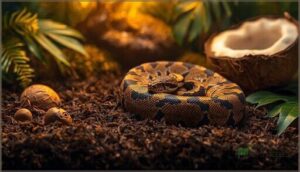
Coconut fiber does more than just fill the bottom of your snake’s enclosure. When you use it right, it works in your favor in a few genuinely useful ways.
Here’s what it actually brings to the table.
Helps Maintain Humidity for Shedding
Shedding goes smoothly when humidity stays consistent — and that’s where coconut fiber earns its place. gradual moisture release keeps enclosure humidity steady between mistings, reducing the dry spells that cause stuck sheds.
natural moisture buffering creates a stable humidity gradient from the warm side to the hide. Microclimate control becomes easier, supporting complete, clean sheds without constant intervention.
Supports Burrowing and Natural Behavior
Coconut fiber doesn’t just sit there — it invites natural burrowing behavior. Ball pythons, corn snakes, and hognose snakes all dig and rearrange it instinctively.
- Burrow stability holds tunnels intact for hours
- Tunnel architecture forms naturally at 3–4 inch depths
- Temperature gradient develops between surface and lower layers
- Enrichment objects like cork bark encourage active exploration
- Burrowing behavior visibly reduces stress and anxiety
Absorbs Waste and Reduces Odor
Beyond burrowing, waste management is where coconut fiber quietly earns its place. Its porous liquid capture pulls urine in quickly, while the waste clumping mechanism bundles feces so spot‑cleaning stays simple.
Odor neutralizing fibers bind ammonia naturally — no sprays needed.
The moisture retention balance keeps things damp enough for microbial decomposition to break down waste, leaving your enclosure smelling clean for weeks.
Lower Mold Issues When Managed Properly
Mold isn’t inevitable with coconut fiber — it’s mostly a management problem. Keep moisture in check, and you’re already ahead of most issues.
Five habits that cut mold risk substantially:
- Airflow Management — don’t let air sit stagnant around the enclosure
- Moisture Monitoring — aim for damp, never soggy
- Spot Cleaning Frequency — remove waste before it becomes a wet patch
- Ventilation Design — mesh panels help substrate dry between mistings
- Substrate Rotation — replace compacted areas before mold takes hold
Risks to Watch For
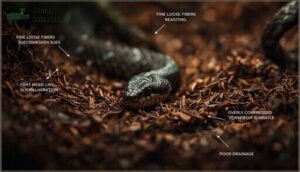
Coconut fiber works well for a lot of snakes, but it’s not without its downsides. Like any substrate, it comes with a few risks worth knowing before you commit to it.
Here’s what to watch for.
Dust and Respiratory Irritation
Dry coconut fiber is dusty — and that’s a real concern for your snake’s lungs. When airborne dust levels rise, especially in low-humidity setups, fine particles can trigger wheezing, clicking sounds, or bubbling mucus.
Respiratory symptom monitoring matters here.
Keeping humidity between 60–80% is one of the best humidity controls for dust.
If you’re worried, low-dust substrate options like triple-washed coir help considerably.
Ingestion During Feeding
Respiratory risks aren’t the only feeding concern — loose fiber clings to prey items during strikes, and your snake swallows it right alongside dinner. Substrate Particle Size matters here; fine pieces under 2mm attach easily to feeder mice.
Four simple ways to cut ingestion risk:
- Use Separate Feeding Tubs
- Try a Feeding Platform Design like paper towel liners
- Adopt Prey Preparation Methods — pre‑kill prey to reduce messy strikes
- Apply Feeding Timing Strategies — feed at night when snakes strike more precisely
Overly Wet Substrate and Bacterial Growth
When coconut fiber stays soggy, the real trouble starts underground. Waterlogged bedding triggers Oxygen Depletion, pushing your enclosure into an Anaerobic Shift — where harmful bacteria replace beneficial ones. That throws off Microbial Balance fast.
| Moisture Level | Dominant Microbes | Risk to Snake |
|---|---|---|
| Lightly damp | Aerobic (healthy) | Low |
| Consistently wet | Mixed populations | Moderate |
| Saturated | Anaerobic bacteria | High |
| Rewetted repeatedly | Rewetting Cycle spikes | Very High |
| Soggy + stagnant | Biofilm Growth on fibers | Severe |
Keep it damp — never soaked.
Compaction, Mess, and Hidden Waste
Over time, coconut fiber packs down under your snake’s weight — and that’s where things get tricky. Substrate Compaction Effects reduce airflow, creating Airflow Moisture Balance problems and Odor Accumulation in the lower layers.
Burrowing pushes waste deeper, making Hidden Waste Detection and Waste Visibility Issues real concerns during spot checks. The surface can look fine while the bedding beneath tells a different story.
A clean surface means nothing when buried waste is quietly rotting beneath
How to Use It Safely
Coconut fiber works well when you manage it the right way. few simple habits can make a real difference in keeping your snake healthy and comfortable. Here’s what to keep in mind.
Keep It Lightly Damp, Not Soggy

Think of the substrate like a wrung-out sponge — damp enough to hold shape, but never dripping. Light misting with warm dechlorinated water keeps humidity steady without waterlogging the fiber. Do a quick moisture squeeze test daily.
Spot clean frequency matters too, since wet waste speeds up bacterial growth. Watch for white patches during mold spot checks and adjust temperature balance to help excess moisture evaporate naturally.
Use The Right Substrate Depth

Depth matters more than most keepers realize. A few centimeters give your snake room to burrow while keeping airflow management healthy through the layer.
Too shallow limits natural movement; too deep traps stale moisture and hurts waste accessibility during spot checks.
Aim for depth consistency across the entire floor. This also reduces shedding contact with overly wet areas and maintains a reliable moisture buffer near the surface.
Feed Off The Substrate When Possible
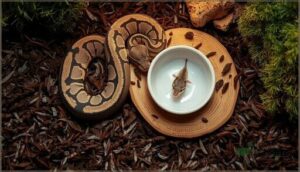
Every time your snake feeds directly on loose fiber, its mouth picks up stray particles. Use a separate feeding dish or an elevated feeding platform to keep prey off the bedding entirely.
prey placement technique reduces fiber contact during strikes and bite adjustments. Feeding area isolation also makes cleanup easier and keeps your spot cleaning routine focused on one low-traffic zone.
Spot-clean and Replace Regularly
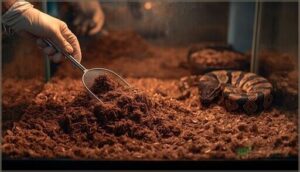
Don’t let waste sit — the longer it stays, the faster odor builds and bacteria spread. Scoop soiled spots soon after you notice them using a clean tool, and discard the clumps right away.
Check moisture levels while you’re at it. Top off removed sections with fresh substrate, and swap out larger portions whenever smell lingers despite regular spot-cleaning.
Best Snake Species for Coconut Fiber
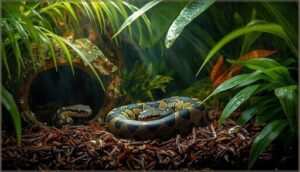
Coconut fiber works best for humidity-loving species. Ball Pythons thrive on it because they need consistent moisture year-round. Corn Snakes do well too, especially adults that benefit from a soft, dig-friendly layer. Tropical Boas and Arboreal Pythons are also strong matches for this substrate.
Desert Kingsnakes, however, are a different story — they need drier conditions, so coconut fiber isn’t their friend.
When to Avoid Coconut Fiber Entirely

Some snakes should never live on coconut fiber. If you keep Desert‑Adapted Species like hognose or kingsnakes, the moisture retention works against them.
Watch for Persistent Respiratory Distress — wheezing or open-mouth breathing signals trouble. Mold Presence, Frequent Substrate Saturation, or Excessive Enclosure Humidity are all signs to switch substrates immediately. If your boa keeps showing these warning signs, a guide to signs of stress in your boa constrictor’s enclosure setup can help you pinpoint what’s triggering the problem.
When in doubt, paper towels are a safer fallback.
Frequently Asked Questions (FAQs)
Is coconut fiber ok for snakes?
Yes, it’s generally fine — as long as you keep it lightly damp and match it to your snake’s humidity needs.
It’s eco-friendly, promotes natural behavior, and offers solid substrate longevity with proper care.
Is coconut good for snakes?
For the right species, it’s a smart pick.
Coconut fiber enhances Temperature Regulation, boosts Habitat Aesthetics, and scores well on Cost Efficiency.
Just match it to your snake’s humidity needs and keep up your Cleaning Frequency.
Can coconut fiber be mixed with other substrates?
You can mix coconut fiber with other substrates for better results.
Perlite Integration improves airflow, Orchid Bark Blend boosts drainage, Sphagnum Moss Addition aids Moisture Buffering, and Particle Size Balance helps prevent compaction—making bedding safer and more manageable.
How often should the full substrate be replaced?
Plan on a full swap every two to four months.
Shorten that cleaning schedule if humidity runs high, mold appears, or waste accumulation indicators like embedded staining or persistent odor signal that it’s time sooner.
Is coconut fiber safe for juvenile or baby snakes?
Coconut fiber can work for juveniles if you manage moisture carefully. Dry fiber stirs up dust that irritates young lungs.
lightly damp to support temperature regulation, shedding, and skin healing without soaking the enclosure.
How does coconut fiber compare to aspen for ball pythons?
Both work, but for ball pythons, coconut fiber wins on Humidity Retention, Mold Resistance, and Burrowing Ability. Aspen edges ahead on Dust Levels and Odor Control in drier setups.
Conclusion
Think of coconut fiber like a double-edged sword—its strength lies in balance. When used wisely, it nurtures your snake’s natural world, supporting shedding and burrowing while keeping odors at bay. However, neglecting its care can turn it into a risk, harboring dust or hidden dangers.
The truth is, is coconut fiber safe for snakes? This hinges entirely on your vigilance: keeping it damp but not wet, cleaning the substrate, and replacing it regularly.
For the right species in the right hands, it’s a gift. For others, a misstep. Your snake’s health depends on this quiet dance of attention.