This site is supported by our readers. We may earn a commission, at no cost to you, if you purchase through links.
A snake’s strike takes less than a tenth of a second. The prey is gone before your eyes register the movement, and sometimes a mouthful of coconut fiber goes down with it.
That’s the problem. A snake’s swallowing reflex doesn’t sort prey from substrate. Those fine, clingy bedding particles stick to a damp rodent and ride straight into the GI tract, where they don’t digest. They clump. They stall gut motility. In severe cases, they obstruct it entirely.
So can snakes ingest bedding while eating? Yes, and the consequences range from harmless to surgical. The good news: a few simple feeding changes drop that risk to nearly zero. Here’s what works.
Table Of Contents
- Key Takeaways
- Can Snakes Ingest Bedding While Eating—and Why Does It Happen?
- What Happens When a Snake Swallows Bedding?
- How to Prevent Bedding Ingestion and Recognize an Emergency
- Top 5 Products for Safer Snake Feeding
- Frequently Asked Questions (FAQs)
- What food is toxic to snakes?
- Can snakes breathe while they eat?
- Do snakes remember who feeds them?
- What are signs that a snake is hungry?
- What if a snake eats a small piece of bedding?
- Can snakes eat coconut bedding?
- Do snakes eat larger food?
- Can snakes eat sand?
- How do you spot early signs of impaction?
- Which bedding types are safest for burrowing snakes?
- Conclusion
Key Takeaways
- Yes, snakes regularly swallow bedding during strikes because the swallowing reflex doesn’t distinguish prey from substrate, and fine materials like coconut fiber are the worst offenders since they cling to damp prey.
- Swallowed bedding can’t be digested, so it can irritate the gut, stall digestion, and in severe cases cause life-threatening impaction or even lung inflammation if particles are aspirated.
- Simple feeding habits nearly eliminate the risk: feed in a separate bare container or on tongs, remove loose substrate from the strike zone, and be strictest with small or young snakes.
- Watch for emergency signs like regurgitation shortly after a meal, open-mouth or labored breathing, bloating, appetite loss, or no stool for two weeks, and call your vet immediately if they appear.
Can Snakes Ingest Bedding While Eating—and Why Does It Happen?
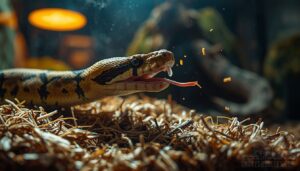
Yes, snakes absolutely can ingest bedding while eating, and it happens more often than most keepers realize.
That’s exactly why choosing the right substrate matters so much, and this beginner-friendly guide to snake substrates breaks down which options are safest if your snake tends to swallow a bit with every meal.
The culprit is usually the feeding strike itself. When your snake lunges at prey, jaw alignment and the swallowing reflex aren’t discriminating, so loose substrate around the feeding area gets pulled in alongside the meal. Fine materials like coconut fiber are especially problematic because they’re lightweight, clingy, and easy to inhale mid-strike.
Substrate choice and feeding method matter enormously here. Deeper substrate increases contact probability, while temperature swings that slow digestion compound the risk further.
Watch for repeated tongue-flicking directed at the bedding during or after meals. That exploratory behavior often signals accidental ingestion has already begun.
What Happens When a Snake Swallows Bedding?
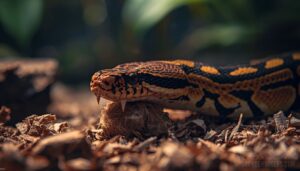
Once bedding enters the GI tract, the body can’t break it down. Fibers, aspen slivers, and coconut strands pass through largely undigested, but it’s far from harmless.
Fine particles irritate the esophageal and gastric mucosa. Repeated substrate ingestion raises gastrointestinal obstruction concerns: clumped material stalls intestinal motility, and impaction risk climbs with each meal taken over loose substrate. Poor feeding practices like leaving deep bedding under prey accelerate it. A digestive aid for reptiles can help keep gut motility steady, though it’s no substitute for removing loose substrate before feeding.
Swallowed bedding can’t be digested, and with every meal taken over loose substrate, the risk of impaction and intestinal blockage grows
There’s a respiratory angle too. During regurgitation or swallowing strain, loose substrate particles can aspirate into the airway and cause pneumonitis, a lung inflammation that’s easy to miss until your snake’s breathing becomes visibly labored.
Heavier aspen chips pass more readily than fine material. Coconut fiber remains the consistent offender here.
How to Prevent Bedding Ingestion and Recognize an Emergency
Prevention beats any treatment I can offer. Move prey to a smooth feeding container, or use a separate feeding enclosure with no bedding at the strike point. If you feed in-tank, remove loose bedding from the immediate zone first.
Your habits matter as much as your setup:
- Feed before cleaning, not after—dust disturbance leaves particles airborne
- Wait after handling so your snake isn’t already carrying debris on its mouth
- Keep substrate level and packed, never loose substrate around the feeding area
- Offer prey at mid-tank or on tongs, never resting on deep bedding
Small or young snakes carry the highest substrate ingestion risk, so be strictest with them. A well-designed small snake starter kit often includes shallow, packable substrate and feeding accessories that make impaction prevention much easier from day one.
If a hatchling does swallow bedding despite your precautions, this guide to impacted snake treatment options walks you through the warning signs and safe next steps.
Know your emergency signs. Regurgitation within hours of a meal, open-mouth breathing, bubbling, or whistling means possible airway irritation. Appetite loss with progressive lethargy? That’s urgent. Call your vet immediately.
Top 5 Products for Safer Snake Feeding
You’ve learned how to spot the warning signs, so now let’s talk gear. The right substrate and feeding tools can cut your snake’s ingestion risk dramatically without complicating your routine. Here are five products I recommend in clinical practice and trust in my own reptile room.
1. Zoo Med Forest Floor Substrate
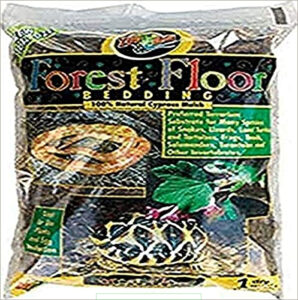
Is your snake’s enclosure a rainforest or a minefield?
Zoo Med Forest Floor Substrate is natural cypress mulch that mimics a humid forest floor. It holds moisture well, making it a solid choice for snakes, amphibians, and tropical tortoises that need stable humidity. It’s also suitable for bioactive setups and resists mold and bug infestation when properly treated.
You’ll see fewer dust clouds than with aromatic wood products, and spot cleaning is simple. A two-inch layer suits most terrestrial reptiles and allows burrowing.
Two cautions. The dark color hides waste, so inspect closely. And while the moderate particle size reduces accidental ingestion, always remove oversized pieces near strike zones to prevent mouth entanglement during feeding.
At 10.6 pounds, one bag covers most standard enclosures. Practical, naturalistic, and forgiving—when you manage the details.
| Best For | Best for keepers of snakes, amphibians, and tropical tortoises who need a natural, humidity-retaining substrate for standard or bioactive terrariums. |
|---|---|
| Material Type | Cypress mulch |
| Dust Level | Low dust |
| Pet Suitability | Snakes and amphibians |
| Odor Control | Moderate |
| Humidity Support | Excellent |
| Mold Risk | Resists mold when treated |
| Additional Features |
|
- Retains moisture well to maintain stable humidity levels
- Resists mold and bug infestation when properly treated
- Suitable for bioactive setups and allows natural burrowing behavior
- Dark color makes waste difficult to spot during cleaning
- May require baking before use to prevent pest infestation
- Can dry out over time and needs periodic watering
2. Zoo Med Eco Earth Coconut Fiber Substrate
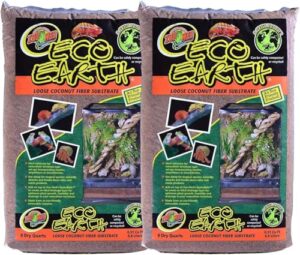
A substrate that absorbs odor, holds humidity, and breaks down waste? Zoo Med Eco Earth Coconut Fiber Substrate genuinely delivers all three. This renewable, plant-based bedding suits tropical and burrowing species beautifully, and its soft texture makes cleanup after spills almost painless.
But let’s be honest about ingestion risk. Coconut fiber is fine-textured, and fine fibers are exactly what snakes swallow accidentally during strikes. Crushed or chewed fiber can pass as coarse material, raising the risk of esophageal or gastric obstruction. Ingested fiber can also swell internally. So Eco Earth earns its place here with caveats: it’s pH-neutral, dust-free, and gentle on the respiratory tract, yet you must feed on a bare surface or feeding dish, never directly on loose fiber.
Layer it over HydroBalls for drainage and live plants if you’re building naturalistic setups. For humidity-loving species? Excellent choice. For careless feeding practices? A hazard.
| Best For | Humidity-loving reptiles, amphibians, and invertebrates like geckos, tarantulas, and tortoises in naturalistic terrariums, provided owners feed on a bare surface or dish to avoid ingestion risk. |
|---|---|
| Material Type | Coconut fiber |
| Dust Level | Dust-free |
| Pet Suitability | Reptiles and invertebrates |
| Odor Control | Absorbs odor |
| Humidity Support | Excellent |
| Mold Risk | Low when used properly |
| Additional Features |
|
- Absorbs odor, breaks down waste, and holds humidity well when used damp
- Soft, dust-free, pH-neutral, and gentle on the respiratory tract
- Layers easily over HydroBalls to create drainage for live plants
- Fine fibers pose ingestion and obstruction risk if prey is fed on loose substrate
- Pricier than compressed coconut fiber bricks
- Some buyers report receiving dry batches or only one bag instead of two
3. Zoo Med Aspen Snake Bedding
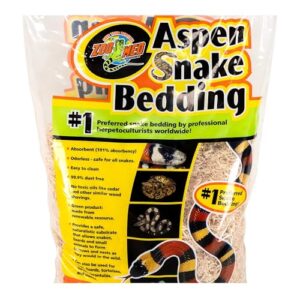
A 191% absorbency rating isn’t just impressive on paper—it actively pulls moisture and waste away from prey residue before your snake can accidentally swallow it during a strike. That’s Zoo Med Aspen Snake Bedding doing real work where it counts.
It’s 99.9% dust-free and completely odorless. No aromatic oils mean no respiratory irritation. No fine particles mean lower inhalation risk during feeding. If your keeper species is a fast striker or a prey-dragger, that matters.
The shavings are soft enough to support natural burrowing while remaining loose and easy to spot-clean. Don’t wait for full saturation—replace sections before moisture accumulates. Damp aspen molds quickly, and moldy bedding introduces hazards no snake keeper wants near feeding time.
At 2.2 pounds, it’s a practical, affordable option that’s easy to rotate on a regular schedule.
| Best For | Snake owners and reptile keepers who want a clean, safe, and easy-to-maintain substrate for their pets. |
| Material | Wood |
| Brand | Zoo Med |
| Primary Use | Snake bedding |
| Color | Whites & Tans |
| Unit Count | 1 package |
| Weight | 2.2 lb |
| Additional Features | High absorbency, no toxic oils, burrowing suitable |
Best For: Snake owners and reptile keepers who want a highly absorbent, odorless substrate that supports natural burrowing and stays easy to maintain.
| Material Type | Aspen wood shavings |
|---|---|
| Dust Level | 99.9% dust-free |
| Pet Suitability | Snakes and lizards |
| Odor Control | Odorless |
| Humidity Support | Moderate |
| Mold Risk | High if over-wetted |
| Additional Features |
|
- 191% absorbency rating pulls moisture and waste away quickly, keeping the enclosure cleaner
- 99.9% dust-free and free of aromatic oils, so it’s gentle on reptile respiratory systems
- Safe for a wide range of animals, including snakes, lizards, birds, tortoises, tarantulas, and insects
- Some customers report inconsistent dust levels, ranging from minimal to very dusty
- Retains moisture well, which can lead to mold if over-wetted and not monitored
- Requires regular spot cleaning and full changes, adding to ongoing maintenance
4. ReptiChip Organic Coconut Substrate
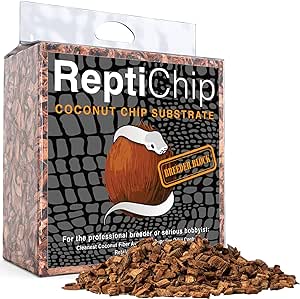
The keeper who wants humidity without hazards often lands on ReptiChip Organic Coconut Substrate—and for good reason. This 100% organic coconut chip bedding comes as a compressed 72-quart brick that expands to roughly 10 pounds once hydrated, giving you a stable, diggable surface that resists dust and splinters.
Why does that matter clinically? Finer, uniform particles mean fewer large fiber chunks your snake might accidentally swallow mid-meal. The chips also encapsulate waste and absorb odor, keeping enclosures cleaner between changes.
One caution from experience: dry it thoroughly after expansion. Overwatered coconut molds fast, and mold poses its own respiratory risks. Maintain moderate moisture, keep the layer shallow in feeding zones, and this sustainable option works beautifully for tropical species. Ball pythons and hermit crabs alike thrive on it.
| Best For | Keepers of humidity-loving reptiles like ball pythons, leopard geckos, and hermit crabs who want a sustainable, low-dust coconut substrate that holds moisture well. |
|---|---|
| Material Type | Coconut chips |
| Dust Level | Dust-free after cleaning |
| Pet Suitability | Ball pythons and geckos |
| Odor Control | Absorbs odor |
| Humidity Support | Excellent |
| Mold Risk | High if overwatered |
| Additional Features |
|
- Expands from a compressed 72-quart brick to about 10 pounds of bedding, offering great value
- 100% organic coconut chips encapsulate waste and absorb odor for cleaner enclosures
- Dust-free after cleaning, with uniform particles that reduce ingestion risk
- Must be dried thoroughly after expansion to prevent mold growth
- Can produce dust during initial break-in, requiring airflow or respiratory protection
- Durability and mite resistance vary across species and setups
5. EvaGO Long Curved Aquarium Tweezers
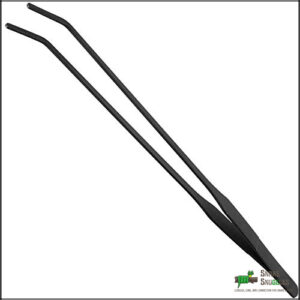
Sometimes the safest substrate is the one your snake never touches. If you’d rather eliminate ingestion risk at the source, feed by tool, not by hand.
The EvaGO Long Curved Aquarium Tweezers give you a 15-inch reach, keeping fingers well clear of a striking snake. That distance matters. A feeding response misdirected at your hand is the most common keeper injury I see, and it’s entirely preventable.
Serrated, curved tips grip rodents securely above loose bedding, so your aspen or coconut fiber stays where it belongs. The stainless steel construction resists rust, and the anti-skid grips help when your hands aren’t perfectly dry.
One honest caution: some keepers report occasional tip flex with larger prey, and shipping can bend them slightly. Inspect yours on arrival. For nervous feeders and deep enclosures, though, this simple tool delivers great control.
| Best For | Keepers of snakes and other reptiles who want to feed by tool rather than hand, keeping fingers safely away from a striking animal while keeping prey off loose substrate. |
|---|---|
| Material Type | Stainless steel |
| Dust Level | Not applicable |
| Pet Suitability | Snakes and reptiles |
| Odor Control | Not applicable |
| Humidity Support | Not applicable |
| Mold Risk | Not applicable |
| Additional Features |
|
- 15-inch reach keeps hands well clear of feeding strikes
- Serrated, curved tips grip prey securely above loose bedding
- Stainless steel build with anti-skid handles for wet or dry hands
- Tips can flex with larger prey items
- Some units arrive slightly bent from shipping
- Grip quality is inconsistent according to some users
Frequently Asked Questions (FAQs)
What food is toxic to snakes?
A garden’s prettiest plants hide the sharpest fangs. Your snake’s world holds similar traps. Toxic exposure comes from avocado, chocolate, grapes, onions, rhubarb, xylitol, and spoiled prey. Prevention is your best medicine.
Can snakes breathe while they eat?
Yes, snakes breathe while eating, but with pauses. Their glottis and airflow adapt mid-swallow. Larger prey creates pressure that blocks breathing briefly. Mouth timing matters; snakes resume breathing between swallows.
Do snakes remember who feeds them?
Do snakes remember who feeds them? Sort of. Your snake learns your scent, not your face. Reptile memory is short-term, so consistent, calm feeding practices build recognition. Change routines, and that trust resets overnight.
What are signs that a snake is hungry?
Hungry snakes show repeated tongue flicking, heightened alertness, circling the feeding zone, and keen striking. Watch for dehydration or lack of stool, which can mimic hunger. True appetite means consistent, willing feeding—never stress-driven defensiveness.
What if a snake eats a small piece of bedding?
A swallowed fragment usually passes harmlessly. But substrate ingestion isn’t risk-free: monitor for regurgitation, bloating, lethargy, or appetite loss. These signal rising impaction risk or gastrointestinal obstruction—act quickly.
Can snakes eat coconut bedding?
A strike lands, the prey vanishes, and a few stray fibers vanish with it. Yes, snakes can accidentally eat coconut bedding.
Small Coconut Fiber fragments usually pass harmlessly, but larger Coconut Husk Blands raise serious impaction risk.
Practice careful feeding guidelines: feed on clean surfaces, use tweezers, and watch for regurgitation, lethargy, or bloating.
Fine particles occasionally cause mild respiratory irritation; persistent symptoms mean call your vet immediately.
Prevention beats surgery every time.
Do snakes eat larger food?
Yes, most snakes routinely eat surprisingly large food. Their flexible jaws and skull ligaments let them swallow prey far wider than their heads. Pythons especially favor oversized prey attempts, maximizing energy while reducing feeding frequency.
Can snakes eat sand?
Can snakes eat sand? Not intentionally, no. But accidental substrate ingestion happens often: damp prey dragged across loose substrate carries grit right into the mouth.
Small amounts may pass, but repeated exposure raises impaction risk. Choose safer bedding.
How do you spot early signs of impaction?
Spot impaction early by watching for a hard, rigid belly, loss of appetite, no stool past two weeks, and lethargy. Straining without results? That’s your cue—call your exotic vet immediately.
Keep in mind that dehydration is a common cause of impaction, so maintaining proper hydration and digestive health is essential for moving food smoothly through the digestive tract.
Which bedding types are safest for burrowing snakes?
Which bedding suits burrowing snakes? Coconut fiber and husk blends excel at moisture retention and tunneling. Cypress mulch for humidity retention works well too. For dry setups, choose aspen for low-humidity species. Avoid dusty, fine substrates.
Conclusion
Here’s the quiet truth most keepers miss: your snake’s next meal could carry hidden baggage. Can snakes ingest bedding while eating? Absolutely.
But now you hold the fix. Feed outside the enclosure, or offer prey on tongs, and the risk collapses. Watch the droppings, trust the scale, act fast on refusal.
Your snake can’t choose safety. You can. And that choice, made consistently, is what separates thriving snakes from preventable emergencies.