This site is supported by our readers. We may earn a commission, at no cost to you, if you purchase through links.
Classroom reptiles are wonderful teachers—until cleaning day turns into a guessing game of "is this safe?" A gecko or bearded dragon breathes, drinks, and lives inches from every surface you spray, making choosing the wrong cleaner a real health risk, not just a minor inconvenience.
Most household disinfectants contain bleach or ammonia that can linger on glass and plastic long after you’ve wiped them down.
The good news: reptile-specific cleaning sprays exist precisely for this situation, and the best ones make your classroom routine faster, safer, and genuinely effective at eliminating odors and germs.
Table Of Contents
- Key Takeaways
- Top 5 Cleaning Sprays Reviewed
- Choosing Safe Classroom Reptile Cleaners
- Using Cleaning Sprays Correctly
- Removing The Reptile Before Spraying
- Spot Cleaning Between Full Habitat Cleans
- Deep-clean Routines for Classroom Enclosures
- Proper Dilution and Label Directions
- Required Contact Time for Germ Control
- Ventilation and Complete Drying Before Reentry
- Preventing Cross-contamination With Dedicated Cloths
- Keeping a Classroom Cleaning Log
- Cleaners and Habits to Avoid
- Frequently Asked Questions (FAQs)
- Conclusion
Key Takeaways
- Household cleaners with bleach or ammonia aren’t just harsh — they’re genuinely dangerous for classroom reptiles, leaving fumes and residue that can harm sensitive airways and skin long after you’ve wiped everything down.
- The best reptile-safe sprays are fragrance-free, enzyme-based, or oxidizing formulas that actually break down waste and odors instead of masking them, and they’re safe around kids too.
- Spraying is only half the job — removing your reptile first, respecting contact time, and letting surfaces fully dry before re-entry are the steps that make your cleaning routine actually work.
- For daily tidying, an enzyme cleaner does the trick; save the heavy-duty disinfectant for post-illness deep cleans, and never mix two cleaners together, no matter how harmless each one seems on its own.
Top 5 Cleaning Sprays Reviewed
Not all cleaning sprays are created equal — especially when kids and classroom reptiles are involved. These five picks stand out for being safe, effective, and easy to use in a school setting.
For a deeper look at what makes each formula stand out, this guide to reptile-safe cleaning sprays for families with kids breaks it all down.
Let’s take a closer look at each one.
1. Oxyfresh Reptile Amphibian Terrarium Cleaner
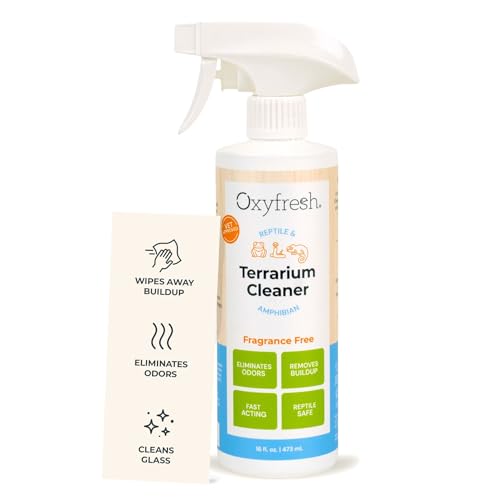
Oxyfresh Terrarium Cleaner is one of the easiest wins for a classroom setup. It’s bleach-free, fragrance-free, and Leaping Bunny certified — ensuring you’re not gambling with your reptile’s health. The oxidizing formula breaks down waste odors at the source in just minutes, leaving glass streak-free and surfaces residue-free.
It works effectively on glass, acrylic, and plastic without relying on harsh chemicals. The simple process—spray, wait, rinse—makes daily maintenance effortless.
For quick cleans between deeper sessions, this cleaner is hard to beat.
| Best For | Reptile and amphibian owners who want a quick, safe, and chemical-free way to keep terrariums clean without stressing their pets. |
|---|---|
| Form | Spray liquid |
| Toxicity | Non-toxic |
| Surface Types | Glass, acrylic, plastic, carpet |
| Odor Control | Oxidizing odor eliminators |
| Price | $17.95 |
| Volume | ~18 fl oz (1.19 lb) |
| Additional Features |
|
- Bleach-free and non-toxic formula is safe around sensitive species like frogs, lizards, and snakes
- Oxidizing agents actually break down waste odors instead of just masking them
- Leaves glass and acrylic streak-free with a simple spray, wait, and rinse routine
- Not a disinfectant — won’t cut it when you need to fully sanitize after illness or contamination
- Struggles with heavy mineral deposits and hard-water stains without extra treatment
- A small plastic piece on the spray bottle can detach, so a quick inspection before use is a good habit
2. F10 SCXD All Purpose Disinfectant Cleaner
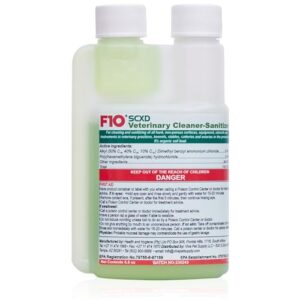
When you need something that punches harder than a daily spray, F10 SCXD steps up. It’s a true 2-in-1 — cleans and disinfects in one pass, targeting bacteria, fungi, and viruses without bleach or harsh chemicals.
Just mix 2 ml per liter of water and wipe down surfaces.
Non-corrosive and biodegradable, it’s safe around animals once dry.
For a classroom terrarium with heavy use, this backup ensures genuinely clean conditions.
| Best For | Pet owners, vet clinics, and animal shelters that need a heavy-duty disinfectant safe enough to use around animals. |
|---|---|
| Form | Concentrated liquid |
| Toxicity | EPA-registered safe |
| Surface Types | Hard, non-porous surfaces |
| Odor Control | Pine fragrance |
| Price | $35.99 |
| Volume | 6.8 oz (200 ml) |
| Additional Features |
|
- True 2-in-1 formula — cleans and disinfects in a single pass, saving time and effort
- EPA-registered broad-spectrum protection against bacteria, viruses, and fungi
- Biodegradable with a mild pine scent that won’t bother sensitive noses or deter pets
- Surfaces need a thorough rinse after use, which adds a step to your cleaning routine
- The 200 ml bottle runs out fast in busy, high-traffic facilities
- Dilution markings aren’t great for small batches, so measuring accurately takes a little extra care
3. Zilla Terrarium Cleaner Spray
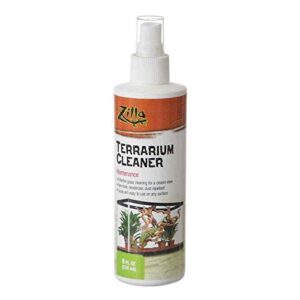
Not every cleaning day calls for heavy-duty disinfection. Sometimes you just need a quick, reliable spray to keep things tidy between deep cleans — and that’s where Zilla Terrarium Cleaner Spray shines. This 8 oz bottle is a classroom favorite for good reason.
It contains no bleach, no ammonia, and features a non-toxic formula that’s safe around reptiles once surfaces dry.
It leaves glass streak-free and even fights dust buildup with an anti-static ingredient.
Simple, effective, and easy to grab off the shelf, it’s a handy solution for maintaining tidiness.
| Best For | Reptile owners who want a safe, natural way to keep their terrarium fresh and odor-free without reaching for harsh chemicals. |
|---|---|
| Form | Spray liquid |
| Toxicity | Natural ingredients |
| Surface Types | Indoor, non-metallic |
| Odor Control | Almond fragrance |
| Price | $13.57 |
| Volume | 8 fl oz |
| Additional Features |
|
- Made from natural ingredients with a pleasant almond scent that actually tackles musty odors
- Works on more than just terrariums — handy for AC units and other enclosed spaces too
- No harsh chemicals, so it’s a gentler choice for your pet’s environment
- The 8 oz size runs out fast if you’re cleaning regularly — expect to restock often
- Not safe for all surfaces, so double-check before spraying on plastics or painted areas
- Anyone with an almond allergy should do a small test before going all in
4. Exo Terra Terrarium Glass Cleaner
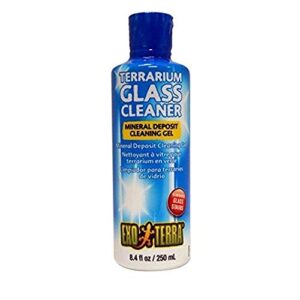
Hard water stains are a sneaky problem in misted reptile enclosures — and Exo Terra’s Glass Cleaner Gel was made exactly for that. This 250 ml gel formula removes calcium and lime buildup on glass, plastic, and acrylic without relying on ammonia, alcohol, dyes, or harsh petrochemicals.
For a deeper look at keeping your setup truly safe, natural reptile tank cleaning methods pair well with fragrance-free formulas like this one.
Just apply, let it sit, scrub gently, and rinse. Safe around sensitive animals, it keeps your enclosure walls crystal clear.
For classrooms with misting setups, this one’s a genuinely smart shelf addition.
| Best For | Reptile and amphibian keepers who deal with regular misting setups and want a safe, chemical-free way to keep enclosure glass spot-free. |
|---|---|
| Form | Gel |
| Toxicity | Non-toxic |
| Surface Types | Glass, plastic, smooth surfaces |
| Odor Control | Lime scent |
| Price | $12.99 |
| Volume | 8.4 fl oz (250 ml) |
| Additional Features |
|
- Free of ammonia, alcohol, and petrochemicals — genuinely safe to use around sensitive reptiles and amphibians
- Works on glass, plastic, and acrylic, so it covers most enclosure types
- Simple process — apply, wait, scrub, rinse — no special tools needed
- Stubborn or old mineral deposits may need multiple rounds to fully clear
- Can leave a residual film if you don’t rinse it thoroughly after scrubbing
- A handful of users found it less effective on severe, long-set stains
5. Absolutely Clean Reptile Terrarium Cleaner Deodorizer
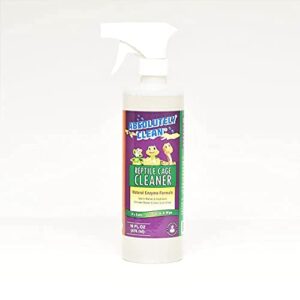
If your classroom terrarium often gets funky fast, Absolutely Clean might be your new best friend. This US-made, enzyme-powered spray breaks down waste proteins and odors on contact — no harsh fumes, no sticky residue.
Spray it, wait a few minutes, wipe it off, and you’re done. It works on glass, acrylic, plastic, and decor without corroding surfaces.
At $16.99, it costs a little more than generic options. However, for a vet-approved formula that’s genuinely safe around kids and critters, that’s a fair trade.
| Best For | Teachers, reptile owners, or anyone managing a classroom or home terrarium who wants a safe, fume-free cleaner that actually kills odors without harsh chemicals. |
|---|---|
| Form | Spray liquid |
| Toxicity | Veterinarian-approved |
| Surface Types | Metal, wood, glass, vinyl, plastic |
| Odor Control | Enzyme-based odor elimination |
| Price | $16.99 |
| Volume | ~16 fl oz (1.15 lb) |
| Additional Features |
|
- Enzyme formula breaks down waste and odors fast, no scrubbing required in most cases
- Vet-approved and safe around kids and animals once the enclosure is rinsed and dry
- Works on almost any surface — glass, plastic, wood, vinyl, you name it
- At $16.99, it’s pricier than your average cage cleaner
- Animals have to be removed before use, which adds a step to your cleaning routine
- Stubborn stains still need some elbow grease — it’s not a miracle worker on tough buildup
Choosing Safe Classroom Reptile Cleaners
Not every cleaner on the shelf is safe for your classroom reptile.
The right pick depends on a few key factors — ingredients, scent, surface type, and how it manages waste.
Here’s what to look for before you choose.
Reptile-safe Ingredients for Daily Enclosure Care
What’s actually in your cleaning spray matters more than the label. Look for pH-balanced formulas, nonionic surfactants, and enzyme stabilizers — these are the workhorses of any truly reptile-safe, non-toxic product.
Low residue solvents and mineral-safe additives make it easy to spot clean daily without leaving harmful buildup behind.
A good chemical-free cleaning solution keeps your classroom habitat genuinely safe for reptiles, every single day. For thorough, residue-free disinfection, consider use hypochlorous acid spray.
Fragrance-free Sprays for Sensitive Classroom Pets
Reptiles have surprisingly sensitive airways — fragrance-free sprays protect them where it counts. A scent-free, nontoxic formula promotes Respiratory Comfort and Allergen Reduction for your classroom pets every single day.
Here’s what makes them worth it:
- Non-Toxic Formulations won’t harm curious lizards or snakes
- Odor Neutralization keeps habitats fresh without added perfumes
- Microbial efficacy stays strong without irritating scents
- Reptile-safe ingredients dry clean and residue-free
- This chemical-free cleaning solution promotes long-term animal wellness
Enzyme Cleaners Vs Disinfectant Sprays
Think of enzyme-based cleaners as your daily janitor and disinfectant sprays as your weekend deep-clean crew — both earn their keep. Enzyme cleaners offer Enzyme Longevity, continuing to work after application by tackling soil breakdown over time. Disinfectant sprays deliver fast microbial spectrum control, though Disinfectant Residue requires full drying before surfaces are safe for reentry.
Prioritize Smart Application Timing with non-toxic cleaning solutions and vet-recommended cleaners to maintain a genuinely safe habitat. Daily use of enzyme cleaners manages odors and soils gently, while disinfectants are best reserved for post-illness pathogen removal.
| Feature | Enzyme Cleaner | Disinfectant Spray |
|---|---|---|
| Best Use | Daily odor and soil control | Post-illness pathogen removal |
| Safety Profile | Gentle, low residue | Requires drying before reentry |
Glass, Plastic, and Decor Surface Compatibility
Glass requires Residue-Free Formulas for streak-free results, while acrylic and plastic demand Non-Abrasive Sprays to prevent clouding.
Corrosion-Safe Ingredients protect metal-trimmed decor from pitting.
Always perform Material-Specific Testing on a small spot first. Film-Free Drying ensures surfaces remain crystal clear and classroom-ready, ideal for surface-safe cleaning of glass and plastic.
Eco-friendly and Biodegradable Product Benefits
Choosing eco-friendly, biodegradable sprays isn’t just good for your classroom — it’s good for the planet your reptile came from. These chemical-free cleaning solutions and non-toxic disinfectants break down into harmless byproducts, leaving nothing nasty behind.
- Carbon footprint reduction through plant-based, renewable resource use
- Low VOC emissions keep classroom air breathable
- Wildlife-friendly formulation protects ecosystems beyond your tank
- Soil health boost via safe, sustainable pet care ingredients
- Truly biodegradable — no lingering residue, no regrets
Using Cleaning Sprays Correctly
Having the right spray is only half the job — knowing how to use it makes all the difference.
A few simple habits can protect your classroom reptile and keep the enclosure genuinely clean, not just look clean.
Here’s exactly what to do from the moment you pick up that bottle.
Removing The Reptile Before Spraying
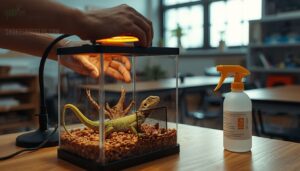
Before you even reach for the spray bottle, remove your reptile from the habitat. Move them to a secure temporary habitat setup with proper heat and lighting—ensuring escape prevention measures are in place.
Notify staff with a quick note or sign; a simple staff notification system ensures everyone remains informed.
Only return your pet once surfaces are fully dry and proper ventilation during cleaning has cleared the air.
Spot Cleaning Between Full Habitat Cleans
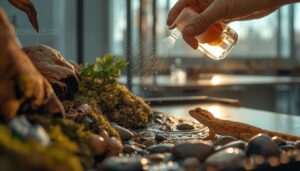
Once your reptile is safely out, spot cleaning keeps things fresh between full cleans. Think of it as a rapid response checklist — remove waste, wipe soiled surfaces with a reptile-safe, scent-free spray, and let everything dry.
This five-minute routine aids your cleaning schedule integration and gives students a simple responsibility protocol they can actually stick to.
Deep-clean Routines for Classroom Enclosures
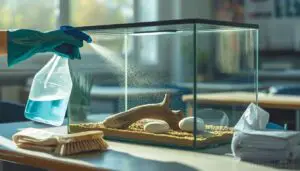
Spot cleaning manages the daily mess, but a deep clean is a whole different level. Begin with Substrate Disposal: seal disposable substrate in a trash bag to ensure proper containment.
Next, tackle Pre-clean Scrubbing using warm soapy water and soft brushes, meticulously cleaning every corner of the enclosure.
Apply Sectional Application to maintain consistent moisture for your reptile enclosure disinfectant, allowing full contact time effectiveness.
Conclude with Drying Verification and Tool Sterilization to guarantee a hygienic environment before reintroducing any items.
Proper Dilution and Label Directions
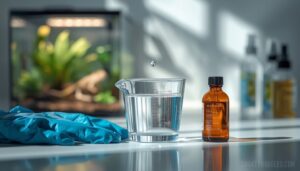
After all that deep-cleaning effort, don’t let a measurement mistake undo your work. The label isn’t just fine print — it’s your safety roadmap. Always follow exact dilution ratios, add concentrate to water (never the reverse), and check PPE guidance labels before mixing.
- Verify label accuracy before every batch
- Record the batch date on each bottle
- Follow proper mixing order: water first, then concentrate
- Use marked cups for dilution guidelines’ precision
- Prep only what you’ll use that session
Required Contact Time for Germ Control
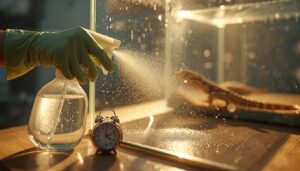
Spraying isn’t enough — contact time is where the real pathogen control happens. Think of it like letting a marinade do its job. Pull out your timer the moment the surface looks visibly wet, because Visible Wetness Assurance signals that disinfection protocols are actively working.
| Step | Why It Matters |
|---|---|
| Start timing when wet | Dwell Time Monitoring begins at full surface coverage |
| Rewet if it dries early | Rewetting Protocols maintain pathogen-specific timing |
Surface Pre-Cleaning Impact is critical — dirt blocks even the best veterinary-grade cleaners and nontoxic disinfectants from doing their job.
Ventilation and Complete Drying Before Reentry
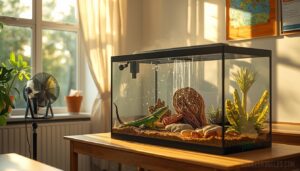
Once you’ve hit that contact time, don’t rush the finish line. Open windows and doors for Cross Ventilation, and position your Air Mover Placement so airflow travels across wet surfaces — not into the enclosure. Dryness Checks matter more than the clock.
- Run Odor Monitoring until no chemical smell lingers
- Confirm zero wet sheen on glass and decor
- Touch porous hides for hidden cool dampness
- Only then end the Reentry Delay
Most products are non-toxic after drying, but drying before reintroduction is non-negotiable for reptile safety. Ventilate the area until surfaces pass every check — that’s what safe cleaning methods actually look like.
Preventing Cross-contamination With Dedicated Cloths
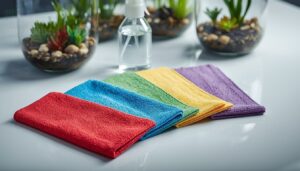
One contaminated cloth can undo everything you just cleaned. Assign each enclosure its own color-coded microfiber — microfiber efficacy drops fast when you share cloths between tanks. Follow a cloth rotation schedule to maintain hygiene standards.
Implement pre-wash validation before reuse, and adopt a cloth disposal policy to ensure consistent chemical-free sanitation. These hygiene best practices protect your reptiles from cross-contamination every single time.
Keeping a Classroom Cleaning Log
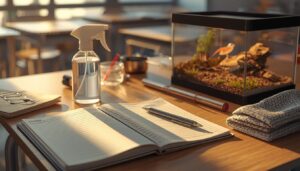
A cleaning log is your best proof that safe cleaning practices are actually happening. Track each routine wipe-down, the reptile-safe products used, dilution ratios, and dry times before re-entry.
Log templates make staff accountability easy, while digital tracking creates audit trails you can review during quarterly trend analysis.
It is cleaning schedule optimization you can actually see working.
Cleaners and Habits to Avoid
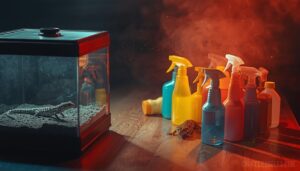
Not every cleaner on the shelf deserves a spot near your classroom pet. Some common options can do real harm — even if they look totally safe.
Here’s what to skip and why it matters.
Why Bleach is Risky in Reptile Habitats
Bleach sounds tough on germs — and it is. But that same toughness makes it risky around reptiles. Sodium hypochlorite leaves behind residue that causes residual skin irritation when your pet licks surfaces. Consider the hidden risks:
- Vapor Respiratory Stress — fumes build up fast inside a closed terrarium
- Corrosive Surface Damage — screens, plastics, and hardware degrade over time
- Porous Material Retention — cork and wood absorb bleach deep, where rinsing can’t reach
- Tool Residue Transfer — a "rinsed" sponge can still spread chemical safety threats to water bowls
Stick with reptile-safe sprays instead.
Why Ammonia-based Sprays Are Unsafe
Ammonia-based cleaners pose sneaky risks in classrooms. Ammonia fumes spread rapidly in poorly ventilated spaces, causing respiratory irritation for both students and pets. Surface residues lead to alkaline skin burns and corrosive eye damage, often affecting reptiles through direct contact. The delayed onset of injuries means harm may not manifest for hours, making these products particularly dangerous.
| Risk | Effect on Reptiles | Why It Matters |
|---|---|---|
| Ammonia fumes | Respiratory irritation | Builds up in enclosed spaces |
| Alkaline residue | Skin and tissue burns | Lingers on porous surfaces |
| Delayed injury | Hidden internal damage | Symptoms appear hours later |
Skip ammonia-based cleaners entirely—chemical safety for pets depends on this simple choice.
Dangers of Mixing Household Cleaners
Skipping ammonia is smart — but mixing any two cleaners is where things get really dangerous. Combining bleach with ammonia releases chloramine vapors that can overwhelm a small classroom fast. Add vinegar to hydrogen peroxide, and you’ve got peracetic acid. Explosive drain reactions happen when acid and base cleaners meet.
Mixing common cleaners is more dangerous than using either alone — bleach and ammonia together create toxic vapors fast
Watch out for:
- Chlorine gas from bleach and acid-based cleaners
- Unknown spray interactions from layering multiple products
- Potential toxic gas formation from mixing cleaners left on surfaces
Strong Scents and Residue Buildup Problems
Mixing cleaners isn’t the only trap — scented sprays cause their own quiet problems. Strong scents linger for days, and that scent lingers and stresses sensitive reptiles. Residue film on glass attracts dust, creating humidity tackiness in warm classrooms.
VOC inhalation poses real risks for both pets and students. Always pick a fragrance-free, reptile-safe, chemical-free cleaning solution with no greasy residue left behind.
When DIY Options Fall Short
DIY natural cleaning solutions for reptiles sound appealing, but they come with real risks. Measurement errors mean your mix might be too weak to work — or strong enough to damage surfaces. There’s no safety data sheet to check, no proven contact time, and unclear efficacy against reptile-specific pathogens.
Species sensitivity makes unpredictable residues especially dangerous. Vet recommended, reptile safe products simply take the guesswork out.
Common Classroom Cleaning Mistakes to Prevent
Even the best vet-recommended cleaners can’t save you from bad habits. High-touch neglect — skipping hiding places, corners, and decor edges — lets germs hide in plain sight. Dilution shortcuts and inadequate contact time mean your chemical-free cleaning solution never fully does its job.
Use dedicated cloths to avoid tool cross-contamination, and don’t skip surface prep before spot cleaning versus deep cleaning routine wipedowns.
Frequently Asked Questions (FAQs)
Can students help clean reptile enclosures safely?
Yes, with the right supervision and age-appropriate duties, students can absolutely help. Assign supervised tasks, use a safety checklist, provide training in protective glove use, and maintain cleaning logs for students to track everything responsibly.
How often should classroom terrariums be fully disinfected?
Think of full disinfecting like a reset button — you don’t hit it daily. A multi-week cycle works best, with illness-triggered disinfection and humidity impact timing guiding when you go deeper.
What certifications should reptile cleaning sprays have?
Look for the EPA Safer Choice label, EPA Disinfectant registration, food contact certification, and low VOC verification.
Child-pet safety compliance matters too — it tells you the formula uses non-harmful chemicals your classroom pets can handle.
How should used cleaning cloths be properly disposed?
Treat used cloths as hazardous waste — place them flat in labeled disposal bags, never bunched.
Check local waste regulations. Launder reusable ones in hot water.
Always practice hand washing hygiene after cleanup.
Conclusion
The gecko that thrives all year is the one whose home never smells like a chemistry experiment. With the right reptile cleaning sprays for classroom pets in your routine, you’re not just wiping down glass—you’re protecting a living creature that curious kids count on daily.
Pick a safe spray, follow the label, and stay consistent. A clean habitat isn’t a chore you dread; it’s the quiet habit that keeps your classroom pet healthy and happy.