This site is supported by our readers. We may earn a commission, at no cost to you, if you purchase through links.

A snake that’s too hot won’t tell you—it’ll show you. Restless pacing along the glass, mouth hanging open, body pressed flat against the cool side: these are distress signals most keepers mistake for curiosity or normal behavior. By the time a snake looks lethargic or refuses food, the damage from heat stress is already underway.
Temperature management isn’t complicated, but it demands precision. few degrees above the safe range can disrupt digestion, suppress immunity, and—in extreme cases—prove fatal within hours.
Knowing how to tell if your snake’s habitat is too hot, and acting fast when something’s off, is one of the most important skills you’ll build as a keeper. the signs, the numbers, and the fixes are all straightforward once you know what to look for.
Table Of Contents
- Key Takeaways
- Signs Your Snake Enclosure is Too Hot
- Know Safe Temperature Ranges
- Measure Heat The Right Way
- Find Common Overheating Causes
- Cool The Habitat Safely
- Frequently Asked Questions (FAQs)
- Do snakes like hot weather?
- Are snakes vulnerable to heat?
- Are snakes dangerous if temperatures are too high?
- How does temperature affect a snake?
- How hot is too hot for a snake enclosure?
- Can overheating affect my snakes shedding cycle?
- How does heat stress impact a snakes immune system?
- Do hatchlings overheat faster than adult snakes?
- How does high heat change a snakes metabolism?
- Which snake species tolerate higher temperatures best?
- Conclusion
Key Takeaways
- Restless pacing, open-mouth breathing, and soaking in the water dish are your snake’s clearest signals that the enclosure is dangerously overheated.
- Every species needs a distinct warm side (85–92°F) and cool side (72–80°F), and even a few degrees outside that range can shut down digestion and weaken immunity fast.
- Accurate temperature monitoring means placing digital probes at snake level on both sides—not mid-air—and cross-checking with an infrared gun weekly.
- When overheating hits, cut power to all heat sources immediately, move your snake to a shaded room, and use a thermostat with dual redundancy to prevent it from happening again.
Signs Your Snake Enclosure is Too Hot

Snakes can’t tell you when they’re uncomfortable — but they’ll show you. Their behavior changes in pretty obvious ways when the heat climbs too high, and catching those signs early can prevent real harm.
Knowing how snakes signal stress and discomfort helps you act fast before a bad situation gets worse.
Here’s what to watch for.
Pacing, Climbing, and Nonstop Movement
When your snake won’t stop moving, that’s your first clue that something’s off. Pacing patterns and continuous locomotion are classic behavioral indicators of thermal distress — your snake is thermal seeking, hunting for a comfortable zone it can’t find.
Climbing triggers kick in when floor temps spike too high.
These stress driven motion and behavioral cues mean it’s time to check your temperature monitoring immediately.
Gaping or Open-mouth Breathing
Open-mouth breathing is a harder sign to miss. If your snake holds its mouth open between breaths, that’s heat stress breathing — a sign of respiratory distress you shouldn’t ignore.
Thermal stress pushes snakes beyond their normal oxygen intake, triggering this behavioral indicator. Humidity effects can worsen it too.
Don’t wait; temperature monitoring and vet intervention may both be necessary.
Hanging Out on The Cool Side
Your snake camping out on the cool side is a clear red flag. Normal cool side behavior involves brief visits — not all-day stays.
Watch for these signs that the temperature gradient has shifted:
- Uses the same cool-side hide repeatedly
- Ignores the warm zone for hours
- Stays near microclimate draft areas
- Avoids spots where heat source is too close
- Shifts based on water dish proximity
Monitor temperature closely and check ventilation impact on both sides.
Soaking in The Water Dish
A snake seeking water excessively takes it a step further than just avoiding the warm side — it’s using the water dish as a last resort cooling station. Heat stress drives this behavior, especially when dish placement effects matter: water near a heat source warms quickly, reducing its ability to help.
When heat stress peaks, a snake’s last resort is its water dish — a cooling station that fails fast if placed too close to a heat source
| Factor | What to Watch | What It Means |
|---|---|---|
| Soaking Timing Patterns | Soaking during peak warm hours | Enclosure heat is too high |
| Dish Temperature Impact | Water feels warm after short time | Heat source proximity is too close |
| Water Quality Concerns | Cloudy or debris-filled water | Frequent soaking disrupts hygiene |
| Heat Source Proximity | Dish placed under lamp | Cooling effect is lost |
| Humidity Levels | Substrate drying out fast | Dehydration risk is rising |
Check water bowls daily — sunken eyes and tacky skin signal dehydration is already developing.
Lethargy, Weakness, or Stiffness
Sometimes, a snake that’s too hot simply shuts down. Signs of heat stress like Reduced Muscle Tone, Delayed Reflexes, and Abnormal Posture can appear quickly when your temperature gradient fails.
- Heavy Body Feel — your snake moves sluggishly, gripping surfaces weakly
- Diminished Mobility — it stays frozen in one spot, ignoring its surroundings
- Stiffness that won’t ease after cooling signals serious heat stress
Check your thermostat and ventilation immediately.
Feeding Problems and Regurgitation
Heat stress hits hardest at mealtime. When your temperature gradient runs too high, digestion breaks down fast — and regurgitation follows.
A properly calibrated setup makes all the difference — thermostat control for snake enclosures keeps temps stable so your snake can actually digest a meal without the stress.
| Regurgitation Triggers | What It Signals |
|---|---|
| Post‑Meal Gaping | Overheating disrupting digestion |
| Meal Timing Issues | Heat stress before feeding |
| Recovery Feeding Refusal | Repeated temperature failures |
Fix your warm side first. Then wait before offering prey again — prey size won’t matter if the enclosure still overheats.
Know Safe Temperature Ranges

Getting the temperature right starts with knowing your target numbers. Every species has its own comfort zone, and even small differences between the warm and cool sides matter more than most people realize.
Here’s what safe temperatures look like for the most common pet snakes.
Warm-side and Cool-side Targets
Your enclosure needs two distinct zones to work properly: a warm side (85–92 °F) and a cool side (72–80 °F). This temperature gradient allows your snake to self-regulate its body temperature effectively.
Adding snake habitat decor like hides and climbing branches on both sides of the enclosure gives your snake comfortable options no matter where it roams.
Zone Air Balance depends on three critical factors: Heat Source Placement, precise thermostat setpoints, and consistent Temperature Drift Monitoring. These elements ensure stable thermal conditions across the enclosure.
Always verify temperature readings using a calibrated temperature probe placed at snake level, not near the heat source. This practice guarantees accurate measurements and prevents overheating risks.
Ball Python Temperature Ranges
Ball pythons require one of the tightest thermal gradient setups of any common pet snake. Achieving these five critical targets ensures their health:
- Basking surface: 90–95°F for digestion temperature effects
- Warm side ambient: 80–85°F for daily activity
- Cool side retreat: 75–80°F for proper thermoregulation
- Nighttime gradient management: hold 75–78°F minimum
- Thermostat setpoint: never let air exceed 95°F
Maintaining the temperature gradient importance is essential for healthy digestion and metabolism.
Seasonal temperature adjustments and smart heat source selection prevent overheating risks.
Corn Snake and Boa Ranges
Corn snakes and boa constrictors require a clear gradient zone placement to maintain health, though they are more adaptable than ball pythons.
For corn snakes, maintain the warm side between 80–85°F and the cool side at 70–75°F. Boas, however, thrive with a warm side of 85–90°F and a cool side of 80°F.
A reliable thermostat and proper heat mat coverage are essential for achieving these conditions effectively.
Safe Basking Spot Surface Temperatures
The basking spot isn’t just "the warm end" — it’s a precise target zone. Aim for a surface temperature between 90–95°F (32–35°C), measured at snake level with a digital thermometer.
Material conductivity matters here: stone or ceramic platforms hold thermal inertia well, staying stable under your lamp. Good platform positioning and thermostat control keep this ideal temperature range consistent without dangerous spikes.
Slightly Warmer Needs for Hatchlings
Hatchlings have a slightly faster metabolic rate than adults, so increase your warm side temperature by 2–4°F above adult targets. That gradual gradient remains critical — they require a cool retreat to prevent heat stress.
Watch their feeding response closely; reluctance to eat often signals the heat source fluctuating too much. Humidity balance is equally vital to prevent dehydration from worsening the issue.
Measure Heat The Right Way
Knowing the right temperature range is only half the battle—you also need to trust what your thermometer is actually telling you. A wrong reading can make a dangerously hot enclosure look perfectly fine on paper.
Here’s how to measure heat accurately so you always know what’s really going on inside your snake’s home.
Use Digital Thermometers on Both Sides

Monitoring the temperature on both sides of the enclosure isn’t optional — it’s your first line of defense. Use a digital thermometer on the warm side to track basking temperature and another on the cool side for ambient temperature. This side-by-side comparison reveals your temperature gradient instantly.
- Cross-check ambient readings with an infrared temperature gun weekly
- Apply gap analysis techniques: a healthy difference is 10–15°F between sides
- Set alert threshold settings on smart thermostats for automatic shutoff
- Follow a battery maintenance schedule — swap batteries every three months
Place Probes at Snake Level
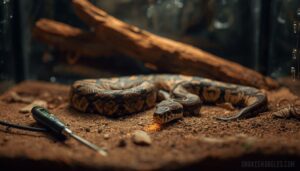
Knowing where your thermometer reads matters just as much as what it reads. A thermostat probe sitting mid-air misses what your snake actually feels. Follow probe height matching — place sensors at the surface your snake contacts most.
| Snake Type | Thermostat Placement |
|---|---|
| Terrestrial (floor-dwellers) | Enclosure floor above heater |
| Arboreal/climbing | Perch or branch height |
| Basking species | Basking surface, offset slightly to avoid lamp bias |
Secure surface mount keeps readings consistent. Loose probes drift into cooler gaps, throwing off your temperature setpoint entirely.
Check Surface Temperature, Not Just Air

Air temperature only tells part of the story. Use an infrared surface gauge to check basking spot heat directly — rocks, hides, and branches hold heat differently due to material heat retention.
Surface temperature mapping across your enclosure reveals hidden hot zones, your thermostat misses.
A probe placement strategy helps monitor the temperature accurately, but surface scans confirm real thermal safety across temperature gradients.
Calibrate Readings Regularly

Even a reliable thermometer drifts over time — that’s why a Zero Check against a trusted reference keeps your readings honest.
Run a quick Calibration Record routine monthly:
- Compare probes side by side to spot any Reference Offset.
- Verify Consistent Probe Position at snake level under the same substrate.
- Confirm Airflow Consistency by keeping vents unchanged during checks.
Small errors compound into dangerous temperature fluctuations fast.
Track Daily Highs and Lows
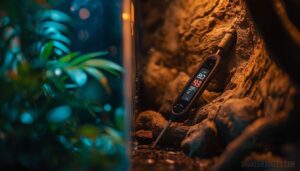
Daily temperature logs turn raw numbers into patterns you can act on.
Check your thermometer at the same times every day — morning checks miss afternoon lamp peaks, and night checks skip the day’s worst spikes. Log both warm and cool sides together to catch localized overheating quickly.
| Logging Frequency | Purpose |
|---|---|
| Morning check | Establish overnight low baseline |
| Afternoon check | Peak Time Identification for lamp heat |
| Evening check | Confirm cool-down after basking |
| Weekly review | Trend Analysis across days |
| Alert Thresholds review | Flag gradual warm-side creep |
Find Common Overheating Causes

Once you’ve confirmed the temps are off, the next step is to figure out why.
Most overheating problems trace back to a handful of predictable causes. Here’s what to look at first.
Direct Sunlight and Hot Windows
Sunbeam hotspots are one of the sneakiest overheating culprits. Glass acts like a mini greenhouse, trapping solar energy and creating window glare effects that push surface temps well past 95°F.
Reflective surface heat from nearby furniture adds more stress. Poor airflow near frames locks that warmth in.
Move the enclosure away from any window to protect your snake’s temperature regulation.
Unregulated Heat Mats or Lamps
A heat mat plugged directly into the wall — no thermostat — just keeps running. That’s how overheating starts without any warning.
Watch for these red flags in your setup:
- Hot Spot Detection: uneven mat contact creates surface spikes
- Lamp Wattage Effects: higher-watt bulbs push basking temps past 95°F fast
- Mat Placement Guidelines: mats covering more than one-third of the floor trap heat
- Fire Hazard Prevention: unregulated heat sources near bedding become serious risks
Always pair every heat source with a thermostat.
Poor Ventilation and Trapped Heat
Your enclosure layout can quietly work against you. When vents are blocked by décor or the tank sits flush against a wall, airflow design breaks down — and heat soak mitigation becomes nearly impossible.
| Ventilation Problem | Effect on Enclosure |
|---|---|
| Blocked vent placement | Warm air recirculates instead of escaping |
| Dense, cluttered layout | Traps heat load near hides |
| High humidity + poor ventilation | Amplifies perceived heat, stresses the snake |
Improve airflow by clearing obstructions and repositioning hides away from vents.
Thermostat Failures or Bad Probe Placement
Your thermostat can silently betray you. A stuck relay keeps the heater running past your setpoint, causing temperature overshoot before you notice anything wrong.
Probe misread issues — often from wiring intermittency or bad thermostat placement — trick the controller into heating longer than needed. Wrong model settings compound this fast.
Always follow thermostat placement and usage guidelines, verify probe contact at snake level, and treat any thermostat fail safe alert as urgent.
Room Heat Spikes and Screen Tops
Your room itself can push temperatures past safe levels. Direct sun through a west-facing window creates radiant wall heat that warms enclosure surfaces even when your thermostat reads fine.
HVAC cycle impact adds to this — each on/off swing spikes ambient temperatures briefly. Screen top airflow also traps rising heat overhead.
Window shading strategies and smart enclosure placement tips help you avoid temperature overshoot before it starts.
Cool The Habitat Safely

Once you’ve spotted the warning signs, cooling things down fast is what matters most. There are a few simple steps that can bring your snake’s environment back to a safe range without causing more stress.
Here’s what to do, in order.
Turn Off Heat Sources Immediately
When your snake is overheating, your first move is simple: cut the power. Manual heater unplugging beats waiting for a thermostat emergency cutoff to cycle — act now. Pull the plug, isolate the power supply, and de-energize every heat device in the enclosure.
- Unplug heat mats directly from the wall
- Switch off overhead lamps at the socket
- Remove any heat source too close to the enclosure
Move The Snake to a Cooler Area
Once the heat sources are off, get your snake out of there. Move it to a cooler room — somewhere shaded, away from windows.
A temporary holding tub works perfectly for microclimate creation while your main enclosure cools down.
Focus on cool room selection to keep cold side ambient temperature stable.
You want a real temperature gradient, not a cooler retreat zone that’s actually cold side too cold.
Offer Fresh Cool Water
Fresh cool water — not ice-cold — is your next move. Cold water can shock an already stressed snake, so aim for something that feels cool to the touch.
Dish placement matters here:
- Set water bowls on the cool side ambient temperature zone
- Prioritize spill prevention with a stable, wide-bottomed dish
- Maintain a cleanliness routine — dump and refill immediately
- Hydration monitoring starts now; watch whether your snake drinks
Improve Airflow Without Chilling The Enclosure
Airflow fixes overheating — but when done wrong, it collapses your warm zone fast.
Proper ventilation means moving hot air out, not blasting cold air in.
Use low-velocity fans and smart vent placement to build draft-free circulation across both sides.
| Airflow Method | What to Avoid |
|---|---|
| Low-velocity fans | Aiming directly at basking spot |
| Airflow baffles | Blocking snake’s movement path |
| Multiple small vents | Single large hole near heat source |
| Cool-side exhaust path | Recirculating heat in one corner |
Watch for Dehydration or Emergency Symptoms
Once the enclosure cools down, watch your snake closely — dehydration and heatstroke can linger even after temperatures drop.
- Skin Dryness Indicators and Shed Retention Issues: Wrinkled, dull skin or a patchy shed signals serious fluid loss.
- Eye Cloudiness Signs: Sunken or cloudy eyes mean emergency care for overheated snakes is needed now.
- Abnormal Breathing Patterns and Reduced Urine Output: Open-mouth breathing paired with little to no waste output is heat exhaustion escalating fast.
Prevent Future Heat Stress With Thermostats
A good thermostat is your best defense against future overheating. Use dual redundancy — two independent thermostats controlling separate zones — so if one fails, the other still limits floor heat.
Set fail‑safe alarms below your snake’s heat tolerance levels. Proper probe placement and cycling optimization keep temperatures steady all day.
| Feature | Purpose | Benefit |
|---|---|---|
| Zoning Strategies | Separate warm/cool zone control | Stable thermal gradient |
| Dual Redundancy | Backup thermostat if one fails | Prevents runaway heat |
| Fail‑Safe Alarms | Alerts before unsafe temps | Early overheating warning |
| Probe Placement | Reads snake-level surface temp | Accurate heat source regulation |
| Cycling Optimization | Gradual on/off heater cycling | Eliminates dangerous heat spikes |
Frequently Asked Questions (FAQs)
Do snakes like hot weather?
Not exactly.
Snakes use Behavioral Thermoregulation Strategies to self-regulate — basking to warm up, then retreating to shade.
Thermal Preference Variability means each species has its own heat tolerance levels, and too much heat triggers Heat Stress Hormones.
Are snakes vulnerable to heat?
Yes, snakes are highly vulnerable to heat. As ectotherms, they rely entirely on thermoregulation — meaning their environment controls their body temperature.
Overheating triggers metabolic acceleration, heat-induced dehydration, and immune suppression quickly.
Are snakes dangerous if temperatures are too high?
Can overheating actually make your snake dangerous?
Heat stress won’t increase venom potency or trigger aggressive behavior, but thermal lethality is real — temperatures past 95°F push snakes into a lethal range where heatstroke mortality becomes a serious risk.
How does temperature affect a snake?
Temperature controls nearly every function in a snake’s body.
It drives metabolic rate, digestive efficiency, growth speed, immune function, and even sex ratio during incubation — making thermal regulation central to long-term health.
How hot is too hot for a snake enclosure?
Once surface temps push past 95 °F, your snake’s heat tolerance is maxed out. Most species need a safe range between 75–92 °F to thermoregulate properly.
Can overheating affect my snakes shedding cycle?
Shedding looks simple, but behind the scenes it’s metabolically demanding.
Overheating triggers thermal stress and metabolic acceleration that disrupts timing, causes dysecdysis triggers, and worsens hot spot effects—turning a clean shed into a patchy, retained mess.
How does heat stress impact a snakes immune system?
Heat stress triggers a corticosterone surge that weakens your snake’s immune defenses. Bactericidal decline follows, leaving pathogens less controlled.
Even leukocyte ratio constancy can mask real immune damage happening beneath the surface.
Do hatchlings overheat faster than adult snakes?
Yes — hatchlings overheat faster. Their higher surface area ratio and metabolic rate mean they gain heat quickly and have far less thermal inertia to buffer sudden spikes than adults do.
How does high heat change a snakes metabolism?
When temperatures climb too high, your snake’s metabolism kicks into overdrive.
For every 10°C rise, metabolic rate roughly doubles — a Q10 metabolism pattern that rapidly drives heat stress, digestive disruption, and hydration stress.
Which snake species tolerate higher temperatures best?
Desert-adapted species like sand boas, sidewinder rattlesnakes, and desert rattlesnakes tolerate the highest heat. Among common pet snakes, king snakes handle warmer conditions best, though none should exceed 95°F.
Conclusion
Your snake’s enclosure is a silent contract—you control the environment, and it trusts you completely. Knowing how to tell if your snake habitat is too hot means catching small warning signs before they become real emergencies.
Check both sides daily, trust your thermometer over guesswork, and act fast when something feels off. A stable thermal gradient isn’t just comfort—it’s the foundation of every healthy shed, successful feeding, and long life your snake has ahead.