This site is supported by our readers. We may earn a commission, at no cost to you, if you purchase through links.

Most breeders assume a Corn Snake is ready to breed once it hits 18 months. That assumption sends many females into early pairings they aren’t physically equipped to handle—with consequences ranging from poor egg quality to life-threatening egg binding.
Sexual maturity and safe breeding maturity aren’t the same thing. Hormones can activate months before a female’s body can sustain follicle development, egg production, and post-laying recovery. Age is just one data point.
Corn Snake reproduction readiness hinges on a combination of weight, length, body condition, health history, and seasonal conditioning—and knowing exactly what to look for changes everything.
Table Of Contents
- Key Takeaways
- What is Reproduction Readiness?
- Corn Snake Breeding Age Guidelines
- Size and Weight Readiness Benchmarks
- Female Breeding Readiness Signs
- Male Breeding Readiness Signs
- Track Growth Before Breeding
- Health Checks Before Pairing
- Conditioning for Breeding Readiness
- Risks of Breeding Too Early
- Final Readiness Checklist
- Frequently Asked Questions (FAQs)
- Conclusion
Key Takeaways
- Sexual maturity and safe breeding maturity aren’t the same thing — a corn snake can show courtship behavior before her body can handle egg production, making age alone a dangerous green light.
- The rule of 3s is your baseline for females: 3 years old, 300g minimum weight, and 3 feet in length — miss any one of these and you’re risking dystocia, poor egg quality, or long-term fertility damage.
- Body condition tells you more than size ever will — a firm midbody, stable feeding response, and clean shed history reveal the energy reserves that actually sustain a successful clutch.
- Breeding too early doesn’t just hurt one season — it depletes follicle supply, causes uterine scarring, suppresses immunity, and can permanently reduce your female’s clutch quality across her entire life.
What is Reproduction Readiness?
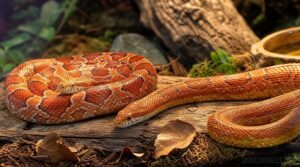
Reproduction readiness isn’t just a single checkbox — it’s a combination of age, size, health, and behavior all lining up at once. A snake that’s technically old enough might still not be ready, and that distinction matters more than most new breeders expect.
That’s why checking signs your snake is ready to breed goes well beyond age alone — growth rate and species-specific development play just as big a role.
Breeding readiness isn’t a single checkbox — it’s age, size, health, and behavior all lining up at once
Here’s what to look for before you even think about pairing your corn snakes.
Sexual Maturity Versus Safe Breeding Maturity
Sexual maturity and safe breeding maturity aren’t the same thing. A corn snake can activate its hormonal axis and show courtship behavior before gamete viability is fully established. Immune maturity and energy allocation also need to catch up.
This timing mismatch between behavior and biology is a real risk.
That’s why the breeder rule of 3s exists — protecting females from the serious risks of early breeding.
Why Readiness is More Than Age Alone
Age gives you a starting point — not a green light. Breeding readiness depends on nutritional reserves, stress levels, and where your snake sits in its hormonal cycle and seasonal rhythm. Body condition scoring tells you more than a birthdate ever will.
Past illnesses can stall development even when the calendar says it’s time. That’s the gap between hormonal onset and actual readiness.
Physical, Behavioral, and Health Indicators
Three categories tell you what age can’t: physical maturity, behavioral changes, and health status.
Watch eye clarity during shed cycles — cloudy then crystal-clear means normal.
Shedding completeness, muscle firmness, and body condition scoring reveal reserves you can’t eyeball otherwise.
post-brumation behavior and thermal preference shifts confirm hormonal readiness.
Consistent health monitoring, sometimes with veterinary input, turns guesswork into real breeding readiness.
Differences Between Males and Females
Males and females don’t follow the same timeline — and that matters. A male corn snake reaches sexual maturity faster, but his hormonal profile and body composition still require time to stabilize.
Females bear more reproductive weight: chromosome effects shape their reproductive organ development differently, leading to distinct growth rate variations between the sexes.
Breeding readiness demands understanding which snake you have and its specific needs.
Corn Snake Breeding Age Guidelines
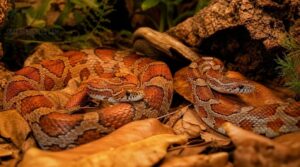
Age is the starting point, but it’s not the whole story. Corn snakes hit sexual maturity earlier in captivity than in the wild, and there’s a big difference between "can breed" and "should breed".
Here’s what the numbers actually look like across different situations.
Typical Captive Maturity at 18–24 Months
Most captive corn snakes hit hormonal maturation between 18 and 24 months. Skeletal growth, metabolic shifts, and digestive efficiency accelerate under consistent feeding and stable temperatures — faster than any wild snake achieves.
By that window, you’ll usually see:
- Steady weight gain without plateauing
- Regular, clean shed cycles
- Reliable feeding response
Seasonal temperature response sharpens noticeably too.
Why Wild Corn Snakes Mature Later
Wild corn snakes face a tougher road. Food scarcity, predation pressure, and temperature variability force the body to prioritize survival over sexual maturity. Seasonal brumation stretches longer and less predictably outdoors. Adding genetic diversity into the mix — individual growth rates vary widely — and physical maturity can take two to three years.
Captive snakes simply skip most obstacles. In captivity, most corn snakes attain the full adult size timeline, reaching 4‑6 feet by two years.
Why Three Years is Commonly Recommended
Most breeders settle on 3 years old for good reason—it’s not arbitrary. By then, Hormonal Maturity Timing has stabilized through multiple seasonal cycles, Body Condition Buffer is solid, and Consistent Clutch Quality becomes realistic. Reduced Failure Risk and Seasonal Cue Synchronization both improve markedly after the growth plateau after two years of age.
The rule of 3s guides safe breeding guidelines:
- 3 years old minimum age
- 300 g minimum weight
- 3 feet minimum length
When Males May Be Ready Before Females
Your male might check every box for breeding readiness months before your female does. Testicular onset and hormonal mismatch are real—male reproductive hormones ramp up early, driving pheromone tracking and chin-rubbing well before female follicles develop.
That early male courtship stresses unprepared females. Sexual maturity in males doesn’t equal female mating readiness.
Patience protects your female and your clutch.
Why Females Should Not Be Bred Too Early
Breeding a female too early puts everything at risk. Immature organ development means her body can’t reliably form or pass eggs—clutch variability rises, and egg binding becomes a real danger.
Nutrient diversion kicks in too: resources meant for her growth shift to egg production, draining her fast.
Physiological stress from early breeding can cause future fertility decline.
The rule of 3s exists for good reason.
Size and Weight Readiness Benchmarks
Age is a starting point, but size and weight are where the real answers live. A corn snake that hits the right numbers is far less likely to run into trouble during breeding season.
Here’s what to look for before you even think about pairing.
Minimum Adult Length Around 30 Inches
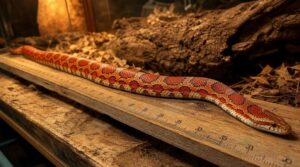
Think of 30 inches as your minimum green light—not a finish line. Growth Rate Influences like diet and temperature mean two snakes of the same age can differ by several inches. Genetic Size Potential also shapes how quickly a corn snake reaches 3 feet in length.
Watch for these before considering breeding:
- Snake measures at least 30 inches snout-to-vent
- Length Development Timeline shows steady, consistent gains
- Seasonal Length Variation hasn’t caused recent stalls
- Morphometric Comparison Standards confirm adult-proportioned body shape
- Length pairs with healthy weight — not just size alone
The “rule of 3s” for Females

Size tells part of the story — but the rule of 3s ties it together. For females, safe breeding guidelines and the rule of 3s require hitting all three marks: 3 years old, 300 grams minimum, and 3 feet long. Miss one, and her Metabolic Energy Reserve, Seasonal Hormone Peaks, and Long-term Fertility Outlook all take a hit.
| Standard | Minimum Target | Why It Matters |
|---|---|---|
| Age | 3 years old | Bolsters immune and hormonal maturity |
| Weight | 300 grams | Fuels Metabolic Energy Reserve for egg production |
| Length | 3 feet long | Confirms skeletal and muscular development |
| Behavioral Readiness Index | Receptive, active | Signals she is cycling properly |
| Breeding Season Forecast | Post-brumation shed complete | Marks true reproductive window |
All three standards together define breeding age recommendations for corn snakes that protect your female’s health across multiple seasons.
Ideal Female Breeding Weight
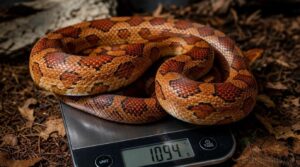
The rule of 3s establishes the foundation—targeting an ideal female breeding weight of 350–450 g. This requires consistent monitoring through Weight Trends tracked weekly, not isolated weigh-ins. Prioritize detecting weight plateaus and mitigating hormonal weight spikes caused by overfeeding.
To achieve this, implement rigorous monitoring protocols:
- Weigh consistently using Scale Accuracy-grade digital scales
- Track Seasonal Fat buildup—aim for firm midbody condition, not soft padding
- Account for Post-lay Recovery reserves before pairing
- Log body condition monitoring alongside raw weight data
Ideal Male Breeding Weight
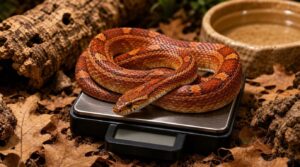
Males don’t need the same reserves as females, but weight still matters. Target 250–350 g for a breeding-ready male. Testes temperature and sperm quality both suffer when muscle fat ratio tips too far either way. Consistent feeding—not sudden weight gain—is what breeders rely on. Watch for weight fluctuation impact by tracking weekly. A weight plateau detection approach works best here.
| Condition | Weight Range | Breeding Suitability |
|---|---|---|
| Underweight | Below 200 g | Not ready |
| Approaching ready | 200–249 g | Monitor closely |
| Ideal range | 250–350 g | Ready to pair |
| Slightly heavy | 351–400 g | Acceptable, watch diet |
| Overweight | Above 400 g | Not recommended |
Following breeding age recommendations for corn snakes, males at 300 grams and beyond—sustained over time, not just at weigh-in—are the ones worth pairing.
Why Body Condition Matters More Than Size Alone
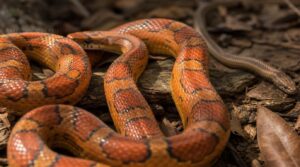
A snake can reach every size milestone and still not be ready. Energy Reserve Capacity, Hydration Status, and Parasite Buffering all live inside body condition—not on your measuring tape.
Poor condition tanks Stress Tolerance and Recovery Speed after laying.
Weight gain means nothing without tissue quality behind it. That’s what body condition actually tells you.
Female Breeding Readiness Signs
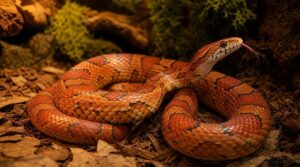
Females send clear signals when they’re ready — you just have to know what to look for. It’s not one single thing but a combination of physical and behavioral cues that tell the full story.
Here’s what a breeding-ready female actually looks like.
Healthy Body Condition and Muscle Tone
A female’s lean tissue ratio tells you more than the scale ever will. Muscle tone assessment matters here — a well-conditioned female feels firm, not soft or doughy, when gently handled.
Key signs of healthy body condition:
- Smooth muscle tone along the dorsal ridge
- No visible spine prominence — a red flag for poor nutrient balance
- Responsive movement reflecting proper exercise stimulation
- Hormonal influences show in consistent feeding drives
- Steady weight gain through deliberate pre-breeding nutrition and weight management
Fuller Midbody Without Obesity
A breeding-ready female shows a fuller midbody from follicle development — not generalized fat. Spine visibility should still be clear, and belly compliance should feel flexible, not packed. Scale pattern clarity confirms weight distribution is reproductive, not obesity-driven.
Consistent pre-breeding nutrition and weight management, combined with weight gain tracking, keeps digestive efficiency on track.
Obesity management in adult corn snakes means knowing the difference.
Strong Feeding Response Before Breeding Season
A healthy appetite is one of the clearest green lights you’ll get before pairing season.
- Meal timing matters — consistent feeding intervals strengthen prey acceptance and support weight gain tracking
- Prioritize nutrient density through appropriately sized prey to maximize protein intake and nutrient absorption
- Environmental triggers like warming temperatures sharpen feeding response naturally
- Stress reduction and hydration management keep prebreeding nutrition and weight management on track
Post-brumation Shed Timing
The first post‑brumation shed is your green light. Once your female warms up and rehydrates — watch for extended time in her water dish — shed timing cues shift fast.
Humidity management around 60–70% keeps shedding health signals clean. Track every shed date; shedding frequency as an age indicator helps confirm prebreeding conditioning is on schedule.
| Shed Stage | Timing After Brumation | What to Watch |
|---|---|---|
| First post‑brumation shed | 2–4 weeks post-warmup | Clear, complete skin release |
| Rehydration behavior | Days 1–7 active | Extended water dish soaking |
| Prelay shed | 10–14 days before eggs | Sudden full-body slough |
| Tracking ovulation and prelay shed timing | 30–45 days post-mating | Follicle swelling appears first |
| Shedding frequency as an age indicator | Every 2–3 months in adults | Confirms adult reproductive status |
Receptive Tail-raising Behavior
When she’s ready, her body says it plainly. After the pre-lay shed, hormonal timing cues shift fast—watch for tail posture cues like a raised, sideways-held tail exposing the vent. This vent exposure signal indicates receptivity, not aggression.
A calm enclosure is critical here; low stress ensures clearer pheromone scent display. During pairing introductions, this tail dimorphism-informed read confirms she’s engaged in courtship and mating behavior of corn snakes.
Follicle Swelling Before Egg Laying
About 10–14 days before egg laying, follicle swelling becomes visible as a subtle lumpy outline in the lower third. This marks the process of dominant follicle selection, where follicular development accelerates due to a pre-ovulatory estrogen rise, triggering antral cavity development within the reproductive tract.
To track ovulation accurately, monitor follicle size metrics alongside pre-lay shed timing. Swelling, combined with a recent shed, indicates that eggs are close.
Male Breeding Readiness Signs
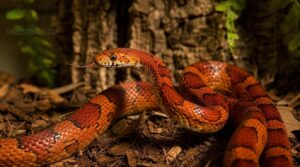
Males are often easier to read than females, but that doesn’t mean you should guess.
A few clear signs tell you when your male corn snake is actually ready to pair — not just old enough on paper.
Here’s what to look for.
Mature Size and Stable Weight
Most male corn snakes reach full size between 2–3 years, but size alone doesn’t confirm sexual maturity. To assess readiness, track growth rate trends using a growth chart and digital gram scale.
Weight Trend Analysis and Scale Measurement Consistency are critical—Seasonal Weight Fluctuations can obscure progress. Prioritize long-term data collection to ensure accuracy.
A healthy Length-to-Weight Ratio, validated by sustained size and weight tracking, confirms the snake is genuinely ready.
Increased Activity During Breeding Season
Beyond stable weight, watch how your male behaves when spring temperatures climb. A Hormonal Activity Spike triggers rapid visible changes —
These include increased tongue flicks, restless Territory Patrol Expansion, and Courtship Chasing Behavior across the enclosure.
Scent Marking Surge intensifies during this window, while Vigilance Suppression occurs, meaning he cares less about hiding.
Head bobs and hyperactive movement signal his hormonal cycles and seasonal breeding drive are activating.
Pheromone Tracking Behavior
All that restless energy you just noticed? It’s building toward something specific. When a female is nearby, your male’s tongue flicks shift from casual to locked-on. He’s processing pheromone binding signals through sensory neuron tuning — detecting plume turbulence and using wind cue integration to triangulate her exact location.
Expect deliberate casting maneuvers: slow, weaving side-to-side sweeps tracking her scent trail directly.
Chin-rubbing and Courtship Attempts
Once he’s locked onto her scent trail, the courtship sequence kicks into gear fast. Chin-rubbing is your clearest sign — he presses his jaw along her body, transferring pheromones while reading her receptivity. Watch for behavioral escalation through these signals:
- Persistent chin contact with lateral body weaving
- Tail alignment attempts confirming sexual maturity
- Visual cues like neck flattening and rapid tongue-flicking
Repeated pairing introductions strengthen these courtship behavior patterns.
Longer Tail and Sex Confirmation
Tail base swelling is one of the clearest physical markers of sexual maturity in males. Look for a broader tail base and a longer tail length ratio compared to females. Hormone-driven tail growth firms the tissue seasonally.
Tail curvature analysis and tail vibration sexing help confirm sex. When in doubt, probe; proper sex determination methods eliminate costly mismatched pairings.
Why Mature Males Are Safer Breeders
Mature males make safe breeding corn snakes because their behavior is predictable. Consistent sperm production ensures fertilization windows aren’t missed, while predictable courtship timing reduces female stress by minimizing failed attempts and disruptions. This leads to better digestion leading up to lay day.
Sexual maturity paired with full hormonal development ensures smoother interactions overall. These factors collectively improve fertilization success while avoiding unnecessary strain on the female.
Track Growth Before Breeding
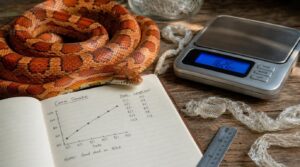
Before you pair your corn snakes, you need hard data — not guesswork. Tracking length, weight, feeding, and sheds provides a clear picture of whether your snake is actually ready.
Here’s what to measure and record: focus on length, weight, feeding, and sheds to ensure accurate readiness assessments.
Measuring Length Safely and Consistently
Getting an accurate length reading starts with alignment technique — lay a flexible tape measure flat along the snake’s spine from snout to tail tip.
Use consistent handling posture each time, keeping your corn snake calm and extended. Repeat measurement two or three times to confirm.
Environmental control matters too; cold temperatures make snakes contract.
Log every reading on your growth chart to build a reliable growth timeline.
Weighing With a Digital Gram Scale
A digital scale is your most reliable tool for tracking snake size and weight over time. Before each session, follow a Scale Calibration Routine — use a certified 100 g or 500 g weight to confirm accuracy. Platform Hygiene matters too; oils and moisture skew readings.
Keep these habits consistent:
- Weigh before feeding to avoid postprandial spikes
- Note Temperature Impact — thermal drift affects readings
- Use Weight Recording Templates to spot weight gain trends
Minimize Handling Stress Reduction by working quickly and calmly.
Logging Feeding Response and Prey Size
A snake that refuses food is telling you something. Log every feeding session: note the prey size categories offered, whether the strike was immediate or delayed, and the final success rate. Capturing latency reveals hunger level correlation directly.
Track environmental impact too, as enclosure temperature affects appetite fast. Monitor these variables consistently to identify patterns in feeding behavior.
Use a simple growth chart to connect weight gain with prey size scaling against nutritional requirements for captive corn snakes. This ensures adjustments align with the snake’s developmental needs.
Recording Shed Dates and Frequency
Shed data is a growth clock hiding in plain sight. Keep a shed calendar with start and finish dates for every cycle. Track interval timing — juvenile shedding every 4–6 weeks signals fast growth, while adult shedding every 2–3 months means maturity is settling in.
Score each shed as complete or incomplete, and note humidity impact on quality.
Seasonal shed trends reveal whether your conditioning is working.
Comparing Growth to Age Milestones
Once your shed log is solid, stack that data against known benchmarks. A simple growth chart comparison — weight, length, and age side by side — shows whether your snake’s Age‑Growth Ratio is on track. Hatchlings hit 60–180 g by six months; adults plateau near 500–900 g at 18–24 months.
The Feeding Impact Curve matters too: inconsistent meals distort Size‑Age Benchmarking and mask true sexual maturity.
Watching for Stalled or Uneven Growth
Feeding gaps slow mass gain — even one or two missed meals can cause a visible weight dip.
Thermal variability disrupts digestion, impacting a snake’s ability to process nutrients effectively.
Irregular shedding signals husbandry issues, often linked to humidity or temperature imbalances in the enclosure.
Watch for condition score decline across weigh-ins: a snake’s length increasing while its weight drops is a red flag for underlying health problems.
Parasite stress can quietly stall a snake that otherwise appears healthy, masking issues until physical symptoms emerge.
Health Checks Before Pairing
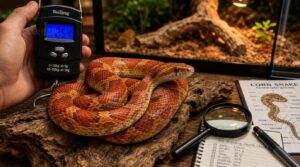
Health is what actually makes or breaks a successful pairing, despite size and age receiving most attention. A snake that appears suitable on paper may still harbor hidden issues, endangering both animals. Before introducing your corn snakes, prioritize these critical health checks.
Hidden problems can jeopardize even well-matched pairs. Always assess snakes thoroughly to avoid unforeseen risks.
Perform key health checks first to ensure safety and compatibility.
Confirming Normal Appetite and Digestion
Before you pair your snakes, appetite and digestion tell you more than almost any other sign.
- Feeding Enthusiasm: Your snake should strike or accept prey without hesitation across consecutive meals.
- Prey Size Matching and Stool Consistency: Correct prey girth produces firm, regular feces — no watery output.
- Regurgitation Absence and Post-Meal Calm: A breeding-ready snake keeps meals down and rests quietly afterward.
Checking for Respiratory Symptoms
Appetite checks out — now listen to your snake breathe. A healthy corn snake breathes quietly and effortlessly. Watch for noisy breathing like wheezes or crackles, open-mouth breathing, increased breathing effort, or nasal discharge.
Posture changes — like an extended head position — can signal respiratory infection.
Any of these signs mean pause breeding and seek veterinary care for the snake before proceeding.
Inspecting for Mites and External Parasites
Mites are easy to miss until they’re a real problem. Run the paper towel test — gently wipe your snake with a damp white towel and check for tiny moving specks. Follow up with a magnification inspection around the eyes, tail base, and cloacal region. Analyze the shed for dark embedded dots.
Decontaminate the enclosure completely before pairing.
Evaluating Body Condition Score
Body condition score is your clearest snapshot of breeding readiness. Run your fingers along the spine and ribs — those are your primary palpation landmarks. On a standard scale interpretation, a well-conditioned female sits at the midpoint: ribs palpable but not sharp.
Anatomical assessment sites include the midbody and tail base. Poor examiner reliability ruins decisions, so weigh animals consistently on a digital scale.
Reproductive impact is real — thin females experience dystocia more easily.
Confirming Accurate Sex Identification
Getting sex wrong before corn snake breeding ruins your pairing before it starts. Use the cloacal probing technique on sexed adults for reliable results.
- Angle the probe along the body wall toward the tail.
- Males show hemipenis eversion cues — deeper pocket, 4–6 scale depths.
- Females probe shallow, 1–2 depths.
- Stress‑free probing means warm, calm snakes only.
- Age‑dependent probing improves past juvenile stage.
Repeat for confirmation.
When to Consult a Reptile Veterinarian
Before pairing your corn snakes, know exactly when to stop and call a reptile veterinarian. Some signs don’t wait for a convenient time.
| Warning Sign | Action Required |
|---|---|
| Respiratory distress | Same-day vet visit |
| Appetite refusal (2+ weeks) | Schedule evaluation |
| Abnormal droppings or blood | Prompt veterinary care |
| Reproductive emergency/straining | Immediate intervention |
Severe injury, prolapse, or seizures — those are emergencies. Don’t delay.
Conditioning for Breeding Readiness
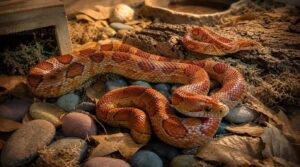
Getting your corn snake ready to breed isn’t just about waiting for the right age — it’s about active preparation. What you do in the months before pairing makes a real difference in how smoothly the process goes.
Here’s what that conditioning looks like in practice.
Pre-breeding Feeding for Females
Think of pre-breeding feeding as building your female’s foundation before the real work starts. Protein digestibility matters here — feed fully sized, whole prey she accepts without hesitation.
- Match prey size to avoid regurgitation and support consistent digestion
- Prioritize mineral content assurance by using well-sourced feeder animals
- Apply consistent meal scheduling — two meals weekly build fat reserves steadily
- Focus on fat reserve optimization without overfeeding
- Practice handling stress reduction — minimize disturbances around feeding time
Avoiding Obesity Before Breeding
Fat reserves are your female snake’s fuel — but too much fuel becomes a problem. Use caloric budgeting to keep meals measured. Obesity management in adult snakes starts with meal frequency control, not guesswork.
Weigh her weekly; if she’s trending past 450 g, pull back.
Pre-breeding nutrition and weight management means building condition, not bulk. A snake that’s overweight entering brumation is already behind.
Proper Prey Size and Feeding Frequency
Meal size and frequency work together — get one wrong and you’ve set back the other. Use girth-based sizing: match prey width to the widest midsection. A slight lump while swallowing means you’re close.
Undersized prey is always safer than oversized for regurgitation-prevention.
Stick to a weekly feeding cadence, log prey-size responses, and adjust from there.
Brumation Temperature and Duration
Feeding frequency sets the stage — brumation seals the deal.
Target temperature range sits at 50–60°F during core dormancy. Keep temperature fluctuation limits tight, under 2°F across the enclosure. Your gradual cooling protocol should span one to two weeks, not days.
Brumation length guidelines recommend 8–12 weeks. Monitor humidity levels throughout, and log everything.
- Brumation as a conditioning method resets hormonal cycles naturally
- Brumation protocols depend on seasonal timing — don’t rush the calendar
- Stable temperature matters more than hitting an exact number
Safe Fasting Before Brumation
Fasting initiation starts about three weeks before temperatures drop. Stop feeding and let the gut clear completely — undigested food ferments during brumation and causes serious problems.
Weekly weigh-ins keep you honest; expect a slow, stable decline. Run parasite screening now, not later.
Offer water baths of 15–30 minutes daily for hydration and stress minimization.
Sick snakes don’t fast — they eat.
Post-brumation Warming and Photoperiod Changes
Once fasting ends, gradual warming — 2 to 6 weeks of slow temperature increases, not a sudden flip — is essential. Implement a temperature ramp schedule mirroring spring: steadily raise ambient temps, fine-tune temperature gradients, and avoid abrupt changes.
Extend photoperiod by 1–2 minutes daily as part of the photoperiod increment plan. This triggers hormonal cycles naturally in reptiles, prompting metabolic rate increases and fostering stress-free behavioral readiness.
Risks of Breeding Too Early

Breeding a corn snake too early doesn’t just risk one bad clutch — it can genuinely hurt your female’s health for years. Immature females aren’t physically prepared to handle the demands of egg development and laying.
Here’s what can go wrong when you rush the process.
Egg Binding and Dystocia in Females
Breeding an immature female corn snake risks derailing her entire reproductive cycle. Dystocia occurs when retention symptoms appear: straining without egg-laying, a distended abdomen, and labored breathing.
The nesting environment also matters; stress triggers egg retention.
Veterinarians treat this with calcium therapy and oxytocin administration to stimulate contractions, but severe cases require surgical egg extraction.
Don’t put her through that.
Poor Egg Quality and Infertility
Even when eggs form, immature females often can’t support them with sufficient quality. Chromosomal abnormalities, mitochondrial dysfunction, and hormonal imbalance all reduce fertilization success.
Genetic predisposition and environmental toxins compound the problem. Poor calcium-phosphorus ratios and disrupted vitamin D synthesis further weakened shell integrity and embryo viability.
In reptiles, rushed hormonal cycles leave egg viability assessments with grim results—mostly slugs, duds, or early embryo failure.
Excessive Weight Loss After Laying
Young females hit a wall after egg laying. Their energy reserve depletion is fast and unforgiving—prebreeding nutrition and weight management directly determines how quickly they bounce back.
Poor post-lay hydration accelerates mass loss, and dehydration signs like sunken flanks or dull skin confirm the problem.
Without delayed feeding recovery support, weight keeps dropping.
That’s when veterinary intervention criteria apply: persistent refusal plus continued loss means a vet call, not more waiting.
Stress-related Appetite Loss
Stress doesn’t just make a snake uncomfortable—it shuts down hunger at the hormonal level. Elevated corticosterone levels trigger fight-flight digestion responses, rerouting resources away from the gut. Cortisol effects suppress hypothalamic signaling, weakening normal ghrelin dynamics so your female simply stops seeking food.
Anxiety-induced anorexia in an already-depleted young breeder compounds fast. Prioritize stress reduction during pairing—breeding corn snakes too early makes recovery nearly impossible.
Increased Veterinary Intervention Risk
Early breeding doesn’t just stress your female—it drives up veterinary costs fast. Dystocia, malnutrition monitoring failures, and antimicrobial resistance from secondary infections can stack up quickly. Delayed vet access turns manageable problems into emergencies.
Obesity complications and poor body condition make diagnostic follow-up more intense. Health monitoring and veterinary care demands escalate sharply when chronically elevated corticosterone levels persist in an underprepared snake.
Long-term Effects on Female Health
Breeding a female too soon leaves permanent marks on her body. Follicle depletion shrinks her lifetime egg supply, while uterine fibrosis quietly degrades reproductive tissue across cycles. Hormonal imbalance disrupts recovery between clutches, and chronic weight loss compounds all of it.
The long-term risks of early breeding for females include:
- Reduced fertility and smaller clutch sizes over time
- Accelerated senescence in snakes bred before full maturity
- Progressive decline in muscle tone and body condition
- Compromised immune function from sustained stress hormones
Final Readiness Checklist
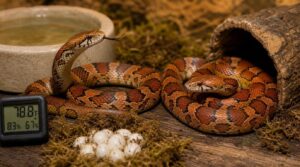
Before you put two corn snakes together, run through this checklist one last time. It covers everything from body condition to your hatchling setup — because readiness isn’t just about the snakes themselves.
Here’s what should be confirmed before breeding day arrives.
Age, Weight, and Length Confirmation
Before pairing, confirm age, weight, and length together — not one in isolation. Your female should meet specific thresholds: at least 3 years old, 300–350 g, and 36 inches long.
To ensure readiness, use a growth chart to track corn snake development over time. Employ Growth Curve Analysis and Weight‑Length Ratio checks to determine whether the snake has achieved full size or just sexual maturity.
Stable Feeding and Shedding History
Numbers and length confirm readiness — but your records seal it.
Check these five patterns before pairing:
- Shedding interval trends stay consistent, every 2–3 months in adults
- Pre-shed appetite dip appears predictably, then bounces back fast
- Humidity correlation holds — complete sheds signal stable husbandry
- Consistent prey size drives post-shed weight gain without regurgitation
- Shedding frequency reflects healthy sexual maturity and nutritional balance
Clean Bill of Health
Records tell part of the story — but a clean bill of health closes it.
Check skin smoothness for retained shed or wounds. Confirm eye clarity — no cloudy caps. Listen for breath calmness, no wheezing. Inspect oral cleanliness for foam or residue. Watch digestive consistency through recent meals.
Health and nutrition during breeding starts here.
Don’t pair a snake showing any active symptoms.
Proper Seasonal Conditioning Completed
Seasonal conditioning acts as the reset button that awakens your snake’s hormonal readiness. If brumation protocols weren’t followed correctly, the activity surge and appetite rebound you’re seeking simply won’t occur.
Confirm these four critical steps before proceeding:
- Brumation ran 8–12 weeks at 60–65°F
- Temperature stability held — never below 45°F
- Environmental humidity control stayed at 40–60%
- Hydration assessment confirmed fresh water access throughout
Seasonal breeding cycles depend on it.
Safe Pairing Environment Prepared
Before you put two snakes together, your breeding enclosure needs to be genuinely ready. Use an escape-proof enclosure with a locking lid — corn snakes exploit any gap.
Set up a temperature gradient using heat mats: warm side around 85°F, cool side near 75°F.
Safe substrate, hiding places, clean hygiene practices, smooth injury prevention details, and a solid handling protocol make pairing far less stressful.
Nest Box and Incubation Setup Ready
Before your female lays, ensure both the lay box and incubator are fully operational.
Material selection matters — use untreated wood for the lay box and line it with damp sphagnum moss.
Maintain temperature consistency at 78–82°F and monitor humidity levels around 85–95%.
Implement a ventilation strategy to prevent mold without drying out the eggs.
Immediately after transfer, mark the orientation of egg placement.
Schedule candling sessions for embryo monitoring around week two.
Hatchling Housing and Feeding Plan Prepared
Set up a 10–20 gallon tank with a thermal gradient—85°F warm side, 75°F cool side. Use disposable substrate for fast spot cleaning and add a shallow hydration station.
Begin aftercare for hatchlings by offering pinkie mice sized to their girth after their first shed.
Frequently Asked Questions (FAQs)
How often do corn snakes reproduce?
Most corn snakes follow an annual breeding cycle, usually producing one clutch per season.
A second clutch is feasible if female energy reserves are strong and temperature influences from brumation have properly reset her reproductive cycle.
How to tell if a snake is ready to breed?
Size, weight, health, and behavior all tell the story. A snake ready to breed shows stable weight, clean sheds, strong feeding response, and active courtship behavior during seasonal hormone cycles.
How to tell if a corn snake is pregnant?
A gravid female corn snake shows a swollen mid-body, appetite decline, and increased soaking.
Watch for cloacal bumps, pre-lay shed, and humidity-seeking behavior.
Confirm with egg imaging from your vet.
Can genetics influence a corn snakes breeding readiness?
Yes, corn snake genetics can influence breeding readiness. Heritable hormone regulation, lineage growth trajectories, and inherited stress resilience all shape how quickly your snake hits key maturity benchmarks.
How does stress affect a corn snakes reproductive cycle?
Stress triggers hormonal disruption that delays ovulation and increases mating latency. It also drives egg quality decline and immune compromise — quietly derailing the entire cycle before you notice anything wrong.
Can a corn snake breed successfully after illness or injury?
A corn snake can breed after illness or injury, but only once fully recovered. Wait for normal appetite, parasite clearance, and veterinary clearance before pairing. Depleted energy reserves set the whole attempt up to fail.
Conclusion
Like a field surgeon who won’t operate until the patient is stable, you don’t breed until every metric confirms readiness. Corn snake reproduction readiness isn’t a single green light—it’s a full panel.
Weight, length, health history, conditioning, behavior: each one has to clear before pairing happens.
Rush it and the female pays the price.
Do it right and you’re not just breeding snakes—you’re running a program built to last.