This site is supported by our readers. We may earn a commission, at no cost to you, if you purchase through links.
That tight S-curve isn’t your snake posing for a photo. It’s a coiled warning, muscles loaded, ready to strike within milliseconds if you push further. Most keepers miss it, mistaking defensive tension for calm stillness, and keep handling right through the warning.
Snakes can’t tell you they’ve had enough, but their bodies do, through hissing, musking, or a sudden refusal to settle. Ignore those cues often enough and you’ll end up with a stressed, defensive animal that associates your hands with threat rather than safety.
Recognizing the signs your snake needs a handling break separates confident handlers from those who get bitten, musked, or trusted less each session.
Table Of Contents
- Key Takeaways
- Signs Your Snake Needs a Handling Break
- Subtle Snake Stress Signals
- When Handling Should Stop Immediately
- How Long Handling Breaks Should Last
- Help Your Snake Recover Calmly
- When Handling Stress Needs Veterinary Care
- Frequently Asked Questions (FAQs)
- How long should you wait to handle a snake after getting it?
- How do I know if my snake wants to be picked up?
- How many times a week should I handle my snake?
- How to tell if a snake is unhappy?
- How often is it safe to handle a snake?
- Can too much handling cause long-term stress?
- Do different snake species tolerate handling differently?
- Whats the best time of day to handle snakes?
- How do I know if my snake trusts me?
- Conclusion
Key Takeaways
- Watch for clear stress signals like hissing, tight S-curve coiling, musking, or repeated escape attempts, and stop handling right away when you see them, since pushing through only builds mistrust.
- Some stress shows up subtly, through rapid tongue flicking, constant head scanning, jerky movement, or freezing, so slow down and give your snake space even when the signs aren’t dramatic.
- Certain conditions call for a full stop rather than a short break, including shedding, weakness, appetite loss, breathing trouble, or signs of injury, and these usually need a vet visit instead of a wait-and-see approach.
- Recovery time depends on the cause, ranging from 24 hours after routine stress to a full week after bringing a new snake home, and easing back in gradually with short sessions rebuilds trust without triggering old stress responses.
Signs Your Snake Needs a Handling Break

Ever watched your snake go rigid the second you reach in? That’s not random—it’s communication, and your snake has a limited vocabulary for saying "not now." Here are the five clearest signals telling you it’s time to back off.
A sharp, sustained hiss is often the loudest of these cues, and understanding why ball pythons hiss can help you read your snake’s stress level before it escalates.
Hissing or Mock Striking
Why does a calm snake suddenly hiss? It’s reading your hand as a threat.
A defensive hiss hits 80–100 decibels, lasting under a second and repeating every 1–2 seconds. Mock strikes stop 2–3 centimeters short—no contact intended.
Real bites carry hisses over 3 seconds. Either signal means stop handling, let heart rate and cortisol settle first.
Tight S-Curve Posture
Past the hiss, watch the coil itself. A tight S-curve bends 120–150 degrees, head to tail, cutting strike distance down to almost nothing.
Dorsal scales ridge up, pupils widen to roughly 4mm, tongue flicks quicken to 2–3 per second. Hold still—most snakes ease out within 15–45 seconds. Rushing this recovery time only resets the clock.
Musking or Biting
If the S-curve doesn’t ease, expect escalation. Musking releases up to 0.5 mL of oily cloacal secretion within 30 seconds, an odor lingering 24 hours.
Bites follow rapid strikes, delivering 2–10 newtons depending on girth. Set the snake down immediately—don’t jerk back. Let bleeding stop, usually within 5 minutes, before any further handling.
Repeated Escape Attempts
Once musking or biting fails, some snakes just keep bolting. Repeated escape attempts—more than 8 within two hours—signal it’s time to stop.
Watch for visible muscle tremors after 5+ tries, ventral abrasions from glass-rubbing, and flushed, reddish scales. Tongue flick rate drops sharply too, from 10 flicks per second down to near zero. Set the snake down; recovery starts now.
Sudden Body Tension
Feel your snake stiffen mid-hold? That’s sudden body tension—ventral scales lock within 2 seconds, triggering a cortisol surge detectable in blood within 30 seconds. Watch for dorsal muscle fiber activation, a tight S-curve, rapid breathing, or brief freezing.
Loud noises or thermal gradient swings often trigger it. If tension repeats three-plus times per minute, stop. Recovery guidelines suggest a five-minute rest before continuing.
Subtle Snake Stress Signals

Not every stressed snake hisses or coils up tight. Sometimes the tells are quieter, showing up in small shifts you’d easily miss if you’re not watching closely. Here’s what to look for when the signals are subtle instead of obvious.
Rapid Tongue Flicking
That flicking tongue is doing more than tasting the air, it’s reading the room. Tongue flick frequency spikes when a stressed snake surveys unfamiliar territory or your hand. Watch for oscillatory patterns lasting longer than normal sampling.
If flicking turns rapid and continuous, that’s a handling stress indicator, not curiosity. Ease your grip, slow down, and let environmental sampling settle before continuing.
The thermal dependence of tongue-flicking behavior in reptiles is well-documented in species like Eumeces laticeps. Thermal response patterns show clear temperature sensitivity in squamates.
Constant Head Scanning
Why does your snake keep sweeping its head side to side like it’s tracking something invisible? That’s over-alertness talking. Watch for scan frequency changes—jumping past 10 sweeps per minute signals trouble.
Three red flags:
- Wider scanning angle adjustments
- Longer scan duration
- Reduced trigger stimuli response threshold
Read the behavioral context before continuing—this is defensive behavior, not exploration.
Jerky, Hesitant Movement
A stutter-stepping snake isn’t being clumsy—it’s showing stress-induced movement. Watch for muscle twitch patterns, tremors, or postural instability mid-crawl.
Escape hesitation looks like starting, stopping, backing off, then trying again. That’s nervous system response to overalertness, not confusion.
Cut handling duration short here. Forcing continued contact only amplifies the stuttery movement you’re already seeing.
Freezing or Death-Feigning
Playing possum isn’t relaxation—it’s predator avoidance mimicry. This tonic immobility can last seconds to minutes depending on threat level.
Watch for:
- Shallow breathing
- Minimal muscle tone
- Sudden stillness mid-handling
- Quick resumption once released
- No response to gentle touch
This handling-induced freezing signals genuine fear, not calm. Set the snake down; movement resumption within minutes confirms stress recovery has begun.
Refusing to Settle
Ever put a snake back and watch it just… not settle? That’s your cue. Continuous restlessness along the walls, an elevated head posture past 30 seconds, or hide avoidance even near a warmed box all signal handling too soon. It’ll skip exploration, pace instead. Give it space, dim the lights, and let the nervous system reset before trying again.
When Handling Should Stop Immediately

Some situations call for more than just a break, they call for a full stop. Ignoring these signs and pushing through a session can turn mild stress into real harm. Here’s when you need to put the snake back immediately and reassess.
Blue-Phase Shedding
Milky, opaque eyes mean vision loss, not calmness. Watch for:
- Blue-tinted eyes
- Dulled, pale skin
- Reduced responsiveness
- Retained eye caps
Raise humidity to 75–85%, assist stuck sheds gently, and skip handling too soon. Prioritize stress reduction and post-shed inspection instead.
Weakness or Appetite Loss
A snake that can’t hold its own weight is telling you something’s wrong internally, not socially. Reduced movement, poor grip, slower righting reflex, plus food refusal across several offers, signals more than shed-cycle moodiness.
Skip handling entirely. This pairing—weakness and appetite loss—often masks poor digestion or an acute issue, warranting immediate veterinary attention rather than a wait-and-see feeding schedule adjustment.
Breathing or Illness Symptoms
Weakness is one thing; a struggling respiratory system is another. Open mouth breathing lasting over 30 seconds signals real distress, especially paired with audible wheezing.
Watch for nasal discharge, labored or rapid breathing, and rib movement exceeding six to eight cycles per minute. Bluish ventral scales mean low oxygen. Any of these calls for an immediate stop and a vet visit.
Pain, Swelling, or Injury
A snake favoring one side, refusing to coil normally, or showing muscle tremors is signaling injury, not stubbornness. Look for localized swelling, discoloration, or open wounds with discharge.
Repeated hiding, tongue flicks hitting 8–10 per minute, or motionless spells past 30 minutes point to pain. Suspect spinal injury if curvature looks uneven. Stop handling immediately and schedule a reptile-savvy veterinary exam.
How Long Handling Breaks Should Last

How long should you actually wait before picking your snake back up? The answer depends entirely on what caused the stress in the first place. Here’s how the timeline shifts across five common situations.
After Routine Handling Stress
How long should a stressed snake rest before you handle it again? Give most species a full 24 hours of undisturbed recovery. Large constrictors like ball pythons need 48 hours for cortisol to normalize.
Watch for tongue flicking at 2–4 flicks per minute and smooth locomotion — reliable recovery indicators before resuming your handling frequency.
After Feeding
Just fed? Give digestion 24 hours minimum, 48 for larger prey, since regurgitation risk stays high until the meal clears the stomach.
That window allows for digestive rest: metabolism runs 20% hotter, redirecting energy toward gut motility instead of muscle control. Grabbing your snake mid-process disrupts that feeding response.
Practice temperature-aware timing — keep warm sides near 88°F throughout this digestion support phase, then resume with gentle handling techniques and proper support.
Throughout The Shedding Cycle
Eyes clouding blue? That’s your cue to pause handling for the entire shedding cycle, not just the blue phase.
Skin discoloration signals loosening layers beneath, so grip pressure now risks tearing tissue. Hold off until the shed completes and hardens.
Meanwhile, adjust humidity to 75–85% and stabilize temperature and humidity through proper tank maintenance, supporting a clean release.
After Bringing Snakes Home
A new snake doesn’t know your home is safe—give it time to learn that.
A new snake doesn’t yet know your home is safe—patience teaches it that trust
Skip handling entirely for 48 to 72 hours after arrival while you finish quarantine setup, environmental stabilization, and secure enclosure checks. Watch body language during this window:
- Tongue-flicking rate
- Hide preference
- Feeding adjustments response
- Resting posture
Gradual acclimation beats rushing every time.
Until Health Symptoms Resolve
Health-related breaks don’t end on a fixed date—they end when symptoms actually resolve. Track respiratory rate every two hours for 24 hours, and don’t resume handling until breathing normalizes.
If appetite doesn’t return within seven days, schedule veterinary attention and a blood panel. Persistent lethargy past five days warrants a radiograph before any handling resumes.
Help Your Snake Recover Calmly
Once you’ve spotted the stress and given your snake space, the real work starts: helping it settle back into feeling safe. Recovery isn’t passive, it’s a handful of deliberate steps that lower cortisol and rebuild trust. Here’s exactly what that looks like in practice.
Return Them Gently

How you put a snake back matters as much as how you picked it up.
Use a gentle scoop placement matching its body width, supporting three points evenly. Lower it within 30 seconds, head facing its original direction.
- Match scoop width to body
- Support head, mid-body, tail
- Place within 30 seconds
- Keep movements horizontal
- Close the lid promptly
Keep the timed return window under five minutes total, and never right after feeding.
Reduce Noise and Movement

Once your snake’s back home, the room itself needs to settle too. Skip loud talk, music, or door slams nearby—sudden sound waves trigger defensive posturing fast.
Dim the lights, keep gestures slow, and avoid touching the enclosure. Vibration reduction matters here: no vents, speakers, or foot traffic against shared walls.
Check Temperature and Humidity

Quiet surroundings mean little if the enclosure itself is running hot, cold, or bone-dry. Check the thermal gradient first: 75–85°F ambient, 88–92°F basking. Confirm humidity sits at 40–60% (higher if shedding looms). Use a hygrometer and probe thermometer, not guesswork—stable temperature and humidity rebuild the sense of habitat mimicry your snake needs to relax.
Provide Secure Warm-Cool Hides

Numbers mean nothing if the snake has nowhere to retreat and feel unseen. Offer dual hide placement—one warm, one cool—so it chooses its zone without abandoning cover.
Independent temperature zones inside each hide prevent the jarring shifts that spike stress hormones.
Add enrichment substrate for texture and security. A snug, dark hide isn’t decor; it’s recovery infrastructure.
Resume Handling Gradually
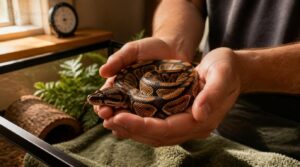
A recovering, stressed snake doesn’t need a full session on day one—it needs proof that handling is safe again. Start with short session limits of two to three minutes, timed exactly.
If it stays calm, apply gradual time increase, adding one to two minutes each round. Keep session timing consistency daily, with observation pauses afterward. This measured post-break handling rebuilds trust without triggering old stress responses.
When Handling Stress Needs Veterinary Care

Some stress doesn’t fade with a quiet enclosure and a few days off. When the signs cross from "adjusting" into "something’s wrong," you’re no longer managing behavior, you’re managing health. Here’s what should send you to the vet, not back to the terrarium.
Persistent Behavior Changes
A single bad day is normal; a changed snake isn’t. Watch for behavior pattern shifts lasting over a week: excessive hiding, lethargy, or repetitive pacing.
Three red flags demand a vet call:
- Hiding avoidance trends replacing normal cover-seeking
- Feeding refusal persistence past 30 days (8% mortality risk)
- Restlessness shifting suddenly into lethargy
Don’t wait it out.
Wheezing or Open-Mouth Breathing
Hear a faint whistle or catch your snake gaping without a strike coming? That’s respiratory distress, not defensiveness. True wheezing and open-mouth breathing signal infection, often bacterial, worsened by low humidity or dust buildup.
Keep humidity at 50–60%, temperatures stable, and clean substrate regularly. Stop handling immediately, don’t wait for rapid breathing to worsen, and schedule a vet visit rather than assuming stress alone explains it.
Repeated Food Refusal
When a stressed snake skips one meal, that’s normal. When it refuses three or four in a row despite proper feeding schedule and handling techniques, dig deeper.
Check prey size preference, try live vs pre-killed, rotate prey types, or add scent enhancement. If refusal persists, suspect parasite-related refusal—get a fecal float before loss of appetite becomes chronic.
Weight Loss or Discharge
A snake dropping 4-5% of body weight in two to three weeks isn’t stress—it’s a red flag. Weigh weekly to catch trends early.
Watch discharge closely: clear/white nasal points to respiratory infection, thick yellow pus signals mouth rot, greenish and foul-smelling suggests cloacal infection. Check hydration, gut-loading, and enclosure hygiene, then call your vet.
Swelling or Abnormal Shedding
A soft, warm bulge along the body isn’t cosmetic — edema causes often trace back to rough handling within the prior 24 hours. Give it 48-72 hours; if swelling lingers past three days, that’s infection territory.
Same goes for shedding issues: retained caps, milky eyes past 48 hours, or dull patchy skin discoloration mean a vet visit, not another humidity tweak.
Frequently Asked Questions (FAQs)
How long should you wait to handle a snake after getting it?
Like a new roommate settling into a strange apartment, a stressed snake needs time before contact. Give it a full seven-day acclimation period for transport recovery and initial observation before any handling begins.
How do I know if my snake wants to be picked up?
Readiness shows in relaxed body language: smooth approach response, calm tongue flicks, and easy settling on your hand. If it stays loose, curious, and unhurried near the enclosure opening rather than coiling or retreating, it’s ready for gentle handling.
How many times a week should I handle my snake?
Frequency depends on the species: adult corn snakes and rosy boas handle 2-3 sessions weekly, ball pythons and boas need just 1-2, always skipping feeding days and shed cycles to keep handling frequency stress-free.
How to tell if a snake is unhappy?
A poker player reads tells; you read your snake the same way. Watch for hissing, tight coiling, or constant escape attempts paired with excessive hiding, appetite loss, or restless movement — these defensive behaviors signal a stressed animal needing space, not affection.
How often is it safe to handle a snake?
Three sessions weekly, capped at 10–15 minutes, suits most healthy adults. Wait 48–72 hours post-feeding, pause entirely during active shedding, and cut winter handling to twice monthly—your snake’s biology, not your schedule, sets the real limit.
Can too much handling cause long-term stress?
Like a snake shedding its skin too often, over-handling wears the body thin. Yes — chronic stress spikes cortisol levels, triggers behavioral changes, causes immune suppression, harms reproductive impact, and drives measurable lifespan reduction.
Do different snake species tolerate handling differently?
Absolutely. Species tolerance varies widely — king snakes handle routine sessions calmly, while skittish boas or coral snakes show stronger defensive behaviors and need shorter handling frequency, more recovery time, and gentler, slower techniques matched to their individual temperament.
Whats the best time of day to handle snakes?
Timing is everything: aim for the morning handling window, when cooler temps and post-rest alertness lower stress. Match timing to species specific timing and always check temperature-aware timing before reaching in.
How do I know if my snake trusts me?
Trust shows through calm body posture, relaxed head and neck during contact, gentle tongue flicking, and steady feeding response. No defensive behavior, no bolting.
Consistent handling routine and gradual acclimation with proper body support technique build that confidence over weeks, not days.
Conclusion
A keeper once ignored three refused-settle sessions in a row and earned a sharp strike on session four; the snake had been telling him the whole time.
Reading the signs your snake needs a handling break isn’t guesswork, it’s pattern recognition built through observation. Trust the S-curve, the stillness, the tongue flicks that won’t stop. Respond early, and every future session gets easier.
Your snake isn’t against you. It’s just asking for space before trust.