This site is supported by our readers. We may earn a commission, at no cost to you, if you purchase through links.
Your boa’s next shed depends on something most keepers overlook: what’s underneath it. Get the substrate wrong, and you’re looking at retained eye caps, dehydration, or a gut-impacted juvenile at the vet—an easy problem to avoid, a costly one to fix.
The right snake substrate bedding for boa constrictors does more than look good in a display tank. It holds humidity where it matters, resists mold in a tropical setup, and lets your snake burrow the way evolution intended.
Five products solve this reliably, each built for a specific job—moisture retention, odor control, or accurate readings you can actually trust.
Table Of Contents
- Key Takeaways
- 5 Best Boa Constrictor Substrate Essentials
- Choosing Safe Boa Constrictor Bedding
- Matching Substrate to Humidity Needs
- Bedding Depth for Natural Burrowing
- Cleaning and Replacing Boa Substrate
- Frequently Asked Questions (FAQs)
- What is the best substrate for boa constrictor?
- What bedding is best for boas?
- What is the safest substrate for snakes?
- Do boa constrictors like to burrow?
- Can you mix multiple substrate types together safely?
- How often should quarantine bedding be fully replaced?
- Do boa constrictors need substrate for shedding help?
- Can bioactive cleanup crews live with juvenile boas?
- Is substrate necessary in a bare-bottom enclosure setup?
- Conclusion
Key Takeaways
- Keep humidity between 55-75% (75-85% during shedding) using cypress mulch or coconut husk, since these hold moisture better than aspen shavings and prevent dehydration or bad sheds.
- Give your boa 4-6 inches of substrate depth (2-3 inches for juveniles) so it can actually burrow the way it’s wired to, packing it firmer near entrances to stop tunnels from collapsing.
- Watch juveniles closely—they taste-test substrate up to 12 times a day, and particles over 2mm or fibers past 5mm sharply raise the risk of impaction.
- Skip pine, cedar, sand, and walnut shell entirely, and stick to a cleaning routine of daily scooping, weekly deep spot checks, and a full substrate swap every 6-12 months.
5 Best Boa Constrictor Substrate Essentials
Your boa’s enclosure lives or dies on the substrate you choose—get it wrong, and you’re looking at respiratory issues or worse.
If you’re weighing your options, this guide to reptile substrate and bedding choices breaks down what actually keeps your snake safe and comfortable.
The right bedding, humidity tools, and cleaning supplies work together to keep your snake healthy and your setup low-maintenance.
Here are five essentials worth adding to your cart.
1. Zilla Coconut Husk Brick Organic Bedding
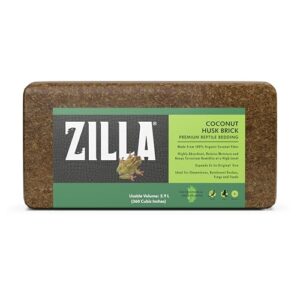
This brick doesn’t look like much dry — a dense 8x2x4 inch block weighing 1.4 pounds. Add hot water, though, and it expands up to five times its size, turning into fluffy, sponge-like bedding.
One brick covers a 55-gallon enclosure once hydrated. It’s 100% organic coconut fiber, sourced from Sri Lanka, with no dyes or synthetic additives. Expect a messy setup process — stir thoroughly, or you’ll get clumping and uneven expansion.
| Best For | Reptile owners setting up tropical, humidity-loving enclosures for pets like chameleons and geckos, or anyone who needs safe, natural substrate for egg incubation. |
|---|---|
| Format | Book |
| Weight | 5.4 oz |
| Dimensions | 6 x 0.24 x 9 in |
| Target Animal | Boa Constrictor |
| Primary Use | Care Guide |
| Publication/Origin | Independently Published |
| Additional Features |
|
- Expands up to 5 times its size, so one compact brick covers an entire 55-gallon enclosure
- Made from 100% organic coconut fiber with no dyes or synthetic additives
- Holds humidity well, making it ideal for tropical terrarium setups
- Hydration can be messy and often produces more substrate than expected
- May contain small pebbles or debris that need to be picked out
- Can clump or expand unevenly if not stirred thoroughly during hydration
2. Exo Terra Forest Bark Natural Substrate
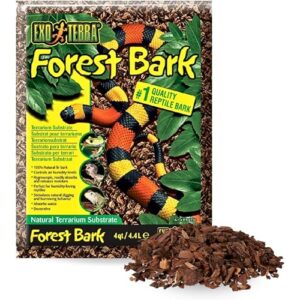
Coconut fiber isn’t your only bark-based option. Exo Terra Forest Bark uses 100% Douglas fir, heat-treated and tumbled to cut dust and bacteria before it hits shelves.
Hygroscopic bark absorbs moisture, then releases it slowly — stabilizing humidity between mistings without soggy patches. Chip sizes vary naturally, so your boa gets tunnels and hiding spots for free.
Spread 1-2 inches deep. Sift first, though — sharp twigs and debris sneak into some bags.
| Best For | Reptile and amphibian keepers—especially those with humidity-loving species like tree frogs, geckos, and snakes—who want a natural substrate that supports burrowing and helps stabilize terrarium moisture. |
|---|---|
| Format | Book |
| Weight | 5 oz |
| Dimensions | 6 x 0.22 x 9 in |
| Target Animal | Rosy Boa |
| Primary Use | Care Guide |
| Publication/Origin | Independently Published, 2024 |
| Additional Features |
|
- Made from 100% natural fir bark, ideal for humidity-loving reptiles and amphibians
- Hygroscopic properties help regulate terrarium humidity by absorbing and slowly releasing moisture
- Encourages natural digging and burrowing behavior, giving pets enrichment and hiding spots
- May contain sharp sticks, twigs, and dust, so sifting before use is recommended
- Product quality can be inconsistent, with some batches including non-bark debris
- Not ideal for reptiles that tend to ingest substrate, due to the risk of splinters
3. Fluker’s Premium Cypress Reptile Bedding
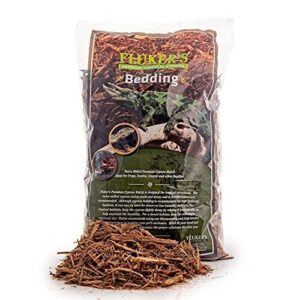
Bark’s one route to stable humidity — cypress mulch is another, and Fluker’s version keeps it simple. Twice-milled for a uniform texture, it skips the oversized chunks that plague cheaper bags.
Mist lightly and the mulch holds moisture at the surface while staying drier underneath — a built-in gradient. Naturally mold-resistant, too, which matters in humid tropical setups.
Works alone or mixed with coconut coir. Just expect occasional dusty batches; some bags run inconsistent on fill weight.
| Best For | Reptile owners housing tropical or desert species who want a natural, soft substrate that supports burrowing and helps maintain humidity. |
|---|---|
| Format | Book |
| Weight | 5.6 oz |
| Dimensions | 6 x 0.25 x 9 in |
| Target Animal | Reticulated Python |
| Primary Use | Care Guide |
| Publication/Origin | Independently Published |
| Additional Features |
|
- Twice-milled for a clean, consistent texture without oversized chunks
- Holds humidity well at the surface when lightly misted, ideal for tropical setups
- Easy to spot-clean and helps cut down on enclosure odors
- Some bags contain excessive dust or oversized wood chunks
- Not ideal for use alone with species like leopard geckos without mixing in another substrate
- Fill weight can be inconsistent, with some customers receiving less than the labeled 10 pounds
4. Digital Hygrometer Thermometer Indoor Outdoor
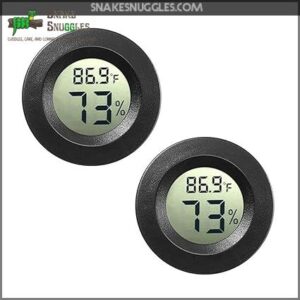
None of that gradient work matters if you’re guessing at the numbers. A digital hygrometer thermometer takes the guesswork out, reading humidity from 10% to 99% RH and temps from -58°F to 158°F, updating every 10 seconds.
Placing the hygrometer near your substrate lets you confirm it’s holding moisture properly, which pairs well with this guide to choosing ball python substrates for small apartments.
The compact ABS housing (45mm x 15mm) fits any enclosure, running up to 10 months per LR44 battery. Accuracy holds to ±3% RH — tight enough to catch trouble before your boa does.
| Best For | Reptile keepers, greenhouse growers, and anyone storing humidity-sensitive items like 3D printing filament or cigars who needs reliable dual temperature and humidity readings in one compact device. |
|---|---|
| Format | Book |
| Weight | N/A |
| Dimensions | N/A |
| Target Animal | Boa Constrictor |
| Primary Use | Care Guide |
| Publication/Origin | Published August 2024 |
| Additional Features |
|
- Wide measurement range (10%–99% RH and -58°F to 158°F) with readings updated every 10 seconds
- Long battery life, up to 10 months per LR44 cell, with a backup battery included
- Compact, easy-to-place housing with a large, easy-to-read 25mm LCD display
- Humidity readings can lag behind fast environmental swings
- Accuracy drops off at higher ambient temperatures, especially for humidity
- Not waterproof or weatherproof, so it’s limited to indoor and sheltered use
5. F10 SCXD Concentrated Cleaner Sanitizer
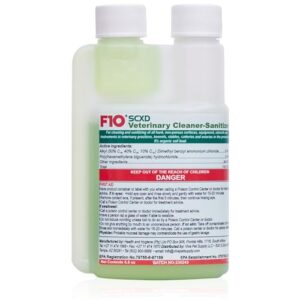
Once your gradient and readings check out, sanitation keeps that setup safe long-term. F10 SCXD is an EPA-registered disinfectant-cleaner that kills bacteria, fungi, viruses, and spores in one step — no separate detergent needed.
It’s alcohol-free, chlorine-free, and non-corrosive on plastic, glass, and metal. Dilute per label instructions, wipe down cages, bowls, and hides, then air dry. Between full substrate changes, this is your best defense against bacterial buildup and ammonia odors building up in the enclosure.
| Best For | Reptile and small-animal keepers, as well as veterinary clinics, kennels, and shelters, who need a single product that cleans and disinfects cages, bowls, and habitat decor without leaving harmful residue. |
|---|---|
| Format | Book |
| Weight | 6.1 oz |
| Dimensions | 6 x 0.28 x 9 in |
| Target Animal | Burmese Python |
| Primary Use | Care Guide |
| Publication/Origin | Published July 2024 |
| Additional Features |
|
- One-step formula sanitizes and cleans without needing a separate detergent
- Non-corrosive and safe on plastic, glass, and metal surfaces
- Effective against bacteria, fungi, viruses, and spores when diluted properly
- Requires accurate dilution, as undiluted concentrate can cause irritation
- Not suited for porous materials that may absorb the solution
- Heavy organic soil can reduce effectiveness unless surfaces are pre-cleaned
Choosing Safe Boa Constrictor Bedding
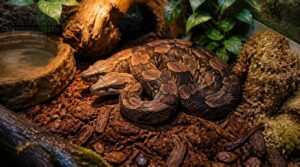
Not every bedding on the shelf is safe for your boa—some hold moisture well, others just cause problems. The right choice comes down to a few key materials that actually work for their size and habits. Here’s what to know before you fill that enclosure.
Cypress Mulch Benefits
Reddish-brown and forest-floor natural, cypress mulch just looks right under a boa.
Its aromatic oils deter pests while slow decay resists mold.
The dense mat retains moisture for steady humidity control, insulates against temperature swings, and holds firm enough for real burrowing behavior—no collapsing tunnels, just a solid mimic of natural habitat.
Coconut Husk Benefits
Fibrous and forgiving, coconut husk earns its spot in any bioactive setup.
It swells to hold 3-6 times its weight in moisture, aerates bedding to prevent compaction, and resists mold naturally when kept dry between cleanings.
- Locks in humidity gradually
- Boosts airflow around coils
- Curbs ammonia odor
- Biodegrades fully
- Encourages burrowing behavior
Coconut husk fibers provide excellent natural moisture retention for reptile enclosures.
Aspen Shavings Benefits
Want dry, low-odor bedding? Aspen shavings deliver — a non-toxic bedding option with low dust for better respiratory health.
Their moisture absorption keeps surfaces drier, and the soft texture reduces abrasions during movement.
| Trait | Aspen | Cypress |
|---|---|---|
| Dust | Low | Moderate |
| Scent | Natural, neutral | Earthy |
| Moisture retention | Low-moderate | High |
Great for burrowing behavior without heavy humidity control needs.
Juvenile Impaction Risks
A young boa’s mouth is basically a curiosity sensor — and that’s the problem. Juveniles explore substrate up to 12 times daily, ingesting roughly 0.24 grams total.
A juvenile boa’s mouth is a curiosity sensor, tasting substrate up to 12 times a day
Particles over 2mm are riskiest; fibers past 5mm spike impaction rates by 42%.
Watch for appetite loss lasting 3-5 days or 5%+ weight drop — early red flags worth an immediate vet call.
Substrates to Avoid
Skip anything from a pine tree or cedar closet. Pine and cedar shavings release phenols and aromatic oils that irritate lungs and skin — coughing, wheezing, dermatitis.
Sand and walnut shell? Impaction risk if swallowed. Cedar bark sheds fine dust into eyes and airways. Dyed or treated mulch introduces chemicals that mess with sheds. Loose particles just aren’t worth the gamble.
Matching Substrate to Humidity Needs
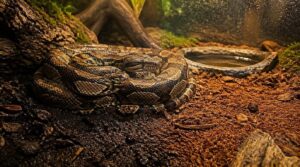
Picking the right bedding is only half the job—your substrate also has to hold humidity where your boa needs it. Too dry and you’ll fight shedding problems; too wet and you’re inviting mold and bacteria. Here’s what actually keeps that balance in check.
Ideal Boa Humidity Range
Get the range wrong and you’ll see it fast—cracked shed or fuzzy substrate. Boas want 55-75% humidity day to day, climbing to 75-85% during shedding. Below 50%? Dehydration risk. Above 80% without airflow invites mold.
A reliable digital hygrometer paired with a humidifier built for boa enclosures makes hitting that range far less of a guessing game.
Calibrate your hygrometer regularly, and place the probe near your boa’s favorite hangout—not the glass, not the vents.
Creating Moisture Gradients
A single humidity number doesn’t cut it—your boa needs choices. Build a natural moisture gradient: drier edges, moist center. Layer substrate—dry top, damp bottom—mixing coco peat for retention with mulch for drainage. Balance airflow to stop condensation pooling.
Fine-tuning this layered setup becomes much easier once you understand how boa constrictor humidity needs shift with behavior and life stage.
For hygrometer placement, check multiple heights, not just one spot, to confirm the gradient’s actually working.
Preventing Soggy Bedding
That gradient only works if the wet side stays wet without turning into a swamp. Build a drainage layer setup beneath your bedding—coarse mulch or bark catches runoff before it soaks upward.
Raise the water bowl on a small stand, dry standing spills within 24 hours, and mix dry coconut husk with mulch at 60/40 for a solid humidity buffer mix.
Monitoring Temperature and Humidity
A drainage layer means nothing without eyes on it. Place sensors at breathing-zone level, away from lamps and water bowls, for accurate readings.
- Use a digital hygrometer with a 1–2 minute refresh rate
- Set alerts for temps outside 24–30°C or humidity under 40%
- Log data every 5 minutes
- Choose battery-backed units to avoid gaps
Comparing Moisture Retention
Not every substrate holds water the same way — and that difference drives your whole humidity strategy.
| Substrate | Moisture Behavior |
|---|---|
| Coconut husk | High water holding capacity, damp longer |
| Cypress mulch | Slow-release, stable humidity gradient |
| Aspen shavings | Fast drying, lower moisture-clogging risk |
Bioactive substrate blends boost retention further. Pair sphagnum moss with coco husk for tropical setups needing tighter humidity control.
Bedding Depth for Natural Burrowing
Boas don’t just sit on top of their bedding—they dig into it. Get the depth wrong and that natural instinct turns into frustration instead of comfort. Here’s what you need to know to build a setup your boa can actually tunnel through.
Recommended Substrate Depth
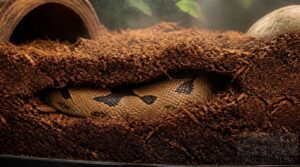
Boas dig. Give them room to do it right: 4 to 6 inches of substrate, with 5 as your sweet spot for most adults.
Juveniles do fine at 4 inches — enough to burrow without swallowing half the enclosure. Deeper substrate also holds moisture longer, so your depth choice directly affects humidity control alongside whatever misting schedule you’re running.
Supporting Stable Burrows
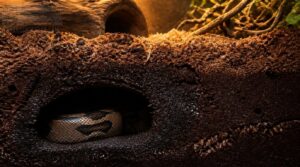
A few tricks turn loose bedding into real tunnels. Pack substrate firmer near burrow entrances—this reinforcement stops tunnel collapse right where snakes enter most.
- Holding power stops sand-like cave-ins
- Moderate humidity keeps walls from crumbling
- Gentle aeration prevents compaction without wrecking structure
Layer denser material around walls, lighter substrate up top. That gradient helps both burrow stability and easier digging.
Bedding for Juvenile Boas
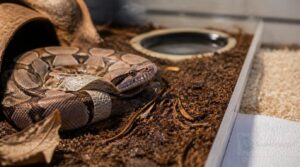
Young boas need less depth, not less care. Stick to 2 to 3 inches, enough for shallow burrows without impaction risk.
Coconut husk holds humidity best for shedding. Aspen shavings work as a low-dust option between sheds.
For quarantine setups, paper towels win—disposable, sterile, easy to monitor. Skip bioactive substrate until juveniles mature and gain size.
Naturalistic Substrate Layering
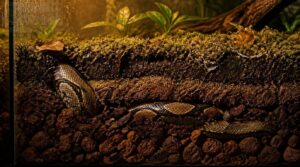
Think of layering like building a lasagna—each level does one job. Start with a base layer for stabilization, add bark for microhabitats, then a soft cushioning mix, a bioactive decomposition layer, and a top cover to fight surface mold.
This substrate layering technique locks in humidity retention and helps natural burrowing behavior far better than a single naturalistic mix ever could.
Bioactive Substrate Mixes
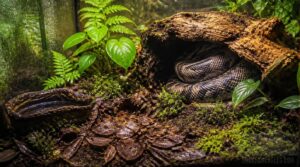
A bioactive substrate turns your enclosure into a self-cleaning habitat. Isopods and springtails drive waste breakdown efficiency, while live plants stabilize humidity and enable natural foraging stimulation.
Keep it running right:
- Monitor microfauna populations monthly
- Track substrate pH (6.0–7.5)
- Support nutrient cycling with leaf litter
Balance moisture for a natural moisture gradient—never soggy, never bone-dry.
Cleaning and Replacing Boa Substrate
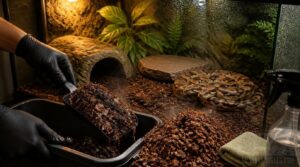
Great substrate only stays great if you keep up with it. Waste, moisture, and bacteria build up fast in a warm, humid enclosure—your cleaning routine matters as much as your bedding choice. Here’s exactly how often to clean, replace, and disinfect to keep your boa’s home safe.
Daily Waste Removal
Every day, scoop feces, shed skin, and leftover prey before odor builds.
Wear gloves, use a substrate-safe scoop, and replace soiled bedding immediately.
Log removal times and stool consistency to catch health issues early.
Check moisture after cleanup, dry damp patches, and sanitize tools between sessions—simple habits that keep ammonia low and your boa’s enclosure genuinely clean.
Weekly Spot Cleaning
Daily scooping controls the obvious mess. Weekly spot cleaning goes deeper, targeting urate stains and dampness hiding 2–3 inches down.
Substrate inspection matters here: press for waterlogged pockets, sniff for must, check burrows stay intact. Log findings—it flags scale rot risks early.
- Scoop deep, not just surface
- Wipe hard surfaces with reptile-safe cleaner
- Replace clumped bedding immediately
Full Replacement Schedule
Full substrate replacement—every 6 to 12 months for adults, 4 to 6 months for juveniles—keeps humidity stable and stops odor buildup. Watch for ammonia smell, mold, or persistent mustiness; replace immediately if found.
During change, remove your boa, dispose old bedding, clean surfaces with F10SC, and lay 6–8 inches fresh substrate for best burrowing.
Preventing Mold and Odors
Fresh substrate won’t stay fresh without airflow. Ventilation improvement matters as much as bedding choice—crack vents or add a small fan to cut condensation.
Three habits keep trouble away:
- Check hygrometer readings daily
- Spot-dry damp patches within 24 hours
- Add a bioactive cleanup crew for waste breakdown
Keep humidity under 60%. Musty smell means act now, not tomorrow.
Disinfecting Between Substrate Changes
Between substrate swaps, don’t just toss in fresh bedding and call it done. Disinfect enclosure surfaces first—wipe down non-substrate areas, respecting labeled dwell time. Use separate cloths for cleaning versus disinfecting; cross-contamination undoes your work.
Let everything dry completely before reintroducing heat or humidity. Rushing this step traps moisture, invites mold. Check hygrometer readings before your boa goes back in.
Frequently Asked Questions (FAQs)
What is the best substrate for boa constrictor?
Cypress mulch or coconut husk, hands down. Both hold humidity retention in that 50–70% range, support burrowing support, and stay bioactive substrate friendly — unlike aspen shavings, which dry out faster and offer less natural enrichment.
What bedding is best for boas?
Cypress mulch and coconut husk top the list — both hold moisture, support burrowing, and control odor naturally. Aspen works for drier setups. For bioactive tanks or juveniles prone to impaction, stick with coconut fiber over loose particles.
What is the safest substrate for snakes?
Safety isn’t one-size-fits-all — it’s about matching material to snake. Non-toxic, low-dust options like coconut husk or cypress mulch win out: they resist mold, support humidity control, and prevent impaction better than sand or loose particles ever could.
Do boa constrictors like to burrow?
Yes—digging is instinctive, driven by temperature shifts and low humidity. They favor 4–6 inch depths in pliable coconut husk or aspen shavings, using burrows as cool, secure retreats rather than surface-dwelling like some other species.
Can you mix multiple substrate types together safely?
Blending works well with the right ratios. Try 60/40 moisture-to-drainage mix—coconut husk with cypress mulch or bark—for burrow structure support, fiber content, and mold prevention. Test moisture balance by squeezing samples; skip mismatched pH combos.
How often should quarantine bedding be fully replaced?
Picture a bare, damp corner tank — no décor, just function. That’s quarantine. Set a quarantine bedding replacement schedule: full swap every 2 weeks minimum, every 7-10 days for moisture-retaining substrate, and within 24 hours if waste or mold appears.
Do boa constrictors need substrate for shedding help?
Absolutely—moisture retention substrates keep humidity steady between mistings, aiding shedding support. Textured surfaces add gentle friction so old skin loosens cleanly, mimicking natural habitat and preventing stuck sheds or retained eye caps.
Can bioactive cleanup crews live with juvenile boas?
Isopods versus a hungry hatchling: not exactly a fair fight. Yes, cleanup crews and juveniles can coexist—with hiding spots, gradual introduction, and close monitoring to prevent overhunting and keep population balance intact.
Is substrate necessary in a bare-bottom enclosure setup?
No — substrate isn’t mandatory. Bare floors boost waste visibility, simplify cleaning efficiency, and prevent impaction risk entirely. You’ll manage humidity regulation and moisture retention through misting and ventilation instead of bedding depth.
Conclusion
Wrong substrate costs you a vet bill. Right substrate costs you nothing but daily attention. That’s the trade every boa keeper faces, and it’s really not a hard one to win.
Quality snake substrate bedding for boa constrictors isn’t about looks—it’s about humidity control, impaction prevention, and a snake that sheds clean every single time. Pick your product, check your hygrometer daily, and clean on schedule. Master the substrate, and you’ve mastered the whole enclosure.