This site is supported by our readers. We may earn a commission, at no cost to you, if you purchase through links.

A brand new corn snake hatchling can fit inside a matchbox, yet the tub you house it in makes the difference between a thriving snake and a stressed one. Too much open space leaves a hatchling exposed and anxious. Too little, and it can’t stretch out, thermoregulate, or feel secure enough to eat.
Getting the best enclosure size for hatchlings isn’t about guesswork or copying whatever setup looked good online. It comes down to simple math based on your snake’s length, its species, and how it behaves in the wild.
Once you know the formula, sizing an enclosure gets a lot less intimidating, and your hatchling gets the safe, stable start it needs to grow.
Table Of Contents
Key Takeaways
- Size your hatchling’s enclosure using its actual body length (roughly 1.5 to 2 times snout-to-vent length), rather than copying generic setups you find online.
- Balance floor space with height and volume, since floor area determines hide placement while volume controls heat stability and airflow.
- Always include two hides and a clear thermal gradient, since bare open space reads as danger to a hatchling, not freedom.
- Upgrade the enclosure once your snake reaches about half its expected adult length, rather than waiting for obvious signs of overcrowding.
What Size Enclosure Does a Hatchling Snake Need?
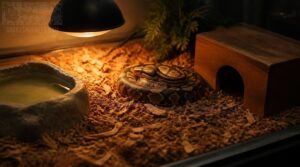
Getting enclosure size right matters more than most new owners expect. Too small, and your hatchling can’t move or thermoregulate properly. Here’s what you need to know before picking a home for your snake.
Since corn snakes stay manageable at 3–5 feet, understanding how corn snakes compare to other popular pet snake species can help you choose an enclosure size that works long-term.
Before you buy a tank, it’s worth checking your area’s state-by-state snake ownership laws, since some regions also regulate enclosure size and setup.
If you’re just starting out, this ball python care guide for beginners breaks down exactly how enclosure size should change as your snake grows.
Minimum Footprint Guidelines
A few inches make all the difference for a hatchling. Most small snake species need at least 0.5 square feet of floor space, enough room for a water dish and two hides without crowding.
Corn snakes want 8 to 12 inches of floor length, while ball pythons do well in 18 by 12 inch setups. Shape matters too, rectangular footprints beat cramped, oddly angled ones.
When documenting these measurements for reference, following clear writing structure guidelines can help keep sizing information easy for readers to follow.
Body-Length Sizing Formula
Once you’ve got the footprint down, the next step is math. Measure your snake snout to vent, that’s the real snout to vent ratio central to any sizing formula.
Multiply by two for enclosure length. For growth projection scaling, size toward their length at 6 to 12 months, then apply a 1.5x enclosure length multiplier for species-specific sizing.
Floor Space Versus Volume
Math gets you length, but length alone doesn’t tell the whole story. Floor space shapes how many hides fit; volume governs heat stability and air exchange. Wide floors without enough height can trap stagnant, humid air, while tall enclosures with cramped floors squeeze thermal zoning. Balance both, and you’ll build a microclimate your hatchling can actually thrive in.
Why Bigger Can Work
Once minimums are met, going a bit larger often pays off. Extra room lets hatchlings display real behavioral expression, exploring and choosing microclimates instead of baking or freezing in one spot.
More surface area spreads heat evenly, cutting hotspots, while added space allows climbing options and reduces stress from constant wall contact during those early growth stages.
Risks of Undersized Enclosures
Skimp on space and your hatchling pays for it. Cramped quarters bring stunted growth, poor thermoregulation, and constant wall contact that fuels stress behaviors like glass-surfing or refusing to settle.
Watch for reduced feeding response and respiratory issues too. Undersized enclosures can’t mimic natural habitat conditions, and that gap shows up fast in hatchling development, so don’t ignore early stress signs.
Hatchling Enclosure Sizes by Snake Species
Not every hatchling snake needs the same setup. Corn snakes, ball pythons, boas, and arboreal species each come with their own space requirements, and getting it right makes a real difference. Here’s what you need to know for each one.
Corn Snake Hatchling Dimensions
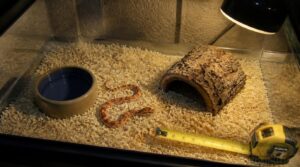
A newborn corn snake stretches 10 to 14 inches, barely thicker than a pencil. Give it an 18 by 12 inch footprint, roughly 1.5 times body length, in a 20-gallon tank or tub.
Keep substrate shallow, 1 to 2 inches. Track growth weekly: steady shedding and weight gain confirm the space still fits.
Ball Python Hatchling Dimensions
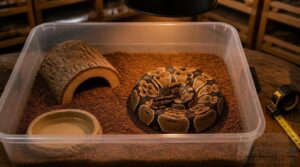
A hatchling ball python arrives 10 to 17 inches long, ready for a snug 12×18 inch footprint. Skip the 40 gallon breeder for now; that’s adult territory. A 10-gallon tub or similar space suits early coiling needs, letting it stretch fully while feeling secure. Expect 1 to 2 inches growth monthly, so check fit often.
Boa Hatchling Space Needs
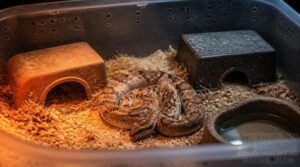
Boas start small, often under a foot and a half, and don’t need much room to feel secure. A 12 to 16 quart tub works well, with a boa hatchling gradient of 88-90°F warm, 78-82°F cool.
Set up two hides essential for security, a humidity hide setup near 50-60%, and a shallow water dish for soaking.
Arboreal Hatchling Height Needs

Green tree pythons and other climbers think in vertical feet, not floor inches. Give them two to three body lengths of climbing room, roughly 12 to 18 inches usable height.
Space perches for safe vertical exploration, avoiding tight turns. A multi-level habitat design with gaps between branches builds muscle and helps healthy tail development, mimicking natural habitat.
Fast-Growing Species Considerations
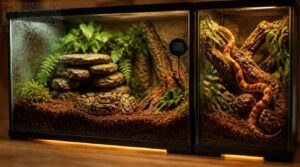
Some species outgrow their tanks fast enough to catch you off guard. Ball pythons and corn snakes especially need modular enclosure design so you’re not rehoming them monthly.
- Track growth rate weekly
- Adjust substrate depth as they thicken
- Add vertical space in stages
- Check temperature stability daily
- Watch for cramped movement signs
Correct drift within 24 hours, stress builds fast otherwise.
Choosing Tanks, Tubs, or PVC Enclosures
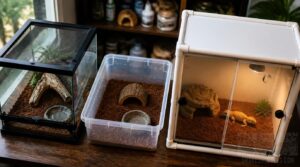
Once you know the size your hatchling needs, the next question is what to put it in. Tanks, tubs, and PVC enclosures all handle those dimensions differently, with their own perks and drawbacks. Here’s how each option stacks up.
10. Gallon Tank Suitability
Twenty inches of usable length sounds generous, but a 10-gallon tank only offers about that much once hides go in. It works for many small snake species early on, provided you wire a stable thermostat holding 82 to 88°F.
Use reptile carpet, not loose substrate, and check temperature daily since small spaces shift fast.
Plastic Tub Size Standards
Tanks work, but tubs beat them on tub volume selection. Nine-quart tubs fit most hatchlings, with 180-360 square inches of floor area and 4-6 inch walls that hold humidity.
Look for:
- Clear plastic for quick visual checks
- Tight lids with small vent slots
- Low walls to ease heat mat contact
PVC Enclosure Advantages
PVC steps up once a hatchling outgrows tub life. Panels resist warping and hold their shape for years, unlike thin plastic. Sealed seams give you an escapeproof design, while gaskets add real weather resistance against humidity swings.
You can also drill and mount vents exactly where needed, tailoring the enclosure to your species without paying for a whole new setup.
Rack System Space Limits
Rack systems trade PVC’s roominess for efficient vertical space planning. Each tub gets a defined footprint, often 6×12 to 12×18 inches, so tub footprint consistency matters more than total cage size.
Airflow optimization between tiers keeps microclimate stability steady across the column. Just don’t let rack column density outpace your hatchling space requirements as growth speeds up.
Best Option by Species
Since no two species grow alike, match the enclosure to the snake, not the other way around.
- Corn snakes: a 20-gallon long tub, easy cleaning
- Ball pythons: snug tubs, 88-92°F warm side
- Boas: 40-gallon setups with sturdy, secure latches
- Arboreal species: tall PVC, vertical branch space
- Fast growers: rack systems for quick upgrades
Can Hatchling Enclosures Be Too Large?
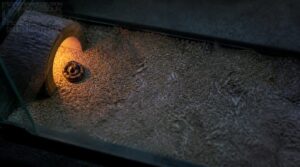
It might seem like more space is always better, but that’s not quite true for a hatchling. A too-large enclosure can leave your snake feeling exposed and anxious instead of safe. Here’s what actually matters when you’re sizing things up, and how to avoid the common mistakes.
The Small-Enclosure Myth
Bigger isn’t automatically worse. The old idea that hatchlings need shoebox-sized enclosures ignores thermoregulation and stress from restricted movement.
| Myth | Reality |
|---|---|
| Tiny space feels safe | Multiple hides feel safe |
| Body-length sizing | Room to roam matters |
| Less ventilation needed | Airflow prevents humidity buildup |
Adding Cover and Clutter
Once you’ve picked a roomy enclosure, fill it wisely. Extra floor space only helps if you add enough cover to match it.
- Top and bottom hides for vertical microclimates
- Cork bark or DIY shelters for natural habitat mimicry
- Hides placed away from the water dish
Balance clutter density carefully. Too little cover leaves hatchlings exposed; too much blocks movement and enrichment.
Preventing Open-Space Stress
Open space feels like exposure to a hatchling, not freedom. Hiding spots essential for reducing stress, since bare floor space mimics predator vulnerability in the wild.
To a hatchling, open space feels like exposure, not freedom, so hiding spots are essential for easing that stress
| Cover Type | Placement | Benefit |
|---|---|---|
| Ground hides | Warm/cool zones | Secure retreat |
| Textured interiors | Floor level | Better grip |
| Multiple hides | Scattered | Less exposure |
Clutter for security matters more than square footage alone.
Creating Secure Microclimates
A large tank still needs small, secure zones inside it. Split the space into a thermal gradient, warm hide near 85 to 92 F, cool hide at 78 to 82 F, with two thermometers confirming both ends.
Balance humidity between 40 and 60 percent using moisture-holding substrate, and keep ventilation slots positioned so airflow doesn’t strip heat from either hide.
Watching for Stress Signals
A jumpy hatchling in a spacious tank is telling you something. Watch for rapid tongue flicking, restlessness, or refusing food, all behavioral stress cues tied to enclosure size.
Excessive hiding, dull skin, or shedding trouble often trace back to humidity substrate issues or a shaky temperature gradient. Catching these physical stress signs early helps hatchling health monitoring and lets you adjust before real harm sets in.
Fit Essentials Without Crowding
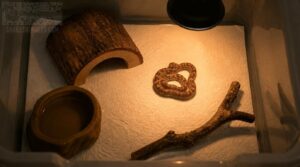
A hatchling enclosure only works if every piece inside earns its spot. Too many accessories, and you lose the open space your snake needs to move and feel secure. Here’s how to fit the essentials in without crowding the space.
Warm and Cool Hides
Give your hatchling two hiding spots, one per temperature zone, and watch stress melt away.
- Warm hide holds 26-32°C
- Cool hide stays 22-26°C
- Snug fit prevents neck strain
- Smooth interiors protect delicate scales
- Removable hides ease daily cleaning
Size each hide 1.5-2.5 times your snake’s girth. Refusal often signals wrong fit or gradient.
Water Dish Placement
Once your hides are sorted, your snake’s water bowl deserves the same thought. Set it on the cool side for natural hydration behavior. Keep it low, wide, and stable, away from heat.
| Feature | Recommendation | Why It Matters |
|---|---|---|
| Placement | Cool side | helps with hydration |
| Depth | Shallow | Prevents drowning |
| Base | Non-slip | Stability |
Heating Equipment Clearance
With water sorted, check what’s powering your heat mat or lamp. Follow manufacturer specification clearances for your thermal gradient setup.
- Keep combustibles 18 inches from heat sources
- Leave panel access clear for adjustments
- Make sure vents stay unobstructed
- Inspect clearances monthly
Thermostat-controlled heaters plus proper spacing mean safer enclosure security overall.
Species-Appropriate Climbing Space
Once clearances are set, think about what happens above the floor. Not every hatchling climbs the same amount, so match structures to your species-appropriate habitat. Arboreal species need 3-4 levels within 16-24 inches of height, while ground dwellers want fewer perches. Space branches for turning room, inspect climbing surfaces biweekly, and secure everything to avoid wobble or sagging.
Maintaining Open Floor Space
Think of the enclosure floor as a hallway, not a storage closet. Keep a clear floor pathway through the center so your hatchling can move without squeezing past clutter. Push hides, water dishes, and branch bases to the edges.
This kind of floor area planning helps unobstructed movement, aids species space requirements, and keeps growing hatchlings from feeling boxed in.
When to Upgrade The Enclosure
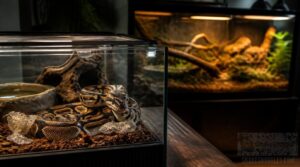
Hatchlings don’t stay small for long, and their enclosure needs to keep pace. Knowing when to size up keeps your snake comfortable and stress-free as it grows. Here’s how to tell it’s time for a bigger home.
Measuring Length and Weight
Numbers don’t lie, and they’ll tell you when it’s time to upgrade. Use a flexible measuring tape for snout-to-vent length and a digital scale (0.1g precision) for weight.
Weigh every 3-7 days, measure weekly. Record everything in grams and centimeters, same tools each time.
Watch the length-to-weight ratio: it reveals true growth, not just a fatter hatchling.
Growth Milestones to Watch
Beyond the tape measure, your hatchling’s habits tell their own story. Watch these four signs closely:
- Shedding frequency drops from every 2 weeks to 4-6 weeks
- Feeding response stays sharp through 6-12 weeks
- Weight gain doubles by 3-4 months
- Basking behavior and activity levels rise noticeably by month four
These milestones ease acclimation stress and confirm your enclosure still fits their growth phase.
Half-Adult-Size Upgrade Rule
Here’s a simple rule: upgrade when your snake hits half its expected adult length, not before. Corn snakes trigger around 3 feet, ball pythons near 2 to 2.5 feet, boas around 4 to 5 feet.
This keeps enclosure volume balanced with body size, supporting stable microclimates and stress-free transitions. Track growth milestones monthly so you catch each species-specific trigger on time.
Signs Space is Limited
Your snake’s body tells you before a tape measure does. Watch for these clues:
- Constant contact with the warm side, rarely exploring cooler zones
- Heavier coiling, almost defensive, instead of relaxed resting
- Head lifting or circling, signs of elevated stress behaviors
- Slower growth or skipped meals, a restricted growth indicator
- Stagnant air, humidity creeping up as space shrinks
These patterns mean poor thermoregulation and it’s time to size up.
Planning The Adult Enclosure
Think ahead, not just up. The adult enclosure should offer at least 2.5 times your snake’s hatchling length in footprint, so growth projection planning starts on day one.
Design a secure microclimate with basking space covering 25-30% of the floor, keep ventilation standards near 6 air changes hourly, and choose easy-clean substrate like tile.
Build the setup before you need it.
Frequently Asked Questions (FAQs)
Can multiple hatchling snakes share one enclosure?
Roommates sound cozy until you remember snakes never wanted one. Solitary by nature, hatchlings fare best alone. Shared enclosures raise stress, disease, and feeding risks, so separate housing stays the safer, species-appropriate default.
What lighting is necessary for a hatchling snake?
Your hatchling needs a UVB light on the warm end, paired with a thermostat-controlled heat source for a steady thermal gradient (85–92°F). Keep a 12-hour light cycle, use thermometers to track temps, and replace bulbs every 6–12 months.
How often should a hatchling enclosure be cleaned?
A tidy home keeps its residents healthy, much like a clean cage keeps a hatchling thriving. Spot clean daily for waste and shed skin, sanitize water bowls each session, and do a full deep clean every four to seven weeks.
Does enclosure shape matter more than size?
Shape matters, though not more than size. Squared corners raise stress by limiting hiding spots, while curves and varied refuges support natural exploration. Shape shifts microclimate distribution and thermal gradients too, so pick a design supporting both safety and space.
Can hatchlings be housed outdoors seasonally?
Yes, seasonally and briefly. Nightly temps must stay above 60 to 65°F, with a predator-proof, ventilated enclosure, shade access, and gradual 15 to 30 minute acclimation sessions while you watch closely for stress or overheating signs.
Conclusion
A hatchling’s tub is like a shell before the shell, a snug space that tells its small body the world is safe enough to grow into.
Get the best enclosure size for hatchlings right, and you’re not just picking dimensions. You’re building confidence into a creature that reads space as safety.
Start snug, add hides, and upgrade with growth. Your snake won’t thank you in words, but a steady appetite and calm posture will say it plainly.