This site is supported by our readers. We may earn a commission, at no cost to you, if you purchase through links.

Your snake’s eyes turned blue and cloudy. The skin looks washed out, almost chalky. Shed season is here, and what you do in the next 48 hours can mean the difference between a clean, one-piece shed and a painful retained skin problem.
Most keepers know humidity matters. Fewer know how to raise it without soaking the substrate, stressing the snake, or inviting mold. Misting the enclosure during shed sounds straightforward, but the details carry real weight.
Getting it right starts with knowing the signs, picking the right water temperature, and hitting the correct humidity range for your specific species.
Table Of Contents
Key Takeaways
- Cloudy eyes and dull, chalky skin are your signal to start misting immediately — waiting too long risks a painful, incomplete shed.
- Humidity targets aren’t one-size-fits-all: ball pythons need 70–80% during shed, while desert species like king snakes only need 40–50%.
- Spray the walls and substrate, never your snake directly — direct misting causes stress and can push water into nasal passages.
- Once the shed is done, reduce humidity within 1–4 hours and inspect the eyes and tail tip for any retained skin that needs prompt attention.
Know When Your Snake Needs Misting
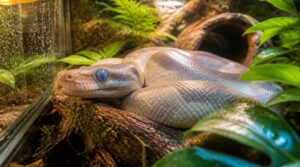
Your snake won’t send you a calendar invite, but it does give you clear signals when shedding is coming. Learning to read those signs means you can act early and keep the process smooth. Here’s what to watch for before you reach for the misting bottle.
Understanding the full snake shedding cycle and humidity requirements helps you connect those early behavioral cues to what’s actually happening inside your enclosure.
Cloudy Eyes and Dull Skin
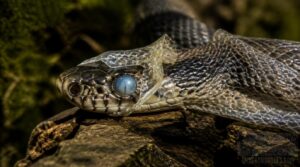
Two clear signs tell you your snake is entering shed: cloudy or bluish eyes and skin that looks dull and washed out. That milky eye appearance happens when fluid builds up between the old and new skin layers, including under the eye cap. Skin coloration also fades during this phase.
Once you spot both signs, it’s time to start misting. Understanding the corn snake shedding stages can help you better anticipate when to adjust humidity and how long each phase should last.
Species-Specific Humidity Needs
Not every snake needs the same humidity boost during shed. Getting this wrong means a stuck shed or worse. Here’s what to target by species:
- Ball pythons: 60–70% for a clean slip
- Garter snakes: 45–55% to keep skin flexible
- Hognose snakes: 50–60%, with dry stretches between sheds
- Desert species like king snakes: 40–50%
Raise levels gradually. Sudden changes cause stress.
Measure Current Enclosure Humidity
Now that you know your target range, you need to know where you’re starting. A digital hygrometer tells you exactly that. Place it at the center of the enclosure, at snake level, and keep it away from direct mist spray to avoid false high readings. Wait 5 to 15 minutes after misting before you check. Calibrate it quarterly to stay within 3% accuracy.
Check Substrate Moisture Levels
The hygrometer tells you what’s in the air, but the substrate tells you what’s underfoot. Press a gloved finger an inch into the substrate. It should feel damp but not soggy. Crumbly or dusty spots mean dry zones that can cause rough, incomplete sheds. Uniform moisture depth across the enclosure floor matters as much as your humidity reading.
Prepare The Enclosure for Misting
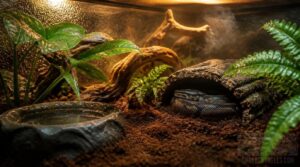
Before you spray a single drop, a little prep goes a long way. Getting the enclosure ready means your snake has the right conditions to shed cleanly and comfortably. Here’s exactly what to set up before you start misting.
Choose Clean Lukewarm Water
Water quality matters more than most keepers realize. Fill your spray bottle with lukewarm, filtered water and aim for 98 to 105°F. Tap water often contains chlorine, which can irritate your snake’s sensitive skin and eyes.
Replace your water daily, and never mist with cold water, since sudden temperature shifts can stress your snake during an already vulnerable shed cycle.
Add Moisture-Retaining Substrate
The right substrate acts like a sponge under your snake. A solid mix includes:
For a deeper look at layering materials that balance drainage, humidity, and burrowing depth, the bioactive snake habitat setup guide walks you through building a substrate mix that actually mimics your snake’s natural environment.
- Coconut coir at 40 to 60 percent as your moisture base
- Perlite at 10 to 25 percent to keep airflow moving
- Bark or wood fiber to hold dampness without compacting
Pre-moisten your mix before placing it. Aim for 2 to 4 inches of depth.
Set Up a Humid Hide
A humid hide gives your snake a moist microclimate during shed. Fill it one third to half full with damp sphagnum moss, cool to the touch and compressible, not soaking wet.
Place it on the cooler side, away from vents. Cut the entry hole 1.2 to 1.5 times your snake’s width with smooth edges. Re-dampen every 2 to 3 days.
Position a Digital Hygrometer
Your digital hygrometer only works well if you place it correctly. Mount it at mid-height on the wall, away from spray zones, vents, and substrate. Three placement rules matter most:
- Keep it away from direct mist to prevent false readings.
- Avoid vents that skew airflow measurements.
- Never rest it on substrate, which absorbs moisture.
Protect Electrical Equipment
Misting and electricity don’t mix well. Any heating lamp, thermostat, or cord near your spray zone is a real risk. Use a water-resistant coating on exposed connections and seal cable entries with IP-rated cord grips. Always plug into an outdoor-rated GFCI outlet and test your grounding system at least annually. A humidity sensor catches spikes before they reach your equipment.
| Equipment | Risk | Protection Method |
|---|---|---|
| Heating lamp | High | Route cord away from mist zone |
| Thermostat/controller | High | Mount in sealed NEMA enclosure |
| Misting nozzles | Medium | Use filtered water to prevent mineral clog |
| Hygrometer wiring | Medium | Raise cables, keep away from spray |
| GFCI outlet | Low | Test monthly, use outdoor-rated 20-amp unit |
Mist The Enclosure Step by Step
Once the enclosure is prepped, it’s time to actually mist. The process is simple, but a few details make the difference between a clean shed and a stubborn one. Follow these steps to get it right.
Lightly Spray Walls and Substrate
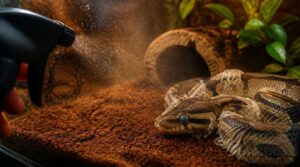
Start with the walls. Set your spray bottle to a fine mist setting and apply quick bursts, under 2 seconds each. Move the nozzle slowly so moisture spreads evenly.
Then lightly target the top 1 to 2 inches of substrate. You want it damp, not wet. This builds a local humidity pocket that rises gradually over 15 to 30 minutes.
Avoid Spraying Your Snake
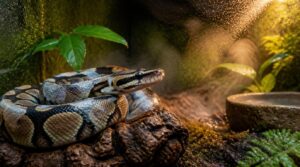
Your snake doesn’t belong in the line of fire. Direct spraying causes stress responses like hiding, striking, and even food refusal. It can also push water into nasal passages, putting respiratory health at risk.
Direct misting stresses snakes and risks their respiratory health — spray the walls, not the animal
Spray the walls and substrate only. Let rising humidity do the work while your snake stays dry and calm.
Keep Substrate Damp, Not Soaked
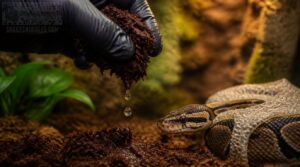
Now that the walls are coated, the substrate is where humidity actually lives. Grab a handful and squeeze. A few drops should release, and the material should briefly hold together without balling up. If it clumps tight, it’s too wet and needs time to dry out.
Color tells you a lot. Dark and cool means you’re in the right range.
Mist Once or Twice Daily
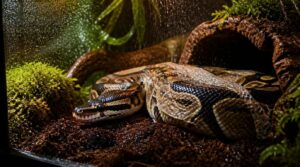
Once the substrate feels right, once or twice daily is your target for misting sessions. That rhythm keeps humidity steady without pushing it into dangerous territory.
Going beyond twice a day risks soggy substrate and serious respiratory problems for your snake.
Lukewarm, dechlorinated water around 75-80°F works best, closely mimicking natural warm rain and keeping temperatures stable inside the enclosure.
Recheck Humidity After Misting
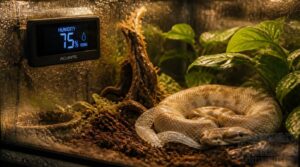
Misting means nothing without confirmation it worked. Within 5 minutes, check your digital hygrometer for a rise of 5 to 15 percent RH above baseline.
- Look for two readings above baseline within 3 minutes
- Record post-mist humidity to track trends over time
- If RH stays flat, adjust your spray coverage
- Compare each reading against your pre-mist baseline
Maintain Safe Humidity During Shed
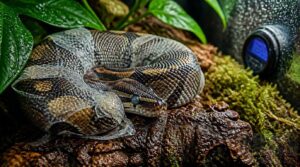
Getting the humidity right during shed isn’t a one-size-fits-all situation — it depends on your snake’s species and what your hygrometer is actually telling you. There are also a few common mistakes that can turn a damp enclosure into a moldy mess. Here’s what to watch for and how to stay on top of it all.
Match Humidity to Snake Species
Not every snake needs the same humidity level during shed.
Tropical species like emerald tree snakes need 70 to 90 percent to shed cleanly.
Arboreal snakes do best near 60 to 80 percent.
Desert species, like corn snakes, only need a brief bump from their normal 20 to 40 percent.
Burrowing species rely more on damp substrate than air humidity.
Ball Python Humidity During Shed
While ball pythons thrive at around 60% ambient humidity on normal days, the shedding phase calls for a bump to 70 to 80 percent. That humidity spike is what helps old skin release cleanly.
Keep the substrate slightly damp to support moisture retention, and place your digital hygrometer at snake level for steady, accurate readings.
Adjust Misting Using Hygrometer Readings
Your hygrometer is the control center here. If RH drops below 50% for more than two hours, increase your misting frequency. If it spikes above 80%, cut back. After each session, check readings within 5 to 10 minutes to confirm levels are stabilizing. Place your sensor mid-enclosure, away from airflow, for the most reliable data.
Prevent Condensation and Mold
Condensation signals you’ve pushed humidity too high. Stay on top of it with these habits:
- Wipe down glass walls whenever condensation forms.
- Crack the lid slightly to improve airflow.
- Clean your nozzles regularly to prevent mineral buildup.
- Use filtered water to protect nozzle performance.
Damp substrate left wet past 48 hours is always a warning sign. Dry it out fast.
Use Automatic Misters Carefully
An automatic mister can be a real difference-maker during shed, but only if it’s set up right.
Program short bursts of 30 seconds every four hours instead of long continuous cycles.
Always use filtered or distilled water to protect your nozzles.
Plug into a GFCI outlet with surge protection, and inspect tubing weekly for leaks.
Your hygrometer tells you when to back off.
Check Shedding Results and Troubleshoot

Once your snake finishes shedding, it’s time to do a quick check to make sure everything went smoothly. A complete shed tells you a lot about whether your humidity levels were right. Here’s what to look for — and what to do if something’s off.
Look for a Complete Shed
After shedding, do a quick shed integrity check by laying the skin flat. A healthy shed comes off in one long piece. If it’s fragmented or patchy, your humidity levels weren’t quite high enough.
Check that your floor moisture barrier held up and that wall seals stayed intact, since gaps let humidity escape and compromise the whole process.
Inspect Eyes and Tail Tip
Once the skin lays flat, check two spots: the eyes and the tail tip.
- Eye clouding check: cloudiness that won’t clear signals a stuck eye cap
- Eye cap release: the cap should lift at the edges on its own
- Tail tip inspection: dull or darker color means shed still clings
- Tail tip ringing: a tight band around the tip needs attention
Handle Retained Shed Safely
If you spotted retained shed on the eyes or tail tip, don’t force it off.
Soak your snake in lukewarm water at 85-90°F for 15-30 minutes to soften the skin first. Then wipe gently with a damp soft cloth along the scale direction. Stop if you feel resistance.
For stuck eye caps, a damp Q-tip rolled lightly often works.
Reduce Humidity After Shedding
Once the shed is complete, bring humidity back down right away. Open vents and run a fan on low for 15 to 30 minutes to pull moisture off surfaces and dry the substrate.
Vent the humid hide to promote air exchange. Check your hygrometer and remove pooled water from dishes.
Normal levels should return within 1 to 4 hours.
Seek Reptile Veterinary Care
If retained shed is still visible after the process completes, schedule a vet visit right away. Reptile medicine is specialized, so always confirm the clinic treats snakes before you go. Call ahead, bring a fecal sample, and share your care details.
If shedding problems come with other illness signs, don’t wait. A reptile-experienced vet can catch things you might miss.
Frequently Asked Questions (FAQs)
Can misting help with respiratory infections in snakes?
Like a cracked pipe letting contaminants seep in, dry mucous membranes leave your snake open to bacterial infection. Misting helps respiratory health by keeping humidity stable, but visible signs like wheezing or discharge mean your vet comes first.
How does room temperature affect misting effectiveness?
Room temperature directly controls droplet lifespan. Above 25°C, mist evaporates faster, causing quick humidity spikes that fade just as fast. Cooler rooms keep droplets airborne longer, so each misting cycle delivers more consistent, lasting results.
What water additives are safe for snake enclosures?
Use a reptile-safe water conditioner like ReptiSafe to neutralize chlorine and chloramine. Follow label dosing exactly. Two drops per 8 oz works for drinking bowls. Plain tap water left sitting won’t remove chloramine.
How long does a typical shedding cycle last?
Time really peels by during a shed. Most snakes take 1 to 2 weeks from first signs to final molt, with younger snakes cycling every 4 to 6 weeks and adults every 6 to
Does enclosure size change how often you mist?
Yes, enclosure size directly changes your misting schedule. Larger enclosures hold more air volume and lose humidity faster. Plan to mist 2-4 times daily in big tanks, and once or twice daily in smaller setups.
Conclusion
Think of a snake’s shed like a house in need of fresh paint. The old coat has to come off cleanly before anything new can stick.
Misting the enclosure during shed gives your snake the humidity it needs to slip free without a struggle. Check your hygrometer. Keep the substrate damp, not soaked.
A clean, one-piece shed means your snake is healthy and your husbandry is working well. That’s the only result worth aiming for.
- https://tempcube.io/blogs/temperature-humidity/ensuring-proper-humidity-levels-in-your-reptile-enclosure
- https://reptileamphibiangear.com/how-to/diy-reptile-misting-system-instructions
- https://reptilinks.com/blogs/news/humidity-how-to-increasing-or-decreasing-moisture-in-your-enclosures
- https://reptilesmagazine.com/the-best-reptile-misting-systems
- https://www.extrememist.com/products/high-performance-reptile-mister