This site is supported by our readers. We may earn a commission, at no cost to you, if you purchase through links.
A client brought in a ball python last spring with a sock of dead skin wrapped around its tail. The snake had shed three weeks prior. Tissue underneath had already started to constrict.
The enclosure looked fine. Temperatures were dialed in. The keeper had no idea that humidity affects incomplete shed far more than heat ever could. The tail was days from necrosis.
Dry air doesn’t just make shedding uncomfortable. It disrupts the thin fluid layer that allows old skin to lift cleanly away, and once that layer dries, retained skin adheres with surprising grip. Knowing why that happens is the first step to stopping it.
Table Of Contents
- Key Takeaways
- Why Low Humidity Causes Incomplete Snake Shed
- Signs Your Snake Has an Incomplete Shed
- Ideal Humidity Levels by Snake Species
- How to Fix an Incomplete Shed Now
- How to Raise Humidity in The Enclosure
- Preventing Incomplete Sheds Long-Term
- Frequently Asked Questions (FAQs)
- My snake hasn’t fully shed. What can I do to fix it?
- How hot does a shed get in 100 degree weather?
- How to stop inside of shed going mouldy?
- Is 95% humidity too high for ball python?
- Can incomplete sheds lead to infection or disease?
- Does feeding schedule impact shedding frequency?
- How does age affect a snakes shedding ability?
- Can stress cause poor shedding in captive snakes?
- Do wild snakes experience incomplete sheds naturally?
- Conclusion
Key Takeaways
- Humidity — not heat — is the deciding factor in whether your snake sheds cleanly, because dry air destroys the thin fluid layer between old and new skin before it ever gets a chance to lift.
- Retained skin becomes a medical emergency fast: a sock of dead skin around a tail can cut off circulation and trigger necrosis within 48–72 hours, so act the moment you spot it.
- A warm 40°C soak for 10–20 minutes, followed by a humid hide packed with damp sphagnum moss, is your most reliable one-two fix for stuck shed — no fingernails, no force.
- Every species has a specific humidity target (ball pythons: 55–70%, corn snakes: 40–60%, boas: 55–75%), and a digital hygrometer at resting level — not near the heat source — is the only way to know you’re hitting it.
Why Low Humidity Causes Incomplete Snake Shed

Incomplete sheds almost always trace back to one thing: not enough moisture in the air during the shedding cycle. Understanding exactly how dry conditions disrupt that process — and what you’re doing to make it worse — puts you in control. Here’s what’s actually happening inside your enclosure.
Your substrate plays a bigger role than most keepers realize — how substrate affects snake health explains why the wrong choice can quietly undermine humidity levels and trigger those frustrating incomplete sheds.
How Dry Air Affects Snake Skin
Snake skin isn’t waterproof. Keratin scales lose moisture constantly, and when relative humidity drops too low, that loss accelerates faster than the body can compensate.
The result is loss of pliability. Scales stiffen, the skin dulls, and you’ll notice a dry, dehydrated texture before a shed even begins. Prolonged dryness drives microcracks at scale margins, locking old skin in place. Understanding humidity’s role in shedding helps explain why the fluid layer between old and new skin must stay adequately moist to prevent adhesion and help smooth ecdysis.
The Shedding Process Explained Simply
The process itself, called ecdysis, runs in two clear stages. Hormonal signals initiate separation between old and new skin, forming a thin lymphatic fluid layer between them.
Your snake’s colors dull noticeably, eyes shift to a blue-grey haze, and appetite drops. These are recognizable pre-shed cues. Once that fluid redistributes, old skin peels cleanly away from the new layer beneath.
Why Humidity Matters More Than Heat
Once that lymphatic fluid redistributes, moisture retention becomes the deciding factor. Heat drives metabolism, but it can’t compensate for low humidity. Dry air leaves old skin brittle, and it won’t slough cleanly.
- Humidity preserves skin elasticity during shedding
- Moisture reduces friction between old and new skin layers
- Dew point regulation prevents micro-tears in dorsal scales
- Consistent moisture aids shedding cycle efficiency
Common Enclosure Mistakes That Dry Air
Most incomplete sheds trace back to enclosure design mistakes. Your moisture control strategy fails before shedding even starts.
| Mistake | Effect | Fix |
|---|---|---|
| Screen lid uncovered | Rapid RH drop | Cover 60% with glass |
| Sandy substrate choice | Dry hide pockets | Use coconut fiber |
| Air leaks at door gaps | Constant moisture loss | Seal with silicone |
| Poor hide ventilation | No humid microclimate | Add wet sphagnum inside |
Signs Your Snake Has an Incomplete Shed
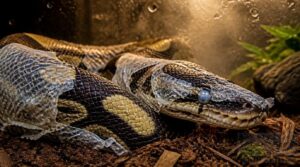
Incomplete sheds don’t always announce themselves with obvious clues — sometimes the signs are easy to miss until damage is already done. Knowing what to look for puts you ahead of the problem. Here are the key warning signs to check after every shed cycle.
Retained Eye Caps to Spot
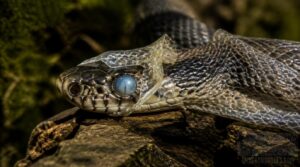
Seen a faint gloss on your snake’s eye after shedding? That’s often a retained eye cap.
If the cap doesn’t come off cleanly on its own, a warm soak and gentle handling can help — here’s a full guide to removing a stuck snake eye cap safely.
- Thin, clear or whitish film covering the cornea
- Dull or cloudy eye appearance post-shed
- Tiny wrinkles or folds near the eyelid margin
- Frequent face rubbing on enclosure objects
- Visible asymmetry between both eyes
Always compare both eyes carefully under bright, direct light.
Patchy or Torn Shed Pieces
Ragged fragments scattered across the enclosure floor are a clear signal.
Low humidity stiffens the skin, stripping away its elasticity and forcing it to tear instead of peeling cleanly. Look for incomplete strips along the belly, thin flaps clinging to the sides, and patchy sections near the head. That pattern points directly to a humidity gradient problem.
Constricted Tail Tip Warning Signs
When retained shed tightens around the tail tip as it dries, the constriction cuts off circulation.
Watch for tail tip narrowing, that pinched or bent appearance during movement, plus skin that looks darker and feels firmer than the rest. Tail tip stiffness limits flexibility noticeably.
If you spot fluid leaking from tiny wounds, that’s a vet call, not a wait-and-see.
Dull Scales After Shedding Ends
After a successful shed, scales should catch light with visible gloss. Dull, flat patches signal dead skin cells still clinging to the surface.
Watch for:
- Scales that appear cloudy or powdery
- Color looking muted compared to surrounding new skin
- Dull patches that persist beyond several days
Low relative humidity slows scale texture recovery. Keep enclosure RH on target.
Ideal Humidity Levels by Snake Species

Not every snake needs the same humidity level — and getting it wrong is one of the fastest ways to trigger a problem shed. Whether you keep a ball python, corn snake, or boa constrictor, each species has a specific range your enclosure needs to hit.
Here’s what those targets look like for each one.
Ball Python Humidity Requirements
Ball pythons need 55 to 70 percent RH as their baseline. During shedding, brief spikes up to 80 percent help the outer skin separate cleanly.
Drop below 50 percent and incomplete sheds, retained eye caps, and respiratory irritation become predictable outcomes. Place a digital hygrometer at the cool end, because heat sources near the warm side will skew your readings.
Corn Snake Humidity Range
Corn snakes are forgiving, but not infinitely so.
Keep ambient RH at 40 to 60 percent normally. When shedding starts, push it briefly to 65 to 75 percent, then drop back within 24 hours. A digital hygrometer at mid-enclosure gives accurate readings.
Cypress mulch or coco coir substrate retains moisture steadily, cutting down on constant intervention.
Boa Constrictor Moisture Needs
Boas need higher baseline moisture than corn snakes. Keep ambient RH at 55 to 75 percent, rising to 75 to 85 percent pre-shed.
- Humidity monitoring daily with a hygrometer
- Large water dish near warm end
- Moisture-retaining substrate for enclosure microclimate
- Never exceed 85 percent long-term
- Drop RH post-shed to prevent condensation
How to Fix an Incomplete Shed Now
Incomplete shedding doesn’t fix itself — you need to act now before retained skin tightens and cuts off circulation. The good news is that most cases respond quickly to a few targeted interventions you can do at home today. Here’s exactly what to do, step by step.
Warm Water Soaking Method
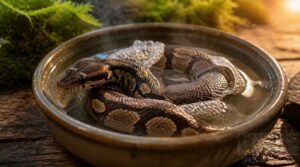
When retained skin won’t budge, warm water soaking is your most reliable first move.
Fill a shallow container with water at 40°C. Keep depth at 1-2 inches to prevent drowning. Let your snake soak 10 to 20 minutes, allowing moisture absorption across the skin surface.
| Factor | Specification | Purpose |
|---|---|---|
| Water temperature | 40°C | Softens skin safely |
| Water depth | 1-2 inches | Prevents drowning risk |
| Soak duration | 10-20 minutes | Restores moisture equilibrium |
Gently rub the skin after. Air dry slowly, away from direct heat.
Setting Up a Humid Hide
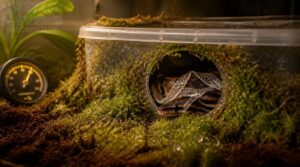
A warm soak starts recovery. A humid hide sustains moisture equilibrium between sheds.
Build one in five steps:
- Use a lidded plastic container as your hide box
- Cut a side entry hole for ventilation
- Layer damp sphagnum moss, kept moist but not soggy
- Target 70 to 90 percent humidity with a hygrometer
- Replace the moss weekly to prevent bacterial growth
Safely Removing Retained Skin Patches
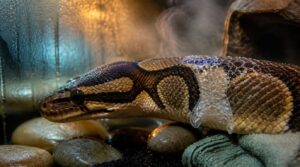
The humid hide softens stuck skin. After 20 to 30 minutes, patches usually slide free with minimal effort.
Use a damp, soft cloth, rubbing gently in the direction of scale growth. For stubborn spots, hold a warm damp cloth against the area for two minutes to soften first. Never use fingernails.
The new epidermis underneath tears easily and heals slowly.
Treating Retained Eye Caps Gently
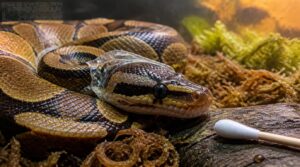
The spectacle sits directly over the cornea, making this the highest-risk step.
After a 30-minute soak, try the cotton swab technique: roll a moistened swab gently from nose to neck.
A mineral oil soak softens stubborn caps within 24 hours.
Fix humidity regulation to prevent recurrence.
If the cap persists, your vet can apply water-soluble gel for safe removal.
How to Raise Humidity in The Enclosure
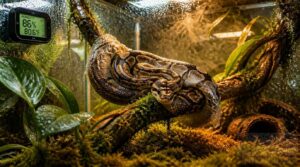
Once you’ve handled the immediate problem, the next step is making sure your enclosure actually holds humidity long-term. There are a few reliable adjustments you can make — some simple, some requiring a small setup — that work far better than just misting more often. Here’s what to focus on.
Misting Schedule for Snake Tanks
Mist once each morning for 10 to 20 seconds in small enclosures, adjusting to 15 to 30 seconds for mid-sized tanks.
A light evening mist compensates for daytime evaporation.
Large enclosures over 40 gallons benefit most from an automatic misting system running 2 to 4 second bursts every 4 to 6 hours. Confirm the target range with a hygrometer afterward.
Choosing Moisture-retaining Substrate Types
The substrate under your snake acts as a moisture reservoir, releasing humidity steadily between mists. Coconut coir holds 600 to 700 percent its weight in water, making it a reliable hygroscopic material.
Mix in perlite at roughly 20 to 30 percent to maintain airflow. Without that balance, fine organic substrates compact, cut oxygen, and raise rot risk over time.
Covering Part of The Screen Lid
Screen lids bleed humidity fast. Covering 25 to 50 percent of the lid with a non-toxic plastic panel or acrylic sheet traps moisture without cutting airflow entirely.
Position the covered section away from the heat source to avoid creating hot spots. Check for condensation buildup daily and adjust the covered area by small increments if humidity stays consistently below target.
Humid Hide Box Setup Tips
Think of the humid hide as a shed station. Keep it cool-side positioned, away from heat mats, to slow substrate drying. Fill with damp sphagnum moss or coconut fiber, and size the entry hole to your snake’s width.
- Replace substrate every one to two weeks during active shedding.
- Use dechlorinated water when remoistening.
- Inspect weekly for mold or odor.
Preventing Incomplete Sheds Long-Term
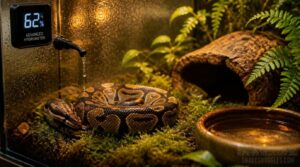
Fixing an incomplete shed is reactive — preventing it is where real progress happens. Long-term success comes down to a few consistent habits that keep humidity stable before problems start. Here’s what to build into your routine.
Preventing incomplete sheds beats fixing them — consistent humidity habits stop problems before they start
Tracking Humidity With a Hygrometer
You can’t manage what you don’t measure. Place a digital hygrometer at your snake’s resting level, away from heat lamps and humid hides. Record readings daily at the same time.
| Species | Baseline RH | Shedding RH |
|---|---|---|
| Ball Python | 60-65% | Up to 70% |
| Corn Snake | 40-60% | Up to 60% |
| Boa Constrictor | 60-70% | Up to 70% |
Calibrate monthly. Fresh batteries prevent lag.
Spotting Pre-shed Signs Early
Once your hygrometer readings are consistent, pair them with daily visual checks. Early scale dullness arrives first, the gloss fading days before eye changes appear.
Watch for milky or opaque eyes, a reliable indicator that shed is 1-2 weeks out. Your snake may also seek shelter more, slow feeding, and linger near humid hides. Log both sets of observations together.
Seasonal Humidity Adjustments Year-round
Humidity targets shift with seasons, and your enclosure tracks every change. Winter air dries out quickly, so mist more often and add moisture-releasing substrate to hold levels steady. Summer’s outdoor humidity can overshoot your target range, which means tightening or opening your ventilation strategy to manage moisture pathways.
Use hygrometer timers to automate misting and fan cycles across both seasons.
When to See a Reptile Vet
Your best ventilation strategy and shed moisture control can still fall short. When humidity support fails, retained skin stays stuck.
See a reptile vet when:
- Retained eye caps don’t clear after a warm soak and humidity boost
- Tail constriction or swelling develops near the tip
- Repeated shed issues continue despite fixing moisture pathways
Annual reptile exams remain your strongest prevention.
Frequently Asked Questions (FAQs)
My snake hasn’t fully shed. What can I do to fix it?
An old apothecary trick still holds: soak your snake in warm water at 85-90°F for 15-30 minutes. After, gently remove retained patches with a damp cloth, then set up a humid hide.
How hot does a shed get in 100 degree weather?
In 100°F heat, a poorly insulated shed can hit 120 to 140°F inside, especially under a dark metal roof. Good ventilation and reflective roofing keep temps closer to 90 to 110°F.
How to stop inside of shed going mouldy?
Left unchecked, mould takes hold quickly. Install a vapour barrier to block ground moisture, improve ventilation using cross-flow vents, and run a dehumidifier to hold RH below 65%. Fix the moisture source before anything else.
Is 95% humidity too high for ball python?
Yes, 95% is dangerously high. Ball pythons thrive at 55-70%, with brief spikes to 75-85% during shedding only. Sustained levels above 80% risk respiratory infections, bacterial growth, and chronic substrate fouling.
Can incomplete sheds lead to infection or disease?
Medieval physicians called it "proud flesh" when trapped tissue turned septic. That same mechanism applies here: bacterial and fungal infections develop fast beneath retained shed, causing scale rot and tissue necrosis within 48-72 hours.
Does feeding schedule impact shedding frequency?
Yes. Feeding timing consistency directly influences molt frequency. Metabolic stress from irregular meals can delay or disrupt shedding cycles. Steady, species-appropriate feeding helps maintain predictable skin turnover and reduces your risk of incomplete sheds.
How does age affect a snakes shedding ability?
Does age slow your snake’s shed quality? Juvenile growth patterns push frequent, clean shedding reliably. As growth stalls, adults shed far less often. Senior skin elasticity declines, and hydration needs increase to support complete sloughs.
Can stress cause poor shedding in captive snakes?
Chronic stress disrupts shedding directly. Elevated corticosterone suppresses keratin production and delays skin turnover, producing patchy or retained sheds. Snakes in barren enclosures without proper hiding spots or stable temperature gradients show this most often.
Do wild snakes experience incomplete sheds naturally?
Wild snakes do experience incomplete sheds. Desert and arid zone snakes are especially prone, with natural shedding cycles often disrupted when atmospheric moisture drops, leaving retained patches on the tail or around the eyes.
Conclusion
Like the canary in the coal mine, a patchy or retained shed signals something is wrong long before you can see the real damage hidden underneath. Humidity affects incomplete shed more than any single variable in your enclosure, and ignoring that connection costs tails, eye caps, and sometimes the snake itself. Fix the air first.
Track your numbers every week. The animal can’t tell you it’s struggling, but the skin it leaves behind always will.
- https://thetyedyediguana.com/blog/stuck-shed-why-it-happens-and-how-to-safely-help-your-reptile
- https://www.zubairkhalid.com/knowledge/veterinary-medicine/reptile-care/ball-python-dysecdysis-retained-spectacle-treatment-humidity-correction
- https://www.petmd.com/reptile/conditions/skin/dysecdysis-reptiles
- https://www.thesprucepets.com/dysecdysis-in-reptiles-5181667
- https://vetericyn.com/blogs/vetericyn/dysecdysis-in-reptiles-everything-you-need-to-know