This site is supported by our readers. We may earn a commission, at no cost to you, if you purchase through links.
Over 3,900 snake species share the planet with you, yet most people couldn’t name five. That gap isn’t a failure of curiosity. It’s a failure of starting points.
Learning about different snake species gets overwhelming fast without structure. One afternoon you’re reading about garter snakes, and the next you’re buried in taxonomic keys for Colubridae, wondering why juvenile corn snakes look nothing like their parents.
A working knowledge of snake families, basic field identification, and a handful of trusted resources cuts through the noise faster than you’d expect.
Table Of Contents
- Key Takeaways
- What Snake Species Groups Actually Exist
- How to Identify Different Snake Species
- Best Books and Apps for Snake Learning
- Hands-on Ways to Study Snake Species
- Popular Pet Species Worth Studying First
- Frequently Asked Questions (FAQs)
- What are the 7 classifications of a snake?
- Which state has zero snakes?
- How to learn more about snakes?
- Can you give me a list of different types of snakes?
- How do snakes communicate with each other in the wild?
- What role do snakes play in their ecosystems?
- How did snakes evolve from their lizard ancestors?
- Which snake species are currently endangered or threatened?
- Conclusion
Key Takeaways
- Understanding the major snake families — Colubridae, Boidae, Pythonidae, Elapidae, and Viperidae — gives you a reliable framework that predicts behavior, venom type, and habitat before you’ve even spotted one in the field.
- You can identify most snakes safely by reading a few key physical signals: head shape, pupil type, scale texture, and whether heat-sensing pits sit between the eye and nostril.
- The sharpest learning toolkit combines regional field guides for local species, iNaturalist for community-verified IDs, and beginner-friendly pet species like ball pythons or corn snakes for hands-on behavioral insight.
- Real fluency with snakes comes from layering structured study with field experience — citizen science trips, reptile expos, and herpetological societies accelerate that process faster than reading alone ever will.
What Snake Species Groups Actually Exist

Before you can confidently identify a snake in the field, it helps to understand how they’re actually organized as a group. Snakes aren’t just "venomous" or "not"—there’s a whole taxonomic structure behind the thousands of species alive today. Here’s a look at the main groups you’ll want to know.
Digging into the full taxonomy of snake species reveals why a snake’s family tree often predicts its behavior, venom type, and even the shape of its pupils.
Major Snake Families Briefly Explained
Snake taxonomy organizes thousands of species into manageable families. Colubridae, the largest, spans nearly every continent and includes familiar species like garter snakes and corn snakes. Boidae and Pythonidae are your constrictors, with pythons laying eggs while boas birth live young. Elapidae covers cobras and mambas, while Viperidae encompasses rattlesnakes and vipers.
Juvenile markings often differ from adult patterns within the same family, which can trip up even experienced observers.
For a deeper dive into how these groups differ, exploring snake classification families and characteristics can help beginners understand venom types, hunting methods, and habitat adaptations across species.
Venomous Vs. Non-Venomous Groups
Beyond family names, venomous vs. non-venomous is the split that matters most for safety.
- Venom fangs: hollow or grooved fangs inject toxins; nonvenomous snakes lack them
- Pupil shape differences: slit pupils often signal vipers; round pupils suggest harmless mimics
- Head morphology traits: broad triangular heads house venom glands
Snake identification apps help confirm what you spot from a safe distance.
Colubridae, Boidae, and Pythonidae Basics
Three families dominate what most people encounter. Colubridae, the largest, covers mostly non-venomous species like garter and corn snakes across temperate regions.
Boidae includes the boa constrictor, bearing live young and using heat-sensing loreal pits to locate prey.
Pythons, grouped in Pythonidae, lay eggs and actively guard their clutches, with reticulated pythons reaching record lengths through powerful constriction.
How Many Snake Species Exist
Those three families represent just a portion of an 80-million-year evolutionary history spanning suborder Serpentes and its over 3,000 known species, a count that grows as genetic research surfaces cryptic lineages.
- Global count: ~3,000 species and rising
- Regional variation: tropical zones hold the densest diversity
- Cryptic discovery: genetics expose hidden species
- Taxonomic updates: databases continuously update classification records
Key Traits Separating Each Group
What truly separates these groups comes down to features you can observe and learn. Head shape morphology and broad jaw width mark venomous species, since venom glands push the skull wider. Eye pupil shape follows: elliptical means caution.
Scale texture, tail rattle function, and infrared detection in snakes via heat pits are the remaining markers that complete the taxonomic picture.
How to Identify Different Snake Species
Identifying a snake comes down to reading the clues it leaves in plain sight — its scales, its shape, its behavior, and how it reacts when you get close. Each of those signals tells a specific part of the story, and knowing which ones to look for makes all the difference between a confident ID and a risky guess. Here’s what to pay attention to.
Start with straightforward species before working your way up to more challenging snake identifications — experience is the sharpest tool in your kit.
A snake tells its own story through scales, shape, and behavior — if you know what to look for
Scale Patterns and Body Coloration
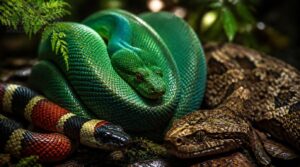
A snake’s scales are a color-coded field guide. Scale border patterns and iridophore color shifts reveal species identity, with thin scale layers producing metallic sheens when light hits at the right angle.
Look for these visual markers:
- Solid body color versus banded or mottled patterns
- Camouflage through mottling mimicking forest leaf litter
- Geometric scale alignment following the body’s natural contours
Size and Body Structure Clues
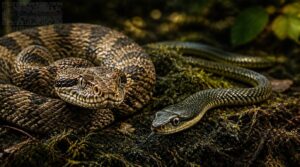
Body girth and head width reveal group identity faster than color alone.
A pit viper’s wide skull, elliptical eyes, and heavy midsection contrast sharply with a racer’s slender body shape.
Tail thickness, snout shape, and scale count at the midbody all narrow identification quickly. Even scale morphology, whether keeled or smooth, combined with fang type, distinguishes families at a glance.
Behavioral Signals for Species ID
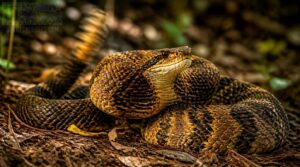
Behavior under pressure can tell you as much about a species as scale counts ever could.
- Tail vibration patterns are species-specific, even in non-rattlesnakes
- Body coiling timing and strike posture identify genus during field sightings
- Puffing behavior cadence and hissing rate variation differ between venomous and non-venomous species
Always watch for breathing sound resonance when a cornered snake feels alarmed.
Spotting Venomous Species Safely
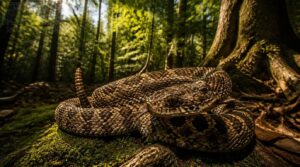
The moment you spot what might be a venomous snake, keeping distance is your first and best defense. Look for a triangular head shape, elliptical slit-like pupils, and a heat-sensing pit between the eye and nostril. A warning rattle means stop immediately.
| Feature | Venomous Cue | Safe Action |
|---|---|---|
| Head | Triangular jaw | Back away |
| Pupils | Slit-like | Use binoculars |
| Sound | Rattle/hiss | Freeze, retreat |
Best Books and Apps for Snake Learning

Learning about snakes doesn’t have to mean staring at blurry photos and hoping for the best. The right books, databases, and apps can sharpen your identification skills faster than almost anything else. Here’s a look at the resources worth adding to your toolkit.
Regional Field Guides Worth Owning
A quality regional field guide narrows geographic snake distribution down to species actually near you.
Look for guides that offer:
- State species checklists for thorough local inventory
- Habitat maps by county range
- Seasonal activity charts for timing outings
- Local look-alike tips to prevent misidentification
- Range hotspot indicators for targeted fieldwork
The Peterson Field Guide Series remains a consistently trusted reference.
Trusted Online Reptile Databases
Regional guides handle local coverage well, but taxonomic name changes outpace any print edition you own.
The Reptile Database lists over 10,000 species, updating entries within months of publication and cross-referencing iNaturalist, NCBI Taxonomy, and Catalogue of Life. Each species entry includes synonyms, distribution notes, and literature references, so you can verify a name or confirm a range in minutes.
Snake ID Apps for Beginners
Databases tell you what a species is called. Apps show you what’s actually in front of you. Snake ID apps process a captured photo within seconds, returning the common name, scientific name, venomous status, and regional range all on one screen.
Many apps include offline species libraries, which matters when you’re out deep in the field without a data signal.
INaturalist for Community Verification
Apps handle quick IDs. iNaturalist controls confirmation through community consensus, not software alone.
Upload your photo with precise location and date; two agreeing users boost your observation to research grade status.
What strengthens your submission:
- Multiple clear photos from different angles
- Precise GPS coordinates
- Exact date and time
- Habitat notes in annotation fields
- Tagging a trusted identifier
Forums and Social Groups to Join
Community verification through iNaturalist gives you an answer, but forums give you the conversation behind it. r/snakes on Reddit has over 200,000 members posting daily species IDs, making it the most active wildlife identification community online. Facebook herpetology groups require prior approval, filtering for serious discussion. Local naturalist clubs and university discussion boards offer regional precision no app can replicate.
| Platform | Best For | Access |
|---|---|---|
| r/snakes (Reddit) | Daily species ID, wildlife identification | Open to all |
| Facebook herpetology groups | Regional expert discussion | Approval required |
| Local naturalist clubs | Field trips, regional snakes | Monthly in-person |
Hands-on Ways to Study Snake Species

Reading about snakes will only take you so far — at some point, you need to actually be around them. Hands-on experience sharpens your eye for detail in ways that photos and field guides simply can’t replicate. Here are some of the best ways to get that real-world exposure.
Visiting Zoos and Reptile Exhibits
Few settings sharpen snake recognition faster than a well-designed reptile exhibit. Modern zoos recreate naturalistic habitats, giving you real context for each species.
Watch for:
- Hidden barriers and viewing windows reducing animal stress
- Basking platforms and climbing structures for natural behaviors
- Clear educational signage with species names and origin
These features turn a zoo visit into genuine herpetology study.
Joining a Herpetological Society
If you’re serious about herpetology, joining a local society accelerates your learning considerably. Monthly chapter meetings connect you with field-experienced naturalists discussing reptile biology and herpetology taxonomy.
Members gain exclusive access to newsletters and publications, with archives covering species profiles and conservation updates. Discounted event admission and conservation outreach participation round out a membership built for genuine reptile taxonomy study.
Attending Reptile Expos and Events
Reptile expos put dozens of species within reach in a single venue. Arrive early to find popular vendors and new arrivals, wash your hands before touching anything, and follow each exhibitor’s handling rules to avoid stressing animals.
Rescue groups often share floor space with commercial breeders, giving you a broader view of the reptile pet trade in a single visit.
Citizen Science Field Trip Options
Few experiences match walking a trail with someone who spots a garter snake before you notice the grass move. Citizen science field trips connect you with naturalists who know local species, seasonal patterns, and safe observation techniques.
- Bring a field guide or ID app
- Log each sighting with date, habitat, and photo
- Wear long pants and sturdy footwear
Learning Through Responsible Pet Handling
Handling a Ball Python or Corn Snake teaches you more about reptile behavior than most field guides ever can. You learn stress recognition cues like hissing or flattening, and build real observational skill quickly.
Safe handling practices mean supporting the full body, moving slowly, and washing your hands after. Return the snake to its secure enclosure when it shows discomfort.
Popular Pet Species Worth Studying First

If you’re just getting started, studying pet species is one of the smartest moves you can make. They’re well-documented, widely kept, and give you a solid foundation before you branch out to wild or exotic snakes. Here are the most popular beginner species worth knowing first.
Ball Python Traits and Temperament
Ball pythons earn their reputation through one defining quality: patience. They’re naturally calm and slow-moving, tolerating gentle, consistent handling without the defensive aggression typical of wild-caught species. When stressed, they curl into their signature ball posture rather than striking.
Keep enclosures at 88 to 96°F with secure hides, and their temperament almost always reflects the quality of care you provide.
Corn Snake Basics for Beginners
Corn snakes (Pantherophis guttatus), known for their distinctive blotched pattern, are among the most beginner-friendly species native to the southeastern United States.
- Enclosure setup: 20-40 gallon tank, warm side at 85-90°F
- Feeding schedule: thawed mice every 7-14 days by age
- Handling tips: brief sessions build a tame, calm temperament
- Health monitoring: clear eyes and smooth, intact skin signal good health
Boa Constrictor Key Characteristics
Where corn snakes reward patience through their compact size, the boa constrictor (Boa constrictor) demands a different kind of respect. Adults reach 10 to 13 feet and weigh up to 60 pounds, with a heavy muscular frame built for constriction. Their brown saddle patterning deepens toward the tail.
Unlike egg-layers, boas deliver live young, with litters reaching up to 60 neonates.
Comparing Common Beginner Species
After the boa, three smaller options offer a cleaner starting point:
- Ball pythons: docile, 3-4 feet, fed every 1-2 weeks
- Corn snakes: curious, 4-5 feet, growing 12-18 inches in year one
- Garter snakes: active and skittish, 2-3 feet, requiring frequent small meals
Your enclosure setup and schedule should drive this choice as much as appearance does.
Where to Research Your First Snake
Once you’ve narrowed your list to two or three candidates, structured research sources close the gap between curiosity and confidence.
| Source | Format | Best For |
|---|---|---|
| ReptiFiles.com | Care sheets | Daily husbandry |
| iNaturalist | Photo ID | Regional species |
| Peterson Field Guide | Print reference | Habitat and range |
Reptile expos let you handle live specimens before committing, and herpetological society meetings fill what websites often miss.
Frequently Asked Questions (FAQs)
What are the 7 classifications of a snake?
Snakes follow the Linnaean classification system across seven ranks: Kingdom (Animalia), Phylum (Chordata), Class (Reptilia), Order (Squamata), Family, Genus, and Species.
Within the Squamata order, snakes specifically occupy the suborder Serpentes, also historically called Ophidia.
Which state has zero snakes?
Alaska is the only U.S. state with zero native snakes. Extreme cold, permafrost-covered terrain, and minimal basking habitat make survival impossible. Hawaii is also effectively snake-free, protected by geographic isolation in the Pacific.
For keepers elsewhere, though, the bigger risk isn’t wild snakes—it’s disease moving between collections, which is why proper snake quarantine procedures matter before any new snake joins your tank.
How to learn more about snakes?
Curiosity killed the cat, but it’ll serve you well here. Start with regional field guides, explore trusted online databases like iNaturalist, and use snake ID apps to sharpen your eye for species in the wild.
Can you give me a list of different types of snakes?
There are roughly 4,000 known snake species worldwide, grouped into families like Colubridae, Boidae, Pythonidae, Elapidae, and Viperidae, spanning venomous and non-venomous types across nearly every habitat on Earth.
How do snakes communicate with each other in the wild?
Like silent telegrams written in scent, snakes communicate through chemical pheromone trails, flicking their forked tongues to read messages left on leaves and soil, while vibrational cues and body postures complete their behavioral vocabulary.
What role do snakes play in their ecosystems?
Snakes are keystone regulators in most ecosystems. They control rodent and pest populations, serve as prey for raptors and mammals, and connect soil, canopy, and aquatic food webs through their movement between habitats.
How did snakes evolve from their lizard ancestors?
Ancestral snakes diverged from varanoid lizards roughly 80 million years ago, gradually losing hind limbs as fossorial life reshaped their bodies, skulls grew more kinetic, and elongated vertebrae replaced the need for legs entirely.
Which snake species are currently endangered or threatened?
Critically endangered sea snakes like Aipysurus foliosquama have collapsed from reef degradation, the Round Island Burrowing Boa is already extinct in the wild, and illegal wildlife trade compounds habitat-driven losses across many threatened populations.
Conclusion
Rome wasn’t built in a day, and neither is a solid understanding of the world’s 3,900+ snake species. Knowing how to learn about different snake species comes down to one simple thing: building the right foundation first.
Start with major snake families, then layer in field identification skills, trusted resources, and meaningful real-world experience. The knowledge compounds faster than you’d expect.
Pick one species. Study it carefully and deeply. Then let curiosity do the rest.