This site is supported by our readers. We may earn a commission, at no cost to you, if you purchase through links.

Most corn snakes disappear into leaf litter without a second glance. The Palmetto morph does the opposite. A white base scattered with vivid speckling makes it look less like a snake and more like something a painter left unfinished.
Breeders Stolz and Whisler developed this look in the late 1990s through selective breeding. The trait is recessive, so two copies of the gene must align before that signature coloration appears.
Keeping one healthy takes the same precision. The right setup, feeding schedule, and handling routine make all the difference between a thriving animal and a stressed one.
Table Of Contents
Key Takeaways
- The Palmetto morph’s white base with vivid speckling only appears when a snake inherits two copies of the recessive gene, so breeding outcomes are fully predictable if you understand basic genetics.
- Getting the enclosure right from day one — proper temperature gradient, humidity levels, and two hides — is the foundation everything else builds on.
- Feeding thawed prey at the right size for your snake’s girth, then waiting 48 hours before handling, prevents most of the health issues new keepers run into.
- Trust with a Palmetto isn’t instant — short, consistent handling sessions three to four times a week are what turn a nervous hatchling into a settled, confident adult.
Palmetto Corn Snake Quick Facts, Origin, and Appearance

The Palmetto corn snake is one of the most visually striking morphs in the hobby — and knowing where it came from makes owning one even more rewarding. Before you set up an enclosure or pick a feeding schedule, it helps to understand what this snake actually is, genetically and physically.
Digging into corn snake morph genetics and identification reveals exactly what makes the Palmetto so exceptional — and why breeders prize it above nearly every other morph.
Here’s what you need to know about its origin, inheritance pattern, and appearance.
Discovery and Palmetto Morph Origin
The Palmetto Corn Snake you see today traces its roots to selective captive breeding in the late 1990s. Breeders Stolz and Whisler are credited with isolating this striking genetic mutation, which shares traits with leucism in reptiles by reducing pigment distribution.
Early lines focused on warm golden tones. Homozygous Palmetto corn snakes remain the standard for consistent color expression. Understanding such traits is easier when hobbyists apply data-centered reading approaches to interpret scientific literature on reptile genetics.
Genetics and Inheritance Pattern
That mutation Stolz and Whisler isolated follows an autosomal recessive inheritance pattern. Both parents must carry the Palmetto allele for offspring to express the morph.
A homozygous Palmetto carries two copies and consistently shows the characteristic white base with colored speckling. A heterozygous Palmetto carries one copy but looks like a normal corn snake.
Understanding this color genetics framework helps you predict clutch outcomes reliably.
Juvenile-to-Adult Color Changes
Your color genetics knowledge applies here. A pinkish juvenile Palmetto looks almost unrecognizable next to a mature snake, but the shift happens gradually.
Three changes stand out with age:
- Juvenile coloration moves from soft cinnamon to deeper amber.
- Speckling sharpens and grows denser.
- The vibrant white adult base becomes crisper after each shed.
Color inheritance keeps all these shifts predictable.
Adult Size and Lifespan
Growth doesn’t stop at color changes. Your Palmetto corn snake keeps developing for 2 to 3 years.
| Stage | Range |
|---|---|
| Adult size | 48-72 inches |
| Adult weight | 300-1,500 grams |
| Full growth | 2-3 years |
| Captive lifespan | 6-15 years |
Females usually grow slightly larger than males on average. Captive lifespan spans 6 to 15 years. Genetic morphs from captive breeding don’t shift these numbers.
Eyes, Speckling, and Markings
What you’ll notice first are the pale, frosted scales covered in dark speckling. Speckling runs densest along the back and fades toward the tail.
The head markings form dark eye patches that extend toward the snout, sometimes with a light crossband between the eyes. Eye color mirrors the body tone, with lighter irises and dark pupils that stay glossy through every shed.
How to Set Up a Palmetto Corn Snake Enclosure
Getting your Palmetto’s home right from day one makes everything else easier. There are a few key things you’ll need to think through before your snake ever arrives. Here’s what to set up first.
Choosing the right hides is one of the most important early decisions you’ll make, so it helps to understand the full range of snake enclosure hide types and how to use them before your Palmetto settles in.
Enclosure Size by Life Stage
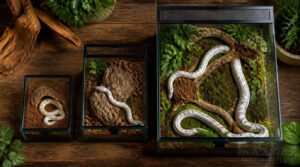
Think of your palmetto’s enclosure size as something you renegotiate with every growth stage. Hatchlings 50-100 grams thrive in a 20-gallon tank. Subadults need a 20-30 gallon terrarium at minimum. Adults want 60 inches or more. A secure lid belongs on every setup.
- Juvenile: 20-gallon minimum
- Subadult: 36 to 48 inches
- Adult: 60 inches or longer
Escape-Proof Lid and Door Security
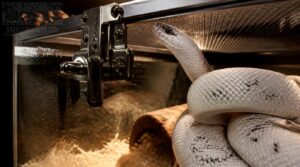
Your enclosure size choice matters, but a secure lid is what keeps your palmetto where it belongs.
| Feature | What It Does |
|---|---|
| Magnetic lid lock | Stops accidental openings |
| Spring-loaded hinges | Closes firmly on release |
| Tolerance gaps under 2mm | Deters prying attempts |
An escape-proof lid directly helps your handling techniques by keeping stress reduction consistent every single time you open the tank.
Temperature Gradient and Heating

Your palmetto is cold-blooded, so thermal regulation depends entirely on the setup you build for it.
- Warm end: 88-92°F helps active digestion
- Cool end: 78-82°F provides a stable retreat
- Thermostat regulation holds each zone within ±2°F
- Temperature monitoring catches dangerous spikes before harm occurs
Aim for a temperature gradient of 75 to 85°F. A good dimming thermostat prevents rapid shifts.
Humidity Range and Monitoring

Humidity sits between 40-60% for juveniles and 40-50% for adults. Good humidity management starts with a hygrometer at snake level, away from heat.
| Life Stage | Humidity Target |
|---|---|
| Hatchling | 50-60% |
| Juvenile | 40-60% |
| Adult | 40-50% |
| Shedding | 55-65% |
| Post-shed | 40-50% |
Hygrometer monitoring catches dips fast. Substrate moisture affects readings, so moisture control starts with sensor placement. Log readings during sheds.
A digital reptile humidity gauge with memory logging makes it easy to spot humidity trends across multiple sheds without guessing.
Substrate, Hides, and Enrichment

Your substrate choice shapes the whole enclosure. Aspen shavings sit 2-3 inches deep, stay dry, and clean up fast. Cypress mulch holds humidity better and helps during sheds.
Keep two hides, one on the warm side and one on the cool side. Climbing branches add vertical space and keep muscles active. Spot clean daily and swap substrate every 4-6 weeks.
How to Feed and Handle a Palmetto Corn Snake
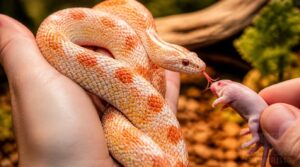
Feeding and handling your Palmetto corn snake the right way makes all the difference in keeping it healthy and stress-free. It’s not complicated, but there are a few key things you’ll want to get right from the start. Here’s what you need to know.
Prey Size and Feeding Frequency
Getting the prey size right matters more than most keepers realize. Start hatchlings on thawed pinky mice every 5 to 7 days.
As your snake grows, match prey width to its body girth to avoid regurgitation. Adults handle prekilled mice on a feeding schedule of 10 to 14 days. Stick to this consistent rodent diet and your snake will thrive.
Pairing consistent feeding habits with an understanding of corn snake behavior and stress signals helps you recognize when your snake is relaxed enough to feed confidently.
Frozen-Thawed Rodent Preparation
Once you’ve set your feeding schedule, prep matters just as much as prey size. Stick to a rodent diet and thaw frozen-thawed mice at room temperature for 60 to 90 minutes. Never use a microwave.
Thawed pinky mice should feel warm before you offer them. Pat dry any surface moisture so your snake grips the prey cleanly. Don’t refreeze leftovers.
Safe Handling After Meals
After feeding, wait 48 hours before handling your snake. Picking them up too soon risks regurgitation.
- Wash hands with warm soapy water before and after sessions
- Dry hands fully before reaching into the enclosure
- Confirm the escape-proof lid is secure after each access
- Keep a clean enclosure to support safe regular handling
- Match handling frequency to your snake’s post-meal schedule
Building Trust Through Handling
Trust isn’t given, it’s built session by session. Regular handling, three to four times weekly in short 5-minute bouts, gradually shapes a docile temperament.
Trust with a snake is built session by session, not handed over all at once
Keep the enclosure clean and always provide hiding places so your snake feels secure between sessions. A snake that can retreat on its own terms stays calmer in your hands. Handling frequency matters more than duration.
Weight and Body Condition Tracking
Weigh your Palmetto corn snake before every feeding using a small digital scale zeroed with the container. Record in grams and keep a log.
A healthy snake gains after meals and holds steady between them. Continued loss over several weigh-ins signals trouble. Check body condition too: ribs shouldn’t be sharply visible, and the body contour should look smooth and even.
How to Keep a Palmetto Corn Snake Healthy

Keeping a Palmetto corn snake healthy isn’t complicated, but it does require consistent attention to a few key areas. Small issues can become serious problems fast if you’re not watching for the early signs. Here’s what to check and when to act.
Routine Health Checks
A quick weekly check keeps small problems from becoming big ones. Look your palmetto over during handling. Check for clear, bright eyes, smooth skin, and a clean vent. Watch for mites, which look like tiny moving dots near the eyes or mouth. Any mucus, wheezing, or visible spine warrants a vet visit.
Inspect the skin regularly and stay consistent.
Shedding Support and Humidity Adjustments
Palmettos shed every 4 to 6 weeks. When eyes go bluish and skin dulls, the shedding cycle has started.
Keep humidity at 40 to 60 percent, using a hygrometer near the basking spot. A humid hide lined with damp sphagnum moss on the cool side helps.
For stuck patches, try water dish soaking for 10 minutes as direct shedding assistance.
Common Illness Warning Signs
Spot problems early and you’ll save your snake a lot of suffering.
Watch for:
- Mouth rot signs: thick mucus or cheesy buildup in the mouth
- Fungal infection: blistered or discolored scales that won’t clear up
- Respiratory distress: open-mouth breathing or audible wheezing
Check scale health between sheds every 4 to 6 weeks. These signs all mean a vet visit.
Brumation Safety and Preparation
Not every corn snake needs brumation. If you choose brumation cycling, only attempt it with a vet-cleared, healthy snake.
Brumation preparation means fasting first, clearing the digestive tract, and reducing the temperature gradient gradually over several weeks. Keep fresh water accessible daily. Always confirm your secure lid is locked.
The full dormancy period usually lasts around 2 to 3 months.
When to See a Veterinarian
Some signs in your Palmetto corn snake simply can’t wait.
- Bluish or white gums and weak pulse need emergency care
- Mouth rot or cloudy eyes call for a vet visit within 24 hours
- Seizures or head pressing are neurological red flags
- Skin that won’t shed or persistent sensitivity may signal infection
Heavy bleeding or broken bones can’t wait at all.
Palmetto Corn Snake Breeding, Cost, and Buying
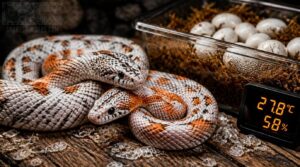
Breeding Palmetto corn snakes is where genetics gets genuinely exciting — and where your investment decisions start to matter.
Whether you’re pairing hets, hunting for a high-contrast designer combo, or just looking to buy your first one, knowing what to expect saves you time and money.
Here’s what you need to know about pairings, pricing, and finding a breeder you can actually trust.
Homozygous and Heterozygous Pairings
If you want to breed Palmettos deliberately, genetics is your starting point. When you pair two heterozygous Palmetto corn snakes, you get a 1:2:1 ratio: about 25% homozygous, 50% heterozygous, and 25% normal.
Homozygous Palmetto corn snakes carry two identical gene copies and reliably pass the color morph to all offspring. That’s why genetic inheritance always matters before any pairing.
Captive Breeding Cycle Basics
Once pairings are set, start the cycle with brumation for 2 to 3 months at 55 to 60°F to trigger readiness.
After brumation, reintroduce your pair. Females lay eggs 30 to 45 days post-mating. Hatchlings shed within days of emergence, then continue shedding every 4 to 6 weeks as they grow.
Track genetic inheritance for every clutch. Breeding Palmetto corn snakes without records makes future pairings guesswork.
Standard and Designer Morph Prices
Prices vary widely. Basic hatchlings start around $60 to $120. Morph valuation climbs fast once rarer color mutations and genetic variations enter the picture.
Four price tiers to know for a Palmetto Corn Snake:
- Hatchling basics: $60–$120
- Standard morphs: $150–$350
- Designer morphs: $500–$1,500
- Proven adult females: $400+
Morphs over 500 reflect documented lineage, rare pairings, and homozygous lines.
Choosing a Reputable Breeder
Once you’ve budgeted for a morph, finding the right breeder matters just as much as the price.
A reputable corn snake breeder shows parent health records, pedigree papers, and clean facility conditions without hesitation. They’ll also offer a written contract and solid post-purchase support.
If they rush you toward a sale or dodge questions, that’s your signal to look elsewhere.
Buyer Health and Genetics Checklist
Before any Palmetto Corn Snake changes hands, ask the breeder for these four things:
- Hatch date and genetic diversity records from documented pairings
- Morph documentation confirming homozygous Palmettos status
- Last feeding date and recent health monitoring notes
- Clear photos showing skin condition and vet visit signs
No documentation, no deal. A good breeder won’t hesitate to hand all of it over.
Frequently Asked Questions (FAQs)
How can I tell if my palmetto corn snake is stressed or unhappy?
A calm snake explores and flicks its tongue steadily. A stressed one refuses to eat, hides constantly, hisses, or strikes during handling. Watch for visible weight loss, erratic movement, and a tightly coiled body too.
Where can I buy a healthy palmetto corn snake?
Buy your Palmetto Corn Snake from a reputable online breeder or at reptile expos. Ask about genetics, lineage, and health guarantees. Avoid wildcaught origin stock. Always inspect the animal and confirm heterozygous expression before committing.
Can Palmetto corn snakes live with other snakes?
Like the lone wolf, Palmetto corn snakes thrive alone. Give each snake its own snake enclosure setup with dedicated hiding places. Cohabitation increases aggression risk and stress, so separate terrariums are always the safer choice.
What permits are required to own a Palmetto?
Most states don’t require a special permit to own a Palmetto Corn Snake. New Jersey charges $10 annually. Virginia requires permits for owning more than five snakes. Always check your local exotic animal laws first.
How long do Palmetto corn snakes live in captivity?
In captivity, Palmetto corn snakes usually live 15 to 20 years. With strong reptile husbandry, a proper terrarium setup, and consistent feeding, some individuals reach their mid-twenties.
Conclusion
A Palmetto isn’t what most would call low-maintenance company. This palmetto corn snake guide gives you the complete framework, but the animal teaches you the rest.
Get the temps right. Nail the feeding schedule. Handle with patience and real consistency. Over time, a nervous hatchling becomes a confident adult that tolerates your presence without hesitation. That shift, from guarded to genuinely settled, is the real reward. You built it, one deliberate decision at a time.