This site is supported by our readers. We may earn a commission, at no cost to you, if you purchase through links.
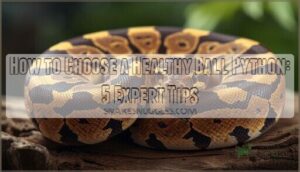
Most people spend more time picking out a phone case than they do evaluating a ball python before bringing one home.
That impulse buy can turn into months of vet bills, feeding battles, or worse—watching a sick snake decline despite your best efforts.
Ball pythons live 20 to 30 years, so the five minutes you spend choosing a healthy ball python matters more than almost any other decision you’ll make as an owner.
A good one will eat reliably, shed cleanly, and handle calmly from day one.
Knowing exactly what to look for separates a thriving pet from an expensive heartbreak.
Table Of Contents
- Key Takeaways
- Choose a Reputable Seller
- Inspect Eyes, Skin, and Vent
- Check Body Shape and Breathing
- Verify Feeding and Health History
- Pick The Right Ball Python
- Frequently Asked Questions (FAQs)
- What are signs of overfeeding a ball python?
- What does an unhealthy snake look like?
- How to know if ball python is healthy?
- What to look for when buying a ball python?
- How can you tell if a ball python is happy?
- When should you not pick up ball pythons?
- What are common beginner mistakes with ball pythons?
- How to identify and prevent stress in ball pythons?
- What is the legal process for owning a ball python?
- Can a ball pythons enclosure be eco-friendly?
- Conclusion
Key Takeaways
- Where you buy your ball python matters as much as how you care for it — a reputable seller provides feeding records, health guarantees, and honest communication before and after the sale.
- A quick physical check of the eyes, skin, vent, and breathing can reveal hidden health problems before you commit to bringing a snake home.
- Always ask for documented feeding history, growth records, and any past vet care, since a snake’s medical background is your clearest window into its long-term health.
- Not every ball python suits every keeper — temperament, age, and morph-specific health risks like the Spider morph’s neurological wobble should all factor into your final choice.
Choose a Reputable Seller
Where you get your ball python matters just as much as how you care for it.
Whether you buy from a breeder or a pet store, knowing what to look for first makes all the difference—this ball python care and sourcing guide walks you through exactly what healthy, ethically sourced snakes look like.
A good seller sets you up for success — a bad one can hand you a sick snake and a stack of vet bills before you even get started.
Here are the key sources and signals to look for.
Reputable Ball Python Breeders
A breeder’s reputation tells you more than any sales pitch ever could. Germany-based specialists like XCLUSIVE SNAKES and Pybreed have built trust since 2005 through transparent breeding practices and detailed ball python care sheets.
Look for breeders who offer:
- Bloodline Documentation and Morph Variety records
- Clear Health Guarantees and feeding histories
- Safe Shipping Practices with live-arrival assurance
- Honest discussion of common health issues in ball pythons
Consider breeders that follow a transparent breeding program for ethical sourcing.
Trustworthy Pet Stores
Not every ball python comes from a private breeder. A trustworthy pet store can be just as reliable — if you know what to check.
Look for strong staff knowledge on reptile husbandry, visible enclosure cleanliness, and clear substrate guidance.
Ask about temperature controls and health guarantees before buying.
Stores that freely discuss common health issues in ball pythons are worth your trust.
Consider retailers that offer overnight shipping guarantee(https://www.bigappleherp.com/collections/ball-pythons/ball-pythons) for live arrival.
Snake Rescue Organizations
Sometimes rescue organization is where your next snake finds you.
These groups follow strict Volunteer Training Standards and Emergency Capture Protocols, so rescued ball pythons receive proper care before adoption. Their Collaboration Networks connect them with vets who assess reptile husbandry needs, handle common reptile illnesses, and manage parasite management issues.
- 24/7 response hotlines
- Certified handler training
- Veterinary health clearance
- Careful Release Site Selection
- Active Public Outreach Programs
Seller Transparency and Communication
A good seller communicates like a partner, not just a vendor. Look for Contact Info Verification — a real address, working phone, and prompt replies within 24 to 48 hours.
Response Time Guarantees, Documentation Transparency around feeding history, and Shipping Condition Disclosure matter too. After‑Sale Support shows they care beyond the sale.
Red Flags From Breeders or Stores
Not every seller is honest — and a few warning signs can save you from bringing home a sick snake. Watch for:
- Incomplete health records or missing veterinary docs with no explanation
- Inconsistent size claims that don’t match the snake’s actual age or weight
- Poor enclosure hygiene — dirty water, visible waste, or no temperature gradient
- Unusual feeding refusals left undiagnosed and brushed off as normal
Inspect Eyes, Skin, and Vent
Once you’ve found a seller you trust, the next step is looking at the snake itself.
Before you commit, check for signs of good health—alertness, clean eyes, and no visible mites—and brush up on what a healthy baby snake feeding and handling schedule actually looks like.
A quick but careful check can tell you a lot about its health before you commit.
Here are five things to look at closely.
Clear, Bright Eyes
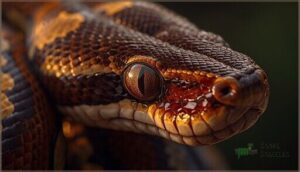
A ball python’s eyes tell you a lot before you even pick it up. Clear, bright eyes mean the snake is healthy and well‑hydrated. Cloudy eyes are only normal during shedding — proper humidity control and enclosure cleanliness make that process smooth.
| Eye Condition | What It Means |
|---|---|
| Clear and glossy | Healthy, good hydration |
| Cloudy (mid‑shed) | Normal — temporary phase |
| Cloudy after shed | Retained eye cap — needs attention |
Smooth Skin and Clean Scales
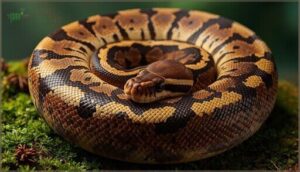
Scales don’t lie. Run your eyes from head to tail — healthy skin should look consistent, glossy, and tight against the body. Here’s what to look for:
- Scales lie flat with uniform Scale Texture Uniformity from nose to tail
- Belly Scale Cleanliness matters — no discoloration, blistering, or soft patches
- Substrate Hygiene directly impacts skin health, so substrate selection and enclosure cleaning are non‑negotiable
- Proper temperature and humidity management prevents dry, flaky skin
- Shedding Hydration through humidity control keeps scales intact between cycles
No Stuck Shed or Eye Caps
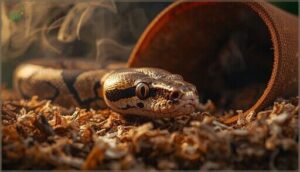
Stuck shed is a red flag you can’t ignore.
When Humidity Management slips and the Moisture Gradient inside the enclosure drops too low, the shedding process stalls.
Check for leftover skin around the eyes — retained eye caps stack up over cycles and can damage vision permanently.
A Humid Hide Setup, proper substrate selection, and consistent humidity gauge readings around 60–80% keep the Shedding Cycle on track.
Clean Vent With No Discharge
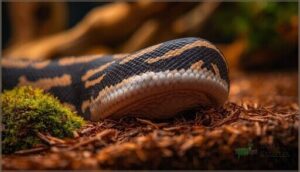
The vent is easy to overlook, but it tells you a lot. A healthy ball python‘s vent should look smooth, dry, and skin‑toned — no redness, no crust, no discharge.
Make Vent Inspection Frequency part of your Vent Hygiene Routine when cleaning a ball python habitat. Proper Substrate Management and Moisture Control through enclosure ventilation keep waste from sitting against the skin and causing irritation.
No Mites, Wounds, or Scale Rot
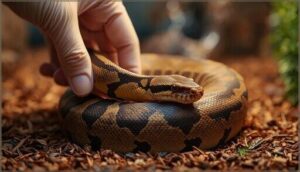
Tiny moving specks on your snake’s skin aren’t dirt — mites, and they spread fast. Before you bring any ball python home, do three quick checks:
- Look near the eyes, chin, and vent for black or red specks
- Check belly scales for pink, soft, or blistered patches signaling scale rot
- Scan for fresh wounds from prey bites or sharp décor
Quarantine Monitoring during the first 60–90 days, combined with Regular Skin Checks and proper Substrate Hygiene, catches problems early. Humidity Management and enclosure ventilation also reduce scale rot risk considerably.
Check Body Shape and Breathing
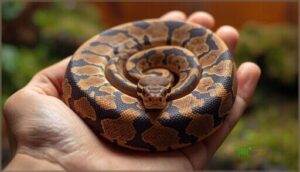
Once you’ve checked the eyes and skin, it’s time to look at the bigger picture. A snake’s body shape and breathing can tell you a lot about its overall health.
Here are the key things to look for.
Rounded, Firm Body Condition
Pick up the snake gently — a quick Muscle Tone Check tells you a lot. A healthy ball python feels firm and rounded, not floppy or bony.
Use this Body Weight Assessment guide:
| Body Signal | What You Feel | What It Means |
|---|---|---|
| Firm, rounded shape | Smooth, holds form | Good condition |
| Soft, loose flesh | Collapses when held | Underweight |
| Bloated midsection | Tight, puffy skin | Obesity Indicators |
| Even Body Depth Balance | Full but not bulging | Ideal muscle tone |
| Dry, loose Scale Texture Evaluation | Wrinkled or slack | Poor nutrition |
No Visible Spine or Ribs
Run your fingers gently along the snake’s sides during a Rib Palpation Technique check — ribs shouldn’t jut out when the snake is relaxed.
A proper Spine Contour Assessment means the backbone stays hidden beneath smooth muscle. Visible ribs or a sharp spine usually signal an underweight snake. Combined with your Body Thickness Evaluation, this Rib Visibility Check tells you a lot about long‑term care quality.
No Lumps, Swelling, or Deformities
Once you’ve checked for visible ribs, move your hands slowly along the full body. An Abscess Check means feeling for firm, localized lumps — hardened pockets roughly 2–3 cm that signal trapped infection. Also assess Spinal Alignment, Jaw Symmetry, and Midbody Firmness.
Watch for:
- Hard lumps anywhere under the skin
- Swollen or asymmetrical jaw area
- Kinks or bends along the spine
- Squishy or uneven midbody texture
- Any sign of compromised Vent Integrity
Quiet, Steady Breathing
After checking for lumps, shift your attention to how the snake breathes. Healthy ball pythons practice Silent Respiration — you simply shouldn’t hear them. Watch the Chest Movement: slow, even, and smooth. Nostril Cleanliness matters too; clear, dry nostrils support smooth Breathing Rhythm. Temperature Influence and proper humidity gauge settings directly affect respiratory health.
| What to Observe | Healthy Sign | Concern |
|---|---|---|
| Breathing Rhythm | Slow, steady pace | Rapid or irregular |
| Chest Movement | Gentle, even rise | Forced or jerky motion |
| Nostril Cleanliness | Clear, dry, open | Debris or moisture buildup |
| Silent Respiration | No audible sound | Audible from short distance |
No Wheezing, Mucus, or Open-Mouth Breathing
Never ignore noisy breathing — it’s one of the clearest red flags in snake health. A healthy ball python shows Breathing Normalcy: Mouth Closed, Silent Respiration, and a Clear Airway with No Nasal Discharge.
Wheezing, mucus, or open-mouth breathing can signal a respiratory infection.
Check your humidity gauge and temperature regulation near the heat source, since both directly affect lung health.
Verify Feeding and Health History
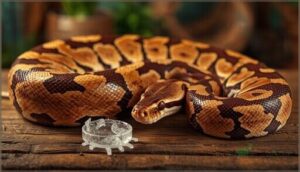
A snake’s feeding history tells you a lot more than most people realize. Before you commit, ask the seller some pointed questions about what this snake has been eating and when.
Here’s what to look for.
Last Meal Date and Prey Type
Ask the seller for the snake’s last meal date and the exact prey type — don’t skip this step. A healthy ball python should have a documented feeding log, not just a verbal “it eats fine.”
Confirm whether it takes frozen rodents or live prey, since prey species preference matters. Proper prey size matching means the feeder shouldn’t exceed the snake’s widest body point.
Consistent Feeding Schedule
steady feeding routine tells you a lot about a snake’s overall health. Hatchlings usually eat every 5 to 7 days, while adults follow a 10 to 14‑day schedule — with portion size matched to their body width.
Good record keeping matters here. Ask whether the seller tracks growth monitoring and digestive rest between meals, since consistent dietary requirements and proper feeding frequency signal a well‑managed snake.
Signs of Feeding Refusal
Two missed meals in a row are your first real warning sign.
Ball pythons can skip food due to stress triggers like enclosure changes or too much handling, but weight loss paired with lethargy means something deeper is wrong.
Prey preference, humidity issues, and improper feeding tongs technique can all cause refusal.
A pattern of skipped meals — not a single one — is the concern.
Age, Weight, and Growth History
A hatchling age of zero to two months means the snake should weigh roughly 50 to 100 grams — and weight trends tell you more than size alone.
Ask for a record keeping log showing steady growth rate milestones, shed frequency, and feeding dates.
Adults reach four to five feet over about three years.
Flat or falling numbers across that timeline are a red flag worth taking seriously.
Previous Illnesses or Veterinary Care
A clean health record is worth its weight in gold.
Ask the seller about respiratory history, parasite treatment, mouth rot records, and scale rot history — these aren’t prying questions, they’re smart ones.
Reputable breeders document prior veterinary care openly.
Also confirm viral screening was done.
A ball python with a transparent medical past gives you the strongest foundation for a long, healthy life together.
A ball python’s medical history is the foundation of a long, healthy life together
Pick The Right Ball Python

Once you’ve checked the health basics, the final step is choosing a snake that actually fits you.
Not every ball python will suit every keeper, so a few more things are worth looking at before you commit.
Here’s what to think about when making your final pick.
Calm, Alert Temperament
Temperament tells you a lot before you even pick a snake up.
Look for these signs of a well‑adjusted ball python:
- Loose, relaxed body posture when resting
- Quiet movement patterns — slow and deliberate, not frantic
- Consistent activity level between warm and cool sides
- Positive response to gentle handling cues
- Steady tongue flicks without defensive balling
These aren’t just personality quirks — they’re health signals.
Normal Tongue Flicking and Posture
Watch how the snake moves. Steady tongue flicks paired with a loose, flowing body — exploring body looseness in action — tells you the snake feels safe.
Notice the resting coil compactness too: a secure snake coils tightly but settles calmly.
Head-neck alignment stays natural, not strained.
That posture-scent sampling combo, where the head dips and the tongue works steadily, signals a confident, healthy animal.
Stress and Fear Behaviors
Not every snake will sit still for you.
Hissing Signals, Defensive Striking, and tight Curling Ball posture all say the same thing — back off.
Restless Pacing and Escape Attempts mean the enclosure or situation feels unsafe.
A snake that stays wound tight during handling isn’t warmed up yet.
Give it time, but don’t ignore repeated stress signs.
Age Considerations for Beginners
Age matters more than most beginners expect. Hatchlings weigh just 65 to 103 grams and need closer first-year care than older snakes — small hatchling size leaves little room for husbandry mistakes.
Adults reach 4 to 5 feet over roughly three years. With a 30-year lifespan and steady weight milestones along the way, starting with a juvenile often gives beginners a more forgiving maturity timeline.
Morph Research and Health Concerns
Not all morphs are just about looks. The Spider morph, for example, carries the Wobble Gene — a neurological condition causing head tremors and missed strikes.
Deformity risks tied to Pigment Mutations in super cinnamon or super black pastel can affect spine and jaw structure.
Always ask breeders for Genetic Transparency and research any Morph‑Specific Illness before committing.
Frequently Asked Questions (FAQs)
What are signs of overfeeding a ball python?
Watch for rapid weight gain patterns, a swollen belly between meals, reduced activity, and digestive delays.
Shedding issues and sluggish movement often signal the feeding routine needs adjusting before problems affect long‑term ball python health.
What does an unhealthy snake look like?
An unhealthy ball python often shows dull scales, sunken eyes, or wheezing breaths. Watch for behavioral lethargy, scale rot, mouth infection, or abnormal shedding — all clear signs something’s wrong.
How to know if ball python is healthy?
A healthy ball python shows clear eyes, smooth scale coloration, steady activity levels, and consistent weight tracking.
Watch hydration indicators like skin elasticity and regular shedding frequency to confirm your snake is thriving.
What to look for when buying a ball python?
Look for a snake with clear eyes, smooth skin, and a clean vent. Ask for seller documentation, verify the last meal date, and confirm it behaves calmly before committing.
How can you tell if a ball python is happy?
Picture a snake coiled loosely in its hide, tongue flicking steadily — that’s a content ball python.
Watch for calm exploratory behavior at night, relaxed coil relaxation, and a smooth handling response without striking.
When should you not pick up ball pythons?
Skip handling during the post‑feeding handling window (48 hours), the shedding phase, quarantine period, and when illness signs or stress signals appear. Rushed handling techniques undo weeks of trust‑building.
What are common beginner mistakes with ball pythons?
Too-large tanks, skipped thermostats, low humidity, and overfeeding top the list.
Handle new snakes sparingly — wait 48 hours after meals.
Get the temperature gradient, enclosure size, and humidity management right from day one.
How to identify and prevent stress in ball pythons?
Watch for tight balling, refused meals, or erratic movement — these signal stress.
Stable Temperature Consistency, proper Hide Availability, controlled Humidity Fluctuations, and a calm lighting schedule go a long way toward stress reduction.
What is the legal process for owning a ball python?
Before you bring one home, know this: ball pythons are CITES Appendix II animals.
You’ll need Import Documentation, Captive‑Bred Certification, and Local Licensing.
Keep your CITES Permit and records together always.
Can a ball pythons enclosure be eco-friendly?
Yes.
PVC enclosures retain heat better than glass, cutting energy waste.
bioactive substrate with coconut coir and isopods breaks down waste naturally, reducing cleanup and replacements while keeping your setup sustainable long-term.
Conclusion
The idea that any ball python will "be fine" with minimal vetting is exactly the kind of thinking that leads to preventable heartbreak. Choosing a healthy ball python means reading the signs most buyers completely miss—body condition, breathing, feeding history, and the seller’s honesty.
These five checkpoints aren’t overcautious; they’re the difference between a snake that thrives for decades and one that struggles from day one. Take the extra time. It’s always worth it.