This site is supported by our readers. We may earn a commission, at no cost to you, if you purchase through links.
The ball python morph market didn’t exist thirty years ago, but today it moves millions of dollars annually through a digital ecosystem where genetic combinations sell for anywhere from $50 to $50,000 depending on rarity, visual impact, and breeding potential.
What started as scattered hobbyist trades has crystallized into a refined marketplace driven by platforms like MorphMarket, where over 34,000 breeders compete for buyers who know exactly which genes they want and what those genetics should cost. You’re no longer gambling on random clutches or settling for whatever your local pet store stocks—you’re selecting animals based on heterozygous pairings, homozygous outcomes, and documented lineage data that puts you in complete control of your collection’s direction.
Understanding how this market operates, where prices land across common to elite morphs, and which breeders maintain ethical standards separates collectors who build valuable projects from those who overpay for substandard animals or inherit genetic problems that tank resale value.
Table Of Contents
- Key Takeaways
- What is The Ball Python Morph Market?
- Types of Ball Python Morphs for Sale
- Where to Buy Ball Python Morphs Online
- Ball Python Morph Market Pricing Trends
- Choosing Safe and Ethical Morph Purchases
- Frequently Asked Questions (FAQs)
- How much does a ball python morph cost?
- Where can I buy ball python morphs?
- Where to buy ball pythons?
- How are ball python morphs bred?
- What is a morph Python?
- How many ball python morphs are there?
- How do I find a ball python near me?
- What is the most sought after ball python morph?
- How much do ball pythons sell for?
- What is a special pied ball python?
- Conclusion
Key Takeaways
- The ball python morph market has evolved from hobbyist trades into a multi-million dollar global industry where genetics-driven platforms like MorphMarket connect over 34,000 breeders with buyers who select animals based on documented lineage, heterozygous pairings, and precise trait combinations rather than settling for random availability.
- Morph pricing operates on a three-tier system spanning $50 to $50,000, determined by genetic complexity, breeder reputation, and market demand—with common morphs like pastels offering accessible entry points while rare recessive combinations and designer combos command premium values that reward strategic timing and breeding expertise.
- Successful navigation of this market requires mastering genetic inheritance patterns, understanding which traits are codominant versus recessive, and using detailed lineage documentation to avoid problematic morphs carrying neurological issues or health defects that destroy both animal welfare and resale value.
- Breeder accountability separates profitable investments from costly mistakes—prioritizing sellers who provide genetic testing results, transparent health guarantees, complete lineage records, and post-purchase support protects your collection’s direction while supporting ethical breeding standards that maintain the market’s long-term integrity.
What is The Ball Python Morph Market?
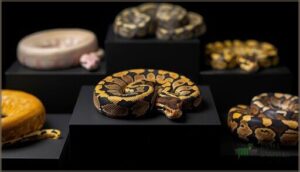
The ball python morph market is where breeders, hobbyists, and collectors buy, sell, and trade genetically altered ball pythons that display unique color patterns and physical traits.
These variations range from subtle color shifts to dramatic pattern changes, and understanding python snake morph identification helps buyers verify genetics and assess the true value of their purchase.
This market has exploded over the past three decades, transforming from a niche specialty into a global industry driven by selective breeding, online platforms, and constant demand for new genetic combinations. Understanding how this market works, where it came from, and who controls the trade will give you the edge you need to navigate prices, spot opportunities, and make informed purchases.
Definition of Ball Python Morphs
Ball python morphs are genetically distinct color and pattern variants that you can inherit through controlled breeding, representing the raw currency of reptile genetics and breeding mastery.
Each morph results from specific genetic variation affecting pigment genetics and inheritance traits, altering color patterns compared with wild-type animals through recessive or codominant mechanisms that breeders track using precise morph classification systems, including heterozygous and homozygous designations.
There are more than 4,000 ball python morph types that have been developed through selective breeding.
How The Morph Market Developed
The morph market evolved from hobbyist breeding circles into a structured ecosystem when centralized online platforms connected breeders with buyers who wanted unparalleled access to ball python genetics, transforming scattered breeder networks into a coordinated marketplace where genetic research, morph history, and snake morphs converged.
This shift gave you control over selecting specific genetics and breeding projects, replacing guesswork with data-driven morph acquisition strategies that elevated ball python breeding from chance to precision. For a parallel in crypto, tracking market capitalization metrics can also provide valuable insight when analyzing token-based ecosystems.
Key Players and Online Platforms
MorphMarket dominates the ball python morph market by connecting breeders and buyers through searchable listings that filter by genetics, price, and seller ratings, giving you direct access to over 34,000 individual morphs worldwide.
Reptile forums and Instagram channels funnel traffic to these online platforms, while established operations like XYZReptiles leverage breeder networks to maintain market dominance in the exotic pet trade through transparent genetics and multi-platform presence.
Types of Ball Python Morphs for Sale
You’ll find ball python morphs organized into three practical tiers based on genetics, market demand, and breeding complexity, each tier serving different goals for keepers looking to enter or expand within the morph market.
Common morphs give you accessible entry points with proven traits and stable pricing, while rare morphs reward patience and investment with animals that command attention and premium resale value.
Understanding the genetic mechanics and breeding potential behind each type will help you make smarter choices, whether you’re exploring foundational corn snake morphs and their care requirements or targeting high-end collectors’ specimens.
Designer combos sit at the forefront of innovation, where stacking multiple genes creates visual outcomes that can reshape what’s possible and profitable in your collection.
Common Morphs and Their Traits
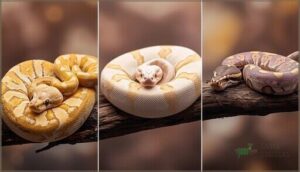
You’ll find pastel ball pythons leading entry-level morph genetics discussions because their incomplete dominant mutation intensifies yellow pigmentation and brightens color patterns in breeding techniques, making them essential building blocks for pet care enthusiasts.
Albino ball pythons display high-contrast yellow-on-white color mutation with pink eyes, a recessive trait requiring careful genetics planning.
Banana morphs deliver lavender-tinged pattern variation that remains vibrant into adulthood, combining striking color patterns with typical snake behavior and beginner-friendly appeal.
Rare and High-Value Morphs
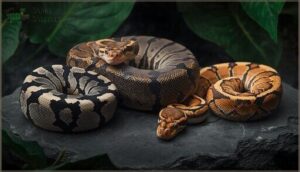
You’ll command top-tier prices when you master rare patterns and high-end breeding programs that push boundaries most collectors won’t touch, with recessive genetics like piebald, clown, and axanthic driving market forecast discussions among serious breeders.
- Piebald morphs showcase irregular white patches contrasted against base color variations, creating one-of-a-kind leucistic complex patterns that can fetch several thousand dollars for clean, symmetrical specimens
- Axanthic lines eliminate yellow pigment entirely, producing stark grayscale ball python morphs that pair beautifully with albino complex genes for hypermelanism combinations
- Sunset and ultramel recessives deliver warm caramel tones with reduced melanin, establishing premium morph genetics that enhance your breeding portfolio above standard offerings
Designer and Combo Morphs
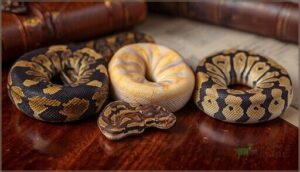
When you combine two or more genetic traits in one offspring, you reveal designer morphs that blend parent influences into fused phenotypes no single gene can deliver on its own, giving you pioneering morph innovation through combo breeding strategies that maintain genetic diversity while showcasing unique pattern symmetry, color saturation, and head-boa focal points.
| Combo Type | Genetics | Key Traits |
|---|---|---|
| Recessive stacks | Clown + Pied | High-contrast leucistic patterns with irregular patches |
| Dominant blends | Pastel + Banana | Brightened yellow tones with lavender undertones |
| Multi-gene designer | Lesser + Clown + Enchi | Eye-catching BEL variations with cleaner segmenting |
Ball python breeders rely on detailed lineage records and intentional pairing decisions to produce these combos, since recessive and dominant inheritance patterns determine hatchling outcomes and future breeding rights, so you’ll need precise genetic sourcing to replicate high-value designer traits that command premium prices before widespread availability levels the playing field.
Where to Buy Ball Python Morphs Online
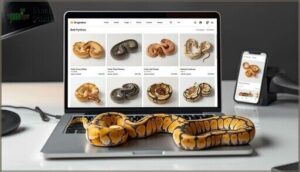
Finding the right platform to buy ball pythons online isn’t about browsing random classified ads anymore, it’s about using specialized marketplaces that give you real-time pricing data, genetic breakdowns, and breeder accountability all in one place.
The morph market has consolidated around a handful of dedicated platforms that let you filter by traits, compare hundreds of listings side by side, and vet sellers before you commit to a purchase. Here’s how to navigate the largest online marketplace and make sure you’re buying from breeders who know their genetics and stand behind their animals.
MorphMarket Platform Overview
When you’re ready to take your ball python morphs game to the next level, you need a platform built for serious reptile sales. MorphMarket features over 34,000 ball python breeders and individual listings worldwide, giving you unparalleled access to the pet trade’s most competitive morph inventory with breeder profiles, online security measures, and customer support channels that protect your investment while you hunt for that perfect animal.
The platform offers several features that make it an ideal choice for serious reptile enthusiasts. These include:
- Virtual storefronts showcase breeder policies, payment options, and transaction histories so you can vet sellers before committing
- Genetics tagging standards guarantee every ball python listed carries accurate trait information, eliminating guesswork on what you’re actually buying
- Seller ratings and store directories let you filter out amateurs and connect directly with proven ball python breeders who’ve earned their reputation
- Mobile-responsive design means you can track new drops and message breeders instantly, so you never miss a rare morph hitting the market
How to Compare Morph Listings
Listing analysis starts by matching trait names exactly to the genes in your photo—mismatched labels cost you money and breeding potential. Compare price, sex, hatch date, and weight across multiple ball python morphs side by side, then cross-check genetic research with morph calculators to verify offspring probabilities.
Screenshots and saved listings let you track price comparison trends over weeks, giving you leverage when negotiating with breeders.
Evaluating Breeder Reputation
Seller profiles on marketplaces reveal whether you’re dealing with a volume flipper or a committed breeder, and the difference dictates your animal’s long-term health and genetic integrity. Check ratings, total sales, and customer reviews for red flags, then verify breeding ethics by asking about health guarantees, lineage records, and post-sale husbandry support before you commit.
- Breeder transparency separates professionals from opportunists selling poorly documented ball python morphs
- Reputation metrics and verified feedback expose patterns of problem shipments or misrepresented genetics
- Health guarantees covering congenital issues for at least one year protect your investment in reptile breeding
- Breeding ethics matter—avoid sellers who hide neurological defects or mass-produce without regard for snake welfare
- Customer reviews often mention follow-up care, accurate trait labeling, and whether the breeder stands behind their ball pythons
Ball Python Morph Market Pricing Trends

Ball python morph prices don’t follow a single rulebook, and understanding what drives value separates smart buyers from those who overpay or miss hidden gems.
Supply, genetics, and market momentum all play into what you’ll see listed on platforms like MorphMarket, where thousands of animals compete for attention and dollars.
The next two factors break down how pricing works from the ground up and what separates a $200 snake from a $2,000 investment.
Factors Affecting Morph Prices
Market demand drives ball pythons‘ price swings when collector interest spikes around trending genes like leucistic complex or piebaldism, while breeder reputation adds premium value through proven health records and transparent lineage documentation.
Morph rarity multiplies your investment when you’re chasing quad recessive combinations, and genetic trends reshape price volatility as hypomelanism projects flood platforms or new designer lines emerge, forcing you to time purchases strategically within reptile breeding cycles.
High-End Vs. Entry-Level Morph Costs
You’ll face sharp contrasts when you weigh entry-level morphs against high-end genetic stock, because Morph Pricing swings from two hundred dollars for simple codominant traits up past four thousand on ultra combo females, and Breeder Costs stack fast with proven lineage, transport fees, and specialized Reptile Husbandry demands that increase Investment Risks across both tiers.
When considering the market, it’s essential to understand the price ranges for different types of morphs.
- Entry-level morphs span two hundred to two thousand dollars, featuring common dual het combinations and straightforward Snake Breeding results that appeal to beginners exploring Herpetology fundamentals.
- High-end specimens exceed four thousand dollars per animal, reflecting rare Genetic Value in Leucistic Complex pairings or quad recessive projects backed by transparent health guarantees.
- Market Fluctuations drive seasonal drops and limited-edition releases from top breeders, creating short-term price spikes that reward strategic timing in your purchase windows.
- Premium stock demands ongoing quarantine and care investments, while entry programs ramp faster with lower capital, balancing Reptile News trends against your risk tolerance.
- Diversifying your holdings across price brackets spreads exposure when morph depreciation hits, because strong provenance retains value even as common genes flood online platforms.
Choosing Safe and Ethical Morph Purchases

Choosing the right ball python morph isn’t just about color and pattern combinations, you’re making a decision that directly impacts the animal’s quality of life and the health of the breeding community.
Some morphs carry genetic baggage that can lead to neurological issues or other health problems, so understanding what you’re buying protects both your investment and the snake’s welfare.
Understanding the genetics behind your morph protects both your investment and the snake’s long-term welfare
The key areas you need to evaluate before purchasing any morph include health screening protocols, known genetic issues tied to specific genes, and the breeder’s track record for ethical practices.
Health and Genetics Considerations
Polygenic inheritance drives both color brilliance and hidden health risks, so your buying decisions must factor in morph genetics alongside visual appeal.
Certain combinations exacerbate neurological abnormalities or skeletal defects, requiring veterinary care familiar with herpetology and species traits.
Genetic testing reveals carriers before you commit, and reputable sellers maintain breeding ethics by documenting hatchling vigor, feeding response, and growth metrics across lineages rooted in herpetology studies.
Avoiding Problematic Morphs
Understanding genetics lets you sidestep morph health risks tied to neurological wobble or skeletal deformities, which polygenic inheritance can exacerbate across hatchlings when problematic alleles stack.
Ethical breeding demands breeder accountability through genetic testing and transparent lineage documentation rooted in herpetology studies, so you avoid spider, champagne, or experimental combos lacking long-term welfare data on species traits and survival rates.
Supporting Responsible Breeders
Once you’ve ruled out wobble-prone locality lines and unproven combos, your next step zeroes in on breeder transparency and breeding standards that reflect genuine animal welfare commitment. Responsible ownership starts with choosing breeders who demonstrate ethical practices through fastidious husbandry records, species characteristics expertise, and documented health clearances for exotic pets.
Look for sellers who provide:
- Complete lineage and genetic testing results for both parents
- Clean facility access and post-purchase reptile care mentorship
- Written contracts covering health guarantees and return policies
Frequently Asked Questions (FAQs)
How much does a ball python morph cost?
You’ll spend anywhere from 60 dollars for basic morphs like Yellow Belly to several thousand for rare combos, with designer genetics, breeder reputation, and seasonal market fluctuations pushing prices higher on exclusive stock.
Where can I buy ball python morphs?
You’ll find morphs through online auctions, dominant breeder networks, locality-focused reptile forums, specialized morph marketplaces like MorphMarket, and select pet stores, each offering different inventory, pricing, and access to exclusive genetic combinations.
Where to buy ball pythons?
You can acquire ball pythons from local breeders, reptile stores, pet expos, or online marketplaces like MorphMarket.
Where breeder direct listings showcase dominant traits and locality-specific animals with live arrival guarantees and detailed genetic backgrounds.
How are ball python morphs bred?
Breeders pair snakes carrying desired genes, tracking dominant, recessive, and codominant traits through careful genetic selection and snake pairing, then apply breeding techniques to achieve targeted morph creation while maintaining rigorous hatchling care standards.
What is a morph Python?
A morph Python refers to Python libraries and morphing tools that reshape data through transformation utilities, offering data wrangling capabilities like flattening nested structures, selecting keys, and handling morph concepts for cleaner processing workflows.
How many ball python morphs are there?
You’ll encounter over 4,000 recognized ball python morphs worldwide, though genetic diversity and hybridization methods make morph counting fluid—breeding techniques constantly yield new designer combinations, so morph classification expands as breeders experiment with novel pairings.
How do I find a ball python near me?
Start with local breeders and pet stores near you—check breeder reviews online first.
Reptile shows let you compare vendors face-to-face, while online marketplaces often offer local pickup options worth exploring.
What is the most sought after ball python morph?
You’ll discover BEL genetics dominate conversations wherever serious collectors gather, because blue eye traits paired with leucistic patterns create unique visual appeal.
While designer combos utilizing morph rarity consistently command the market’s highest premiums.
How much do ball pythons sell for?
You’ll find ball python costs ranging from $25 for normals to over $10,000 for ultra-rare designer combos, with common morphs usually landing between $100 and $500 depending on genetics and breeder reputation.
For a clearer budget baseline, compare current ball python morph prices by genetics before choosing a hatchling.
What is a special pied ball python?
A pied ball python carries recessive pied genetics that create irregular white patches across a dark base, producing a striking patchwork pattern you’ll recognize instantly—each snake displays unique color patterns and varying white coverage.
Conclusion
Traversing the ball python morph market works like charting a course through territory where genetic knowledge determines whether you capture premium animals or settle for overpriced mediocrity.
You’ve got the platform access, pricing benchmarks, and breeder evaluation criteria that separate informed collectors from buyers who gamble on unknown lineages and inherit problems that destroy project value.
Your next acquisition should reflect deliberate genetic strategy, not impulse—because morphs purchased right appreciate while poorly chosen animals drain resources without delivering breeding returns.