This site is supported by our readers. We may earn a commission, at no cost to you, if you purchase through links.

snake with mites can drop weight fast—faster than most keepers expect. These parasites don’t just irritate; they pull blood, compromise immune function, and open doors to secondary infections that spiral quickly.
single infested animal introduced without quarantine can seed an entire collection within two weeks.
What makes parasite control genuinely hard isn’t identifying the problem—it’s the layered response required across ectoparasites, internal worms, and protozoa like Cryptosporidium, each demanding a different drug, dose, and timing.
The treatments that actually work share one trait: precision over guesswork.
Table Of Contents
- Key Takeaways
- Effective Methods to Control Snake Parasites
- Recognizing Signs of Snake Parasite Infections
- Diagnosing Parasites in Snakes
- Treating Ectoparasites in Snakes
- Managing Endoparasitic Infections Effectively
- Combating Protozoal Parasites in Snakes
- Preventing Parasite Infestations in Captive Snakes
- Top 5 Best Snake Parasite Control Options
- Maintaining Snake Health Against Parasites
- Holistic Approaches to Snake Parasite Management
- Frequently Asked Questions (FAQs)
- What is the 80 20 rule for parasites?
- What is the best dewormer for snakes?
- How to prevent parasites from infesting a snake?
- How do you treat parasites in snakes?
- How to eliminate snakes?
- How effective are poisons against snakes?
- How do I keep my snake healthy?
- How to get rid of parasites in snakes?
- What is the best way to get rid of snake mites?
- What is the most effective way to control parasites?
- Conclusion
Key Takeaways
- Mites, worms, and protozoa each need a different drug and protocol — one-size-fits-all treatment fails every time.
- single unquarantined snake can infect your entire collection within two weeks, so isolation isn’t optional.
- Fecal exams, blood tests, and imaging work as a team — no single diagnostic tool tells the whole story.
- Treating your snake without decontaminating the enclosure guarantees reinfestation, since mite eggs survive long after the host is clear.
Effective Methods to Control Snake Parasites
Parasite control in snakes isn’t one-size-fits-all — the right approach depends entirely on what you’re dealing with. Mites crawling on scales, worms hiding in the gut, and protozoa disrupting digestion each calls for a different game plan.
Understanding which parasites pose a zoonotic risk from snakes to humans helps you prioritize treatment and handle your snake safely throughout the process.
Here’s a breakdown of the three main parasite categories you need to know.
Ectoparasites: Mites and Ticks
Mites don’t wait — and neither should you. Identifying snake mites early means checking scale edges, eye caps, and vent folds for tiny moving specks. Understanding the mite life cycle (7–14 days) is key to resistance management; breaking it requires chemical rotation and targeting environmental reservoirs like substrate and hides. You should maintain substrate humidity below 75% to prevent larval development.
- permethrin-based treatments from 12–15 inches, avoiding water dishes.
- replace all substrate immediately after treatment.
- predatory mites as a biological control option.
Environmental control strategies, run consistently, clear infestations within 2–4 weeks.
Endoparasites: Nematodes, Cestodes, and Trematodes
Once you’ve handled mites, look deeper. Nematodes (roundworms), cestodes (tapeworms), and trematodes live inside your snake — and their life cycle stages and host organ tropism determine how hard they’re to clear.
Proper identification through fecal testing, including egg morphology analysis, is your first move. Molecular diagnostics catch low-level infections that fecal flotation misses.
Fenbendazole for roundworms and praziquantel for tapeworms are your go-to options — but dose calculation and administration routes for reptile drugs must be exact.
Drug resistance is real; don’t cut treatments short.
Protozoal Infections: Cryptosporidium and Entamoeba
Nematodes may be the headache you know — but parasitic protozoa hit differently. Cryptosporidium serpentis causes chronic gastric disease, often progressing silently before you notice weight loss or repeated regurgitation. Subclinical carriers are common, making PCR screening and oocyst detection non‑negotiable.
Watch for these red flags:
- Regurgitation, wasting, or appetite loss
- Bloody stools or sudden lethargy
- Entamoeba invadens signs: seizures, dehydration, rapid decline
- Zoonotic risk — handle infected snakes with gloves
Use metronidazole for amoebiasis; consider paromomycin or hyperimmune colostrum for cryptosporidiosis. Environmental sanitation and strict quarantine close the loop. Environmental contamination is amplified by infectious cysts shed in feces.
Recognizing Signs of Snake Parasite Infections
Parasites rarely announce themselves loudly — they work quietly, and by the time something looks obviously wrong, the problem has usually been building for weeks. Knowing what to watch for early is the difference between a quick fix and a serious health crisis.
Snake parasites work quietly — by the time something looks wrong, the crisis has already begun
Here are the key signs that should put you on alert.
Physical Symptoms: Weight Loss and Lethargy

Unexplained weight loss in your snake isn’t something to sit on. When parasites take hold, they trigger real cachexia signs — muscle atrophy, energy deficiency, and progressive lethargy.
Watch for these red flags:
| Symptom | What It Signals | Action |
|---|---|---|
| Weight loss | Parasitic drain | Start weight monitoring |
| Lethargy | Systemic stress | Schedule fecal testing |
| Muscle wasting | Cachexia progression | Begin antiparasitic medication |
Body condition scoring monthly catches problems before they spiral. Deworming early saves lives.
Behavioral Changes: Decreased Appetite and Restlessness

When a snake refuses food for weeks or starts pacing its enclosure restlessly, don’t dismiss it as a mood. These behavioral changes — disrupted circadian rhythm, inconsistent prey presentation responses, and altered handling frequency tolerance — are classic clinical signs of infestation.
Parasitic infection throws off enclosure temperature sensitivity too.
Consistent behavioral monitoring is your first line of defense for snake health monitoring.
Visible Parasites: Mites Around Eyes and Scales
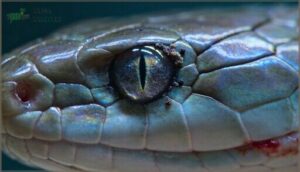
Tiny moving black dots near the eye rims or scale folds? That’s Ophionyssus natricis — and it moves fast through a collection.
Watch closely for these mite spotting signs:
- Eyelid margin crust and white lash flakes along scale edges
- Cylindrical dandruff and scale redness patches near the vent
- Clusters of specks in water bowls after soaking
Act immediately with permethrin-based treatments, environmental cleaning, and quarantine new snakes on arrival.
Diagnosing Parasites in Snakes

Spotting symptoms is only half the battle — knowing what’s actually going on inside your snake requires proper diagnostic tools. A vet can confirm parasite infections through several reliable methods, each targeting different types of parasites.
Here are the key diagnostic approaches you need to know.
Fecal Flotation and Direct Smear Techniques
Two simple tests — fecal flotation and a direct smear analysis — give you a clear window into what’s living inside your snake. Use both together for the best results:
- Sample Freshness Timing — run the direct smear within minutes; motile protozoa die quickly
- Specific Gravity Selection — flotation solution separates eggs and oocysts from debris by density
- Centrifugal Flotation Sensitivity — centrifuge-based flotation catches more than passive methods
- Iodine Staining Protocol — stained smears reveal cysts that unstained slides miss
Combined Method Benefits make these diagnostic tests for endoparasites far more reliable than microscopic examination alone.
Blood Tests to Detect Systemic Parasites
Blood doesn’t lie. When you suspect systemic parasites, a complete blood count revealing CBC Eosinophilia points directly toward infection. Serology Antibody Panels confirm immune response, while Antigen Rapid Assay detects active parasite proteins. PCR DNA Detection and PCR testing identify organisms even at low levels. Blood Smear Microscopy visualizes hemoparasites directly.
Pair these diagnostic tests for endoparasites with fecal flotation — no single test tells the whole story.
Radiography and Ultrasound for Internal Parasites
Radiography and ultrasound work as a team for internal parasite management. Radiographic patterns can reveal worm-like shadows in the airway — airway parasite visualization becomes possible when pentastomes are large enough to outline in lung tissue.
For soft tissue detail, ultrasound probe selection matters: a 7.5–12 MHz linear probe gives solid coelomic tissue characterization.
Imaging sensitivity has limits, though — always pair these diagnostic testing methods for snake endoparasites with fecal flotation.
Treating Ectoparasites in Snakes
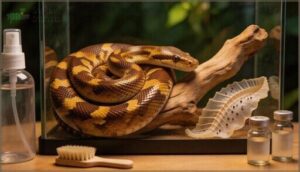
Mites and ticks on your snake aren’t just uncomfortable — they can spiral into serious health problems fast.
Treatment works best when you hit the problem from multiple angles: the snake, the enclosure, and the environment around it.
Here are the three most effective approaches to get ectoparasites under control.
Permethrin-Based Sprays and Dips
Permethrin sprays are your frontline weapon against snake mites and other external parasites. Mixing ratios matter — a typical concentrate calls for roughly 10 mL in 400 mL of water.
Application technique is everything: spray against the scale layer, ensuring full coverage down to the skin.
Residual efficacy lasts one to two weeks, so repeat treatments every 7–10 days. Always follow safety precautions — keep solution away from water dishes.
Pair chemical treatment with thorough environmental cleaning for lasting results.
Systemic Treatment With Ivermectin
When permethrin isn’t enough, ivermectin steps in — working systemically to reach mites that hide deep between scales. Dose calculation accuracy is non‑negotiable here: 0.2 mg/kg IM, weight‑based, every time. Pharmacokinetics in reptiles differ substantially from mammals, so veterinary guidance isn’t optional.
Never use it on chelonians or indigo snakes — neurologic toxicity risks are real and fast.
- Monitor for lethargy 48–72 hours post‑treatment
- Watch for appetite loss or neurological signs
- Flag drug interaction concerns before combining treatments
- Schedule a follow‑up fecal exam to confirm clearance
Environmental Decontamination to Prevent Reinfection
Treating your snake is only half the battle. Mite eggs survive in enclosures long after the host is clear.
Strip all substrate immediately and switch to white paper towels — eggs hide in porous bedding. Apply a 1:30 bleach dilution, let it sit 15 minutes, then rinse thoroughly.
F10 deals with cryptosporidium-level threats without rinsing. Leave the enclosure vacant 60–80 days minimum to break the cycle completely.
Managing Endoparasitic Infections Effectively

Internal parasites are tougher to spot than mites, but they’re just as damaging if left untreated. The good news is that a few targeted medications work reliably when you use the right one for the right parasite.
Here’s what actually works for the most common endoparasitic infections in snakes.
Fenbendazole for Roundworms
Fenbendazole for roundworms works by binding to tubulin in parasite cells, collapsing their internal structure until they can’t absorb nutrients.
Dose calculation matters — the standard protocol runs 50 mg/kg daily for three days. Precise dosing isn’t optional; even small errors risk drug toxicity.
Safety monitoring for 48–72 hours post-treatment is essential.
Veterinary guidance to avoid resistance development with this core internal parasite management tool.
Praziquantel for Tapeworms
Once roundworms are under control, tapeworms need a different approach. Praziquantel for tapeworms is your anthelmintic drug of choice for cestode infection — it disrupts the parasite’s outer skin layer, paralyzes its suckers, and triggers disintegration.
The mechanism of action is direct and fast. Standard dosage regimens run 5–8 mg/kg orally, repeated at 14 and 28 days.
Dose calculation must be exact. Veterinary guidance helps manage side effect management and any resistance concerns.
Don’t skip follow-up treatments — treatment timing determines whether you fully clear the infection.
Ivermectin for Hookworms and Lungworms
Ivermectin remains one of the most reliable tools against hookworms and lungworms, but nematode infection demands precision — not guesswork. Its pharmacokinetic profile allows effective absorption via multiple administration routes, yet species sensitivity makes dosage accuracy non‑negotiable.
- Dose at 0.2 mg/kg (200 mcg/kg) only after weighing your snake
- Choose oral, IM, or SC routes based on veterinary guidance
- Use a 1% solution at 0.02 ml/kg for exact dose calculation
- Never administer to chelonians, skinks, or indigo snakes — high toxicity risk
- Watch for lethargy or paralysis during safety monitoring post‑dose
- Rotate protocols if resistance development is suspected
Repeated Treatments and Monitoring
One treatment rarely finishes the job.
Schedule fecal examinations and repeat after 14 and 28 days — that timing targets parasite egg shedding before a new generation takes hold.
Monitor closely for appetite changes and track weight trend analysis at each recheck; numbers don’t lie.
Log every dose for treatment adherence tracking, and don’t skip hydration monitoring post‑treatment.
Regular health screenings turn guesswork into a clear, manageable plan.
Combating Protozoal Parasites in Snakes

Protozoal parasites like Cryptosporidium and Entamoeba are some of the trickiest infections to clear — they don’t respond to standard dewormers and can quietly drain your snake’s health for months.
Getting the right medication matched to the right organism makes all the difference here.
Here’s what actually works.
Metronidazole for Flagellates and Amoebae
Metronidazole works like a precision strike against protozoal parasites — its mechanism of action targets anaerobic organisms like flagellates and Entamoeba, disrupting their DNA directly. Dosage regimens run 24–50 mg/kg every 1–2 days for 2–5 treatments.
Follow these non-negotiables:
- Confirm the protozoa before treating
- Complete the full course
- Watch for lethargy or appetite loss 48–72 hours post-dose
- Resistance issues emerge fast with incomplete treatment
Smart treatment monitoring is your best snake parasite prevention strategy.
Paromomycin for Cryptosporidiosis
Cryptosporidium is the parasite that breaks keepers. It’s detected in over 25% of tested snakes, and standard antiparasitic medications often miss it.
Paromomycin changes that picture. This aminoglycoside stays in the gut, targeting the infection locally with minimal systemic absorption.
Veterinary guidance recommends 100 mg/kg orally, once daily for 11 days.
| Factor | Details | Clinical Note |
|---|---|---|
| Dosage Regimens | 100 mg/kg PO q24h | Run full 11-day course |
| Safety Profile | Low absorption, GI upset possible | Monitor stool and appetite |
| Resistance Concerns | Not clearly described yet | Confirm oocysts before treating |
Efficacy data shows reduced shedding, not guaranteed clearance — treat it as suppressive, not curative.
Hydration and Supportive Therapy During Recovery
Recovery doesn’t end when treatment does. Your snake still needs active support to rebuild.
- Maintain water access at all times using a shallow dish
- Follow soaking protocols — brief, warm, dechlorinated water sessions support hydration levels
- Use electrolyte solutions only under veterinary guidance
- Track urine monitoring — dry, chalky urates signal dehydration
- Provide temperature support and fluid therapy to strengthen immune support and counter stress-induced immunosuppression
Preventing Parasite Infestations in Captive Snakes

Prevention isn’t complicated — it just takes consistency. The three pillars of keeping parasites out of your collection are quarantine, regular health checks, and clean enclosures.
Here’s what each one actually looks like in practice.
Quarantine Practices for New Snakes
Quarantine new snakes the moment they arrive — no exceptions. Your Quarantine Duration should run for a minimum of 4 months, extended to 8 months for wild-caught animals. A proper Isolation Room Setup means a separate space with independent ventilation, disposable substrate, and dedicated thermostats.
| Protocol Area | Requirement | Why It Matters |
|---|---|---|
| Quarantine Duration | 4–8 months minimum | Breaks parasite transmission cycles |
| Dedicated Equipment | Separate tongs, hides, dishes | Prevents cross-contamination |
| Daily Cleaning Protocol | Replace paper towels, refresh water daily | Eliminates pathogen buildup |
| External Parasite Checks | Inspect eyes, vent, scales daily | Catches mites before spread |
| Biosecurity Measures | Handle quarantine snakes last | Protects your main collection |
Strong quarantine protocols for new snakes aren’t bureaucratic — they’re your collection’s immune system.
Routine Health Screenings and Fecal Exams
Once your new snake clears quarantine, regular health screenings and fecal examinations for snakes become your first line of defense.
- Sample Timing — collect a fresh stool sample within 4–6 hours and keep it cool
- Slide Preparation — fecal flotation concentrates worm eggs for clearer detection
- Fecal smear analysis — reveals motile protozoa missed by flotation alone
- Result Interpretation — combine findings with clinical signs, not test results alone
- Follow-up Testing — repeat every six months; a single negative doesn’t rule out infection
Proper Enclosure Hygiene and Sanitation
Clean screenings mean nothing if your enclosure stays contaminated. Stick to strict cleaning protocols — spot-clean waste daily, and rotate substrate every six to twelve months.
Apply bleach-based surface disinfection to hard surfaces, then rinse completely. Use tool segregation: dedicated brushes and tubs per enclosure prevent cross-contamination.
Run ventilation drying after every wash. These biosecurity measures and consistent environmental decontamination break the parasite lifecycle before it restarts.
Top 5 Best Snake Parasite Control Options
Not all snake parasite control products work the same way, and picking the wrong one wastes time and money. The five options below cover the most practical, widely available choices for 2026.
Here’s what you need to know before you buy.
1. Victor Snake Repelling Granules 10LB
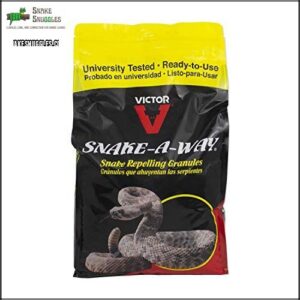
Victor Snake-A-Way Repelling Granules (10 lb, model VP364B-10) take a straightforward approach — they disrupt a snake’s Jacobson’s organ using 7% naphthalene and 28% sulfur, making treated areas smell like somewhere a snake doesn’t want to be.
One application covers up to 1.25 acres and holds for 2–3 months under dry conditions. Apply an 8–12 inch band for rattlesnakes or a 4–5 inch band for garter snakes. Reapply after heavy rain.
It’s EPA-registered, which matters. Odor is strong — expect mothballs. Results vary, so treat it as one layer of a broader control strategy.
| Best For | Homeowners, campers, and rural property owners dealing with frequent snake activity who want a low-maintenance, chemical-free barrier around yards, sheds, or outdoor living areas. |
|---|---|
| Formula Type | Sulfur & Naphthalene |
| Snake Types | Venomous & Non-Venomous |
| Longevity | 2–3 months |
| Pet Safe | No |
| Coverage Area | 1.25 acres |
| Reapplication Needed | After heavy rain |
| Additional Features |
|
- EPA-registered — the only snake repellent with that designation, which adds a layer of credibility
- One application lasts 2–3 months, so you’re not out there spraying every other week
- Works on both venomous and non-venomous snakes, including rattlesnakes and garter snakes
- Strong mothball smell that can linger — not great if you’re sensitive to odors
- Coverage may fall short of the advertised 1.25 acres in real-world use
- Effectiveness is mostly anecdotal with no independent studies backing it up
2. Natures Mace Snake Repellent Granules
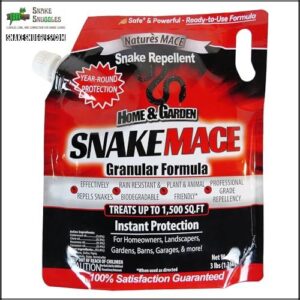
If chemical sulfur isn’t your preference, Nature’s Mace Snake Repellent Granules offer a plant-based alternative worth considering. The formula combines cedarwood, clove, cinnamon, and rosemary oils — all chosen to overwhelm a snake’s chemosensory system without toxins.
One 2.5 lb bag covers roughly 1,500 square feet. Spread an even band along fence lines, foundations, and entry points. Reapply every 40–60 days, and always after heavy rain — the oils dissipate faster than sulfur-based products.
It’s safe around pets and kids when applied as directed. For large properties, costs add up, so use it where snake pressure is highest.
| Best For | Homeowners who want a pet- and kid-safe, plant-based option to keep snakes (and lizards) out of yards, gardens, barns, and outbuildings. |
|---|---|
| Formula Type | Plant-Based Oils |
| Snake Types | Venomous & Non-Venomous |
| Longevity | 40–60 days |
| Pet Safe | Yes |
| Coverage Area | 1,500 sq ft per 2.5 lb |
| Reapplication Needed | Every 40–60 days |
| Additional Features |
|
- Plant-based formula using cedarwood, clove, cinnamon, and rosemary oils — no harsh chemicals
- Works on a wide range of reptiles, including non-venomous snakes, iguanas, and geckos
- Safe around pets, kids, and livestock when applied as directed
- Needs reapplication every two weeks and after any heavy rain or watering, which gets tedious
- Cost per square foot can climb quickly on larger properties
- Effectiveness is mostly anecdotal — hard to know for sure if the product alone is doing the work
3. Solar Snake Mole Repellent LED 2 Pack

A stake-in-ground device sounds almost too simple — but the Maxfetched Solar Snake Mole Repellent LED 2 Pack earns its place in a control strategy.
Each unit pulses ultrasonic vibrations at 400–1000 Hz every 45 seconds, cycling through three patterns every two days, so pests don’t adapt.
Two stakes spaced 80–100 feet apart cover up to 8,000 square feet. Solar-charged, weatherproof ABS housing withstands rain and UV without complaint.
The built-in LED activates at dusk automatically. Expect 2–5 weeks before results appear.
Pre-drill before staking to avoid cracking the housing.
| Best For | Homeowners dealing with snakes, moles, or gophers who want a chemical-free, low-maintenance solution for larger yard or garden areas. |
|---|---|
| Formula Type | Ultrasonic Vibration |
| Snake Types | Venomous & Non-Venomous |
| Longevity | Continuous (solar) |
| Pet Safe | Yes |
| Coverage Area | 8,000 sq ft (2 stakes) |
| Reapplication Needed | Not required |
| Additional Features |
|
- Solar-powered with a built-in LED light — no wiring, no battery runs, pulls double duty at night
- Rotating pulse patterns every two days help keep pests from getting used to it
- Two stakes cover up to 8,000 sq ft, making it a solid value for the price
- Takes 2–5 weeks to see results, so don’t expect overnight fixes
- The LED stays on all night with no way to turn it off — could be annoying depending on placement
- Less effective against mice, squirrels, and rabbits, so it won’t solve every pest problem
4. Pet Safe Snake Repellent for Yard
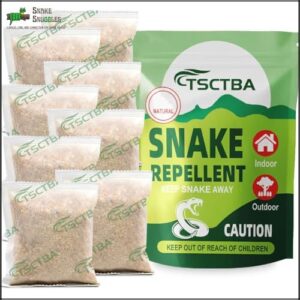
If you’re searching for a straightforward, pet-safe option, mint-scented granules offer a practical solution. These essential-oil-based packets repel both venomous and non-venomous snakes for up to three months, covering about 120 square feet per packet.
The odor is strong—think garlic and mint—which helps drive snakes away but can linger and transfer to skin or clothing. Handle with gloves and avoid placing near windows or living spaces.
Effectiveness varies; some users report fewer sightings, others notice no change. Combine this repellent with proper yard maintenance for best results and peace of mind.
| Best For | Homeowners with kids or pets who want a hands-off, chemical-free way to keep snakes out of their yard, garage, or garden. |
|---|---|
| Formula Type | Essential Oil Packets |
| Snake Types | Venomous & Non-Venomous |
| Longevity | 2–3 months |
| Pet Safe | Yes |
| Coverage Area | 120 sq ft per packet |
| Reapplication Needed | Every 2–3 months |
| Additional Features |
|
- Made with natural essential oils — safe around pets, kids, and plants
- Super easy to use — just place the packet and leave it
- Covers up to 120 sq ft and lasts 2–3 months per packet
- The garlic/essential-oil smell is strong and can cling to skin, clothes, and drift indoors
- Effectiveness isn’t consistent — some users still see snakes after use
- Larger yards need multiple packets, which adds up fast
5. Powerful Snake Repellent 36 Pack
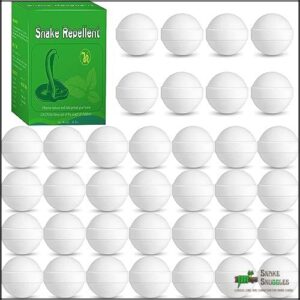
When covering large outdoor areas, the Motrapso Powerful Snake Repellent 36 Pack gives you real coverage without the hassle of spraying chemicals. Each sealed unit contains cedarwood oil, cinnamon oil, and castor oil — ingredients that naturally irritate a snake’s sensory receptors.
Place them every 3–6 feet, especially in dark, damp spots like garages, garden beds, and barn corners. They’re rainproof, sunproof, and last up to three months per unit.
Results vary, but the 36-unit count means you won’t run short mid-season. It’s a low-effort, eco-conscious addition to any broader parasite control strategy.
| Best For | Homeowners, campers, and property owners who want a hands-off way to keep snakes away from large outdoor spaces like yards, gardens, barns, and campsites. |
|---|---|
| Formula Type | Oil & Acid Blend |
| Snake Types | Venomous & Non-Venomous |
| Longevity | 2–3 months |
| Pet Safe | Conflicting Labels |
| Coverage Area | 1 unit per 3–6 ft |
| Reapplication Needed | Every 2–3 months |
| Additional Features |
|
- 36 units give you solid coverage across big areas without running out mid-season
- No spraying needed — just place them and let the natural oils do the work
- Rainproof and sunproof design means they hold up outdoors for up to 3 months
- The smell is strong — think mothballs — which can be a real problem in enclosed spaces
- Effectiveness is mostly anecdotal, so results aren’t guaranteed for every snake species
- Label messaging is inconsistent about safety around kids and pets, which is worth paying attention to
Maintaining Snake Health Against Parasites

Keeping your snake parasite-free doesn’t end with treatment — it’s an ongoing commitment to its daily environment and health. A few core habits make all the difference between a thriving snake and one that is constantly battling infection.
Here’s what to focus on to keep your snake in top shape.
Stress Reduction in Captivity
Stress is a silent parasite multiplier.
When your snake is chronically stressed, stress-induced immunosuppression leaves it wide open to infection.
Start with a solid thermal gradient and humidity regulation — both matter more than most keepers realize.
Calm Handling, Consistent Lighting, and an adequate Acclimation Period do the heavy lifting.
- Provide multiple Hiding Structures
- Maintain a stable thermal gradient
- Practice Calm Handling with short sessions
- Keep Consistent Lighting on a fixed cycle
- Allow a full Acclimation Period for new arrivals
Balanced Diet and Immune System Support
Your snake’s immune system runs on fuel. Poor nutrition and immunity in snake care go hand in hand — skimp on protein quality or antioxidant vitamins, and parasite prevention becomes an uphill battle.
| Nutrient | Immune Role |
|---|---|
| Vitamins A & D | Support immune cell growth |
| Quality protein | Builds immune molecules |
| Selenium | Lowers oxidative stress |
Micronutrient intake through appropriate prey and targeted supplementation.
Identifying Early Symptoms for Immediate Action
Early symptoms are easy to miss — until they’re not. Watch for weight loss, lethargy, sunken eyes, and abnormal shedding.
Excessive soaking often signals mite irritation.
Blood-stool indication or open-mouth breathing means act now.
Flaky scales and appetite changes are your first alert.
Regular health screenings and fecal examinations for snakes help you monitor closely before small problems become serious ones.
Holistic Approaches to Snake Parasite Management

Medications and enclosure hygiene are essential, but they’re only part of the picture.
A truly resilient snake benefits from natural antiparasitic support, stress reduction, and a balanced gut — layers of protection that work quietly in the background.
Here’s how each of those approaches fits into a complete parasite management plan.
Herbal and Natural Antiparasitic Treatments
Natural remedies get plenty of buzz, but the evidence is mixed.
Neem Oil disrupts mite hormone cycles, and Clove Oil at 1% can kill mites on contact — genuinely useful data.
Aloe Ferox, Elephantorrhiza root decoctions, and Garlic allicin show real antiparasitic activity in research.
Diatomaceous earth and predatory mites offer chemical-free methods for mite control worth considering.
Just don’t ditch natural and veterinary parasite control methods — combine both carefully.
Reducing Stress for Better Parasite Resistance
Herbal tools only go so far. Your snake’s immune system does the real heavy lifting — and chronic stress triggers stress-induced immunosuppression that leaves it wide open to parasites.
Four husbandry habits that make a measurable difference:
- Consistent Temperature gradients reduce physiological load
- Secure Hides on both sides eliminate vigilance stress
- Predictable Feeding schedules preserve immune energy
- Minimal Disturbance through Quiet Handling lowers glucocorticoid spikes
Balancing Gut Flora for Long-Term Health
Stress reduction sets the stage — but what happens inside your snake’s gut determines how well that immune system actually performs.
Gut flora balance matters more than most keepers realize. Prebiotic Fiber Benefits include fueling SCFA Production, which strengthens intestinal lining integrity and enhances Immune Modulation against intestinal parasites. Fermented Food Diversity principles apply here too — a Microbiome Diversity Boost means more resilient defenses.
| Gut Support Factor | Mechanism | Practical Application |
|---|---|---|
| Prebiotic fibers | Fuel beneficial bacteria | Add vet-approved supplements |
| SCFA production | Fortifies gut lining | High-fiber, species-appropriate diet |
| Microbiome diversity | Improves immune tolerance | Consistent nutrition and immunity protocols |
Pair this with regular fecal examinations, anthelmintic therapy when indicated, and strict prey source safety for lasting results.
Frequently Asked Questions (FAQs)
What is the 80 20 rule for parasites?
The 80/20 rule — or Pareto Aggregation — means an Essential Few Hosts carry most of the parasite load.
That Statistical Skew drives Burden Concentration, making Targeted Intervention far more efficient than treating every snake equally.
What is the best dewormer for snakes?
There’s no single "best" dewormer—it depends entirely on what’s actually living inside your snake. Fenbendazole for roundworms, praziquantel for tapeworms, pyrantel for light nematode burdens. Vet-confirmed diagnosis first, always.
How to prevent parasites from infesting a snake?
75% of captive snakes deal with parasites at some point.
You can dramatically cut that risk through quarantine protocols for new snakes, consistent enclosure sanitation, and regular fecal examinations — before problems take hold.
How do you treat parasites in snakes?
Treating snake parasites depends on what you’re dealing with. Fenbendazole for roundworms, praziquantel for tapeworms, and ivermectin for mites — all require weight-based dosing, species-specific toxicity checks, and post-treatment monitoring.
How to eliminate snakes?
Seal entry points, clear clutter, and trim vegetation short. Use natural repellents like cinnamon oil or sulfur granules around your perimeter. For persistent intrusions, call a professional wildlife removal service.
How effective are poisons against snakes?
Poisons offer a false sense of control. Toxicology variability means no compound works reliably across species — resistance mechanisms, environmental degradation, and safety concerns make them ineffective and dangerous.
Use barriers and professional removal instead.
How do I keep my snake healthy?
Clean enclosure, proper temperature regulation, and hydration management form your snake’s first defense. Quarantine new arrivals, feed parasite-free prey, schedule veterinary check-ups, and track weight consistently.
Healthy husbandry prevents most problems before they start.
How to get rid of parasites in snakes?
Think of parasites as uninvited tenants — eviction requires both removing them from your snake and making the environment uninhabitable.
Use ivermectin for mites, permethrin-based treatments for ectoparasites, and fenbendazole or praziquantel for internal worms.
Always confirm with a vet first.
What is the best way to get rid of snake mites?
Getting rid of snake mites takes a coordinated strike on two fronts: the snake itself and its enclosure. Miss either one, and you’re back to square one within a week.
Start with a permethrin-based treatment — it’s your most reliable first move. Apply it to enclosure surfaces from about 12–15 inches away, keeping it away from water dishes, eyes, and nostrils. This is the backbone of most snake mite treatment options, and for good reason: it kills on contact.
Your Spot Cleaning Protocol matters just as much as the chemical. Remove all substrate immediately. Throw out heavily infested hides — don’t try to save them. Scrub every surface with a reptile-safe bleach solution, then let everything dry completely before reassembling.
Don’t stop there. A Repeated Application Schedule is non-negotiable. Mites hatch in 7–14 days, so one treatment won’t catch everything. Re-treat the enclosure 7–10 days after the first application to hit any newly emerged mites before they reproduce.
For Heat Treatment, sterilize décor by baking at 150–200°F for 30–60 minutes or soaking in 3–5% hydrogen peroxide for 10–15 minutes. Both methods disrupt the mite lifecycle in hiding spots chemicals might miss.
If you want to go a step further, Biological Control Agents — specifically predatory mites — can be introduced per product guidelines to target surviving snake mites naturally without additional chemical load.
When infestations are severe or keep returning despite environmental sanitation and quarantine for reptile health, that’s your signal to escalate. Professional Treatment Guidance from a reptile-savvy vet can confirm the species of mite, rule out lookalikes, and authorize systemic options like ivermectin at 2 mg/kg IM — never in chelonians.
Isolate the affected snake throughout the entire treatment window. Using predatory mites for mite control works best as a complementary layer, not a standalone fix. Keep the snake quarantined until two consecutive inspections — spaced a week apart — come back clean.
What is the most effective way to control parasites?
Consistent parasite control comes down to clean enclosure, targeted treatments based on fecal exams, and strict quarantine.
Skip any one of these, and you’re leaving the door open.
Conclusion
Ignoring parasites is playing with fire—a single oversight can unravel years of careful husbandry.
The best snake parasite control hinges on the precision-driven strategies we’ve dissected: targeted treatments like ivermectin, rigorous quarantine, and relentless environmental hygiene. These aren’t suggestions; they’re non-negotiable protocols.
Stay vigilant—monitor weight, behavior, and habitat. Partner with a reptile vet for diagnostics.
By anchoring prevention in science, not guesswork, you shield your snake from silent invaders. Their health, and your peace of mind, depend on it. Act decisively.