This site is supported by our readers. We may earn a commission, at no cost to you, if you purchase through links.
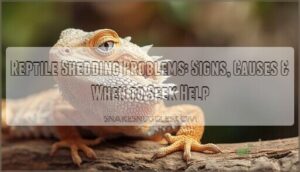
Your bearded dragon’s skin looks pale, its eyes turned milky blue yesterday, and now it won’t eat. Before you panic, understand this: those symptoms signal a normal shed cycle.
The real concern starts when patches of old skin remain stuck for days, constricting toes or covering eyes after the process should have finished. Dysecdysis—the clinical term for abnormal shedding—affects reptiles when humidity drops too low, nutrition falters, or underlying illness disrupts their skin renewal process.
Retained shed cuts off circulation to digits, traps bacteria against vulnerable new skin, and damages corneal tissue if eye caps don’t release properly. Recognizing the difference between healthy pre-shed behavior and genuine reptile shedding problems determines whether you adjust husbandry parameters at home or schedule an urgent veterinary exam.
Table Of Contents
Key Takeaways
- Normal shedding involves predictable signs like dull skin, cloudy eyes, and temporary appetite loss, but retained skin stuck on toes, tail tips, or eyes after the shed completes signals dysecdysis requiring immediate intervention to prevent tissue death and infection.
- Low humidity below species-appropriate levels, dehydration, and nutritional deficiencies directly cause incomplete sheds by preventing the moisture layer between old and new skin from forming properly.
- Retained shed acts like a tourniquet on extremities, cutting off blood flow within days and progressing to permanent tissue loss, while trapped eye caps damage the cornea and create breeding grounds for infection.
- Three consecutive failed sheds despite corrected humidity and husbandry indicate underlying medical conditions like parasites, vitamin A deficiency, or systemic illness that require veterinary diagnosis and treatment.
Normal Shedding Signs in Reptiles
Your reptile’s shedding cycle follows predictable patterns when things are going well. Understanding normal shedding behavior helps you distinguish routine changes from warning signs that need attention.
Watching for healthy post-shed behaviors like active exploration and clear eyes confirms your snake’s shedding cycle completed successfully.
Watch for these five key indicators that your reptile is entering a healthy shed.
For a deeper look at what to expect, check out this complete guide to understanding the snake shedding process.
Dull or Cloudy Skin Appearance
Your reptile’s skin will lose its usual shine and turn noticeably dull or cloudy a few days before shedding. This early sign happens when new skin forms underneath the old layer, causing a milky cast in snakes or faded patches in lizards.
If your reptile shows signs of a problematic shed, understanding why snakes refuse to use their hide can help you address both behavioral and health concerns early.
It’s a normal part of reptile shedding, not dysecdysis. If dullness persists beyond two weeks or appears patchy with retained shed, check your humidity levels and hydration.
For detailed information on the various signs of snake shedding, reviewing expert sources can help guide proper care.
Cloudy or Blue Eyes
Cloudy or blue eyes signal your reptile has entered the blue eye phase, a normal pre-shed stage lasting three to seven days. This opacity occurs as fluid collects under the spectacle, temporarily obstructing vision and making your pet defensive or nervous.
If cloudiness persists after shedding or appears asymmetric, you may be dealing with retained eye caps or spectacle problems requiring immediate attention. In snakes, issues like retained eye caps explained can impair vision and require prompt treatment.
Increased Hiding Behavior
As your pet’s vision clouds, you’ll notice a shift in hiding patterns—snakes often retreat for seven to fourteen days during the shed cycle. Ball pythons may disappear into the darkest hide until their spectacles clear.
This behavioral change reflects their vulnerability, not reptile shedding problems. Environmental factors like humidity effects and stress signals matter, but increased hiding during shedding remains a normal part of reptile health and wellness requiring patience rather than intervention.
Decreased Appetite
During shedding cycles, many healthy reptiles show food refusal for one to two weeks without concern. This appetite loss links to energy diverted toward skin renewal rather than digestion. However, when combined with stuck shed, weight loss, or lethargy lasting beyond ten days, it signals reptile shedding problems requiring attention.
Humidity effects and nutrition impact directly influence both shed quality and feeding response in reptile health and wellness, so monitor both closely during this vulnerable window.
Complete, One-Piece Shed
A smooth, intact skin peeled away in one continuous sheet marks successful ecdysis and confirms you’ve nailed humidity control, enclosure management, and reptile nutrition. When ball pythons or corn snakes produce this complete shed, it signals proper hydration and skin health.
Conversely, incomplete shed or retained shed fragments indicate shedding problems that require immediate adjustments to prevent tissue damage and circulation issues common in reptile shedding problems.
Regular monitoring and preventive strategies, including proper humidity management and parasite control, are essential—learn how to prevent common snake health issues before shedding complications arise.
Warning Signs of Shedding Problems
While shedding is normal, certain signs indicate the process isn’t going as it should. These warning signs require immediate attention to prevent circulation issues, infections, and long-term damage.
Watch for these specific indicators that your reptile needs intervention.
Incomplete or Patchy Shed
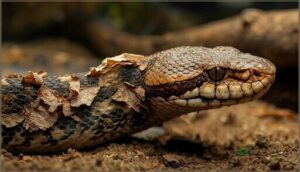
When your reptile’s old skin clings in random flakes instead of sliding off cleanly, you’re witnessing dysecdysis—a clear warning that something in their care needs adjustment. This incomplete shed or retained shed signals underlying husbandry gaps that can escalate quickly.
Watch for these patchy shed patterns:
- Scattered strips clinging to neck creases, armpits, and sides while other areas appear fresh and bright
- Mottled appearance from uneven peeling, especially common when humidity management falls below species requirements
- Rough patches on head, limbs, or spine that resist normal ecdysis despite the reptile’s rubbing efforts
- Shell irregularities in chelonians, showing lifting scutes instead of smooth plates
Patchy shed causes include low humidity, dehydration, and poor nutrition—each making skin less elastic and harder to release. Left unaddressed, retained skin risks range from constricted blood flow to skin infection prevention challenges, as trapped moisture creates bacterial growth zones.
Recognizing early warning signs of snake diseases helps catch dysecdysis before complications escalate into serious infections or circulation problems.
A lukewarm soak and proper shedding aids like moist hides often resolve minor cases, but persistent shedding problems demand veterinary assessment to rule out systemic disease.
Retained Skin on Toes or Tail Tips
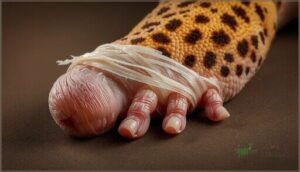
Those thin, pale rings wrapping your gecko’s digits or your dragon’s tail tip are more than cosmetic—they’re tourniquets that strangle tissue. Retained skin from dysecdysis creates toe constriction and tail tip damage, blocking blood flow until the digit darkens, then dies. Early humidity control and shedding aids prevent this, but veterinary intervention becomes critical once swelling or discoloration appears.
| Early Warning Signs | Tissue Impact | Prevention & Treatment |
|---|---|---|
| Tight, pale bands on toes or tail | Restricted arterial flow, cold tissue | Maintain species-appropriate humidity levels |
| Stacked, layered shed on same digit | Progressive constriction over cycles | Provide humid hide with damp substrate |
| Slight swelling behind retained ring | Venous return blocked, tissue hypoxia | Gentle warm soaks for 15–30 minutes |
| Color shift from normal to brown/black | Avascular necrosis, permanent damage | Check every toe and tail tip post-shed |
| Dry, papery texture vs. new skin | Auto-amputation if untreated | Seek veterinary help for persistent cases |
Retained Eye Caps
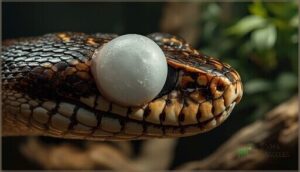
Clear eyes should shine after every shed, but when a retained spectacle clouds your snake’s vision, you’re looking at progressive corneal damage.
Retained eye caps from dysecdysis stack over multiple cycles, trapping bacteria and causing vision impairment.
Ophthalmic care demands gentle eye cap removal by a veterinarian—never peel at home—because improper technique tears delicate tissue and worsens reptile shedding problems.
Discolored or Dry Skin
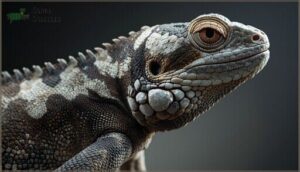
Duller scales and chalky white patches across your reptile’s body signal dehydration and low moisture levels. Dry skin that won’t release during normal skin shedding causes discolored skin and persistent dry patches.
Chronic stuck layers increase skin damage risk through cracking at joints, inviting infection and necrosis.
Correct humidity, hydration, and careful use of shedding aids prevent these escalating shedding problems and protect reptile skin integrity.
Abnormal Skin Texture or Bumps
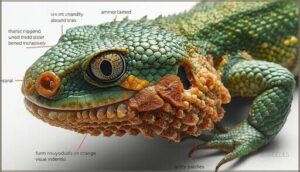
Bumps, lumps, and unusual textures warn you of serious skin disorders beyond simple retained skin. These changes demand immediate attention.
- Thick, ridged rings around toes or tail tips indicate multiple layers of retained skin cutting off circulation
- Soft, fluid-filled blisters under scales signal early scale rot or burn injuries
- Firm, pea-sized nodules suggest abscesses or reptile tumors requiring bump removal
- Gritty, peppered patches reveal external parasites causing chronic irritation
Dysecdysis treatment alone won’t resolve these skin lesions—veterinary diagnosis determines whether infection, discolored skin, or dry skin complications need targeted intervention.
Behavioral Changes Indicating Shedding Issues
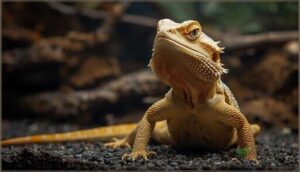
Your reptile’s behavior often tells you more than its skin alone. Changes in activity, appetite, and temperament can signal that shedding isn’t going smoothly. Watch for these four behavioral red flags that indicate your reptile needs help.
Increased Hiding or Lethargy
When your reptile shows increased hiding behavior or lethargy patterns during a shed, it may signal shedding discomfort rather than normal pre-shed vulnerability. Dysecdysis often drives reptile anxiety as tight, retained skin restricts movement.
Environmental stress—low humidity, incorrect temperatures—compounds these shedding and skin problems.
A reptile that remains motionless for days, barely reacts to handling, or avoids basking despite proper conditions requires immediate attention for potential reptile health complications.
Refusal to Eat or Drink
Food refusal during shedding cycles often represents temporary shedding anorexia rather than critical reptile health emergencies. Many healthy reptiles skip meals for several days surrounding a shed without immediate harm. However, when your reptile refuses both food and water for more than several days alongside retained or patchy shed, dehydration risks escalate rapidly. Drinking changes combined with dry, wrinkled skin signal serious shedding and skin problems requiring nutrition support and fluid intervention.
Key indicators of concerning food and water refusal:
- Sunken eyes, thick sticky saliva, and dry wrinkled skin accompany dehydration beyond normal shedding anorexia
- Weight loss exceeding 10 percent of body weight during shedding indicates underlying medical problems rather than temporary fasting
- Refused water intake combined with retained shed increases kidney stress, gout risk, and potential impaction
- Continued anorexia with stuck shed over mouth or nostrils interferes with breathing and requires veterinary removal
- Nutritional deficiencies worsen when prolonged food refusal depletes fat stores and weakens immune function during problem sheds
Excessive Irritability or Stress
Stress signals from shedding issues often appear as sudden defensiveness or refusal of handling your reptile once tolerated calmly. Pain indicators include flinching, tail lashing, or aggressive reactions when you approach areas with tight retained skin.
Environmental factors like low humidity worsen irritability, making your reptile snap or hiss during routine care.
Behavioral changes such as tense posture or constant avoidance suggest discomfort requiring immediate humidity adjustments and reduced handling stress.
Frequent Rubbing Against Objects
While irritability and stress reveal internal discomfort, watch your reptile closely for persistent rubbing against enclosure surfaces—a clear behavioral flag for shedding problems. Healthy snakes use rocks or branches as friction points to pull off loosening skin, but repeated rubbing without progress signals dysecdysis.
Look for:
- Frequent nose rubbing causing rostral abrasions
- Rubbing eyes yet retained eye caps remain
- Using cage mesh instead of proper abrasive surfaces
- Continued friction after partial skin removal
This pattern demands humidity correction and safe shedding aids.
Common Causes of Shedding Problems
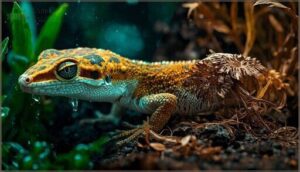
Shedding problems don’t happen without reason. Environmental factors and health conditions work together to create the conditions for incomplete or retained sheds. Understanding these root causes helps you address issues before they compromise your reptile’s health.
Low Humidity Levels
When ambient humidity drops below 35 percent, your reptile’s skin dries out instead of forming the moisture layer needed to separate old from new skin. This disrupts normal shedding mechanics and causes dysecdysis, where skin clings in patches rather than lifting cleanly.
A humid hide stocked with damp moss provides the microclimate most species need, preventing dry air effects that lead to constricting rings around toes and tail tips.
Dehydration
Internal hydration deficiencies disrupt shedding more critically than many keepers realize. When your reptile’s body water drops, the lymphatic layer between old and new skin dries out, causing retained skin to cling stubbornly around toes and tails.
Dehydration tests reveal packed cell volumes above 50 percent and elevated uric acid, confirming that inadequate fluid intake directly triggers dysecdysis.
Provide clean water daily and monitor skin hydration closely.
Poor Nutrition
Vitamin deficits and mineral imbalance directly compromise skin cell formation, causing fragile layers that tear or stick during the shed cycle. When your reptile lacks vitamin A, calcium, or adequate protein, the new skin grows thin and poorly structured.
Proper nutrition through dietary variety and targeted nutrient supplements corrects these nutritional deficiencies, restoring normal scale development and complete one-piece sheds.
Inadequate Enclosure Setup
Temperature regulation inside your reptile enclosure setup depends on proper temperature gradients, humidity control, and ventilation issues working together. Without a suitable humidity box and proper humidity levels, your reptile can’t complete a healthy shed.
- Set a basking zone at species-specific temperatures, usually 88 to 92 degrees Fahrenheit for most snakes, with a distinct cool side for thermoregulation.
- Maintain humidity levels between 35 and 50 percent for desert species, higher for tropical animals, using a hygrometer to track conditions.
- Provide rough-textured decor quality items like cork bark and branches that create rubbing surfaces to help strip loose skin during shedding.
- Choose enclosure size large enough for full body extension and natural movement, as cramped quarters prevent the mechanical action needed to remove old skin.
Underlying Illness or Stress
When chronic illness collides with stress factors, your reptile’s physiological strain disrupts normal skin turnover and triggers dysecdysis. Underlying infections suppress immune response, while hormonal imbalance from prolonged stress elevates cortisol levels that impair tissue repair. Nutritional deficiencies worsen dehydration, creating a cycle where retained skin becomes both symptom and complication.
You’ll notice reptile shedding problems persist despite correcting humidity and enclosure conditions.
Health Risks of Unresolved Shedding Issues
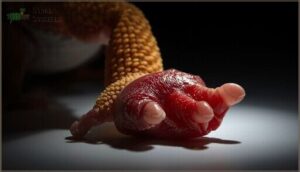
Shedding problems don’t just cause temporary discomfort—they create serious health complications if you don’t address them quickly. Retained skin can escalate from a minor inconvenience to a life-threatening condition within days. Understanding these risks helps you recognize when your reptile needs immediate intervention.
Restricted Blood Flow and Tissue Damage
Retained skin acts like a tourniquet on your reptile’s toes and tail tips, tightening as it dries. This constriction injury cuts off blood flow, triggering avascular necrosis where cells die from oxygen starvation.
Retained skin tightens like a tourniquet, strangling blood flow and causing tissue death from oxygen starvation
You’ll notice tissue damage as dark discoloration progressing to dry, black necrotic lesions. Without prompt treatment, these blood flow issues from dysecdysis lead to permanent tissue loss or auto-amputation.
Impaired Vision From Retained Eye Caps
Beyond tissue damage, your reptile’s vision suffers when eye caps remain stuck. These spectacles block light and create layers over the cornea, reducing visual acuity with each incomplete shed.
You’ll see your snake rubbing its face or squinting as corneal damage develops beneath the retained cap. Left untreated, this dysecdysis creates a breeding ground for eye irritation and secondary infections requiring specialized vision restoration techniques and prompt eye cap removal.
Increased Risk of Infections
Incomplete shedding creates direct pathways for bacterial and fungal infections. Retained skin traps moisture against your reptile’s body, turning those patches into breeding grounds for microbes.
Gaps in the compromised skin barrier allow pathogens to colonize exposed tissue, while chronic dysecdysis suppresses immune response when your pet needs it most.
Environmental factors like poor substrate hygiene compound these infection risks during vulnerable shedding periods.
Long-Term Skin and Scale Damage
When shedding problems persist, your reptile faces permanent epidermal damage that compromises skin health and disorders beyond immediate infection. Chronic inflammation from dysecdysis causes scale scarring and skin lesions that don’t fully heal.
Repeated retained skin episodes create lasting dermatological issues—thinned outer layers, reduced elasticity, and discolored patches where circulation was restricted. These structural changes make future skin shedding increasingly difficult.
When to Seek Veterinary Help
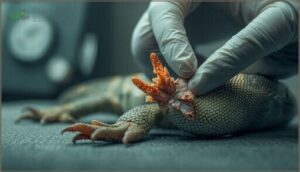
Most shedding problems respond to adjustments in humidity, hydration, and enclosure conditions. However, certain situations require professional veterinary intervention to prevent permanent damage or systemic health complications.
Recognize when home care isn’t enough by watching for these critical warning signs.
Persistent Retained Shed
When stuck skin remains through multiple cycles despite your best efforts with humidity control and reptile hydration, veterinary care becomes critical. Persistent dysecdysis signals that shedding issues have deeper roots—chronic dehydration, vitamin deficiency, or disease.
A veterinarian can safely perform shed removal, assess for skin lesions, and diagnose the underlying cause before tissue damage from retained skin becomes permanent.
Signs of Infection or Swelling
Redness, warmth, and retained skin areas demand urgent veterinary attention. Swelling causes circulation loss, while pus infection produces foul-smelling discharge, indicating active bacterial invasion. Skin lesions with visible tissue damage won’t heal without intervention.
Fever symptoms like lethargy or breathing changes signal that shedding problems have become systemic infections requiring immediate medical treatment to prevent sepsis.
Severe Behavioral Changes
Dramatic shifts in temperament reveal shedding pain that demands immediate veterinary intervention. When your reptile’s behavior deviates sharply from normal patterns, you’re witnessing emergency signals rather than simple discomfort.
- Extreme lethargy where your reptile can’t right itself indicates dangerous circulation problems from retained bands
- Sudden aggression with striking or hissing reflects heightened vulnerability from impaired vision and tight skin
- Complete food and water refusal lasting several days signals serious dehydration compounding shedding problems
- Obsessive rubbing causing raw spots or missing scales shows self-injury from unresolved dysecdysis
- Abnormal restlessness with frantic pacing suggests constrictive bands affecting movement and thermoregulation
These behavioral alerts require emergency interventions to prevent systemic complications.
Repeated Shedding Problems Despite Care
When three consecutive sheds fail despite correct humidity and heat, hidden husbandry gaps, nutritional factors, or medical conditions are driving chronic complications.
Persistent dysecdysis signals underlying parasites, vitamin A deficiency, or systemic illness that home care can’t resolve.
Veterinary intervention becomes critical when incomplete shed patterns repeat, particularly with toe bands or eye caps that worsen each cycle, threatening permanent tissue damage and vision loss.
Frequently Asked Questions (FAQs)
How often should healthy reptiles shed their skin?
Shedding frequency varies dramatically by species variations and age factors. Baby lizards shed every one to two weeks during rapid growth rates, while adult bearded dragons usually shed only twice yearly when humidity levels remain stable.
Can I safely help remove my reptiles stuck shed?
Should you intervene when your reptile struggles with stuck shed? You can safely assist using soaking techniques and gentle manual removal, but only after humidity control and shedding aids have softened the dysecdysis completely.
What humidity level is best for my specific species?
Your reptile’s ideal humidity depends entirely on its natural habitat. Desert species like leopard geckos need 30-40%, while tropical animals such as crested geckos require 70-80% for proper hydration and shedding cycles.
Do supplements or vitamins improve shedding in reptiles?
Yes, supplements improve shedding when paired with proper husbandry. Vitamin A, calcium supplements with vitamins A and D3, multivitamin support, omega fatty acids, and electrolyte balance all strengthen skin quality and ease stuck shed.
Are misting systems better than manual humidity control?
Automated spraying through misting systems maintains humidity levels within narrow ranges more reliably than hand-held methods, reducing patchy sheds.
Manual control offers directional flexibility but requires consistent daily effort and monitoring with a hygrometer.
Conclusion
A missed shed becomes a medical emergency faster than most owners expect. Toes lose circulation within days when constricting bands form. Eye caps trap debris against delicate corneal tissue. What started as dull skin transforms into infected lesions if retained patches persist beyond 48 hours post-shed.
Recognizing reptile shedding problems signs early—and responding with appropriate humidity adjustments or veterinary intervention—prevents permanent digit loss, vision impairment, and systemic infection. Your vigilance during this vulnerable period determines whether shedding remains a routine process or escalates into crisis.
- https://reptilesmagazine.com/diagnosing-and-treating-dysecdysis-aka-retained-shed/
- https://companion-animals.extension.org/shedding-management-for-companion-reptiles/
- https://avianexoticvetcare.com/reptiles-amphibians/shedding-reptiles
- https://www.petmd.com/reptile/conditions/skin/dysecdysis-reptiles
- https://www.dialavet.com/blog/preventing-incomplete-shedding-problems-in-reptiles