This site is supported by our readers. We may earn a commission, at no cost to you, if you purchase through links.
Your ball python spends its days tucked into a hide, and a bare tank can feel like a stage with no wings. Live plants change that. They throw shade, break sightlines, and give your snake the cover it craves.
But the wrong leaf can hurt. Peace lily and dieffenbachia are common shelf plants, and both can harm a ball python that tastes them.
Choosing safe plants for ball python vivarium setups takes more than a pretty photo. You need tough foliage, the right light, and clean roots. Here are eight non-toxic picks, plus the care that keeps them thriving.
Table Of Contents
- Key Takeaways
- 8 Live Plant Options for Ball Python Vivariums
- How to Choose Plants for Your Ball Python Vivarium: Safety, Humidity, and Light
- Preparing and Maintaining Live Plants in a Ball Python Vivarium
- Top 5 Plant Products to Evaluate for Ball Python Vivariums
- Frequently Asked Questions (FAQs)
- What live plants can I put in a ball python enclosure?
- What plants are safe to put in a snake enclosure?
- Are Hobby Lobby fake plants safe for reptiles?
- What are the best artificial plants for ball pythons?
- What live plants can I put in with my ball python?
- What plants are safe for snake tanks?
- What plants are toxic to ball pythons?
- Can I put real plants in my snake tank?
- Can you put succulents in a ball python enclosure?
- How long should I quarantine new plants?
- Conclusion
Key Takeaways
- Check every plant’s toxicity before you buy, because common picks like peace lily and dieffenbachia can harm your ball python, and some listed products (Alocasia, ZZ plant, snake plant) carry toxicity warnings, while pothos, spider plant, and ponytail palm are the safer choices.
- Quarantine new plants for at least 30 days (ideally 4 to 6 weeks), then rinse the roots clean of nursery soil to keep pests, mold, and chemicals out of the enclosure.
- Match your plants to bright indirect light from a full-spectrum LED and a 50 to 80 percent humidity range, but let your water bowl and substrate handle most of the humidity work.
- Place tall plants along the back wall, keep basking areas clear, and pull any plant your snake chews, so the greenery adds cover without becoming a hazard.
8 Live Plant Options for Ball Python Vivariums
Eight Safe Plants for Ball Python Vivarium setups give you plenty to work with, so let’s meet them.
Since live plants need the right foundation to thrive, pairing them with a safe substrate for pet snakes helps keep humidity steady and roots healthy.
Start with the tough trio. Pothos trails from ledges and background panels, and it shrugs off trampling. Snake plant stands stiff and upright, so it resists crushing and breaks sightlines near hides. Spider plant works best mounted high, where its arching leaves can dangle.
Need foreground filler? Peperomia and bromeliads stay low and create shaded refuges. Rinse bromeliad cups often so water never stagnates.
Want more cover? Creeping fig blankets backgrounds, but you’ll need to prune it. Ponytail palm likes brighter light and drier feet. Birds nest fern adds soft texture, so tuck it behind cork bark. Your python will thank you.
How to Choose Plants for Your Ball Python Vivarium: Safety, Humidity, and Light
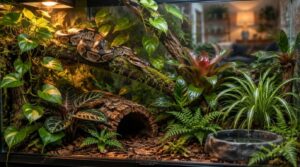
Picking the right plants for your ball python’s home isn’t guesswork, and you’ve got this. Four simple steps will guide you: Check Plant Safety, Match Humidity Needs, Provide Suitable Light, and Plan Placement And Care.
Let’s walk through them so your vivarium looks lush and stays snake-safe.
Check Plant Safety
A pretty leaf isn’t proof of safety. Check toxicity first, every time. Stick with a nontoxic plant like pothos or spider plant, and skip peace lily and dieffenbachia.
- Confirm each species before buying.
- Follow a 30-day plant quarantine procedure.
- Rinse roots and use reptile safe soil.
Then keep a humidity range 50-80 in mind. Safe picks keep your snake healthy.
Match Humidity Needs
Safe plants still need the right air. Aim for a humidity range 50-80, then choose tropical species that enjoy it. Dense foliage builds a humidity microclimate near the substrate, which gives you steady humidity support.
Don’t rely on plants for humidity control, though. Your water bowl and substrate handle most humidity regulation. Keep airflow open to avoid soggy, moldy conditions.
Plants add beauty, but your water bowl and substrate do the real work of humidity control, so keep airflow open
Provide Suitable Light
Humidity is half the story. Light is the other half. Plants in a ball python vivarium live in partial or full shade, so aim for bright indirect light, not a spotlight.
If you’re still choosing an enclosure, a well-sized reptile terrarium for snakes leaves room for a 12-inch plant to grow without blocking its light.
Choose a full-spectrum LED around 5200K–7000K for light spectrum optimization. Mount it 10–16 inches up, covering half the enclosure. Set a 12-hour light scheduling routine with a timer.
Plan Placement And Care
Placement planning keeps your setup stress-free. Start with a plant quarantine procedure, then build around these basics:
- Tall plants along back walls add foliage density for cover.
- Keep basking areas clear.
- Use a steady light scheduling routine.
- Practice humidity control and substrate moisture control weekly.
Trim weekly, watch your snake’s movement, and adjust. Small tweaks protect your ball python’s comfort.
Preparing and Maintaining Live Plants in a Ball Python Vivarium
Starting with a solid plant quarantine procedure keeps your vivarium healthy. Isolate new plants for 2 to 4 weeks and inspect them often for pests and mildew. Then rinse every root clean of nursery soil using dechlorinated water. A 10 to 15 minute soak in 1 part 3 percent hydrogen peroxide to 3 parts water helps knock back hitchhikers. Rinse well afterward.
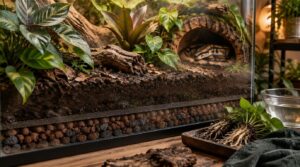
Next, build a bioactive enclosure setup that works. Layer clay balls or lava rock below a mesh barrier, then add 3 to 4 inches of fertilizer free substrate. Plant your nontoxic foliage 2 to 4 weeks before the snake moves in, and shield roots with hardscape.
Good substrate moisture control matters. Add humidity control, and scoop waste fast.
Top 5 Plant Products to Evaluate for Ball Python Vivariums
Ready to shop for your snake’s Living Jungle Setup? Here are five plant products worth a close look before you buy. Check each one against your enclosure’s humidity, light, and space, and you’ll pick with confidence.
1. Alocasia Polly Black Shield Houseplant
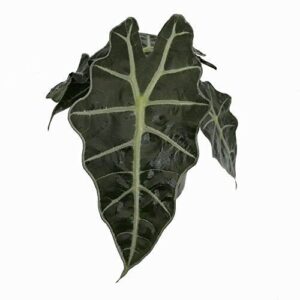
Want a jungle-in-a-box look? The Alocasia Polly Black Shield delivers it. Its glossy, near-black leaves with bright white veins pop against bark and moss.
It arrives in a 4-inch pot at roughly 10 to 12 inches tall. Indoors, it can reach 12 to 24 inches, so give it room.
One big catch: calcium oxalate crystals run through every tissue. Alocasia is toxic to cats, dogs, and horses, and nobody has documented reptile safety. Don’t call it "safe" for your ball python. If you’re after mastery, choose a confirmed-safe plant, or keep this one outside the enclosure.
Light and water are easy. Offer bright indirect light, mist every seven to eight days, and hold humidity at 60 to 80 percent. Expect some winter dieback. Reviews are mixed, with yellowing and creased leaves
| Best For | Plant collectors with bright, diffuse light and no pets, who want a dark, glossy-leaved Alocasia and are comfortable with a plant that may need extra care. |
|---|---|
| Plant Type | Alocasia Polly Black Shield |
| Light Needs | Bright indirect light |
| Watering | Mist every 7-8 days |
| Pet Toxicity | Toxic to cats, dogs, horses |
| Reptile Safety | Undocumented |
| Customer Concerns | Yellowing, creased leaves |
| Additional Features |
|
- Deep green, shiny leaves with a blackish hue and sturdy stems that don’t weaken or wilt
- Arrives with moist soil and protective packaging in a 4" pot
- Easy watering routine: a spray bottle every 7-8 days in strong indirect or bright diffuse light
- Toxic to cats, dogs, and horses because of calcium oxalate crystals, and reptile safety is undocumented
- Some customers report yellowing leaves and plant decline, with mixed reviews on long-term health and color retention
- Leaves are occasionally broken or creased on arrival
2. Hirts Gardens Reverse Variegated Spider Plant
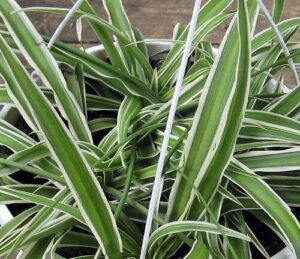
The ASPCA lists spider plants as non-toxic to cats, dogs, and horses. That isn’t a reptile feeding guarantee, so keep your snake from chewing the leaves.
This is the Easy Care Option on your list. White-edged leaves with a green center stripe arch into a trailing clump, adding cover without stiff foliage.
Give it Bright, Indirect Light to keep the reverse variegation crisp. Direct midday sun scorches leaves. Keep it away from basking-lamp heat. Water once the top layer of soil dries slightly, and keep the roots lightly moist, never soggy. Plant it in a raised pot or well-drained pocket so its roots stay out of the damp substrate below.
Mature plants grow spiderettes you can root. Arrivals vary, though, and some buyers report brown tips. It ships east of the Mississippi only.
| Best For | Beginner plant owners, including cat households and reptile keepers who want a low-maintenance, trailing plant for a bright spot with indirect light. |
|---|---|
| Plant Type | Reverse variegated spider plant |
| Light Needs | Bright indirect light |
| Watering | Water when top soil dries slightly |
| Pet Toxicity | Non-toxic to cats, dogs, horses |
| Reptile Safety | Not guaranteed; prevent chewing |
| Customer Concerns | Brown tips, variable size |
| Additional Features |
|
- Easy to grow and propagate, since mature plants produce spiderettes you can root
- Reverse variegated leaves with white edges and a green center stripe add visual interest
- Non-toxic to cats, dogs, and horses according to the ASPCA
- Some buyers received plants with brown tips or yellow leaves on arrival
- Plant size and health can vary from order to order, and some find the value weak for the size
- Ships only east of the Mississippi River
3. Costa Farms ZZ Plant Decorative Pot
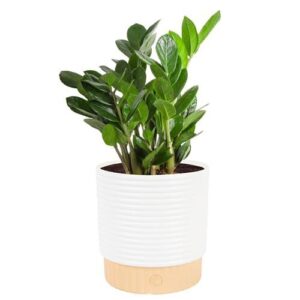
Think of the ZZ plant as the houseplant that shrugs off your mistakes. It tolerates low light, forgives missed waterings, and keeps its glossy, upright shape through all of it.
One honest warning first. ZZ plants contain calcium oxalate crystals, so they’re toxic if a snake chews them. Ball pythons rarely nibble foliage, but hatchlings deserve extra caution. Watch for any chewing, and pull the plant if you see it.
Wear gloves when you handle or pot it, then wash your hands.
The 6-inch pot arrives at 12 to 14 inches tall, so sightlines stay clear. Water only when the top inch or two of soil dries, roughly every two weeks. The decorative pot has no drainage holes, so never let it sit in soggy soil. Repot into a well-draining, inert mix when it outgrows the pot.
| Best For | Busy people or beginners who want a low-maintenance, modern-looking plant for an office desk, tabletop, or shelf, or who need an easy gift. |
|---|---|
| Plant Type | ZZ plant |
| Light Needs | Tolerates low light |
| Watering | Every two weeks |
| Pet Toxicity | Toxic to snakes |
| Reptile Safety | Toxic if chewed |
| Customer Concerns | Size and health vary |
| Additional Features |
|
- Upright, architectural leaves give a clean, minimalist look
- Needs very little watering and tolerates low light and missed waterings
- Arrives healthy in specialized packaging and works well as a birthday, housewarming, or holiday gift
- The decorative pot has no drainage holes, so soggy soil and root problems are a risk
- Contains calcium oxalate crystals, which are toxic to snakes and require gloves when handling
- Size and health may vary slightly from the photos, and it can’t tolerate freezing temperatures
4. Sansevieria Superba Snake Plant
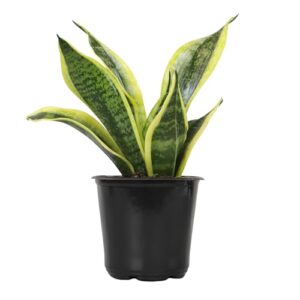
The ZZ Plant keeps things simple. The Sansevieria Superba keeps them simpler.
Stiff, sword-shaped leaves rise straight up, so you get a bold vertical accent without sacrificing floor space. Expect wavy, pointed, grey-green blades with yellow edge bands.
Care is refreshingly easy. It thrives in low to moderate light and is drought-tolerant, so water roughly every other week. Keep it between 70°F and 90°F, and never below 50°F.
Here’s the catch: Safety Comes First. This plant contains saponins and is toxic to dogs and cats. Evidence for ball pythons is limited, so don’t assume it’s harmless.
Keep it in its own drained pot away from the wet substrate, and let the soil dry between waterings. Soggy roots rot fast. Place it away from burrows and heavy snake traffic, and remove any chewed or broken leaf pieces right away. Repot it as it matures.
| Best For | People who want an easy, low-maintenance indoor plant that adds a bold vertical accent to an office, apartment, or home, as long as they keep it away from curious pets. |
|---|---|
| Plant Type | Sansevieria Superba |
| Light Needs | Low to moderate light |
| Watering | Every other week |
| Pet Toxicity | Toxic to dogs and cats |
| Reptile Safety | Limited evidence |
| Customer Concerns | Arrives smaller than expected |
| Additional Features |
|
- Thrives in low to moderate light and is drought-tolerant, needing water only about every other week
- Wavy, pointed grey-green leaves with yellow edge bands add a striking vertical look without taking up floor space
- Comes in a decorative pot with a draining tray, ready to display indoors or outdoors in partial shade
- Toxic to dogs and cats because of its saponins, and safety around ball pythons is not well established
- Some customers say the plant arrives smaller than expected, and the white plastic pot is described by some as cheap
- Needs temperatures between 70°F and 90°F and must never drop below 50°F, and soggy soil quickly causes root rot
5. American Plant Exchange Ponytail Palm
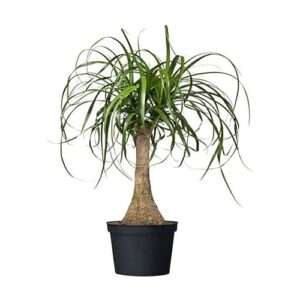
Sansevieria asks for caution. The American Plant Exchange Ponytail Palm doesn’t. It’s non-toxic to pets, which makes it an easy call for a snake household.
You get a bulbous elephant foot trunk topped with long, ribbon-like leaves that cascade like, well, a ponytail. It stores water, so it controls drought and low light with ease. Slow growth means it won’t crowd your ball python’s space.
Here’s the catch: overwatering kills it. Let the soil dry fully before you water, and use a gritty, fast-draining mix. Repot it into an 8 to 10 inch container soon after arrival.
Check it right away, too. Some buyers report brown leaves, and some plants died within days. It weighs about 5 pounds and arrives around 15 inches tall in a 6-inch pot. Then pot it up with care.
| Best For | Pet owners, especially snake keepers, who want a low-maintenance, non-toxic, slow-growing plant for a small space with little light. |
|---|---|
| Plant Type | Elephant foot plant |
| Light Needs | Low light |
| Watering | Minimal water |
| Pet Toxicity | N/A |
| Reptile Safety | N/A |
| Customer Concerns | Brown leaves, some died |
| Additional Features |
|
- Non-toxic to pets, so it’s a safe pick for a home with a ball python
- Stores water in its thick, elephant-foot trunk, so it handles drought and low light easily
- Slow growth and a compact size fit apartments, offices, and other small spaces
- Overwatering can kill it, so it needs fast-draining soil and fully dry soil between waterings
- Some buyers report brown leaves and uneven growth
- Some plants died within days of arrival, and it needs repotting into an 8 to 10 inch container soon after it arrives
Frequently Asked Questions (FAQs)
What live plants can I put in a ball python enclosure?
You’ve got great options! Pick a nontoxic plant like pothos, spider plant, or Boston fern for your bioactive enclosure. Keep your humidity range between 50 and 80%, use reptile-safe soil, and quarantine new plants first.
What plants are safe to put in a snake enclosure?
Pick a nontoxic plant like pothos, spider plant, or ponytail palm for your reptile terrarium. They handle a humidity range 50-80%, suit a bioactive enclosure, and easily shrug off trampling. Always quarantine new plants first.
Are Hobby Lobby fake plants safe for reptiles?
Not automatically. Hobby Lobby fake plants aren’t certified, so quarantine new plants, wash them, and dye test. Skip glitter, paint, and exposed wire. For bioactive enclosure setup, a nontoxic plant with reptilesafe soil beats decor.
What are the best artificial plants for ball pythons?
Ball pythons spend most days hidden, so cover matters.
Reptile-rated silicone or polyethylene pothos vines, spider plant clumps, snake plant blades, ZZ plant stems, and parlor palm fronds work best. Skip sharp edges and wires.
What live plants can I put in with my ball python?
Picture pothos draping over a cork ledge, snake napping below. Choose nontoxic foliage with lowlight tolerance: pothos, spider plants, snake plants, bromeliads, bird’s nest ferns.
Hold a 50-80% humidity range, reptile safe substrate, hiding space.
What plants are safe for snake tanks?
Not every plant belongs in a snake tank, so run plant toxicity screening first. Stick with nontoxic foliage like pothos, spider plants, snake plants, and bromeliads. They offer humidity support, lowlight tolerance, and reptile enrichment.
What plants are toxic to ball pythons?
Skip toxic plants like dieffenbachia, philodendron, peace lily, schefflera, and oleander. Their toxicity can mean mouth irritation if your snake chews a leaf.
Run plant toxicity screening before buying. When in doubt, leave it out.
Can I put real plants in my snake tank?
Wondering if real plants belong in your snake tank? Yes, absolutely! Nontoxic plants turn a naturalistic vivarium into reptile habitat enrichment. Plant them in bioactive substrate, steady your terrarium microclimate, and quarantine new plants first.
Can you put succulents in a ball python enclosure?
Technically, yes, but it’s a humidity mismatch. Succulents hate the 50–80% humidity range, so roots rot. Keep them in a dry, well-drained pocket with substrate aeration, check toxicity, and treat them as reptile habitat enrichment.
How long should I quarantine new plants?
Ready to play it safe? Your plant quarantine protocol should run 4 to 6 weeks, with 30 days minimum.
Follow a strict weekly pest inspection protocol. If pests or mold appear, restart the quarantine period.
Conclusion
Picture a ball python sliding through dappled green shade, tongue flicking, finally at ease. That’s what the right leaves can give you.
Stick with safe plants for ball python vivarium setups, and you’ll build cover, humidity, and calm in one move. Check toxicity first, match light to each species, and keep roots clean. Your snake gets a jungle. You get peace of mind.
Start small, watch your snake explore, and let the greenery become home.