This site is supported by our readers. We may earn a commission, at no cost to you, if you purchase through links.
A freezer-burned mouse might look harmless, but that frost-bitten husk has lost moisture, nutrients, and probably your snake’s interest too. Spoiled prey is one of the sneakiest ways hobbyists accidentally make their animals sick, and it usually traces back to sloppy storage, not bad luck.
The good news? Keeping frozen feeders fresh takes less effort than you’d think. A few snake food storage tips, like nailing the right temperature and rotating your stock, turn your freezer into a reliable pantry instead of a mystery meat archive.
Here’s how to store, label, and thaw prey like a pro.
Table Of Contents
- Key Takeaways
- Store Frozen Snake Food at 0°F or Below
- Label, Date, and Rotate Frozen Prey
- Follow Safe Frozen Prey Storage Times
- Thaw Frozen Prey Safely Before Feeding
- Prevent Contamination and Discard Spoiled Prey
- Frequently Asked Questions (FAQs)
- How to store snake food?
- Can I feed my snake 2 days in a row?
- What do snakes love to eat the most?
- What are some tips for properly storing food?
- How do you keep a snake healthy?
- What do you need to prepare a snake?
- How do you keep a snake out of a tank?
- How do you get a snake to eat food?
- How do you keep a snake entertained?
- Can a snake eat a food holder?
- Conclusion
Key Takeaways
- Keep your freezer at 0°F or below and use vacuum-sealed or airtight packaging to prevent freezer burn and bacterial growth.
- Label every bag with species, size, and dates in YYYY-MM-DD format, then rotate stock first-in, first-out so the oldest prey gets fed before it expires.
- Follow safe storage windows—6–9 months for rodents, 8–12 months for larger prey—and discard anything with deep ice crystals, freezer burn, off odors, or slimy texture.
- Thaw prey only in the refrigerator (12–48 hours depending on size) or a cold water bath under 60 minutes, and never refreeze thawed items.
Store Frozen Snake Food at 0°F or Below
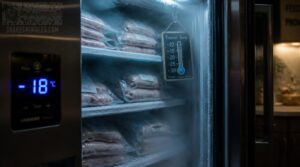
Your freezer does the heavy lifting, but only if you set it right. Keep temps at 0°F or below to lock in freshness and stop bacterial growth cold. Here’s what you need to make that happen:
For a full walkthrough on bagging, labeling, and organizing your supply, check out this guide on storing frozen feeder mice at home.
Airtight Packaging
Bag choice matters. When you seal prey items using vacuum-sealed bags or mylar pouches, you’re creating a strong barrier against moisture and air that protects proteins for months.
- Use food-grade multilayer film bags
- Double-bag each prey item as backup
- Squeeze out all air before sealing
- Add oxygen absorbers inside to extend shelf life
- Keep airtight containers in organized freezer zones
Preventing Freezer Burn
Sealed bags alone won’t save dinner. Freezer burn strikes when moisture escapes the prey and turns surfaces leathery, so your next move is temperature control. Keep the freezer at 0°F or below, where sublimation slows to a crawl and ice crystals stay tiny.
For a refresher on how often to feed once that prey is thawed, a solid corn snake feeding schedule takes the guesswork out of meal timing.
Pair those airtight containers with smart placement for solid cold chain management:
- Skip door shelves and vent zones
- Pre-freeze items on a tray, spaced apart
- Test seals monthly
- Keep a dedicated thermometer inside
Your snake deserves better than jerky.
Label, Date, and Rotate Frozen Prey
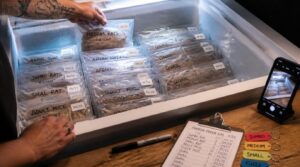
Now that your freezer’s humming at 0°F, let’s make sure nothing in there becomes a mystery meat. Label every bag with prey species, size class, and quantity, using a permanent marker or freezer-proof printed labels. Add the collection date and a use-by window in YYYY-MM-DD format, so nobody squints at "3/4" wondering if that’s March or April.
Container labeling only works if it survives the cold, so pick cold-temperature adhesive labels and seal critical info against condensation. Snap a photo when you stock, and initial every update for accountability.
For a full rundown on safe thawing practices that keep pathogens at bay, this guide to thawing frozen rodents for snakes is worth a read.
Then rotate. Food rotation means first-in, first-out: slide newer bags behind older ones so the oldest prey feeds first. Run a quick weekly audit, keep a master log tying lot IDs to dates, and your freezer stays organized, safe, and drama-free.
Follow Safe Frozen Prey Storage Times
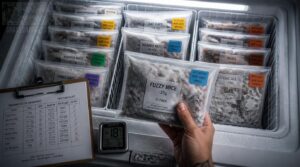
Your labels and rotation system just paid off, because now you know exactly how long each bag has left. Even perfect packaging can’t stop the clock: frozen prey items slowly lose quality, and freezer burn creeps in long before anything smells "off."
Stick to these windows:
- Rodents and small mammals: 6–9 months for peak quality.
- Rabbits and larger prey: 8–12 months in airtight containers.
- Anything past its window: inspect before feeding, discard if dehydrated or off-smelling.
- Weekly inventory checks: catch trouble before your snake does.
- When in doubt, toss it: food safety beats saving five bucks.
Treat those dates like expiration dates on milk, not suggestions. Your rotation log makes enforcement painless.
Thaw Frozen Prey Safely Before Feeding
You’ve nailed the storage game, but thawing is where things get dicey. Do it wrong, and you’re serving your snake a bacteria buffet instead of dinner. Here are the two safe thawing methods you’ll want in your toolkit.
If you’re feeding a ball python, this guide to frozen-thawed prey breaks down exactly how to warm each item to the right temperature.
Refrigerator Thawing

Want your snake’s dinner ready without drama? Refrigerator thawing is your slow-and-steady champion. Place prey on a leak-proof tray, bottom shelf, and let patience work.
| Prey Size | Thaw Time | Check |
|---|---|---|
| Small | 12 hrs | Pliable flesh |
| Medium | 24 hrs | No odor |
| Large | 36–48 hrs | 40°F center |
Never refreeze thawed items. Use dedicated feeding tools, log times, and toss anything slimy.
Cold Water Thawing
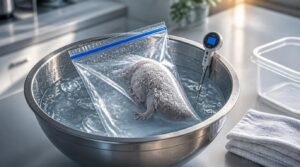
Grab a leak-proof bag, seal it tight, and submerge your prey in a cold water bath held at 1–4°C. Swap cloudy water immediately, and gently agitate it every 15 minutes for even thawing.
Stick to the 60-minute limit: anything still icy afterward gets tossed. Skip refreezing, sanitize your thaw container, and you’ve nailed the thawing safety protocols.
Prevent Contamination and Discard Spoiled Prey

Think of your freezer like a hospital ward: one sloppy visitor can spread trouble everywhere. That’s why cross-contamination is your real enemy, not just spoilage.
Here’s your four-step defense:
- Store prey in dedicated containers, sealed and zoned away from household foods.
- Sanitize prep surfaces and utensils before and after every transfer. Never share tools.
- Sniff test everything. Off-odors, slimy texture, or color changes mean toss it, no matter the date.
- Log every discard: prey type, date, and reason. Patterns reveal problems.
Ice crystals deeper than a centimeter or visible freezer burn? That prey’s done. Diligent food rotation and honest food safety habits keep your snake healthy and your conscience clean. When in doubt, throw it out.
Deep ice crystals or freezer burn mean the prey is done—when in doubt, throw it out
Frequently Asked Questions (FAQs)
How to store snake food?
How to store snake food? Keep it at 0°F or below in airtight containers or vacuum-sealed bags, packed flat to dodge freezer burn. Label with dates, rotate FIFO, and thaw only in the fridge or cold water.
Can I feed my snake 2 days in a row?
Absolutely, sometimes! If your snake’s schedule allows, back-to-back feeds work when prey size stays right and digestion’s smooth. Skip it during shed or sluggish days, and never refreeze thawed items.
What do snakes love to eat the most?
What do snakes love to eat the most? Small mammals, usually mice or rats, top the menu. Your snake’s prey selection depends on size and species, so match prey width to its mid-body girth.
What are some tips for properly storing food?
What are some tips for properly storing food? Keep everything at 0°F or below, use airtight packaging, and wrap portions individually for freezer burn prevention. Label with dates, rotate first-in, first-out, and never refreeze thawed prey.
How do you keep a snake healthy?
Your snake thrives on the right habitat temperature, fresh water daily, and age-appropriate frozen prey. Treat snake food like raw meat, use dedicated feeding tools, minimize handling during shedding, clean regularly, and watch for illness signs.
What do you need to prepare a snake?
Here’s what you need to prepare a snake: a secure, spacious terrarium, precise heating and humidity controls, hiding spots, safe substrate, a water dish, appropriate prey, and safe feeding practices. Research your species first.
How do you keep a snake out of a tank?
How do you keep a snake out of a tank? Lock down a tight-fitting lid with dual latches, seal gaps over 1–2 mm, add a smooth base barrier, and remove climbing aids nearby.
How do you get a snake to eat food?
Getting a stubborn snake to eat is like coaxing a picky toddler. Warm prey to about 100°F, wiggle it with feeding tongs, try scenting or smaller sizes, and respect stress-induced feeding refusal with patience.
How do you keep a snake entertained?
Enrichment keeps your snake sharp. Add climbing branches, rotate hides weekly, and bury prey-scented items in substrate for search-and-find fun. Try puzzle feeders mimicking natural hunting behaviors.
Track responses, adjust variety, and watch boredom vanish.
Can a snake eat a food holder?
Can a snake eat a food holder? No! Rigid plastic or metal can’t pass safely. Swallowed holders risk choking, obstruction, or injury. Use feeding tongs, remove containers first, and monitor for regurgitation if accidents happen.
Conclusion
Here’s a number worth remembering: bacteria can double every 20 minutes at room temperature, which is why thawed prey left out becomes a hazard fast.
Your freezer set to 0°F or below, airtight packaging, and clear labels do most of the heavy lifting. Rotate stock, thaw in the fridge, and toss anything sketchy.
These snake food storage tips cost you minutes but buy your snake months of safe, fresh meals.