This site is supported by our readers. We may earn a commission, at no cost to you, if you purchase through links.

Most people who’ve never owned a snake picture something unpredictable—coiled, tense, ready to strike. Ball pythons are the quiet rebuttal to that fear.
These compact, slow-moving constrictors have earned a reputation as one of the most reliably calm reptiles you can keep, partly because their default stress response is to curl into a ball rather than bite. That instinct alone tells you something about their character.
A ball python good-tempered pet isn’t just a selling point—it’s backed by decades of captive breeding and thousands of first-time owners who expected a challenge and got a companion instead.
Understanding their behavior, handling needs, and enclosure requirements turns that calm potential into a genuinely rewarding relationship.
Table Of Contents
- Key Takeaways
- Are Ball Pythons Good-Tempered Pets? The Honest Answer
- Ball Python Temperament: What to Expect Day to Day
- Handling Your Ball Python The Right Way
- Setting Up a Ball Python Enclosure for a Happy, Calm Snake
- Top 5 Products for Ball Python Owners
- Who Should (and Shouldn’t) Own a Ball Python
- Frequently Asked Questions (FAQs)
- Do ball pythons have good temperament?
- Do ball pythons enjoy being petted?
- Is a ball python a high maintenance pet?
- What do ball pythons eat and how often?
- How much does a ball python setup cost?
- Can ball pythons coexist with other household pets?
- Do ball pythons carry diseases transmissible to humans?
- What veterinary care do ball pythons typically require?
- Conclusion
Key Takeaways
- Ball pythons default to curling up rather than biting when stressed, making them one of the safest and most forgiving snakes you can keep.
- Consistent, short handling sessions — starting at just 5–10 minutes — are what actually shape a calm, people-tolerant snake over time.
- Getting the enclosure right (88–92°F warm side, 50–60% humidity, and proper hides) does more for your snake’s temperament than almost anything else.
- Buying captive-bred from a reputable breeder with documented feeding and temperament history gives you the best shot at a relaxed snake from day one.
Are Ball Pythons Good-Tempered Pets? The Honest Answer
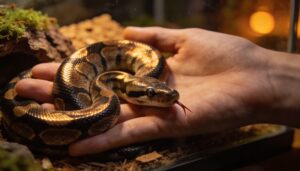
Ball pythons have a reputation for being calm, easy-going snakes — and honestly, it’s well-earned. But temperament isn’t one-size-fits-all, so it helps to know what you’re actually getting.
Most ball pythons stay relaxed even during handling, which is part of what makes them such a great first snake — dig into the science behind ball python peaceful nature if you want to understand what’s driving that chill demeanor.
Here’s a closer look at what makes these snakes such a popular first choice.
Why Ball Pythons Are Called The Golden Retrievers of Snakes
Ball pythons have earned the golden retrievers of the snake world title for good reason — their docile temperament and calm social demeanor make them genuinely easy to live with. They move slowly, rarely hiss, and seem almost unbothered by routine handling.
That friendly companion vibe and low tension profile are exactly why so many beginners discover that ball pythons make good pets.
How Ball Python Temperament Compares to Other Beginner Snakes
Compared to other beginner snake species, ball pythons stand out for their consistently docile temperament and low bite incidence — most bites only happen during feeding or extreme fear. Their activity patterns lean calm and steady, unlike faster, more skittish species. They also show lower escape tendencies and noise sensitivity.
Three things that set them apart:
- Slower, more predictable movement
- Minimal aggression during routine handling
- Better tolerance of gentle, consistent interaction
Individual Personality Variation: Curious, Shy, or Somewhere in Between
Not every ball python reads from the same script. Some show real curiosity — actively nosing around new objects within minutes.
Others hang back, retreating behind hides until they feel safe. Most land somewhere in the middle.
Age-related shifts matter too: juveniles tend to explore more, while adults settle into predictable routines. Either way, their mid-range personality makes them genuinely forgiving for beginners.
Ball Python Temperament: What to Expect Day to Day
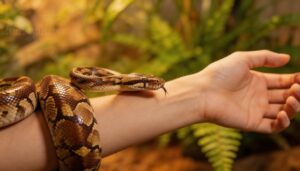
Living with a ball python is pretty low-drama — but knowing what "normal" looks like makes all the difference. Day-to-day, your snake will show you exactly how it’s feeling through subtle cues.
Here’s what to watch for.
Defensive Behaviors Vs. Genuine Aggression
Most ball python "aggression" isn’t aggression at all — it’s a misread warning sign. A defensive snake usually shows body tensing, tail spasms, or warning hissing before anything escalates. Prey mistake bites and post-feeding strikes are especially common culprits. Knowing the difference changes everything about handling stress reduction:
- A defensive strike is usually one quick lunge, then disengagement
- Prey mistake bites happen when your hands smell like food
- Post-feeding strikes drop when you wait 48 hours before handling
- True aggression repeats persistently — defensive behavior doesn’t
Common Stress Signals Every Owner Should Recognize
Your snake can’t talk — but it absolutely communicates. Learning to read these signals early makes you a far better keeper.
| Stress Signal | What You’ll Notice | What It Means |
|---|---|---|
| Fast Body Freezing | Sudden total stillness | Feels threatened |
| Rapid Defense Balling | Tight, immediate coiling | Wants to disappear |
| Tail Tip Tension | Tail bracing, stiff anchoring | Actively resisting you |
| Cloacal Air Release | Small waste release during handling | Serious stress response |
| Feeding Refusal | Skipping multiple meals | Feels too unsettled to eat |
Spot these handling stress cues fast, and stress-induced feeding refusal rarely becomes a longer problem.
A hide-friendly substrate that lets snakes burrow safely can make a real difference in how quickly a stressed snake settles back into regular feeding.
How Regular Handling Shapes a Calmer, More Tolerant Snake
Think of handling like a gym routine — skip it, and progress stalls. Consistent routine and predictable cues teach your ball python that human contact isn’t a threat. Desensitization techniques that support positive transfer include:
- Start with 5-minute sessions, then gradually extend
- Use the same grip and approach each time
- Always handle away from feeding days
Stress hormone reduction follows naturally.
Handling Your Ball Python The Right Way
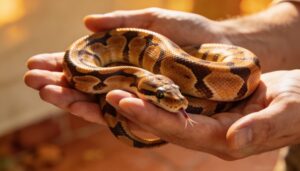
Knowing your ball python’s temperament is one thing — knowing how to handle it well is another. A few simple rules make the difference between a snake that’s relaxed in your hands and one that’s curled up in a tight, stressed ball.
Here’s what you need to know about timing, technique, and when to just leave your snake alone.
How Often and How Long You Should Handle a Ball Python
Handling frequency isn’t one-size-fits-all — it shifts with age. Hatchlings do well with two to three short sessions weekly, while adults usually need just one longer session.
Start with 10–15 minutes, then gradually increase handling time as your snake stays relaxed. Watch your snake’s body language closely; that’s your best guide.
Flexibility matters more than sticking to a rigid schedule. For ideal care, follow the weekly handling schedule.
Safe Handling Guidelines for Children and Beginners
Kids and first-timers do great with ball pythons — if the ground rules are clear. Always practice adult supervision, keeping young ones on a low surface handling spot like the floor or a couch cushion.
Move with a gentle grip, read every stress cue, and wash up after — hand hygiene is non-negotiable. Let curiosity lead; just keep it calm and controlled.
What to Do After Feeding, Shedding, or Relocation
Timing is everything with ball pythons — three moments demand you step back and let them breathe.
- Post-feeding Rest: Skip handling for 48 hours; movement triggers stress and regurgitation
- Shedding Humidity Boost: Raise humidity to 70–80% and avoid contact — skin tears easily
- Relocation Adjustment Period: Give 24–72 hours of quiet settling time before resuming contact
- Post-shed Clean-up: Check for stuck shed, spot-clean damp bedding, then resume your Feeding Schedule Monitoring
Setting Up a Ball Python Enclosure for a Happy, Calm Snake
A calm, well-adjusted ball python doesn’t happen by accident — it starts with the right home.
Getting the enclosure set up correctly covers three key areas, each one directly affecting how relaxed and healthy your snake will be.
Here’s what you need to know about each.
Enclosure Size Requirements for Juveniles and Adults
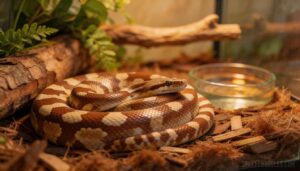
Space matters more than you’d think.
For juveniles, the juvenile minimum volume starts at 20 gallons — roughly 24 inches long — giving room to roam without overwhelming them.
Adults need 40–60 gallons minimum, with coiling space requirements and horizontal space emphasis taking priority over height.
A 4-foot enclosure lets your ball python stretch comfortably, supporting calmer, more confident behavior daily.
Temperature Gradients and Humidity Levels That Reduce Stress
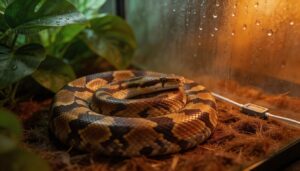
Once you’ve nailed the space, temperature becomes your next big lever. Think of your ball python’s enclosure as having Microclimate Zones — a warm side hitting 88–92°F, a cool side around 76–80°F. Thermostat Precision keeps those zones stable, preventing heat stress.
Humidity Control, aim for 50–60% baseline, bumping to 70–80% during sheds. Nighttime Stability matters too — never let temps drop below 72°F.
Substrate, Hides, and Environmental Enrichment for Docile Behavior

Now that temperatures are dialed in, your substrate and hides do the quiet work. Cypress mulch substrate and coconut fiber substrate both hold humidity beautifully.
Burrow hides give your snake that snug, secure feeling — seriously beneficial for stress reduction.
Add scented hides and a paper towel base during quarantine.
These substrate options, paired with smart environmental enrichment, make ball python handling and behavior tips much easier to apply.
Top 5 Products for Ball Python Owners
Getting your setup right makes all the difference for a happy, stress-free ball python.
A few well-chosen products can cover everything from temperature control to parasite prevention. Here are five worth keeping on your radar.
1. Mite B Gone Natural Pet Safe Mite Spray
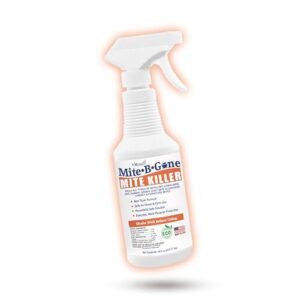
Snake mites are sneaky — and once they show up, you want them gone fast.
Mite B Gone is a plant-derived spray that kills mites on contact without harsh chemicals, making it safe around your ball python, kids, and other pets.
You can treat bedding, enclosure surfaces, and nearby furniture with one bottle. It’s labeled as residue-free after drying, which matters when your snake lives in that space.
At $24.99 for 16 oz, it’s worth keeping on hand.
| Best For | Reptile owners dealing with snake mites who want a plant-based, pet-safe solution that won’t put their animals at risk. |
|---|---|
| Price (USD) | $24.99 |
| Primary Use | Pest control spray |
| Pet Safe | Yes |
| Indoor Use | Yes |
| Package Weight | ~1 lb |
| Reusable/Lasting | Multiple applications |
| Additional Features |
|
- Kills mites on contact without harsh chemicals, so it’s safe to use directly in and around your snake’s enclosure
- Versatile enough to treat bedding, furniture, and nearby surfaces all with one bottle
- Plant-derived formula is safe around kids, other pets, and livestock too
- May need multiple applications to fully clear an infestation — one round often isn’t enough
- Can cause mild respiratory irritation during spraying, so wearing a mask is a good idea
- At $24.99 for 16 oz, it’s pricier than most conventional pest sprays
2. LUCKY HERP Ceramic Heat Emitter
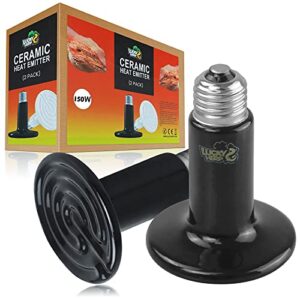
Once mites are handled, keeping your ball python warm — especially at night — becomes the next priority. The Lucky Herp Ceramic Heat Emitter does exactly that. It puts out steady infrared heat with zero light, so your snake’s sleep cycle stays undisturbed.
The 150W version heats up in about 10 seconds, fits any standard E26 socket, and is rated for up to 10,000 hours.
At $15.99 for a two-pack, it’s genuinely good value.
Just pair it with a thermostat — always.
| Best For | Reptile and small animal owners who need reliable nighttime heating without disrupting their pet’s sleep cycle. |
|---|---|
| Price (USD) | $15.99 (2-pack) |
| Primary Use | Reptile heat source |
| Pet Safe | Yes (with precautions) |
| Indoor Use | Yes |
| Package Weight | 11.68 oz |
| Reusable/Lasting | Up to 10,000 hours |
| Additional Features |
|
- Zero light output means your animals get consistent heat all night without any sleep disruption
- Warms up fast and rated for up to 10,000 hours, so you’re not swapping bulbs every few months
- Two-pack at $15.99 is solid value for a ceramic emitter that fits any standard E26 socket
- Surface gets seriously hot, so you need a proper ceramic or metal fixture and at least 30 cm of clearance
- Some users have reported early failures or uneven heating, so keep an eye on performance
- Frequent on/off cycling shortens the lifespan, which means a thermostat isn’t optional — it’s essential
Vitafusion Women’s Gummy Multivitamins
You’re caring for a ball python, but don’t forget yourself.
Vitafusion Women’s Gummy Multivitamins offer a Vitamin C Boost, Vitamin D Absorption support, and Zinc Immune benefits — all in a Berry Flavor Profile that actually tastes good. Flexible Packaging Options fit any budget.
Exotic pet nutrition demands your focus; staying healthy keeps your handling and feeding schedule consistent.
Healthy keeper, healthy snake.
3. Zilla Jungle Mix Terrarium Bedding
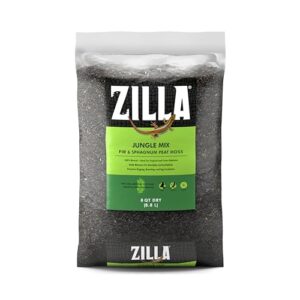
Your ball python’s floor matters more than you’d think. Zilla Jungle Mix blends aged Douglas fir bark with sphagnum peat moss — a combo that naturally locks in humidity right where ball pythons need it: that 50–60% sweet spot.
It’s 100% biodegradable, encourages digging and burrowing, and has an earthy texture that your snake will actually use.
Aim for a 1–2 inch depth, spot-clean daily, and swap it out monthly.
Simple, effective, and it smells like a forest floor — not a pet store.
| Best For | Ball python owners who want a natural, humidity-friendly substrate that supports burrowing and mimics a tropical forest environment. |
|---|---|
| Price (USD) | $9.99 |
| Primary Use | Daily supplement |
| Pet Safe | N/A |
| Indoor Use | Yes |
| Package Weight | 12.8 oz |
| Reusable/Lasting | 60-day supply |
| Additional Features |
|
- Locks in humidity naturally — great for hitting that 50–60% sweet spot ball pythons need
- 100% organic and biodegradable, so it’s safe and eco-friendly
- Encourages natural behaviors like digging and nesting, keeping your snake active and comfortable
- Can cause splinters if you’re not careful when handling it
- Needs daily spot-cleaning and a full monthly swap — it’s not a set-it-and-forget-it substrate
- Not a great fit for non-tropical reptiles or drier habitat setups
4. Etekcity Infrared Thermometer Laser Gun
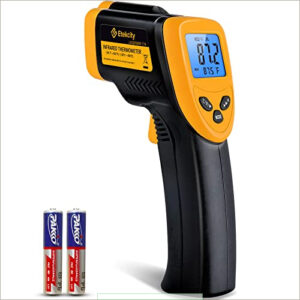
Temperature guessing is how snake keepers get into trouble.
The Etekcity Infrared Thermometer takes the guesswork out completely — just point, pull the trigger, and get an accurate surface reading in about half a second. It covers -58°F to 842°F, so your warm side, cool side, and basking spot are all covered. The 12:1 distance-to-spot ratio means you don’t need to hover over the enclosure either.
Consistent temps keep your ball python calm, feeding well, and healthy long-term.
| Best For | Snake and reptile keepers who want a fast, reliable way to monitor enclosure temps without sticking their hand in the tank. |
|---|---|
| Price (USD) | Not listed |
| Primary Use | Reptile bedding |
| Pet Safe | Yes |
| Indoor Use | Yes |
| Package Weight | 5.8 lbs |
| Reusable/Lasting | Biodegradable |
| Additional Features |
|
- Reads surface temps in half a second — no waiting, no guessing
- Wide range (-58°F to 842°F) covers every zone of your enclosure with room to spare
- Adjustable emissivity means you can dial it in for different surfaces, not just one-size-fits-all
- Only reads surface temp, so it won’t tell you what’s happening deeper in a substrate or hide
- Shiny or reflective surfaces can throw off the reading if emissivity isn’t set right
- Not a precision instrument — that ±2% margin is fine for reptile care but won’t cut it for anything that needs lab-level accuracy
Who Should (and Shouldn’t) Own a Ball Python
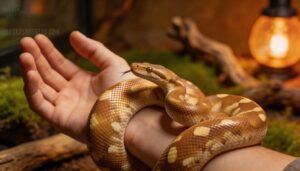
Ball pythons aren’t for everyone — and that’s okay. The right match comes down to your lifestyle, your patience for a decades-long commitment, and where you get your snake in the first place.
Here’s what to think about before you bring one home.
Lifestyle Factors That Make Ball Pythons a Perfect Fit
Not everyone’s lifestyle suits a dog or cat — and that’s where ball pythons quietly win.
They’re a beginner-friendly ball python pet built for busy, small-space lives. Their predictable feeding schedule, minimal daily care, and low space needs make them ideal for quiet apartment living.
No fur means allergy-friendly pet status, and their budget-friendly care keeps monthly costs surprisingly low.
The Long-Term Commitment: 20–30 Years of Care
Think of a ball python as a decades-long relationship — we’re talking 20 to 30 years, sometimes longer. That’s serious long-term commitment and lifespan of ball python’s territory.
Owning a ball python is a decades-long relationship — commitment measured not in years, but in generations
Financial planning, owner education, and succession planning all matter here. Who cares for your snake if life changes? Build that contingency now.
Regular health monitoring and timely enclosure upgrades keep your snake thriving every year.
Choosing a Captive-Bred Ball Python for Better Temperament
Captive-bred specimens are your safest bet for a calm, handleable snake from day one. Breeders who prioritize Genetic Calm Lines and Early Socialization Practices raise snakes that genuinely tolerate routine handling.
Here’s what to look for:
- Breeder Reputation — Choose sellers who document feeding history and temperament
- Lineage Temperament Records — Ask about parent behavior patterns
- Health History Screening — Verify parasite-free status and clean sheds
- Early Socialization Practices — Snakes handled young adapt faster
Frequently Asked Questions (FAQs)
Do ball pythons have good temperament?
Yes — ball pythons are genuinely docile. Their calm, low-stress nature and predictable feeding behavior make them ideal for beginners.
With proper owner interaction and handling guidelines, they stay relaxed and rarely show defensive responses.
Do ball pythons enjoy being petted?
Ball pythons don’t "enjoy" petting the way a dog does — no hormonal response drives that.
But many tolerate touch comfortably, showing relaxed posture and slow tongue-flicking as sensory feedback that says, "I’m okay here.
Is a ball python a high maintenance pet?
Surprisingly low-maintenance.
Ball pythons eat every one to two weeks, need minimal enclosure maintenance, and veterinary expenses stay manageable. With stable humidity control and simple budget planning, ball python care and maintenance fits easily into a busy life.
What do ball pythons eat and how often?
Frozen rodents — mice for juveniles, rats for adults — make up their entire diet. Feed juveniles every 5–7 days, adults every 10–14 days. Simple, consistent, and surprisingly low-effort.
How much does a ball python setup cost?
Getting started runs $300–$600 for your initial investment — enclosure, thermostat, hides, substrate. Monthly expenses land around $40–$ Budget $100–$300 annually for veterinary fees. Upgrade costs add up gradually, but it’s manageable.
Can ball pythons coexist with other household pets?
As the saying goes, "good fences make good neighbors." Yes, ball pythons can share a home with other pets — but enclosure separation isn’t optional. It’s the whole plan.
Do ball pythons carry diseases transmissible to humans?
Yes, ball pythons can carry Salmonella — a zoonotic bacteria — without appearing sick. Simple soap-and-water handwashing after handling dramatically lowers your risk.
What veterinary care do ball pythons typically require?
Think of your reptile vet as a yearly tune-up mechanic. Annual health checks, mite treatment plans, and respiratory infection care keep your ball python thriving for decades.
Conclusion
The biggest misconception about ball pythons is that they’re boring because they’re calm. But isn’t it impressive that we often crave excitement from our pets while they crave safety from us?
A ball python’s good-tempered nature isn’t just a selling point; it’s a foundation for a deep bond. By understanding and respecting their needs, you’ll find that a ball python good-tempered pet can bring surprising joy and companionship into your life, quietly coiling its way into your heart.