This site is supported by our readers. We may earn a commission, at no cost to you, if you purchase through links.

A rescued ball python arrives with more than empty water dishes and skipped meals — it often carries mite infestations, respiratory infections, or stress-driven anorexia that the wrong substrate can worsen overnight.
Cedar shavings, reptile carpet, and soaked sphagnum moss might look harmless in a pet store aisle, but under a stressed snake’s belly, they become vectors for fungal growth, impaction, and toxic fume exposure.
Choosing ball python substrates for rescue owners isn’t cosmetic — it’s a frontline decision in quarantine protocol, humidity control, and thermoregulation. Get the depth, moisture, and material right, and you’ll cut recovery time a lot while protecting every snake that comes after.
Table Of Contents
- Key Takeaways
- Safest Substrates for Rescued Ball Pythons
- Top 5 Ball Python Substrates
- Humidity, Depth, and Comfort
- Substrates Rescue Owners Should Avoid
- Frequently Asked Questions (FAQs)
- What substrates are safe for ball pythons?
- Do snakes recognize their owners?
- What to put in the bottom of a ball python tank?
- What not to use for snake bedding?
- How often should I fully replace the substrate?
- Whats the ideal ventilation rate for enclosures?
- How can I trap humidity inside the enclosure?
- Should misting frequency change during winter months?
- What bedding works best for sick or injured rescues?
- Conclusion
Key Takeaways
- Use low-dust, disposable substrates like unscented paper towels during quarantine to monitor waste for parasites while avoiding pathogen transfer and heat mat overheating.
- Coconut husk and aged cypress mulch are the best long-term substrates for recovering ball pythons, holding humidity effectively while resisting mold and reducing skin irritation.
- Maintain humidity at 50–60% (up to 70% during shedding), keep substrate depth at 2–4 inches for juveniles and 3–4 inches for adults, and place hygrometers at substrate level for accurate readings.
- Avoid cedar, pine, walnut shell, since they cause toxic fumes, digestive impaction, mold growth, or bacterial buildup that can seriously harm already-stressed rescues.
Safest Substrates for Rescued Ball Pythons
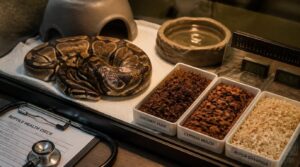
A rescued ball python arrives with unknown history—parasites, stress, sometimes open wounds—so your substrate choice carries real weight from day one.
For a rescue like this, a gentle, easy-to-clean substrate guide for ball pythons can help you pick bedding that won’t irritate wounds or harbor parasites while they recover.
The right material helps with healing and honest observation instead of hiding problems underneath it.
Here are five substrate types that consistently earn a place in rescue enclosures, and why each one works.
Quarantine Paper Bedding
When a rescue arrives, resist the urge to make its enclosure "cozy" right away. Unscented paper towels or newspaper are your first move: low-dust, disposable, and built for spot-cleaning.
They wick moisture fast, curb pathogen transfer between animals, and let you monitor waste for parasites or diarrhea.
Sheets carry minimal thermal mass, so heat mats won’t overheat a stressed snake during those critical first quarantine days.
Coconut Husk Benefits
Once quarantine ends, coconut husk earns its keep as a long-term substrate. This fibrous material holds water up to 10 times its weight, distributing moisture through microchannels rather than pooling it. That means fewer humidity swings for stressed rescues.
- Traps odor-causing compounds naturally
- Encourages beneficial microfauna that break down waste
- Uses a renewable coconut byproduct, cutting environmental cost
This material is primarily composed of durable coir fibers that provide excellent structure.
It’s practical, sustainable, and genuinely calming for recovering snakes.
Cypress Mulch Safety
Coconut husk isn’t the only fiber-based option worth considering.
Cypress mulch offers natural antimicrobial properties, but only when aged or composted first—fresh, uncured mulch releases volatile compounds that irritate airways.
Choose sustainably sourced, dye-free bags.
It resists mold better than pine or cedar shavings and won’t cause the impaction risks tied to sand, though moisture buildup still demands ventilation checks.
Topsoil Sand Mixes
A 70/30 topsoil-to-sand mix gives you drainage efficiency without sacrificing moisture retention—unlike a straight topsoil coco, sand content curbs compaction while supporting burrowing.
Keep mixing ratios consistent; uneven texture consistency invites pooling or crusting. Always use chemical-free play sand to avoid substrate compaction risks.
This combo demands more substrate maintenance than fiber-based options, but it’s a budget-friendly, stable choice for enclosures.
Low-dust Bedding Choices
Dust hides more risk than most owners realize—every particle a stressed snake breathes in strains its respiratory health over time.
Bamboo pulp wicks moisture while staying low-dust; microfiber bedding traps fine particles for a cleaner airway. Calcium carbonate alternatives resist powdery release entirely.
Skip aspen shavings and loose paper towels alike—both shed debris that compromises hypoallergenic substrate selection and heightens substrate toxicity risks for sensitive rescues.
Top 5 Ball Python Substrates
Once you understand what makes a substrate safe, the next step is picking a product you can actually buy and trust.
Rescue intake means your budget and your timeline both matter, so you need options that work across quarantine, recovery, and long-term housing.
Here are five substrates worth stocking in your rescue setup.
1. Organic Coconut Chip Reptile Substrate
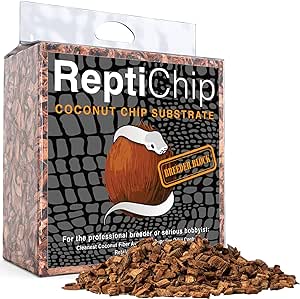
A brick of dried husk doesn’t look like much until you add water and watch it expand into 72 quarts of usable bedding. This 100% coconut chip product costs around $10-15 per 10-lb block and holds humidity far better than dry alternatives, making it a budget-friendly staple for rescue setups housing multiple pythons.
It’s dust and dirt free, which matters when you’re caring for animals with compromised respiratory systems from prior neglect. Break the brick apart manually before use, and adjust moisture to match your snake’s shed cycle.
| Best For | Reptile keepers and rescues housing tropical species like ball pythons, geckos, and tortoises who need an affordable, high-humidity substrate for bioactive setups. |
|---|---|
| Material | Coconut husk chips |
| Absorbency | High |
| Primary Use | Reptile bedding |
| Weight | 10 lbs |
| Packaging Format | Compressed brick |
| Odor Control | Yes |
| Additional Features |
|
- Expands from a compact 10-lb block into 72 quarts of dust-free bedding, ideal for animals with sensitive respiratory systems
- Retains humidity exceptionally well, supporting natural burrowing and breeding behaviors for tropical and bioactive enclosures
- Budget-friendly at $10-15 per block, making it practical for multi-tank setups like rescue operations
- Requires manual labor to break apart the compressed brick before it’s usable
- Needs water added and moisture levels adjusted based on species-specific needs and shed cycles
- Compressed format means there’s prep time involved before the substrate is ready for the enclosure
2. Zoo Med Eco Earth Coconut Fiber
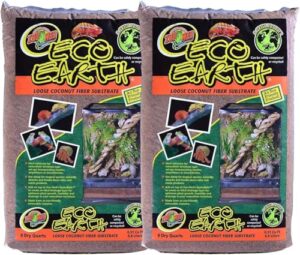
Renewable coir fiber gives you a soft, diggable texture that mimics what ball pythons burrow through in the wild, available loose or as compressed bricks depending on enclosure size. It absorbs moisture and releases it gradually, smoothing out the humidity swings that stress rescues recovering from neglect.
The fibrous texture reduces skin irritation for shy or defensive animals, cushions movement, and resists compaction—preserving airflow at depth. No added dyes or fragrances means fewer chemical triggers for sensitive respiratory systems.
| Best For | Ball python owners and reptile, amphibian, or hermit crab keepers who need a soft, diggable, high-humidity substrate—especially for rescues or sensitive animals recovering from stress. |
|---|---|
| Material | Coconut husk fiber |
| Absorbency | High |
| Primary Use | Reptile bedding |
| Weight | 5.9 lbs |
| Packaging Format | Compressed fiber pack |
| Odor Control | Yes |
| Additional Features |
|
- Soft, diggable texture that mimics a natural burrowing environment while resisting compaction
- Naturally absorbs and gradually releases moisture, helping stabilize humidity swings
- Free of added dyes or fragrances, reducing skin irritation and chemical triggers for sensitive animals
- Moisture content can vary between production batches
- Substrate may arrive drier than expected depending on its age
- Some users report inconsistent pack counts per order
3. Zoo Med Cypress Mulch Bedding
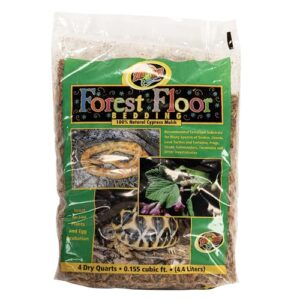
That forest-floor look does more than dress up a rescue’s enclosure—it’s functional camouflage for animals still learning to trust their surroundings. Zoo Med’s cypress mulch isn’t heat-treated, so it holds moisture at 60–80% humidity while staying breathable enough to resist mold.
Bake hardware-store cypress at 250°F for an hour before use; Zoo Med’s packaged version skips that step but still warrants a visual pest check. Diggable texture is great for burrowing, and bioactive setups benefit from its compatibility with live plants.
| Best For | This substrate is best for reptile and amphibian keepers—especially those with tropical species like tortoises, lizards, snakes, and invertebrates—who need reliable humidity control and a natural, burrow-friendly setup. |
|---|---|
| Material | Cypress mulch |
| Absorbency | Moderate |
| Primary Use | Reptile bedding |
| Weight | 1.95 lbs |
| Packaging Format | Bagged mulch |
| Odor Control | No |
| Additional Features |
|
- Retains moisture well to help maintain the high humidity tropical species need
- Natural forest-floor look with a texture that supports digging and burrowing behavior
- Works well in bioactive terrariums alongside live plants
- Natural material may occasionally contain pests
- Might need sterilizing before use for extra peace of mind
- Costs more than many other substrate options
4. Tropicoco Husk Reptile Bedding Block
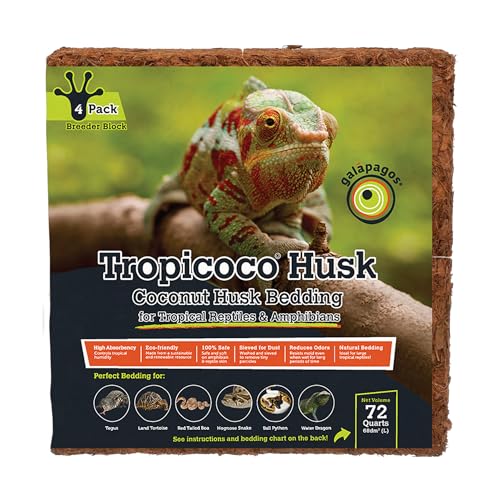
A brick that fits in your palm expands into a full 72-quart bed once soaked—that’s the practical appeal of Tropicoco for rescues short on storage space. The compressed coconut husk stores flat, then softens into fibrous, diggable substrate when hydrated.
It’s washed and sieved for a dust-free formula, protecting sensitive heat pits, and holds moisture well enough to support the 60–80% humidity range your python needs. Free of salts and chemicals, it’s a safe bet for compromised immune systems, and it blends easily with Tropicoco Soil for bioactive builds.
| Best For | Reptile keepers and rescues housing humidity-loving species like pythons, chameleons, boas, tortoises, and water dragons who need a compact, storage-friendly substrate. |
|---|---|
| Material | Organic coconut fiber |
| Absorbency | High |
| Primary Use | Reptile bedding |
| Weight | Not specified |
| Packaging Format | Compressed block |
| Odor Control | Yes |
| Additional Features |
|
- Expands from a compact block into a full 72-quart bed, saving storage space
- Dust-free, washed-and-sieved formula protects heat pits and sensitive respiratory systems
- Free from salts, chemicals, and parasites, and easily mixes with soil for bioactive terrariums
- Requires soaking and expansion time before it’s ready to use
- Humidity retention needs may need adjusting depending on the specific reptile species
- Not ideal for keepers wanting a ready-to-use substrate straight out of the package
5. Scott Choose A Sheet Paper Towels
Every rescue intake starts the same way: you need to see what’s coming out before you decide what’s going wrong.
Scott Choose A Sheet earns its spot here for quarantine, not display tanks. The Choose-A-Sheet perforation lets you tear off exactly enough to line a tub without waste, and the virtually lint-free surface won’t shed fibers into wounds or eyes.
At roughly 108 sheets per roll, you’re tracking stool samples and mite activity for pennies per changeout.
| Best For | Reptile and small-animal rescuers who need a lint-free, tear-to-size liner for quarantine setups and quick health checks. |
|---|---|
| Material | Paper |
| Absorbency | High |
| Primary Use | Household cleaning |
| Weight | 2 lbs |
| Packaging Format | Roll |
| Odor Control | No |
| Additional Features |
|
- Choose-A-Sheet perforation lets you tear off just the right amount for each tub, cutting waste
- Virtually lint-free surface won’t shed fibers into wounds or eyes during exams
- 108 sheets per roll keeps cost per changeout low for frequent monitoring
- Disposable design means ongoing repurchases rather than a reusable solution
- Not suited for delicate or easily scratched surfaces
- Packaging may differ from what’s shown in product images
Humidity, Depth, and Comfort
Picking the right substrate is only half the job—getting the humidity and depth right is what actually keeps a rescued ball python healthy.
Numbers matter here, and small mistakes in moisture or bedding depth can lead to real health setbacks. Here’s what you need to track and measure to get it right.
Ideal Humidity Range
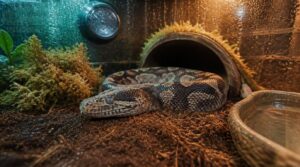
How much moisture does your rescue actually need? Aim for 50 to 60 percent RH during shedding, since prolonged spikes above 70 percent trigger respiratory stress.
- Juveniles: watch for dehydration below 40%
- Adults: stable mid-range prevents dysecdysis
- All ages: recalibrate hygrometers seasonally
Winter heating and summer AC both cause swings — consistent moisture buffering keeps microclimates stable.
Humid Hide Moisture
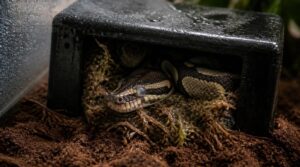
Ambient humidity covers the enclosure, but the humid hide needs its own moisture gradient. Pack sphagnum moss or coconut fiber damp — not soaked — and run the Moisture Squeeze Test weekly: any water release means excess.
Watch for milky eyes signaling shed cues, mist to restore dampness, and swap moldy material immediately. This targeted evaporation control prevents bacterial buildup while giving stressed rescues a reliable retreat.
Juvenile Substrate Depth
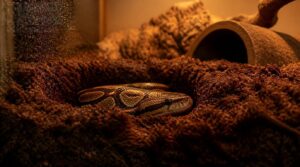
Get the humid hide right, and depth becomes the next lever. Rescued juveniles need 2 to 4 inches of coco coir, deep enough for burrowing safety without impaction risk from loose particles caught mid-strike.
Shallow layers compromise shedding depth requirements and thermal mass stability; too little substrate, and microclimate moisture reservoirs vanish overnight.
Adjust gradually — 0.5-inch increments — watching for compaction or stress signs like excessive curling.
Adult Substrate Depth
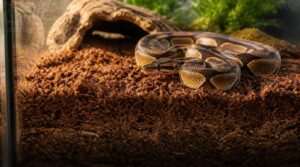
Adult ball pythons need 3 to 4 inches of substrate, deeper than juveniles, to support thermoregulation and full-body burrowing.
This depth buffers seasonal moisture swings and prevents compaction under adult body weight — cypress mulch or coconut husk hold structure better than sand mixes.
Keep clearance at 1.5–2 inches from substrate to coiled snake, avoiding depths past 5 inches in smaller enclosures.
Digital Hygrometer Placement
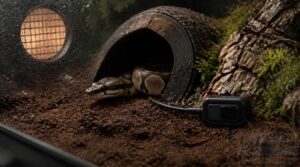
Where you place your digital hygrometer matters as much as the number it displays. Mount the probe at substrate level, clear of vents, drafts, and heat sources — those skew relative humidity readings fast.
- Avoid airflow drafts near doors
- Check accurate sensor height near the hide
- Calibrate monthly using a salt test
This allows real microclimate management, not guesswork, across your rescue’s moisture management routine.
Substrates Rescue Owners Should Avoid
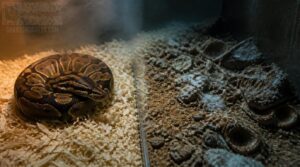
Not every substrate that lines a pet store shelf belongs in a rescue enclosure, and some choices carry real health consequences for an animal already fighting to recover.
Not every pet store substrate belongs in a rescue enclosure—some carry real health consequences for animals already fighting to recover
Rescued ball pythons often arrive with compromised respiratory systems, healing wounds, or unknown parasite loads, so the margin for error shrinks fast.
Here are five substrates you should rule out immediately, along with the specific risks that make them dangerous.
Cedar and Pine Risks
Cedar and pine may smell like a pet store, but that scent signals toxic phenolic compounds and volatile organic compounds actively harming your rescue.
| Wood Type | Primary Risk |
|---|---|
| Cedar | Plicatic acid, respiratory distress |
| Pine | Abietic resin, airway inflammation |
| Both | Handler skin sensitivity |
| Both | Toxic oils, mucous irritation |
| Both | Chronic substrate toxicity |
Skip pine shavings and aspen shavings entirely—rescues need clean air to heal.
Walnut Shell Dangers
Walnut shell substrates carry documented neurological risk factors for ball pythons, alongside chemical residues from processing that cause substrate toxicity. Ingested fragments create real impaction hazard risks.
Fine dust irritates respiratory tissue and can trigger allergenic protein reactions in sensitive handlers.
Skip walnut shell entirely—preventative veterinary care shouldn’t have to undo damage from a substrate you chose.
Sand Impaction Concerns
Sand and pea gravel might look natural, but every strike-feeding event risks digestive impaction—loose particles cling to prey and get swallowed whole. Slowed digestive transit lets grains accumulate, causing substrate toxicity, a distended abdomen, and appetite loss.
Watch for impaction symptoms daily. Persistent bloating or straining beyond 24 hours calls for veterinary intervention—don’t wait, and keep up sand particle monitoring during every enclosure cleaning.
Mold-prone Aspen Shavings
Aspen shavings look cozy, but they turn into a moisture trap fast. Once humidity climbs past that 15% saturation point, fungal growth indicators—powdery white or black patches, matting, musty odor detection—show up within days.
- Rapid moisture retention breakdown
- Mold colonies within days
- Weight collapse under snakes
- Frequent substrate replacement needed
Kiln-dried options help, but expect mold and respiratory health risks regardless.
Reptile Carpet Bacteria
Reptile carpet looks clean but hides what matters most—feces, shed, and food residue work into the fibers, feeding biofilm formation you can’t rinse away.
| Cleaning Method | Removes Waste? | Kills Bacteria? |
|---|---|---|
| Spot-clean wipe | Partial | No |
| Rinse | Minimal | No |
| Full soak/replace | Yes | Yes |
Cross-contamination spreads to hands and tools, risking human exposure—especially for kids or immunocompromised handlers.
Frequently Asked Questions (FAQs)
What substrates are safe for ball pythons?
An ounce of prevention beats a pound of cure: coconut husk, cypress mulch, and paper bedding stay safe, low-dust, and mold-resistant. Avoid impaction and respiratory toxicity by skipping sand, cedar, or pine entirely.
Do snakes recognize their owners?
Yes—through scent recognition via tongue-flicks to the Jacobson’s organ, not affection. Routine timing, calm handling, and consistent visual cues build learned tolerance, reducing defensive behavior. It’s survival-based comfort, not bonding, but genuine trust nonetheless.
What to put in the bottom of a ball python tank?
Start with coco coir or coconut husk for humidity retention and natural burrowing behaviors, or plain paper for quarantine. Avoid sand or loose particles that risk substrate impaction and digestive impaction—check substrate toxicity and monitor waste patterns daily.
What not to use for snake bedding?
Skip cedar, pine, walnut shells, sand, aspen shavings, and reptile carpet.
These cause toxic oils, digestive impaction, mold, bacterial buildup, and respiratory distress—serious risks for already-stressed rescues needing stable, chemical-free recovery environments.
How often should I fully replace the substrate?
Full replacement" sounds permanent, but it’s really routine housekeeping. Replace every 6 to 12 months, or sooner (3–4 months) if you spot mold, odor, or contamination — spot-clean waste daily to stretch that window and protect thermoregulation.
Whats the ideal ventilation rate for enclosures?
Aim for 8–12 air changes per hour, balancing airflow vs humidity so you prevent ammonia buildup and respiratory distress without drying out microclimates—critical for thermoregulation and preventing dysecdysis in stressed rescue pythons.
How can I trap humidity inside the enclosure?
Pair a gasket-sealed lid with moisture gradient layering—damp coconut fiber near humid hides, drier substrate below—plus controlled ventilation. This traps 60–80% humidity while preventing stagnant air, protecting rescued snakes from respiratory stress and dysecdysis.
Should misting frequency change during winter months?
Yes — indoor heating drives winter air dryness, so bump misting to two–four times weekly, monitor ambient humidity with a hygrometer, and pair with humid hides rather than relying on misting alone to prevent overmisting mold risks.
What bedding works best for sick or injured rescues?
Sterile quarantine options like paper towels win here—easy spot-clean, minimal dust, and clear waste monitoring. They reduce wound infection risk and support skin healing while protecting fragile respiratory health during recovery from illness or injury.
Conclusion
Every rescued snake carries its own quiet odyssey, and the bedding beneath it writes the next chapter. Choosing wisely among ball python substrates for rescue owners means fewer respiratory flare-ups, faster weight gain, and mites that never get a foothold.
Paper towels cost pennies; coconut husk holds humidity at 55–60%; cedar and sand cost you a vet bill.
Check depth, check moisture, check daily. That small vigilance is what true rehabilitation looks like.