This site is supported by our readers. We may earn a commission, at no cost to you, if you purchase through links.

A ball python won’t just sip from its water dish—it soaks its entire body, coiling up until the water covers every scale. That’s why a shallow, wobbly bowl can turn bath time into a stressful squeeze instead of the relaxing shed-prep ritual your snake needs.
Size, depth, and material all matter more than most keepers realize. The right water bowls for soaking give snakes room to submerge fully, resist bacteria, and won’t tip mid-cleaning.
Below, you’ll find exactly what to look for and which bowls actually deliver.
Table Of Contents
- Key Takeaways
- What Makes a Good Snake Soaking Bowl
- Best Materials for Snake Soaking Bowls
- Choosing The Right Bowl Size
- Keeping Soaking Bowls Clean and Safe
- Top Soaking Bowl Picks for Snakes
- Frequently Asked Questions (FAQs)
- What is the snake bowl for soaking?
- How to stop a sloppy dog from drinking?
- What are the different types of water bowls?
- Can I use a slow feeder for water?
- How often should I replace my snakes soaking bowl?
- Can I use a soaking bowl for shedding assistance?
- What water temperature is safe for snake soaking?
- How long should a snake soak per session?
- Can multiple snakes share the same soaking bowl?
- Conclusion
Key Takeaways
- Your snake’s soaking bowl should let it curl up and submerge completely, with a size and depth matched to its species since ball pythons, boas, and corn snakes all have very different needs.
- Stick with non-porous materials like sealed ceramic or stainless steel, since they resist bacteria and hold up to daily scrubbing far better than plastic or painted finishes.
- A smooth, rounded rim and a wide, low, non-slip base keep your snake from getting scraped or tipping the bowl mid-soak.
- Daily water changes with at least 50% fresh water, plus regular disinfecting and swapping the bowl out every 6 to 12 months, keep soak time safe and healthy.
What Makes a Good Snake Soaking Bowl
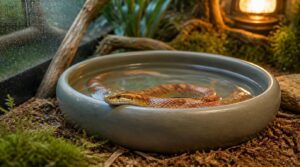
Not every bowl is safe or comfortable for your snake to soak in. A good one comes down to a few key things: size, material, depth, and edge safety. Here’s what to look for before you pick one out.
If you’re setting up a smaller enclosure, something like this compact water bowl designed for small reptile tanks checks all those boxes without taking up precious floor space.
Once you’ve chosen the right bowl, proper hook handling and snake support techniques will help ensure your snake stays relaxed from the moment you move it to the soak.
If you’re just starting out, browsing a guide to terrarium water bowls for beginner snake owners can help you avoid common sizing and material mistakes before you buy.
Weight and stability matter too, so choose a wide, low-profile bowl your snake can’t easily flip while soaking, and run through this snake health checklist to catch other habitat essentials you might be missing.
Size for Full Body Coiling
Picture your snake curling up like a coiled rope, not squished against the walls. Coil space allowance matters most: aim for a bowl 2-3 times your snake’s girth.
- Flat base stability prevents tipping
- Shallow depth keeps coils covered
- Low rim height eases entry/exit
Skip deep bowls—they block full-body soaking.
Material Safety for Reptiles
Bowl material matters as much as size. Choose non-porous, non-toxic options—sealed ceramic or stainless steel—since porous surfaces trap bacteria fast.
| Material | Safety Note |
|---|---|
| Ceramic | Inert, chemical resistant |
| Stainless Steel | Rust-proof, easy to sanitize |
| Painted/Plastic | Risk of chip, leach |
Skip anything with heavy metals or flaking finishes—your snake’s skin deserves smooth, safe contact every soak.
Be aware of toxic wood materials when selecting enclosure accessories near water bowls.
Depth for Species-specific Needs
Chemical resistance and heat retention aside, depth is where most owners guess wrong.
Species-specific depth needs vary widely: king snakes want 2-4 inches, boas need 6-8, corn snakes prefer 3-5. Burrowing and arboreal species do best under 2 inches, while aquatic adapted breeds tolerate 8-12. Juveniles start at just 1 inch.
Ergonomic design and stainless steel construction help you adjust safely across life stages.
Smooth Edges to Prevent Injury
Getting depth right means nothing if the rim cuts your snake on the way in. Look for Rounded Rim Design and Polished Interior Surfaces—these prevent scrapes on scales.
Guarded Lip Sections, Uniform Wall Thickness, and a Non-Skid Base Edge add nontip stability. That’s ergonomic design working for wrist comfort and your snake’s safety together.
Best Materials for Snake Soaking Bowls
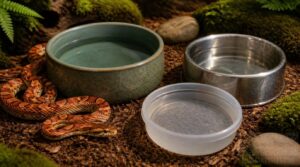
The material your soaking bowl is made from matters just as much as its size. Some options hold up better to daily scrubbing, curious noses, and constant water exposure than others. Here’s what to look for before you pick one out.
Ceramic and Stoneware Benefits
Stoneware wins big on heat retention, holding warm water longer thanks to its dense, fired structure. That thermal stability keeps your snake’s soak comfortable start to finish.
Just remember that even the sturdiest stoneware bowl needs regular upkeep, so pairing it with these safe ways to clean a snake’s water bowl keeps every soak truly fresh and healthy.
Its non-porous surface resists bacteria and staining, so cleanup stays simple. Ceramic’s smooth, even heating means no cold spots. Durability matters too, since stoneware shrugs off daily bumps far better than thin ceramics ever could.
Stainless Steel Durability
A chromium oxide layer gives stainless steel its edge, self-healing after scratches and blocking moisture from corroding the surface.
- Corrosion resistance for daily water exposure
- Heat tolerance for warm soak refills
- Strength durability under active coiling
- Surface finish that resists scratches
- Trusted alloy grades like 304
Your snake gets safe pet hydration, and you get an easy clean pet bowl that lasts.
Polypropylene Pros and Cons
Polypropylene keeps things simple: lightweight design makes water changes a breeze, and its chemical resistance shrugs off soap or diluted bleach without breaking down.
Heat tolerance grips warm refills fine, and cost effectiveness means replacing a cracked bowl won’t sting your wallet. Bonus: recyclability fits an eco-conscious routine.
The catch? Plastic scratches easier than steel, giving bacteria hiding spots over time.
Chew and Scratch Resistance
Ever watched a snake drag its coils across a bowl’s rim night after night? That’s where surface wear prevention matters most.
- Reinforced edge design blocks peeling
- Protective coatings resist abrasion
- Polished stainless steel resists scratches like stainless steel cuticle tools
- Regular micro scratch inspection catches damage early
Material durability testing proves it: smooth, uninterrupted surfaces outlast textured ones every time.
Choosing The Right Bowl Size
Size isn’t a one-size-fits-all deal for your snake’s soaking bowl. Every species has its own coiling habits and body shape, so the right fit really depends on who’s using it. Here’s what to look for based on your snake’s breed and setup.
Ball Python Soaking Dimensions
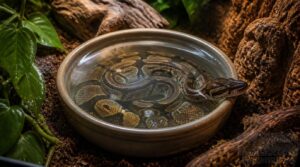
A ball python wants to curl up completely underwater, not just dip a toe in. For adults (3–4 feet), aim for a 6 to 8 inch diameter bowl—roughly a large salad bowl—holding 1 to 2 liters. Juveniles need only 4 to 5 inches. Depth matters too: deep enough for full body submersion, shallow enough to rest a head comfortably at the rim.
A ball python wants to curl up completely underwater, so its soaking bowl should allow full body submersion, not just a quick dip
Boa Constrictor Bowl Sizing
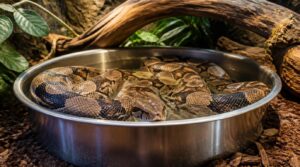
Boas outgrow salad-bowl thinking fast. Adults reach 6 to 10 feet, so your ideal bowl diameter lands between 12 and 16 inches, giving true coil space needed without touching enclosure walls.
Water depth range runs 3 to 5 inches, matching that 60-80% body length ratio submerged. Check enclosure clearance before placing—these aren’t dainty stainless steel pet accessories meant for tabletop use.
Corn Snake Soak Depth
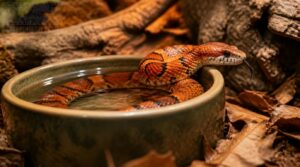
Corn snakes need way less water than boas—just 1 to 2 inches, covering roughly a third of body length.
Head exposure safety matters most; keep the resting surface firm so breathing stays easy.
For shedding, deepen the soak to mid-body, but watch closely.
Calm, settled behavior means you’ve nailed the depth.
Matching Bowl to Enclosure Space
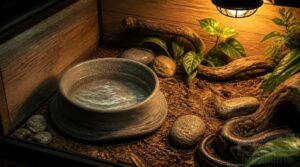
Getting depth right only helps if the bowl actually fits. Leave 2 inches of enclosure clearance space so it won’t tip during cleaning, and check bowl diameter fit against your footprint.
- Non-slip base for grip
- Wall edge utilization in corners
- Placement near water source
- Nontip design with contoured grooves
- Match width to hot spot spacing
Keeping Soaking Bowls Clean and Safe
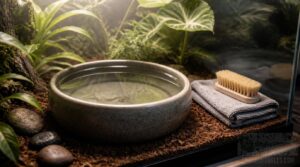
A great soaking bowl only works if you keep it clean, since dirty water can undo all your good intentions fast. Your snake’s health depends on a routine that’s simple to follow but easy to skip if you’re not paying attention. Here’s what that routine should actually look like.
Daily Water Changing Routine
Every day, swap your snake’s water for a fresh batch—no exceptions. Aim for at least 50% replacement, using room-temperature, dechlorinated water so you don’t shock your serpent.
Wipe the bowl’s rim and inner surface with a clean cloth first. Keeping a quick change log helps you spot patterns and stay consistent, turning routine care into a reliable pet hydration solution.
Safe Disinfecting Methods
Fresh water alone won’t kill lingering bacteria, so a full disinfect matters too. Mix 1 part bleach to 9 parts water, apply, and let it sit for label contact time before rinsing thoroughly.
Prefer alcohol? Use 60-90% isopropyl on nonporous stainless steel only—never porous bowls. Always ventilate the area afterward, since fumes linger in enclosed reptile rooms.
Removing Hard Water Residue
Chalky white rings creep in fast if your water’s hard. Blame calcium and magnesium buildup.
- Vinegar soak, 15-30 minutes, scrub, rinse
- Citric acid, 1-2 tbsp per cup, 20 minutes
- Commercial mineral removers, follow label
- Wipe dry after each soak
- Distilled water prevents future scale
Stainless steel cuticle tools handle acid rinses fine, too.
Dishwasher-safe Bowl Options
When soak day rolls around, tossing the bowl straight into the dishwasher saves real time. Look for stainless steel or glazed stoneware, both handle high heat without warping or dulling.
Skip anything not labeled dishwasher-safe. Material durability and non-toxic finishes matter for reptile health, so a sturdy, easy-clean bowl beats fragile plastic every time.
Top Soaking Bowl Picks for Snakes
Finding the right bowl doesn’t have to be complicated once you know what to look for. Below are a few standout picks that check the boxes for size, material, and everyday ease of use. Take a look and see which one fits your snake’s setup best.
Once your water dish is sorted, pairing it with the right humidity setup—like the substrate and hide choices covered in this guide to whether snakes actually need a fogger for humidity—keeps your enclosure balanced without overcomplicating things.
1. Teenitor Nail Soaking Bowl Kit
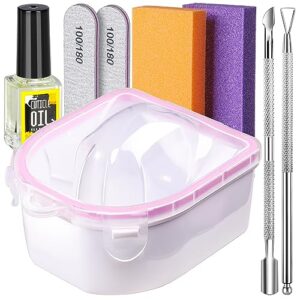
Marketed for manicures, the Teenitor Nail Soaking Bowl Kit actually works well repurposed as a snake soak. Its BPA-free plastic resists acetone and other solvents, so it can handle repeated cleaning without cracking or warping.
The bowl includes a raised, non-slip base and rounded edges, which keeps smaller snakes like corn snakes from slipping or scraping themselves. At roughly 250 milliliters capacity, it suits juveniles better than full-grown boas.
It’s dishwasher safe too, making daily water changes quick and simple.
| Best For | People who want an at-home solution for soaking off gel polish, acrylics, or dip powder without a salon visit. |
|---|---|
| Bowl Layers | Double-layer |
| Material | Acetone-resistant plastic |
| Included Tools | Oil, pusher, peeler, files, buffers |
| Weight | 6.7 oz |
| Primary Use | Gel/acrylic removal |
| Hand Coverage | Single hand |
| Additional Features |
|
- Dual-layer bowl lets you combine acetone and hot water to speed up soak-off time
- Comes with a full 8-piece tool set, including cuticle oil, pusher, peeler, files, and buffers
- Ergonomic design with finger positions and palm support makes soaking more comfortable
- Acetone isn’t included, so you’ll need to buy it separately
- No instructions are provided, which may leave first-time users unsure how to use it properly
- Might feel snug for people with larger hands
2. Dual Nail Soaking Bowl for Both Hands
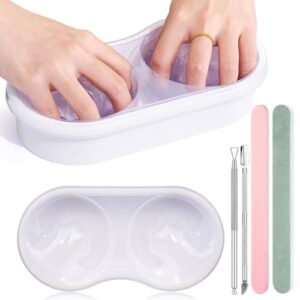
Two snakes, one bowl, zero hassle. This dual-compartment design was built for double manicures, but it’s handy if you’re keeping a pair of similarly sized corn snakes or juveniles in one enclosure.
Each side holds water separately, so you can offer different temperatures for shedding versus routine soaks. The non-slip base keeps things steady, and rounded contours protect delicate scales.
Just remember, it’s still shallow. Great for hatchlings needing a quick dip, not for adults who need full-body coverage.
| Best For | People who want to soak both hands at once for faster, more comfortable at-home manicures and polish removal. |
|---|---|
| Bowl Layers | Dual-compartment |
| Material | Acetone-proof plastic |
| Included Tools | File, cuticle pusher |
| Weight | 8.11 oz |
| Primary Use | Gel/dip removal |
| Hand Coverage | Both hands |
| Additional Features |
|
- Dual compartments let you soak both hands simultaneously, cutting down soak time
- Bottom layer warms acetone for faster, more effective gel or dip powder removal
- Comes with a nail file and cuticle pusher, plus a pink gift box for easy gifting
- Pouring out acetone can be messy due to the bowl’s shape
- Finger compartments may feel tight for people with longer or wider nails
- Plastic may hold onto odors or residue after repeated acetone use
3. Teenitor Nail Soaking Bowl Kit 10 Piece
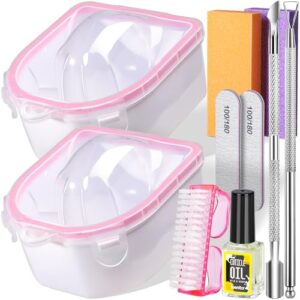
This 10-piece Teenitor set wasn’t made with reptiles in mind, but hobbyists have repurposed it for hatchling soaks. You get two acetone-resistant bowls plus cuticle tools like files, buffers, and a pusher — most of which you’ll never touch.
The real draw is the dual-layer bowl itself, dishwasher safe and easy to sanitize between sheds. Just skip the cuticle oil near your snake’s tank, and treat this as a budget hatchling soak, not a full grown-snake solution.
| Best For | Reptile hobbyists looking for a budget-friendly soaking bowl for hatchling snakes during shed season. |
|---|---|
| Bowl Layers | Double-layer (x2) |
| Material | Acetone-proof plastic |
| Included Tools | Oil, pusher, peeler, files, buffers, brush |
| Weight | 10.12 oz |
| Primary Use | Gel polish removal |
| Hand Coverage | Both hands (2 bowls) |
| Additional Features |
|
- Dual-layer, acetone-resistant bowls are dishwasher safe and easy to sanitize between sheds
- Compact size (5.91 x 5.47 x 4.53 inches) makes it easy to store and handle for small soaks
- Comes with extra tools like files, buffers, and a pusher, even if most go unused for reptile care
- Designed for manicures, not reptiles, so most included tools (cuticle oil, pusher, files) are irrelevant
- Bowls are sized for hatchlings only and won’t work for full-grown snakes
- Plastic bowls may degrade over repeated use if any acetone exposure occurs
4. Acetone Resistant Double Layer Nail Soak Bowl
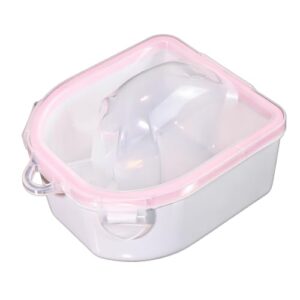
Why would a nail bowl matter for your snake? This one’s built with a double-layer design, keeping warm water sealed below and the acetone-resistant top chamber separate. Skip that top layer entirely and just use the base as a compact coiling dish for hatchlings.
The impact-resistant shell shrugs off drops near the enclosure, and the non-porous interior won’t stain or hold odors between soaks. Small, sturdy, and easy to rinse — it’s a decent backup bowl, not a primary setup for growing snakes.
| Best For | Reptile owners looking for a small, easy-to-clean backup dish for hatchling snakes, or nail care users wanting an at-home soak-off station for dip powder, gel, or acrylic nails. |
|---|---|
| Bowl Layers | Two-piece layered |
| Material | PP plastic |
| Included Tools | None listed |
| Weight | 4.16 oz |
| Primary Use | Dip/gel/acrylic soak-off |
| Hand Coverage | Single hand |
| Additional Features |
|
- Durable PP plastic construction resists impacts, stains, and odors
- Two-piece design keeps warm water separate from acetone or treatment solutions
- Compact size makes it easy to rinse and repurpose for small tasks like hatchling coiling
- Central hump in the base can cause wrist discomfort during extended use
- Finger wells can trap residue that’s tough to clean fully
- No lid included, so acetone evaporation isn’t well controlled between uses
5. Marianna Manicure Soaking Bowl
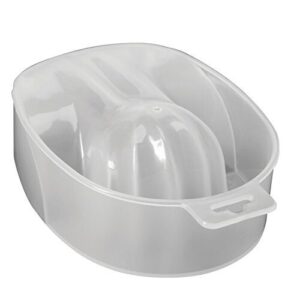
Rounder and shallower than the acetone-resistant pick, the Marianna bowl brings a wide mouth and non-slip base to the table. That stability matters once a snake shifts its weight mid-soak.
The 8 to 9 centimeter interior fits corn snakes and smaller balls without crowding, and the rounded rim keeps scales from catching on sharp edges. It’s not built for full-body coiling on bigger boas, but for quick soaks and shed-assist sessions, it does the job reliably.
| Best For | Snake owners looking for a stable, wide-mouthed bowl for quick soaks and shed-assist sessions with corn snakes or smaller ball pythons. |
|---|---|
| Bowl Layers | Single layer |
| Material | Durable plastic |
| Included Tools | None listed |
| Weight | 1.59 oz |
| Primary Use | Cuticle softening |
| Hand Coverage | Single hand |
| Additional Features |
|
- Non-tip plastic construction and non-slip base keep the bowl steady even if a snake shifts mid-soak
- Wide, rounded rim with an 8 to 9 centimeter interior comfortably fits corn snakes and smaller balls without catching scales
- Compact size makes it easy to store alongside other nail and pet care supplies
- Not intended for use with acetone or nail polish remover, which may damage the plastic
- Single-bowl design only allows soaking one hand (or one snake) at a time
- Not suited for full-body coiling on larger boas or bigger snakes
Frequently Asked Questions (FAQs)
What is the snake bowl for soaking?
Ever wonder how your snake takes a bath? A soaking bowl gives it a shallow, stable water spot inside the enclosure to submerge, hydrate, and loosen skin naturally during shedding season.
How to stop a sloppy dog from drinking?
Try a narrow-mouth bowl to cut splash, or an elevated stand for a gentler drinking angle. Slow the pace with smaller water amounts, and add a rubberized base so post-drink shakes don’t send water flying everywhere.
What are the different types of water bowls?
Snake bowls come in shallow dishes, deep troughs for full immersion, curved-rim styles that ease coiling, wide-mouth designs that limit splash, and weighted bases that resist tipping when your snake moves in fast.
Can I use a slow feeder for water?
Square peg, round hole—that’s a slow feeder for soaking. It’s built to slow down dry food, not hold water. Ridges trap debris, seals leak, and watertight design matters more here than convenience.
How often should I replace my snakes soaking bowl?
Plan on swapping it out every 6 to 12 months, sooner if you spot cracks, rough spots, or warping. Once cleaning stops removing odors or grime, that’s your cue—a fresh bowl keeps soak time safe.
Can I use a soaking bowl for shedding assistance?
Think of it as a spa day before a costume change. Yes—warm water softens stuck skin, easing shedding. Keep sessions 10 to 20 minutes, water around 82 to 86°F, plain and additive-free for safety.
What water temperature is safe for snake soaking?
Aim for 84 to 90°F (29 to 32°C), checked with a reptile thermometer. Anything hotter risks burns; cooler water causes chilling. Start slightly cool, then adjust gradually until your snake settles into a calm, relaxed coil.
How long should a snake soak per session?
Slow and steady really does win the race here: keep sessions to 10 to 15 minutes. Watch your snake closely, and end early if it starts thrashing or seems stressed instead of relaxed.
Can multiple snakes share the same soaking bowl?
Sharing isn’t a great idea. Snakes are solitary by nature, and one bowl often means stress, competition, or aggression. Give each snake its own dish, or rotate soak times to keep water clean and everyone calm.
Conclusion
The smallest bowl choice makes the biggest difference in your snake’s comfort. Good water bowls for soaking aren’t fancy—they’re just sized right, sturdy, and clean. Your ball python needs full coverage. Your corn snake needs manageable depth.
Get the size and material right, and bath time stops being a struggle and becomes what it should be: a calm, natural reset before shedding. Pick well once, and comfort follows every soak after.