This site is supported by our readers. We may earn a commission, at no cost to you, if you purchase through links.
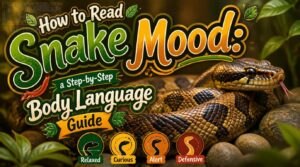
A snake’s face gives you nothing. No raised eyebrows, no flared nostrils, no twitching lips. Yet the animal in front of you is broadcasting its mood constantly, through muscle tension along its spine, the angle of its neck, the rhythm of its tongue.
Most keepers miss these signals because they’re watching the wrong thing, waiting for an expression that will never come. Learning how to read snake mood means shifting your attention to posture, pace, and pattern instead.
Once you know what to look for, a coiled loop or a quickened tongue-flick stops looking random and starts telling you exactly what your snake needs next.
Table Of Contents
Key Takeaways
- Since snakes can’t change facial expressions, you need to read mood through body cues instead—things like muscle tension, head position, movement speed, and tongue-flicking patterns.
- A relaxed snake shows loose, S-shaped coils, slow deliberate movement, and steady tongue flicks (4-12 per minute), while a stressed snake tenses up, balls up, hisses, or flattens its body.
- Behaviors like glass surfing, tail vibrating, or refusing food often point to bigger problems—things like poor temperature and humidity levels or a cramped enclosure—not just a bad mood.
- When you see defensive signals, the best move is to back off, give your snake space, and only handle it once it settles back into a relaxed, loose posture.
Read Snake Mood Through Body Language

Reading a snake accurately means paying attention to several signals at once, not just one obvious cue. Posture, head position, movement, and even tongue activity all work together to tell you what’s really going on beneath that scaled exterior. Here’s what to watch for, one behavior at a time.
Muscle tension often speaks the loudest, which is why supporting a snake’s body correctly can immediately ease that stiff, coiled resistance into calm, relaxed muscle tone.
Observe Posture and Muscle Tension
Run your eyes along the spine before anything else. Muscle tension curves tell the story: tight, bunched coils with rib cage flexion mean bracing, while loose S-curves and even ground pressure signal a relaxed posture.
Neck muscle bracing during elevation warns of alertness. Compare that tone against baseline, since your snake’s normal resting tension is your best measuring stick.
Watch Head Position and Alignment
Once the spine checks out, look up. A straight neck alignment with the head resting level signals calm attention, not threat. Head tilt curiosity shows in a slightly raised snout; a coiled, elevated neck means something else entirely.
- That steady gaze can melt your worry away
- Straight alignment feels like trust earned
- A tilted head sparks genuine wonder
- Stable head position brings quiet reassurance
Track Movement Speed and Direction
Once head alignment confirms mood, watch how your snake covers ground.
Speed patterns reveal intent: 0.2 to 0.5 body lengths per second signals calm exploration, while sudden bursts often follow a startle cue.
Direction shifts matter too. Zigzagging suggests cautious navigation; a steady linear path toward shelter shows purposeful movement, not distress.
Notice Tongue-Flicking Patterns
Beyond gait, that flicking tongue tells its own story. A regular rate of four to twelve flicks per minute signals calm olfactory sampling, while sudden rapid bursts suggest a novel scent, pheromone trace, or shifting chemical signal worth investigating.
Sparse, sluggish flicking paired with poor appetite often flags illness. Steady, unhurried patterns without stiff posture mean your snake’s simply building scent memory, not sounding an alarm.
Compare Cues With Normal Behavior
No single cue tells the whole story. You need a behavioral baseline first, then watch for drift.
- Baseline posture: smooth coils, even tone
- Normal movement: slow, deliberate pacing
- Typical tongue flicking: four to twelve flicks per minute
- Head position norms: level, unbent
- Stress-induced deviation: rigid, elevated, defensive postures
Match today’s enclosure behavior against that baseline before assuming stress signals.
Identify Relaxed and Curious Snake Behavior

A relaxed snake doesn’t announce itself loudly; it just settles into its body and lets its guard down. Once you know what calm actually looks like, the signs are easy to spot and even easier to trust. Here’s what to watch for when your snake is comfortable and simply curious about its world.
A loose, gently curving body and slow, deliberate tongue-flicks are good signs, but if you’re still building trust, this guide on handling a baby snake safely can help you read those early cues with confidence.
A relaxed snake doesn’t announce itself; it simply settles into its body and lets its guard down
Loose Coils and Gentle Curves
Ever notice a snake looped like a dropped garden hose? That’s relaxed body posture at work. Gentle curve formation replaces sharp bends, muscle tension release lets loops go soft and rounded.
Loose coiling means no compact balling, no rigid straightness. Curves stay smooth and open, signaling calm exploration rather than coiled alertness. Trust what you see.
Supported Resting and Natural Draping
Weight tells the real story. A relaxed snake lets branches or substrate carry its body weight distribution, draping along contours instead of gripping. Watch the belly: light, even contact means comfort, not clinging.
That’s natural draping, gentle S-curves following whatever surface it rests on, no tension pulling against gravity. Secure hides encourage this posture most reliably.
Slow, Deliberate Exploration
A relaxed snake moves like it’s got nowhere urgent to be. Methodical movement patterns replace darting bursts, covering short distances with frequent pauses for environmental assessment. The head stays level, leading forward motion while the body follows in gentle coiling investigation.
Muscles stay loose throughout, no sudden turns or rapid reversals, just calm sensory sampling as it evaluates every texture and gap the enclosure offers.
Calm Environmental Investigation
Watch how a content snake investigates new enrichment items. Steady tongue flicking, gentle head extension, and calm exploration of novel objects signal genuine curiosity, not alarm. This behavior thrives when temperature regulation, humidity balance, and noise minimization stay consistent.
Key markers of comfortable investigation:
- Frequent tongue flicks without withdrawal
- Slow approach toward new stimuli
- Relaxed muscle tone throughout
- No retreat to hides
Confident Head and Neck Alignment
A calm snake carries its head like it knows exactly where it’s going. Your neck curve observation should reveal a gentle arch, not a stiff line or defensive hunch.
| Signal | Confident | Defensive |
|---|---|---|
| Head alignment | Level, centered | Elevated, flared |
| Neck shape | Soft S-curve | Rigid or flattened |
| Tongue rhythm | Steady flicks | Erratic pauses |
Body weight stays distributed evenly, no straining anywhere.
Recognize Defensive, Fearful, and Stressed Snakes
Not every snake you meet will greet you with loose coils and easy curiosity. When something in the environment feels wrong, your snake’s body starts sending warnings, and those signals deserve your full attention. Here’s what defensive, fearful, and stressed behavior actually looks like.
Strike-Ready S-Shaped Posture

An arched neck, a shallow S coil, a tail anchored tight: this is the strike-ready posture. Muscle tension analysis reveals tightened shoulders and chest, storing energy for explosive release.
The head aligns slightly above midline, eyes locked in pre-strike visual focus. Tail coil mechanics store power at the base, ready to propel forward without warning.
Hissing, Puffing, and Flattening

Once that shallow S locks in, sound and shape often join the show. Hissing forces air sharply through the glottis, a defensive breath display warning you off. Puffing lifts neck scales, reddening skin beneath. Flattening spreads the head wide, boosting threat posture mechanics.
Combined intimidation tactics include:
- Hissing with raised posture
- Puffing plus reddened neck
- Flattening for a broader silhouette
Protective Balling and Hiding

When threat display fails, some snakes skip escalation entirely and ball up instead, tucking the head into a tight coil to shield vulnerable tissue. Younger, smaller animals favor this over hissing.
| Balling Trigger | Typical Response |
|---|---|
| Loud noise | Tight coil, rigid tail |
| Cornered handling | Head tucked inward |
| Temperature stress | Prolonged balling |
| Unfamiliar objects | Retreat, then hide |
Persistent hiding signals chronic stress, not curiosity.
Glass Surfing and Escape Attempts

Balling hides fear internally; glass surfing broadcasts it. Your snake presses flat against the pane, sliding in rhythmic passes while testing edges for an exit. Younger animals do this most, often driven by bright reflections, cramped quarters, or poor thermal gradients.
Fix it with taller enclosures, branches, cork bark, and consistent basking temperatures, since enrichment and stable heat curb the compulsion fast.
Tail Vibrations and Rigid Staring
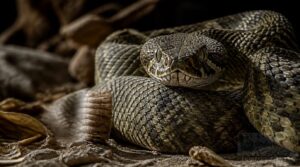
When a snake’s tail starts shivering against the substrate, you’re watching tension, not curiosity. Tail vibration paired with rigid posture and unblinking staring cues means defensive postures are escalating.
Watch for:
- Subtle tremors vs. audible shivers
- Fixed gaze holding steady
- Rigid body, no movement
- Vibration paired with hissing
Pause handling immediately. Give space, lower triggers, and let your snake disengage safely.
Understanding animal visual signals helps interpret defensive behaviors in reptiles like snakes.
Consider Feeding, Shedding, and Environment

Not every mood shift traces back to fear or aggression—sometimes biology and habitat are doing the talking. Feeding cycles, shedding phases, and enclosure conditions all leave their own distinct fingerprints on your snake’s behavior. Here’s what to watch for as you sort out what’s actually driving the change.
Pre-Feeding Sensory Behavior
Watch the tongue flicks quicken before food even hits the enclosure floor: that’s scent memory at work. Chemical signals prompt directed head positioning, tightened mouth corners, and a forebody lift toward the source.
Eyes sharpen, pupils dilate, and body tone stays loose but coiled.
This is prey anticipation, not stress, so read it as focused readiness rather than alarm.
Calm Post-Meal Retreat
Once feeding ends, expect a shift into calm post-meal digestion. The snake retreats, settling into gentle body curves with proper head neck alignment, no jerking. Movement slows to purposeful repositioning only.
Quiet environmental assessment replaces active foraging: fewer head turns, minimal tongue flicks. Respect this hiding behavior, keep temperature gradients stable, and avoid handling until digestion visibly completes.
Normal Pre-Shed Mood Changes
A duller, cloudy-blue cast to the eyes signals shedding preparation has begun. Expect slower pre-shed movement, reduced appetite, and quieter tongue-flicking as sensory drive dips.
Hydration stays steady even as scenting slows, so don’t mistake this preshed lull for illness. Cloudy blue-gray eyes and gentle coiling are simply your snake conserving energy for the molt ahead.
Temperature and Humidity Stress
Behavior often reveals a thermostat problem before your gauges do. Restlessness, glass surfing, and heavy tongue-flicking can signal thermal gradient loss, while lethargy paired with sunken eyes points to dehydration.
Keep warm sides at 85 to 90°F, cool sides at 78 to 82°F, and humidity between 40 and 60 percent. Correct the enclosure microclimate fast; stress compounds quickly once comfort ranges slip.
Enclosure and Enrichment Problems
A cramped tank breeds tension fast. Inadequate space cuts exploration and triggers glass surfing, while poor substrate and insufficient climbing limit natural movement patterns entirely.
Check these enclosure basics:
- Length at least 1.5 times body size
- Substrate depth 2 to 3 times girth
- Multiple secure hides per enclosure zone
- Vertical branches supporting climbing behavior
Enclosure design shapes mood directly, so correct these gaps before blaming temperament.
Respond Safely to Snake Mood Changes

Reading the signals is only half the job; what you do next determines whether your snake learns to trust you or learns to fear you. Every response, from backing off during a defensive display to adjusting a habitat that’s causing stress, should match the specific cue you’re seeing.
Here’s how to turn your observations into the right action, every time.
Pause Handling During Defensive Displays
When defensive spirals kick in, hissing, flattening, elevated coils, stop. Handling pause techniques work by giving control back to the snake, not you.
| Signal | Your Response |
|---|---|
| Rigid stare | Freeze, retreat slightly |
| S-coil, raised | Wait, no touching |
| Flattening eases | Reassess calmly |
| Loose posture returns | Resume gently |
Quiet, still, patient. That’s stress reduction in action.
Support The Body Gently
Once the loose posture returns, gentle body support matters most. Cradle from underneath, palms open, weight distributed evenly along the torso, no gripping the neck or spine.
Move slowly. Keep wrists straight, monitor breathing, and release instantly if stiffening resumes. Consistent, calm contact builds trust over repeated sessions, turning wary body language into cooperative handling.
Correct Habitat Stressors Promptly
Trust means little if the cage itself keeps triggering stress. Check the temperature gradient first, basking zone at 32-34 C, cool retreat below 24 C.
Confirm humidity sits between 60-70%, adjust misting immediately if it drifts. Inspect substrate moisture daily, swap damp material within two hours, and refresh the water dish weekly to prevent bacterial buildup.
Build Trust Through Consistency
Once the enclosure stops working against you, consistency becomes your real tool. Predictable enclosure checks, same feeding times, and a steady voice build owner familiarity over weeks.
- Calm exploration replaces frantic glass surfing
- Handling feels routine, not threatening
- Trust deepens, session by session
- Stress responses fade noticeably
- You gain a genuine bond
Recognize Possible Health Problems
Sometimes body language crosses into biology. Milky blue eyes lasting beyond a normal shed cycle, repeated regurgitation, unexplained weight loss, lethargy, abnormal posture, or open-mouth breathing all point past mood into illness.
When these signs persist rather than pass within a day or two, stop guessing and call a reptile vet.
Frequently Asked Questions (FAQs)
How to tell a snakes mood?
Watch muscle tension, head position, and tongue flicking together. A snake balling up, showing rigid coils, or rapid tongueflicking near you signals stress, while slow movement and steady flicks mean calm curiosity.
How to read a snakes behavior?
No single cue tells the whole story. Combine posture interpretation, tongue flicking patterns, and movement observation techniques: loose coils plus steady tongue flicks signal calm curiosity, while rigid stillness or rapid darting suggests genuine stress indicators worth respecting.
Flattened sides and firm, unyielding loops are early warning signs worth learning to spot, and this guide to boa constrictor body language breaks down exactly how these postural shifts precede defensive inflation or a strike.
What 7 scents do snakes hate?
Snakes rely on chemical signals over smell, so cinnamaldehyde in cinnamon oil, clove eugenol, diluted peppermint spray, garlic sulfur compounds, and vinegar’s acetic acid vapor all irritate their vomeronasal organ, creating effective natural oil deterrents and barrier methods that discourage entry.
How to read snake?
Your snake is an open book written in coils and glances. Track posture, head position, and tongue flicking together, since coiling patterns and body tension reveal mood far more honestly than any single cue alone.
How often should I handle my snake weekly?
Two to three sessions weekly, 5 to 10 minutes each, works for most species. Ball pythons tolerate less, corn snakes more. Adjust based on stress signs, and skip handling within 48 hours of feeding or during shedding.
Does a snakes mood change with age?
Like fine wine, temperament mellows with age.
Startle responses fade, exploratory zeal gives way to routine reliance, and handling tolerance builds. Juveniles startle fast; adults rest calmly, lean on familiar patterns, and rarely spiral into defensive balling.
Why does my snake refuse food for weeks?
Prolonged refusal often traces to temperature gradients running cold, incomplete shedding cycles, enrichment deficits, or feeding mismatches like oversized prey. Rule out respiratory infection or parasites too. Persistent fasting beyond three weeks warrants a veterinary exam.
How can I tell males and females apart mood-wise?
Males settle into firmer coils with slower baseline movement and steady head alignment. Females show looser drape, quicker tongue flicking intervals, and faster feeding approach behavior, striking with noticeably higher speed and readiness.
Conclusion
Test this theory yourself: watch your snake for one full week, logging posture, tongue-flicks, and resting position each day. Patterns emerge fast.
That loose coil, that rigid stare, that quick retreat, none of it’s random once you know how to read snake mood. Your snake isn’t hiding its feelings. It simply speaks a language built on muscle and movement instead of expression. Learn that language, and every glance becomes a conversation, not a guess.